
Scores for all instruments: 16,000+ (active and growing), over 236,000 pages.
All genres and levels: Jazz & Blues, Rock & Pop, Classical & Contemporary, Film & Musicals;
books & biographies; methods, études, play-along tracks (MP3) for Jazz & Rock.
Access & benefits: US$15.99 one-time payment, valid for lifetime, full Library access.
Table of Contents

The best sheet music download from our Library.
For the price of a single songbook, get a full Sheet Music Library!
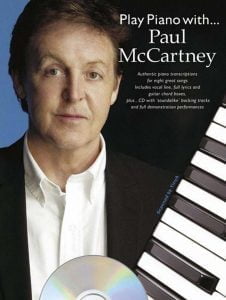
Please, subscribe to our Sheet Music Library. Sheet music should be accessible and affordable for all musicians, from professionals to absolute beginners.
Paul McCartney: The Architect of Modern Melody
Paul McCartney is not merely a musician; he is a foundational force in the architecture of modern popular music. As a Beatle, he helped transform a youth subculture into a lasting art form. As a solo artist and bandleader, he demonstrated that the gift for melody could be a lifelong pursuit, not a fleeting moment of youthful inspiration. His career, spanning more than six decades, is a testament to an almost instinctual genius for harmony, an adventurous spirit in the recording studio, and an unwavering commitment to the craft of songwriting. From the working-class streets of Liverpool to the world’s most prestigious concert halls and honors, McCartney’s story is one of relentless creation, proving that the “silly love songs” he once defended are, in fact, the very substance of enduring musical legacy.

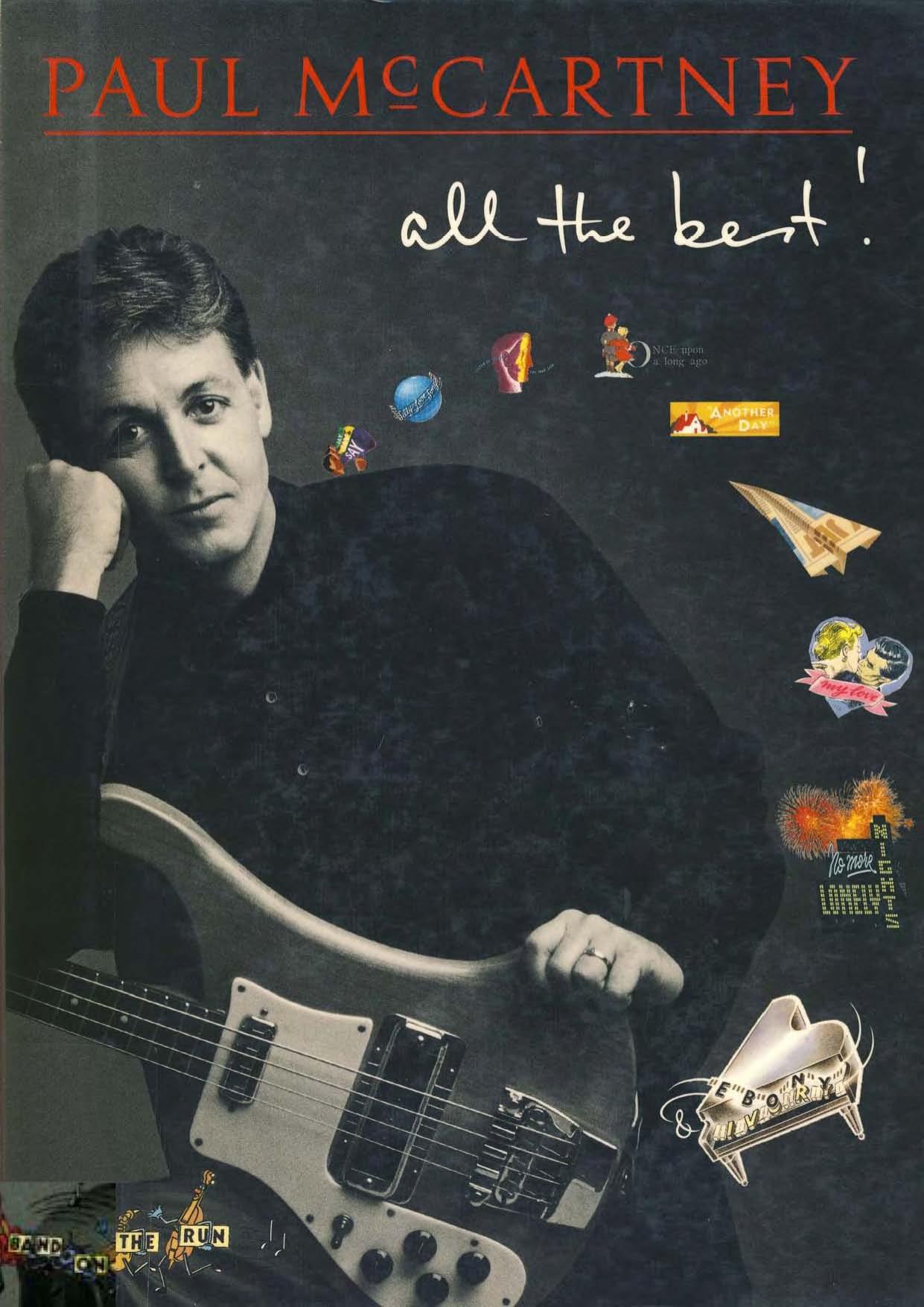


Search your favorite sheet music in the Sheet Music Library Catalog
Early Life and The Beatles: The Crucible of Genius
James Paul McCartney was born on June 18, 1942, in Liverpool, England, into a family where music was a household presence. His father, Jim, a jazz musician and volunteer fireman, led Jim Mac’s Jazz Band, and the family often gathered around the piano, an experience that would later inform the sing-along charm of songs like “When I’m 64”. His mother, Mary, was a midwife whose death from breast cancer when Paul was fourteen profoundly shaped his life and would later inspire the elegiac “Let It Be”. McCartney’s early musical education was largely self-directed; he taught himself trumpet and then guitar, his brother recalling that once Paul got a guitar, “that was the end. He was lost”.
The pivotal moment came on July 6, 1957, when the fifteen-year-old McCartney met John Lennon at a church fete in Woolton. Impressed by McCartney’s ability to play and tune a guitar, Lennon asked him to join his skiffle group, the Quarrymen. This meeting laid the foundation for the most celebrated songwriting partnership of the twentieth century. As the Quarrymen evolved into The Beatles, McCartney initially played lead guitar before switching to bass, a move that would revolutionize the instrument’s role in popular music. With the additions of George Harrison on lead guitar and Ringo Starr on drums, the classic lineup was complete by 1962.


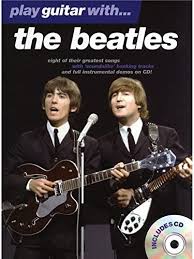

The Beatles’ ascent was meteoric. Signed to EMI in 1962, they achieved unprecedented global fame by 1964, a phenomenon dubbed “Beatlemania”. Their string of albums—from Please Please Me to Sgt. Pepper’s Lonely Hearts Club Band, The White Album, Abbey Road, and Let It Be—redefined the possibilities of the recording studio. While Lennon often provided the band’s acerbic edge, McCartney was the melodist and the pop craftsman, responsible for everything from the achingly beautiful “Yesterday” to the proto-metal roar of “Helter Skelter”. His partnership with Lennon was symbiotic and competitive, driving both to artistic heights they might not have reached alone. Even as their personal relationship frayed in the late 1960s, their creative bond remained potent, as evidenced by their collaboration on “The Ballad of John and Yoko” in 1969.
Wings and a Solo Odyssey
The breakup of The Beatles in 1970 left McCartney adrift but not idle. He released his debut solo album, McCartney, a deliberately homespun affair on which he played every instrument, followed by Ram in 1971. Both albums, initially met with bafflement by some critics, have since been reevaluated as influential works of lo-fi, artful pop. Seeking a more collaborative and stable musical environment, McCartney formed Wings with his wife, Linda, an American photographer and keyboardist.
Wings became the best-selling pop act of the 1970s, a fact often overshadowed by the monolithic legacy of The Beatles. The band achieved an astonishing 27 U.S. Top 40 hits and five consecutive number-one albums, including the critically acclaimed Band on the Run (1973) and Wings at the Speed of Sound (1976). Hits like “Live and Let Die,” “Jet,” “Silly Love Songs,” and “Mull of Kintyre” (at one point the UK’s best-selling single) demonstrated McCartney’s unerring pop instincts remained fully intact. The 1970s were also a period of personal and creative renaissance, with Linda providing both a musical partner and a stabilizing personal presence.
The 1980s presented new challenges. The murder of John Lennon in 1980 deeply affected McCartney and led to a decade-long hiatus from touring. He focused on studio work, releasing albums like Tug of War (1982), which featured collaborations with Stevie Wonder and Carl Perkins, and the commercially successful Flowers in the Dirt (1989), which coincided with his return to live performance. The 1990s saw a creative resurgence with the critically lauded Flaming Pie (1997) and his knighthood by Queen Elizabeth II the same year. The decade also brought personal tragedy with Linda’s death from cancer in 1998, a loss he channeled into the instrumental tribute A Garland for Linda.
In the twenty-first century, McCartney has remained prolific and restlessly experimental. Albums such as Chaos and Creation in the Backyard (2005), Memory Almost Full (2007), New (2013), and Egypt Station (2018) have been met with both popular success and critical praise. He has continued to tour, playing record-breaking stadium shows and even headlining Glastonbury in 2022, becoming the festival’s oldest-ever solo headliner. His 2026 album, The Boys of Dungeon Lane, was hailed as a poignant and vital return to his Liverpudlian roots, proving that at over eighty years old, his “gift for melody still astounds”.
Musical Style, Harmony, and Technique
Paul McCartney’s musical style is a unique blend of intuitive genius and eclectic curiosity. He is, at his core, a melodist of the highest order. Musicologist Ian MacDonald described him as “a natural melodist – a creator of tunes capable of existing apart from their harmony,” with melody lines that are “primarily ‘vertical,’ employing wide, consonant intervals which express his ‘extrovert energy and optimism’”. This gift for a memorable, standalone tune is the bedrock of his songwriting, allowing songs like “Yesterday” and “Let It Be” to transcend their original arrangements and become modern standards.
His harmonic language is equally distinctive, characterized by a sophisticated yet accessible use of classical and jazz-influenced techniques. He frequently employs modal mixture, seamlessly shifting between major and minor tonalities to create emotional ambiguity. His use of Mixolydian mode, with its flattened seventh, gives songs a relaxed, “stubborn and lazy” harmonic character. He is also a master of the dramatic key change, often using a pivot chord to modulate to a distant key, creating a sense of surprise and expansion. “Penny Lane” is a prime example, featuring a complex structure that shifts between the keys of B major and A major through a series of “formal pivoting dominant chords,” with the song pulling off “clever immensely satisfying key changes no less than 7 times”. Similarly, his Bond theme “Live and Let Die” is a masterclass in harmonic contrast, moving from a wistful ballad to driving rock, “incorporating jazz-influenced chord progressions in the quieter passages alongside straightforward rock power in the louder moments”.
Perhaps McCartney’s most revolutionary technical contribution is his approach to the bass guitar. Before him, the bass in rock and roll was largely a rhythmic anchor, holding down the root notes. McCartney transformed it into a melodic voice. He treated the bass as a “blank canvas for composition,” often recording his bass parts last, after the rest of the track was complete, so he could compose a line that functioned as a “counter-melody” to the main vocal. This approach, inspired by the active playing of Motown’s James Jamerson, is evident on songs like “Something,” where the bass weaves an independent, lyrical line beneath the vocal, and “Lady Madonna,” with its driving, boogie-woogie-inflected bass riff. His use of the Höfner violin bass, with its light touch and distinctive tone, further enabled this guitar-like, melodic style, allowing him to play with “staccato and legato feels, octaves and upper-register passages”.
The Best Songs and Compositions
Main article on Wikipedia: Paul McCartney discography
See also: The Beatles albums discography, The Beatles singles discography, Wings discography, and List of songs recorded by Paul McCartney
Paul McCartney’s catalogue is vast, but a consensus of his greatest works consistently highlights a remarkable range of styles and emotions.
Among his Beatles compositions, “Yesterday” stands as a singular achievement. A simple ballad of regret, it was wholly written by McCartney and performed with a string quartet. It has been played over six million times on American radio and has been covered more than 2,500 times, making it one of the most recorded songs in history. “Hey Jude” is its emotional counterpart, an optimistic anthem with a four-minute, sing-along coda that was, at over seven minutes, a radical departure for a pop single in 1968. “Let It Be” is a gospel-tinged hymn of acceptance and comfort, inspired by his mother’s memory. “Eleanor Rigby” showcased his storytelling and his incorporation of classical string arrangements, while “Blackbird” is a delicate, solo acoustic piece that has become a standard for aspiring guitarists. His harder-rocking side is exemplified by “Helter Skelter,” a proto-metal track that showcased his versatility and vocal power.
His post-Beatles work includes “Maybe I’m Amazed,” a soulful love song written for Linda that remains a concert staple. “Band on the Run” is a multi-part epic that moves through distinct musical sections with effortless grace, proving his continued ambition. “Live and Let Die” is one of the most iconic Bond themes, a song that perfectly balances drama, melody, and rock energy. “Silly Love Songs” was a direct, disarmingly catchy response to critics who accused him of being lightweight, and it became a number-one hit, vindicating his pop sensibilities.
Film Music and Classical Works
Main article on Wikipedia: Paul McCartney discography § Videography
See also: The Beatles in film and The Beatles videos
McCartney’s foray into film music began in 1966 with the score for The Family Way, a film starring Hayley Mills. Composed in collaboration with George Martin, who produced and arranged the music, the score was based on a brief piano piece by McCartney that Martin interpreted into a series of variations. The soundtrack won an Ivor Novello Award in 1967, and its use of a brass band was a precursor to the sound of Sgt. Pepper.
His most famous film contribution is undoubtedly “Live and Let Die,” the title song for the 1973 James Bond film. The song, performed by Wings, was a major hit and earned an Academy Award nomination for Best Original Song. He also contributed the title track to Cameron Crowe’s 2001 film Vanilla Sky, which earned him another Oscar nomination and a Golden Globe nomination.
In addition to film, McCartney has had a significant career as a classical composer. His first major work was the Liverpool Oratorio (1991), an eight-movement, ninety-minute piece for orchestra, chorus, and soloists, written with American composer Carl Davis to celebrate the 150th anniversary of the Royal Liverpool Philharmonic Society. It is semi-autobiographical, tracing the life of a young Liverpudlian named Shanty. This was followed by Standing Stone (1997), which topped classical charts in the U.S. and Britain, and Working Classical (1999). His fourth classical album, Ecce Cor Meum (“Behold My Heart”), a choral work in four movements, was released in 2006 to critical acclaim. In 2011, he composed the score for Peter Martins’s ballet Ocean’s Kingdom, further cementing his status as a composer who transcends genre boundaries.
Collaborations: A Voracious Musical Omnivore
While McCartney is often viewed as a solitary creative force, his career is punctuated by notable and often surprising collaborations that reveal his “voracious pop omnivore” nature. His most famous duets include “Ebony and Ivory” with Stevie Wonder (1982) and “The Girl Is Mine” with Michael Jackson (1982), both of which were massive international hits. He co-wrote several songs with Elvis Costello for his 1989 album Flowers in the Dirt, including the hit “My Brave Face”. He collaborated with Kanye West on the ballad “Only One” (2014) and with Rihanna and Kanye on “FourFiveSeconds” (2015), introducing his songwriting to a new generation of pop and hip-hop fans.
His collaborative spirit extends beyond the pop world. He recorded with the surviving members of Nirvana—Dave Grohl, Krist Novoselic, and Pat Smear—on the song “Cut Me Some Slack” (2012), a gritty, spontaneous rock track. He has also worked with artists as diverse as Johnny Cash, Carly Simon, Billy Joel, Tony Bennett, and even the beat poet Allen Ginsberg. These collaborations demonstrate a restless curiosity and a willingness to step outside his comfort zone, ensuring his music remains connected to the contemporary moment.
Awards and Honors: A Crowded Mantle
Paul McCartney’s list of accolades is staggering, reflecting a career of sustained excellence and cultural impact. He has won 18 Grammy Awards as a solo artist and with The Beatles, in addition to a Lifetime Achievement Award (1990), a Trustees Award (1972), and a President’s Award (2004). He is one of only a handful of artists inducted into the Rock and Roll Hall of Fame twice: first as a Beatle in 1988 and again as a solo artist in 1999.
In the United Kingdom, he was appointed a Member of the Order of the British Empire (MBE) in 1965 (as part of The Beatles) and was knighted in 1997 for services to music. He was made a Companion of Honour in 2018. He has received the Kennedy Center Honors (2010), the Gershwin Prize for Popular Song from the Library of Congress (2010), and the Wolf Prize in Music (2018), where he was hailed as “The Orpheus of our era”. He also won an Academy Award for Best Original Song Score for Let It Be (1970) and has been nominated for numerous Oscars and Golden Globes for his film songs. With some 60 gold records and sales of more than 100 million singles, he is arguably the most commercially successful composer and performer in popular music history.
Influences and Legacy: The Perpetual Melodist
Paul McCartney’s influences are a tapestry of mid-century popular culture. His father’s jazz band introduced him to the American Songbook and its structures of verses, choruses, and bridges. The rock and roll of Little Richard and Buddy Holly provided the raw energy and the idea of the self-contained singer-songwriter-guitarist. The close harmonies of The Everly Brothers and the sophisticated songcraft of Cole Porter and George Gershwin are also audible in his work. He has cited his high-school English teacher, Alan Durband, as a literary influence, alongside Shakespeare and Lewis Carroll.
His legacy, however, is not defined by who influenced him, but by whom he has influenced. As a Beatle, he and the band “changed the course of rock and roll and transforming youth culture”. They proved that a pop group could be a vehicle for high art, experimentation, and personal expression. As a solo artist and bandleader, he demonstrated that a career in popular music could be long, varied, and vital. His bass playing permanently elevated the role of the instrument in rock, inspiring players from Geddy Lee to Flea to treat the bass as a melodic voice. His songwriting has been covered by thousands of artists across every conceivable genre, from Ray Charles and Elvis Presley to Frank Sinatra and Daffy Duck. Artists as diverse as Michael Jackson, Sting, and Phil Collins have cited him as an influence.
More than a rock musician, McCartney has become a “British institution,” an icon of national identity. He has used his platform for activism, championing animal rights, vegetarianism, and campaigns for debt relief and landmine elimination. His 2021 book, The Lyrics: 1956 to the Present, offered a definitive, first-person commentary on 154 of his songs, cementing his status as a literary as well as a musical figure.
Ultimately, Paul McCartney’s legacy is the music itself—a body of work so vast and so deeply embedded in the global consciousness that it is difficult to imagine the twentieth century without it. He has been a Beatle, a Wing, a solo artist, a classical composer, and a collaborator. Through it all, he has remained what he always was: a man with an extraordinary gift for melody, a restless curiosity, and an “addiction” to the act of creation. His songs, like those of the great classical masters, “will be sung and savored as long as there are human beings to lift up their voices”.
Listen to Paul McCartney music on Spotify
Browse in the Sheet Music Library:
Or browse in the categories menus & download the Library Catalog PDF: