Scores for all instruments: 16,000+ (active and growing), over 236,000 pages.
All genres and levels: Jazz & Blues, Rock & Pop, Classical & Contemporary, Film & Musicals;
books & biographies; methods, études, play-along tracks (MP3) for Jazz & Rock.
Access & benefits: US$15.99 one-time payment, valid for lifetime, full Library access.
Table of Contents
Philip Glass - Opening
The best sheet music download from our Library.
Who is Philip Glass?
Search your favorite sheet music in the Sheet Music Library Catalog
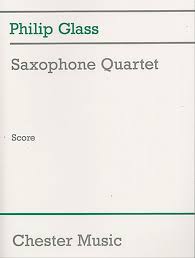
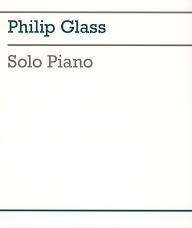


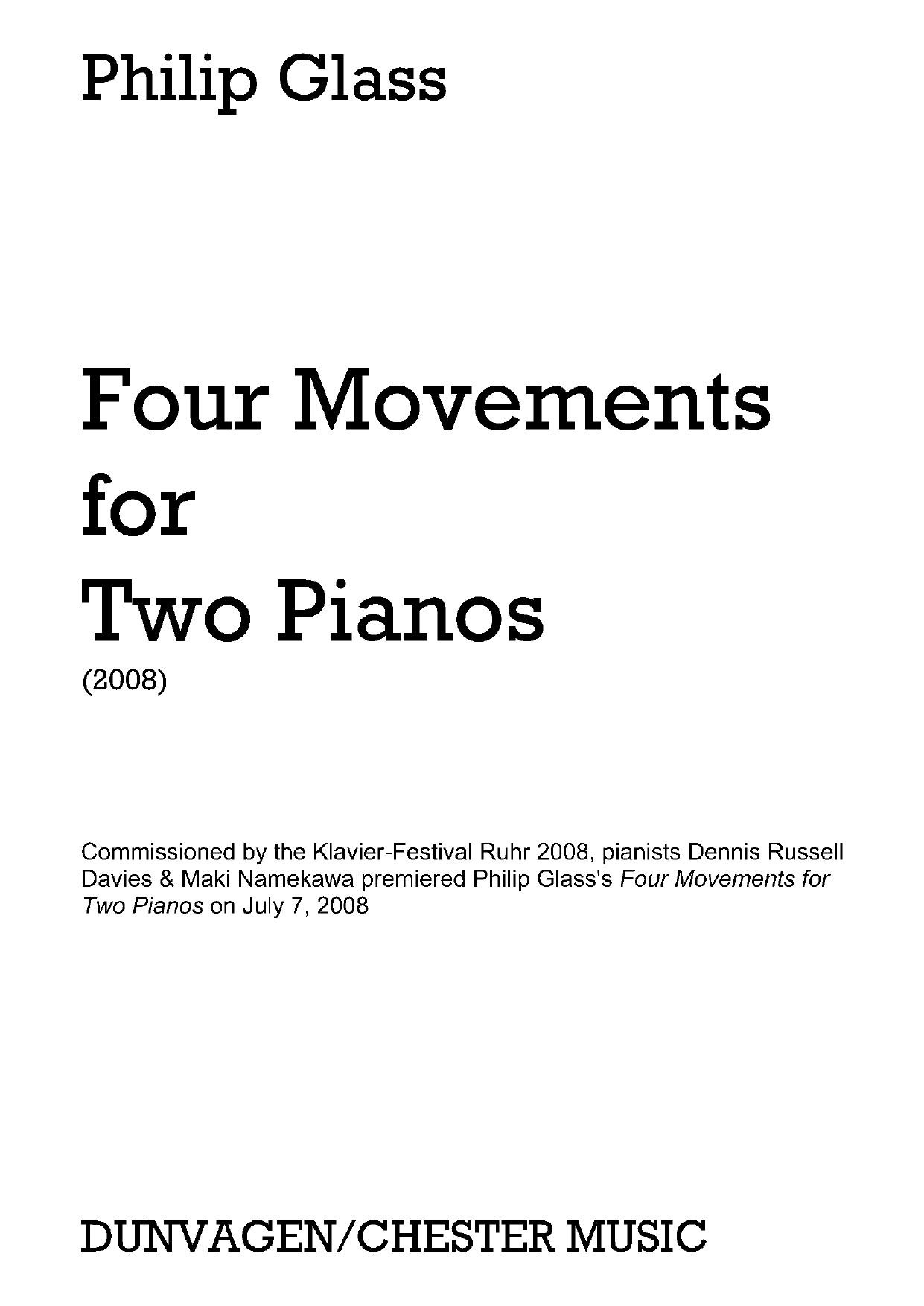
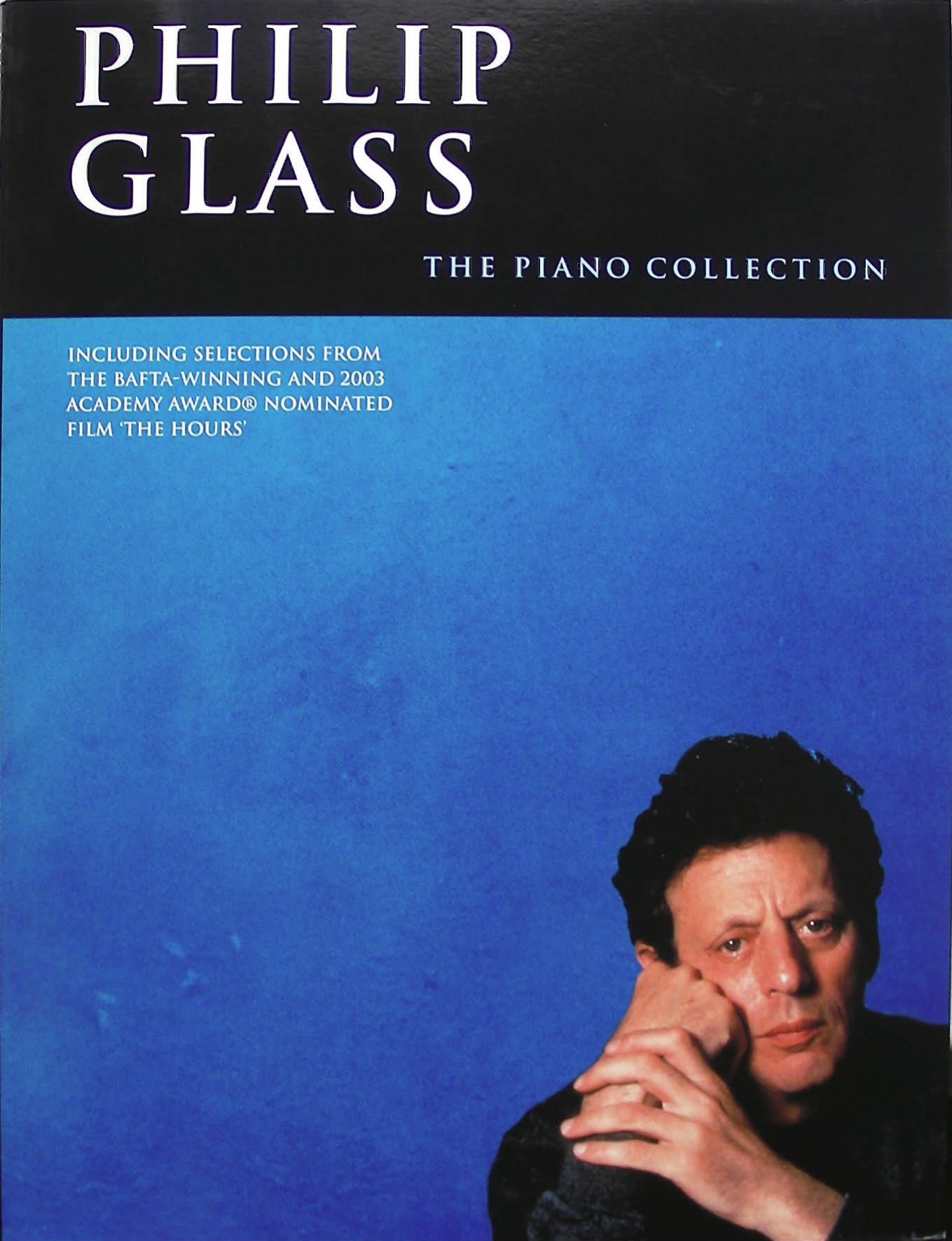


Philip Glass: The Architect of Repetition and the Sound of Modern Life
Few composers have reshaped the musical landscape of the late twentieth and early twenty-first centuries as profoundly as Philip Glass. Through his operas, symphonies, film scores, and wide-ranging collaborations, Glass has had an extraordinary and unprecedented impact upon the musical and intellectual life of his times. He is widely acknowledged as a composer who brought art music to the public, bridging the chasm between the concert hall and popular culture in a way that few of his contemporaries could match. Born in Baltimore in 1937, Glass grew up in a world of post-World War II America, absorbing the sounds of his father's record shop before embarking on a journey that would take him from the University of Chicago to the Juilliard School, from Paris under the tutelage of Nadia Boulanger to the experimental downtown scene of New York, and ultimately to a position as one of the most performed and influential composers of the modern era.
Please, subscribe to our Sheet Music Library.
From Baltimore to Paris: The Formative Years
Philip Glass was born on January 31, 1937, in Baltimore, Maryland. His early life was steeped in music, though not in the way one might expect from a future composer of avant-garde operas. His father owned a record shop, and the young Glass listened to a wide variety of music, from classical greats such as Bartók and Stravinsky to the bebop jazz of Charlie Parker. This early exposure to both the Western classical canon and the improvisational energy of jazz would later become a crucial foundation for his musical language.
Search your favorite sheet music in the Sheet Music Library Catalog
A precocious student, Glass entered the University of Chicago at the age of fifteen, where he studied mathematics and philosophy. He graduated at nineteen with a Bachelor of Arts, having immersed himself not only in his formal studies but also in the vibrant jazz and blues scene of 1950s Chicago. Following his graduation, he enrolled at the Juilliard School, where he studied composition and encountered fellow future minimalist pioneer Steve Reich. It was during this period that he also heard bebop jazz in New York, further enriching his musical vocabulary.
Dissatisfied with much of what then passed for modern music—particularly the dominant serialist orthodoxy—Glass moved to Europe. In Paris, he studied with the legendary pedagogue Nadia Boulanger, who had also taught Aaron Copland, Virgil Thomson, and Quincy Jones. Boulanger's rigorous training in harmony and counterpoint, grounded in the works of Bach, Mozart, and Schubert, gave Glass a classical technique that would underpin all his later experiments. But it was his encounter with Indian music that truly transformed his artistic trajectory. While in Paris, Glass worked closely with the sitar virtuoso Ravi Shankar, transcribing music played by the Indian master. This experience led him to adopt cyclic elements within his own works and to rethink the very nature of musical time.
Glass later recalled his early experiences with Indian music: "I [then] thought I was listening to music that was built in an additive way, but it turned out it really wasn't. It was built in a cyclic way… In Indian music (and all the non-Western music with which I'm familiar), you stake small units, or 'beats,' and string them together to make up larger time values. For my whole generation, which was dominated by serialism, this music was a breath of fresh air. It allowed us to think of music in a different way".
Philip Glass - Metamorphosis
"Metamorphosis One" – 00:00 "Metamorphosis Two" – 06:54 "Metamorphosis Three" – 13:59 "Metamorphosis Four" – 19:09 "Metamorphosis Five" – 26:29
The Birth of a New Musical Language
Returning to New York in 1967, Glass formed the Philip Glass Ensemble—a group of seven musicians playing keyboards and a variety of amplified woodwinds, fed through a mixer. This ensemble became the laboratory for his evolving musical style, which was eventually dubbed "minimalism." Glass himself never liked the term, preferring to speak of himself as a composer of "music with repetitive structures". As he later explained, "There has been nothing 'minimalist' about his output," pointing to the sheer scale and ambition of his catalogue: more than thirty operas, fourteen symphonies, thirteen concertos, soundtracks to numerous films, nine string quartets, and a growing body of work for solo piano and organ.
Glass's early works, composed between 1967 and 1975, featured rhythm as the primary structural principle, containing cyclical constructions adapted from Indian music. He combined this approach with additive and subtractive elements commonly associated with minimalist technique. In the mid- to late 1970s, Glass began to combine rhythmic elements with drones and slow harmonic rhythm, the latter influenced not only by Indian music but also by the modal jazz of John Coltrane. He also included chromatic side-stepping in many of his works, a technique used by Debussy and other composers in the early twentieth century, and employed tonal–modal hybrid constructions that sounded harmonically and melodically enigmatic.
The early period of Glass's career, the most radical phase of his "minimalist" vein, extended from approximately 1965 to 1974. Works such as Music in Twelve Parts (1971-1974) demonstrated his interest in extended reiteration of brief, elegant melodic fragments that wove in and out of an aural tapestry. In the last part of Music in Twelve Parts, the novelty lay especially in the proposal of a rudimentary and resolutely naive, postmodern harmony. This period established Glass as a central figure in the downtown experimental music scene, alongside LaMonte Young, Steve Reich, and Terry Riley, who together are considered the co-founders of minimal music.
Harmonic Language and Compositional Technique
Philip Glass's harmonic language is one of the most distinctive features of his music, and it has evolved significantly over the course of his career. In his early minimalist works, harmony was often static and slow-moving, with simple chord progressions repeated over extended periods. These musics show a minimal pattern with the continued repetition of simple harmony and figuration. Glass has attempted new sounds through a hemiola technique that allows various rhythm alterations in repetition. This technique—the simultaneous use of two different rhythmic groupings, typically two against three—creates a natural push and pull in the music, an underlying source of tension and intrigue.
Glass's harmonic approach often involves moving from one chord to another by common notes, a technique that allows him to remain within the universe of consonant chords while maintaining a sense of atonality. He employs harmonic cycles, a concept that has been analyzed in works such as Glassworks (1981). Since the 1970s, the end of his purely minimalist period, an increased importance of harmony as a structural principle became evident. The application of harmony in a more functional manner was identified as occurring in Music in Twelve Parts in the early 1970s, and this trend continued in his later works.
Glass's approach to harmony is also characterized by tonal–modal hybrid constructions that sound harmonically and melodically enigmatic. This hybridity reflects his diverse influences, from Western classical harmony to Indian ragas and modal jazz. In his film scores, such as The Hours, Glass's score features strange meter changes and unconventional chord progressions that do not align with rules in tonal harmony, though much less than in his earlier and more experimental minimalist works. The repetitive structures and harmonic cycles in his music provide a sense of continuity, which makes his style very suitable for connecting scenes and shots in film, creating a unified emotional landscape across disparate narratives.
The Portrait Operas and the Qatsi Trilogy
The mid-1970s marked a turning point in Glass's career with the creation of Einstein on the Beach (1976), a non-narrative music-theater work created with director Robert Wilson. This work solidified his reputation in the downtown arts community and served to clarify and codify his distinctive language. Described as an "Opera in Four Acts," Einstein on the Beach is structured around three key Einsteinian visual themes: the train (relativity theory), the trial/prison (the moral implications of that theory which made the atomic bomb possible), and the spaceship. The work, which lasts three and a half hours, is non-narrative and is punctuated by tableaux inspired by science and the character of Einstein. Glass's swirling score and singers intoning syllables and numbers alongside Wilson's staging of abstract aspects of Einstein's interests and influences became a significant dividing line between traditionalists and those seeking out a new late-twentieth-century aesthetic.
Following Einstein on the Beach, Glass cemented its success with two more acclaimed "portrait" operas: Satyagraha (1979) and Akhnaten (1983). Satyagraha, a lyrical reflection on Gandhi's formative years in South Africa, is considered by some to be his finest opera. Akhnaten, which premiered in 1984, is said to be more accessible than his others and remains one of the most popular operas in his output. Together with Einstein on the Beach, these three works form a trilogy of portrait operas that highlight historical figures who changed the world through the power of their ideas.
In parallel with his operatic work, Glass made a breakthrough to the mainstream with his score for Godfrey Reggio's experimental film Koyaanisqatsi (1982). This film, the first of the Qatsi trilogy, is a montage of stark, contemplative imagery without narration, and Glass's music accompanies it by aligning minimalist motifs with evolving cinematic sequences. Koyaanisqatsi, a Hopi word that translates roughly as "life out of balance," shows faceless hordes of commuters and bureaucrats moving at a frantic pace, imprisoned by technology and divorced from a ravaged environment. Set against this urban nightmare are various traditional cultures whose graceful balance and timeless rituals are rooted in the rhythms of the land. Glass's music for Koyaanisqatsi has only gained in stature over the years, and it could even be considered his first orchestral score. The collaboration between Glass and Reggio was something new when it was released, and it reinvented the relationship between music and the moving image.
The Film Scores: From Koyaanisqatsi to The Hours
Philip Glass's contribution to cinema is as significant as his contribution to the concert hall. He has racked up Oscar nominations for his scores for the films Kundun, The Hours, and Notes on a Scandal, a triptych of Academy Award-nominated scores. His many scores for documentaries are also represented through his breakthrough score for Godfrey Reggio's Koyaanisqatsi. Glass's music doesn't just accompany a film—it transforms it.
One of the highpoints of Glass's career as a composer for narrative cinema is his collaboration with Paul Schrader on Mishima: A Life in Four Chapters (1985). This "mosaic biography" interweaves moments from Mishima's life with scenes from his fiction, and Glass's pulsating structure for the film is one of its defining features. Another notable score is for the 1992 horror film Candyman, which took a strikingly different approach from the bombastic scores typical of the genre. Glass's score for Candyman—written for voice and pipe organ—is audacious and chilling, and some regarded it as his finest.
Glass also provided a new score for the classic 1931 film Dracula, performed by his long-term collaborators the Kronos Quartet. This score tweaks out the tale's emotional undercurrents, its romance and elements of the sublime, while never resorting to the trappings of a conventional horror score. His work on Errol Morris's pioneering documentary The Thin Blue Line (1988) demonstrated his ability to enhance the power of documentary storytelling. The film's critical success, aided by Glass's memorable theme that probes the events in question, saw the case re-opened.
Perhaps his most celebrated film score is for Stephen Daldry's The Hours (2002). Glass's ravishing, Oscar- and Grammy-nominated score was a key element in this acclaimed triptych of dramatic tales starring Meryl Streep, Nicole Kidman, and Julianne Moore. The score creates a temporal and emotional continuum, interweaving disparate narratives into a unified experiential field. Glass's post-minimalist techniques in The Hours interact with the film's non-linear narrative structure, using micro-variations, additive processes, and repetitive structures to intensify the emotional resonance of the film and reinforce its fragmented temporal flow across three interwoven storylines. The score features pieces such as "The Poet Acts," "Morning Passages," "Something She Has to Do," and "Choosing Life," which have become some of Glass's most beloved compositions.
Collaborations: From Bowie to Ginsberg
Glass's collaborative spirit is one of the defining features of his career. His wide-ranging collaborations with artists from every discipline—including choreographer Twyla Tharp, poet Allen Ginsberg, and filmmaker Martin Scorsese—have fascinated opera, dance, pop, and rock audiences for more than half a century. He has collaborated with Paul Simon, Linda Ronstadt, Yo-Yo Ma, and Doris Lessing, among many others.
One of his most famous collaborations is with David Bowie and Brian Eno. Glass composed his Low Symphony (1992) based on Bowie's 1977 album Low, a daring experiment in fusing art rock with electronic and ambient music. He followed this with the Heroes Symphony (1996), based on Bowie and Eno's Heroes album, and later completed the trilogy with a composition based on Lodger. The film The Hunger illustrates how Glass collaborated with Bowie and Eno on these symphonies and how these influential musicians in turn influenced each other.
Another significant collaboration was Songs from Liquid Days (1986), a collection of songs composed by Glass with lyrics by Paul Simon, Suzanne Vega, David Byrne, and Laurie Anderson. Glass began the project by scoring lyrics by Byrne and then thought to collaborate with additional songwriters. The album fused Glass's minimalist brilliance with pop sensibilities, forever changing the landscape of contemporary music. Singers on the album included Linda Ronstadt and The Roches.
Glass's collaboration with Ravi Shankar, which began in Paris in the 1960s, was particularly formative. Their work together on Passages (1990) is a testament to the cross-cultural dialogue that has been central to Glass's artistic vision. The piece "Meetings Along the Edge" from Passages has been performed by orchestras around the world. Glass also studied with Shankar's legendary tabla player Alla Rakha, deepening his understanding of Indian rhythmic structures.
Influences and Legacy
Philip Glass's influences are as diverse as his output. He was trained in harmony and counterpoint and studied composers such as Franz Schubert, Johann Sebastian Bach, and Wolfgang Amadeus Mozart with Nadia Boulanger. His encounter with Indian music, particularly through Ravi Shankar, led him to adopt cyclic elements and a different approach to rhythm that would define his style. He was also influenced by the modal jazz of John Coltrane and the chromatic techniques of Debussy. Along with LaMonte Young, Steve Reich, and Terry Riley, Glass belongs to the co-founders of minimal music.
Glass's legacy is immense. He is considered one of the most influential composers of the late twentieth century and is widely acknowledged as a composer who brought art music to the public. He is the most prolific, successful, and emulated American composer of the last quarter of the twentieth century. Although he dislikes the term, Glass is considered one of the founding fathers of Minimalism, which became something of a pop culture phenomenon and went on to influence a wide variety of musicians across musical boundaries. His works helped reinvent the sound of music for Western audiences from the late 1960s on, and over time, audiences and critics began to see him as one of the most important musical minds of the modern era.
Glass's influence extends far beyond the concert hall. His music has been used in popular culture in myriad ways, from The Truman Show to Battlestar Galactica to Pearl Jam's pre-concert music. He has become a cultural icon, reaching across generations and genres—even outside the world of music. His catalogue of visionary works—known for both hypnotic and dramatic structures and shape-shifting motifs—are landmarks of a mid-century compositional movement that pivoted from serialism and atonality toward a more direct and rhythmic style.
A Continuing Legacy
Philip Glass continues to compose and perform well into his eighties. During the COVID-19 pandemic, he continued composing, with three major works for opera and symphony premiering in 2021 and 2022. In 2015, he made The New York Times Best Seller List with his memoir, Words Without Music. His music remains a staple of concert programs worldwide, and his influence can be heard in the work of countless composers, from film scorers to indie rock musicians.
Glass once described himself as a "Classicist," pointing out that he is trained in harmony and counterpoint and studied the great composers of the Western canon. Yet his classicism is one that embraces the rhythms of the modern world—the relentless pulse of urban life, the hypnotic repetition of technology, the fragmented narratives of contemporary existence. In the end, Philip Glass's music is not minimal at all. It is maximal in its ambition, its emotional range, and its capacity to speak to the widest possible audience. As he himself has said, his music is "music with repetitive structures"—and in those repetitions, he has found an infinite world of variation, beauty, and meaning.
Through his operas, his symphonies, his film scores, and his countless collaborations, Philip Glass has created a body of work that is as vital and relevant today as it was when he first shocked audiences with Einstein on the Beach nearly fifty years ago. He has shown that art music can be popular without sacrificing its integrity, that minimal means can produce maximal effects, and that the simplest musical ideas, when pursued with rigor and imagination, can open up new worlds of feeling and thought. He is, without question, one of the defining artists of our time.
Browse in the Sheet Music Library:
Or browse in the categories menus & download the Library Catalog PDF:
Philip Glass - Music from The Hours
Philip Glass - Music from The Hours | Live & Complete | Arranged for piano solo by Michael Riesman and Nico Muhly.
0:00 The Poet Acts 3:39 Morning Passages 8:32 Something She Has to Do 11:00 I'm Going to Make a Cake 14:08 An Unwelcome Friend 17:51 Dead Things 22:23 Why Does Someone Have to Die? 25:58 Tearing Herself Away 30:13 Escape! 33:05 Choosing Life 36:05 The Hours