
Scores for all instruments: 16,000+ (active and growing), over 236,000 pages.
All genres and levels: Jazz & Blues, Rock & Pop, Classical & Contemporary, Film & Musicals;
books & biographies; methods, études, play-along tracks (MP3) for Jazz & Rock.
Access & benefits: US$15.99 one-time payment, valid for lifetime, full Library access.
Table of Contents

The best sheet music download from our Library.
For the price of a single songbook, get a full Sheet Music Library!

Please, subscribe to our Sheet Music Library. Sheet music should be accessible and affordable for all musicians, from professionals to absolute beginners.
Richard Clayderman - Ballade Pour Adeline (from A Night In Budapest) 2007
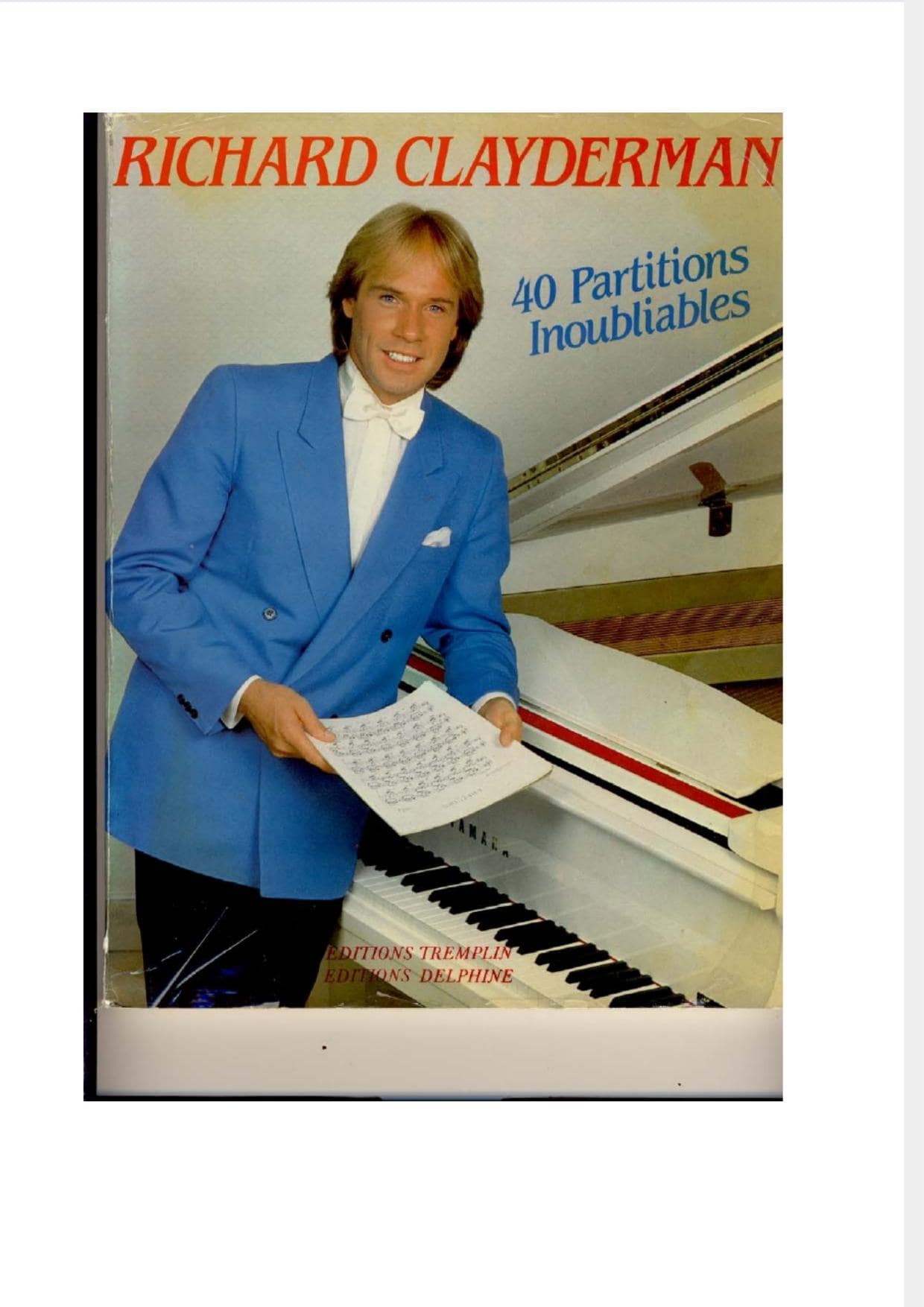
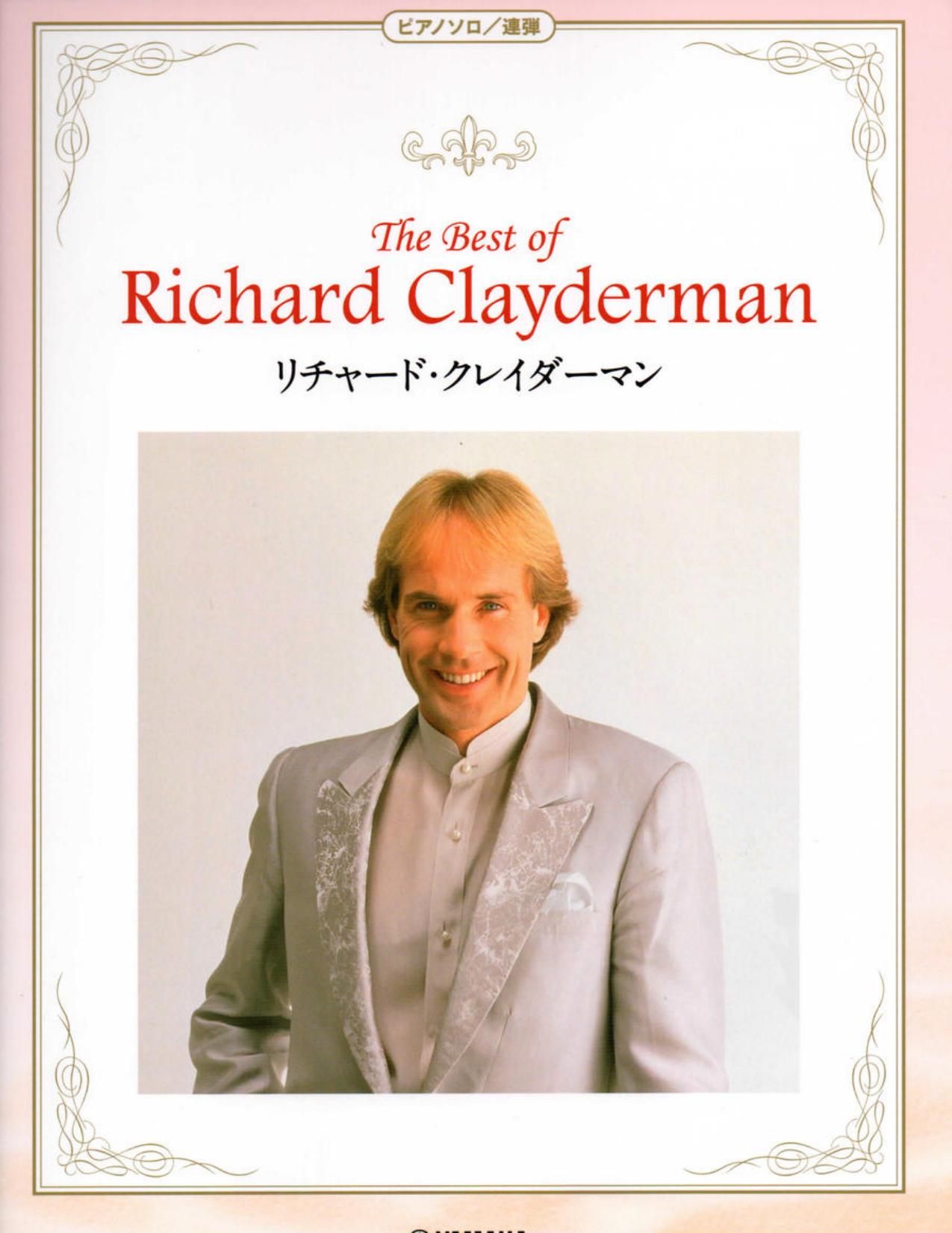
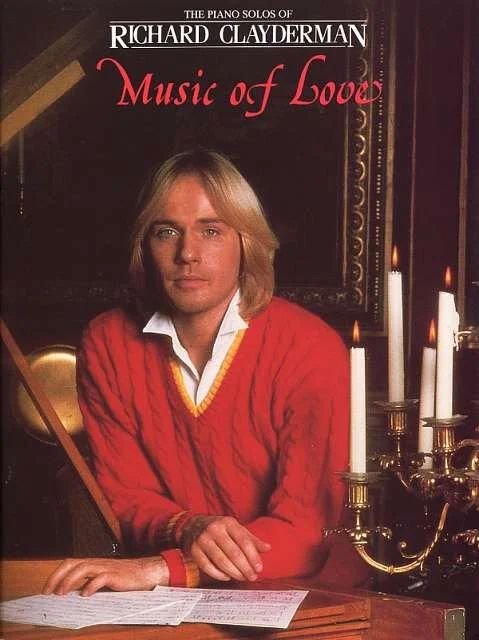
Richard Clayderman: The Prince of Romantic Piano – A Comprehensive Portrait
Few instrumentalists have achieved the kind of global, cross-cultural ubiquity enjoyed by Richard Clayderman. For more than four decades, his cascading arpeggios and tender, unhurried melodies have served as the soundtrack to countless weddings, quiet evenings, and moments of reflection. Recognized by the Guinness Book of World Records as “the most successful pianist in the world,” Clayderman is not merely a musician but a cultural phenomenon, one who bridged the gap between classical technique and popular sentiment, selling an astonishing number of records in the process.
Search your favorite sheet music in the Sheet Music Library Catalog


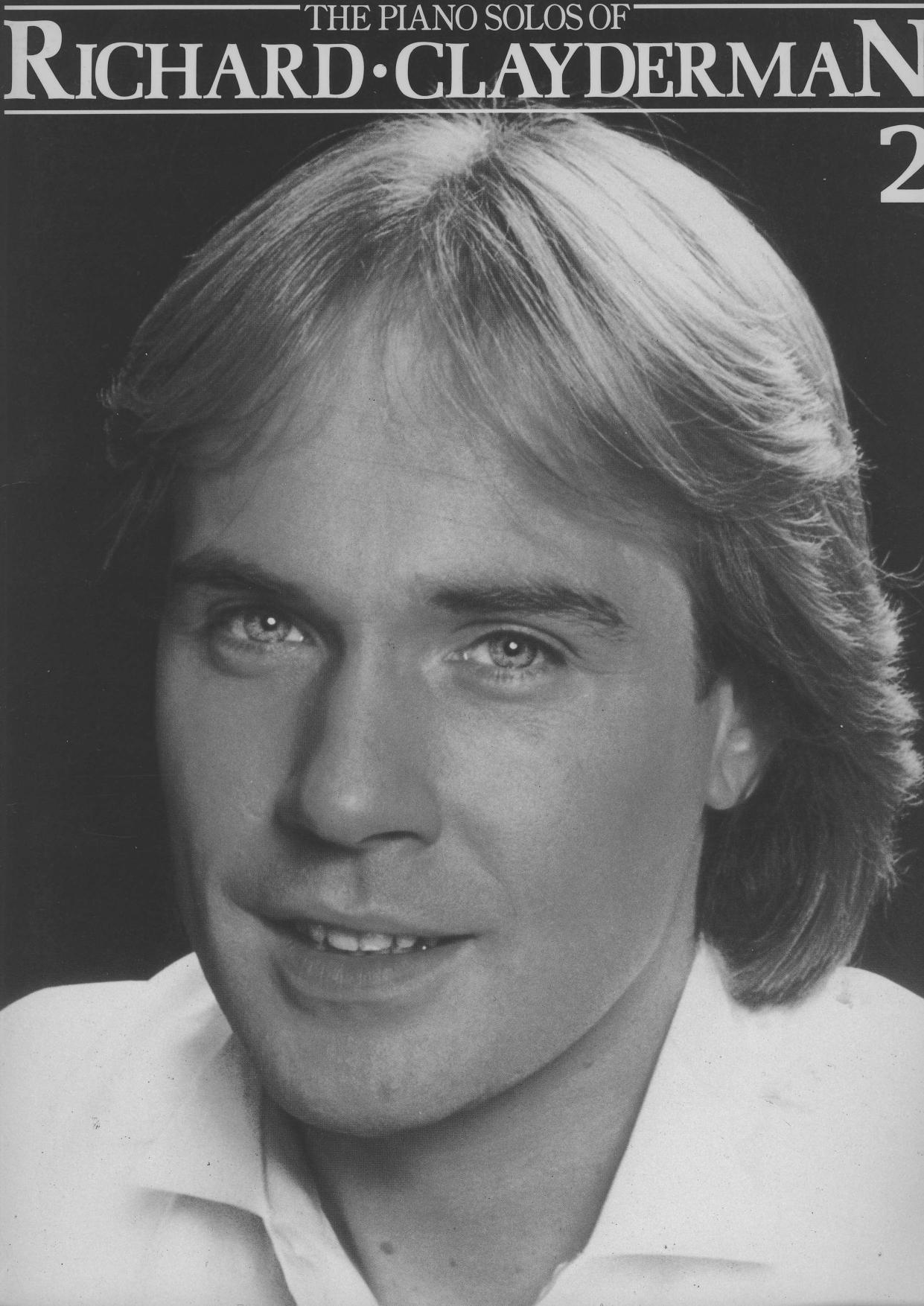
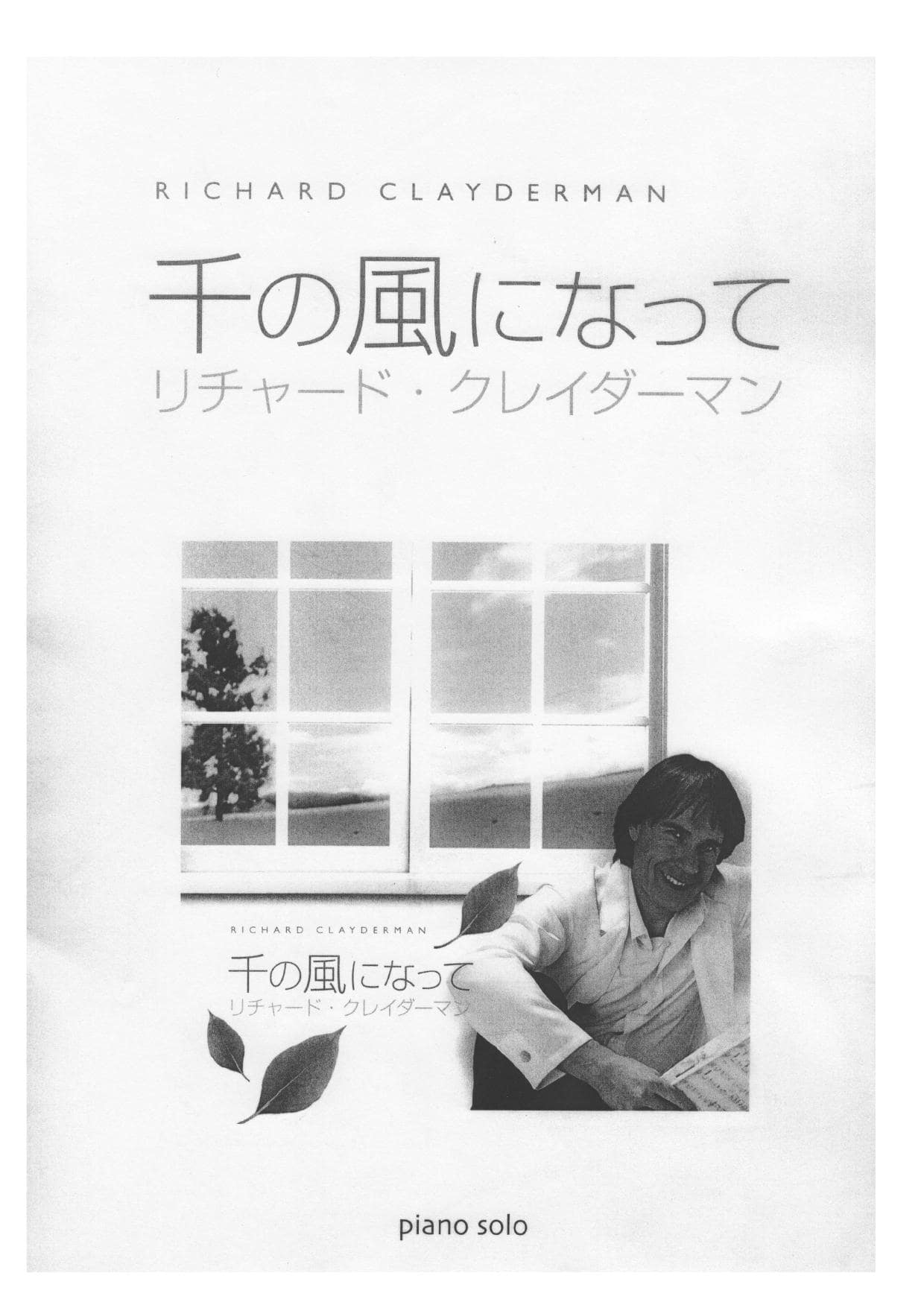
Early Life and the Making of a Pianist
Born Philippe Robert Louis Pagès in Paris on December 28, 1953, Clayderman’s path to the piano was almost preordained. His father, an accordion teacher and later a piano teacher, introduced him to the instrument at a very young age. The young Philippe displayed prodigious talent. By the age of twelve, he had been accepted into the prestigious Conservatoire de Paris, a crucible for classical excellence. There, he studied with rigor, and his later adolescent years were marked by notable acclaim, with a particular affinity for the music of Chopin, whose romantic lyricism would subtly inform his own mature style.
However, a promising career as a classical concert pianist was not to be. Financial difficulties, precipitated by his father’s illness, forced Philippe to leave the Conservatoire. To support himself, he took a series of day jobs, working as a bank clerk, while also finding employment as an accompanist and session musician for contemporary bands and singers. This period proved to be an invaluable, if unconventional, education. He accompanied French icons such as Johnny Hallyday, Thierry Le Luron, and Michel Sardou, learning the craft of collaboration, the demands of the recording studio, and the art of adapting his playing to serve a song and a singer. It was a grounding in versatility that would serve him well.
The Audition That Changed Everything: Ballade pour Adeline
The pivotal moment arrived in 1976. The French record producer Olivier Toussaint and his partner, the composer Paul de Senneville, were searching for a pianist to record a gentle ballad. De Senneville had composed the piece as a tribute to his newborn daughter, Adeline. The 23-year-old Philippe Pagès auditioned alongside twenty other pianists for the job. He was chosen. Toussaint later recalled, “He was an interesting musician with a soft touch and good technique. And he looked good, too”.
The decision was transformative. Philippe adopted the stage name Richard Clayderman, drawing on his great-grandmother’s surname to avoid the mispronunciation of “Pagès” outside of France. The resulting single, Ballade pour Adeline, was a sensation. It sold an estimated 22 million copies across 38 countries, instantly establishing him as a household name in the world of easy listening and romantic piano. The piece’s success was not a fluke; it possessed an innate, almost universal appeal—a tender, repeating melodic motif supported by a lush, flowing accompaniment that felt both intimate and expansive. It became the foundation upon which an entire career was built.
Musical Style, Harmony, and Technique
Richard Clayderman’s music is often categorized under the broad umbrellas of easy listening and new age, but his style is more specific: a distinct form of romantic crossover piano. His artistry is defined by a consistent aesthetic of accessibility, emotional directness, and polished beauty. This is not the intellectual romanticism of a Brahms or a Schumann, but a popular, melodic romanticism designed to soothe and charm.
At the heart of the Clayderman sound is a particular approach to harmony. His arrangements, whether original compositions by de Senneville or his own adaptations of popular and classical pieces, frequently employ lush, consonant chord progressions. While not harmonically adventurous in a jazz or modernist sense, his harmonic language is carefully calibrated to maximize emotional warmth. He often uses extended chords—major sevenths, ninths, and suspended chords—to create a shimmering, open quality in the upper register. The progressions are often cyclic and predictable, which is key to their memorability and comfort, but they are voiced with a rich, full-bodied texture. A characteristic feature, noted in analyses of his style, is the heavy use of arpeggios and broken chords not just in the left-hand accompaniment, but also woven into the right-hand melody, adding a constant sense of movement and sparkle to the musical fabric.
His technique is a fascinating study in serving the music rather than showcasing the performer. While trained at the Conservatoire, Clayderman’s playing is often described as deliberately non-virtuosic in a flashy sense. Instead, his technical command is channeled into a specific set of expressive tools. The most defining is his touch. Critics and observers have repeatedly noted his “soft touch” and the “crystal clear” quality of his sound. His large hands are said to touch the keys with a cotton-like softness, producing a tone that is warm, rounded, and devoid of percussive harshness. He achieves a remarkable evenness of articulation, with “clear passing passages” and a masterful control over dynamic gradations, allowing him to swell and recede with subtlety.
Another crucial element of his technique is his phrasing and timing. Clayderman is a master of rubato on a micro-scale. His playing is anything but mechanically predictable; his rhythms “surge and fall,” and his sense of timing is described as “exquisite”. He often applies a gentle push-and-pull to the melodic line, slowing down for a poignant moment and then easing back into the tempo, a technique that mimics the natural inflections of a human voice or a pop singer’s delivery. This is often referred to as a “lyrical” or “vocal” approach to the piano, prioritizing a singing, emotionally resonant melody over strict rhythmic adherence. This combination of a gentle touch, ringing arpeggios, and vocal phrasing creates the signature “Clayderman sound”: a sonic embrace that is at once sophisticated in its execution and immediately accessible in its emotional impact.
The Best Songs and Compositions: A Romantic Canon
While Ballade pour Adeline remains his signature, Clayderman’s catalogue is vast, comprising over 1,300 recorded melodies. His most enduring works fall into three categories: original compositions by his production team, arrangements of classical pieces, and instrumental covers of popular songs and film themes.
Among his original compositions, several have become staples of his repertoire and are instantly recognizable to his fans. A Comme Amour (often translated as Autumn Leaves or Like Love) is a quintessential example of his style, featuring a soaring, romantic melody over a bed of flowing arpeggios. Souvenirs d’enfance (Childhood Memories) is a nostalgic, tender piece that showcases his ability to evoke a gentle melancholy. Mariage d’amour (Wedding of Love or Dream Wedding) has become one of his most beloved pieces, particularly in Asia, where it is a standard at wedding ceremonies and is seen as a symbol of romantic purity. Nostalgy (Homesickness) demonstrates his skill with a more restrained, contemplative mood, using space and delicate phrasing to convey longing. Lettre à ma Mère (Letter to My Mother) is another cornerstone, a deeply personal and melodic tribute that resonates with audiences worldwide.
His classical adaptations are equally significant in his discography. His rendition of Beethoven’s Für Elise (For Elise) transforms the familiar bagatelle into a warm, pop-inflected romantic miniature, making it accessible to a new generation of listeners. He has also famously interpreted Debussy’s Clair de Lune and Arabesque, applying his signature soft-focus lens to these impressionist masterpieces. These are not scholarly readings but popular re-imaginings, designed to highlight the inherent beauty of the melodies.
His pop and film covers form another pillar of his success. His version of Nino Rota’s Romeo and Juliet (from the 1968 film) is a masterclass in romantic arrangement, turning the tragic theme into a sweeping, heart-on-sleeve piano ballad. His take on Francis Lai’s Love Story theme (Where Do I Begin) is similarly iconic, capturing the bittersweet essence of the film. He has also had great success with L’amour est Bleu (Love is Blue) and has covered everyone from The Beatles (Yesterday) to ABBA, always filtering the source material through his own distinctive, romantic prism.
Richard Clayderman in Film: The Sound of Romance
While Clayderman is not primarily known as a film composer in the traditional sense, his music has had a significant presence in cinema, both as a source of soundtrack material and as a subject of documentary. His own composition, Ballade pour Adeline, and his other romantic pieces have been licensed extensively for use in films, television shows, and advertisements, often to signal a moment of tenderness, nostalgia, or sophisticated romance.
More directly, he has released several albums dedicated to film music, cementing his association with the cinematic. His 1985 album Divorce à Hollywood / Irreconcilable Differences was a soundtrack album for the film of the same name, featuring his performances. He also released a full album dedicated to the work of the legendary Italian composer Ennio Morricone, titled The Fantastic Movie Story of Ennio Morricone (1990). More recently, compilations like Movie Favourites (2017) and Cinema Feelings (2025) collect his interpretations of iconic themes.
The track lists of these albums read like a history of film music: Love Story, Chariots of Fire, Merry Christmas Mr. Lawrence, Flashdance… What a Feeling, Romeo and Juliet, The Way We Were, The Thorn Birds, Over the Rainbow, a Harry Potter Melody, Exodus, Moon River, Titanic Symphony, Cavatina (from The Deer Hunter), Tara’s Theme (from Gone with the Wind), and Schindler’s List, the latter often performed in collaboration with Chinese pipa player Zhao Cong. Through these recordings, Clayderman has become a conduit for film music, re-presenting these familiar melodies in his own gentle, piano-centric idiom, ensuring their continued life in a different context.
A Spirit of Collaboration: Bridging Musical Worlds
Despite the solitary nature of a solo pianist’s work, Clayderman has consistently sought out collaborations that broaden his musical horizons and introduce his sound to new audiences. These partnerships reveal a genuine curiosity and a willingness to step outside his comfort zone.
One of his most notable cross-cultural projects was the 2003 album Confluence, a collaboration with the Indian santoor maestro Rahul Sharma, son of the legendary Pandit Shivkumar Sharma. The album was a true fusion of sensibilities, blending Clayderman’s classical-influenced piano with the shimmering, resonant tones of the santoor, supported by Indian percussion, flute, and guitar. Tracks like “Together” and “Jaisalmer” created a unique musical space where French romanticism met the intricate ragas of India, and the project was mixed partly in France and partly in India to achieve a perfect balance of cultural ideas. The two musicians continued to perform together, including a memorable concert in Chennai in 2019.
Clayderman’s connection with Asia, particularly China, is profound, and he has actively collaborated with Chinese artists. He has performed with the renowned erhu player Feng Huang, uniting piano with traditional Chinese instruments like the pipa, dizi, and guzheng. In 2022, he participated in a “cloud duet” with Chinese guzheng player Peng Jingxuan, performing the folk song Liuyang River. He has also recorded with artists such as singer Zhang Ye and pipa player Zhao Cong.
In the Western world, he has collaborated with a diverse array of musicians. He recorded albums with German bandleader James Last, including Il Y A Toujours du Soleil Au-Dessus des Nuages (1990), and with the Royal Philharmonic Orchestra. He has worked with Romanian pan flute virtuoso Gheorghe Zamfir, French guitarist Nicolas de Angelis, and Dutch singer Berdien Stenberg. More recently, he recorded a music video for the song “Wedding of Love” with the young Romanian singer Miriam Alice Vultur, demonstrating his continued willingness to mentor and collaborate with new talent. These collaborations paint a picture of an artist who, far from being isolated, uses his platform to create musical dialogues across genres and geographies.
Awards, Achievements, and a Record-Breaking Career
The statistical achievements of Richard Clayderman’s career are staggering and place him in a rarefied stratum of recording artists. He has sold an estimated 90 million albums worldwide, a figure that continues to grow. This commercial success is underpinned by an incredible haul of certifications: 267 Gold Discs and 70 Platinum Discs to his name. He has recorded over 1,400 songs and performed in more than 2,000 concerts globally. It is for these cumulative achievements that the Guinness Book of World Records officially recognized him as the “most successful pianist in the world”.
Beyond the sales figures, he has received critical and popular recognition in various forms. In China, a market he has cultivated since his first concert there in 1992, he was honored with a Special Award for Outstanding Performance and a Best Promotion Award at the Second “Top Ten Performing Arts Events in China” selection. His concerts are renowned for their captivating atmosphere, where he seamlessly blends classical repertoire with popular music in a romantic setting. His popularity in Asia is so enduring that his melodies have been broadcast on radio there since the mid-1980s, and he is credited with inspiring a generation of Chinese people to learn the piano.
Influences and the Shaping of a Style
Clayderman’s primary influence is undeniably Frédéric Chopin. His time at the Paris Conservatoire was spent deeply immersed in Chopin’s music, and the Polish composer’s gift for lyrical, emotionally charged melody and his use of rubato left an indelible mark on the young pianist. However, Clayderman took these classical tools and applied them to a popular idiom. He was also influenced by the easy listening and light orchestral music of the mid-20th century, as well as the work of pianists like Ray Conniff, who specialized in instrumental arrangements of popular songs. His style is a synthesis: the melodic sensitivity of Chopin, the lush arrangements of light orchestral pop, and the direct emotional communication of a singer-songwriter, all filtered through his own gentle, understated personality.
Legacy: The Prince of Romance and His Enduring Impact
The legacy of Richard Clayderman is multifaceted. Commercially, he is a titan, proving that instrumental piano music can achieve mass-market success on a global scale. Culturally, he is a bridge-builder. In Asia, and particularly in China, he is revered not just as a musician but as a cultural ambassador who introduced Western romantic piano to millions. His “gentlemanly image,” consistent with a certain perception of a Western “Prince Charming,” played a significant role in his Asian popularity, but it was his music—accessible, beautiful, and emotionally direct—that solidified it. He is credited with inspiring countless individuals to take up the piano, democratizing an instrument that was often perceived as elitist.
His nickname, the “Prince of Romance,” bestowed upon him by former US First Lady Nancy Reagan, perfectly encapsulates his public persona and musical offering. He provides a soundtrack for love, nostalgia, and tranquility. While some classical purists may dismiss his easy-listening approach, his artistic significance lies not in pushing the boundaries of harmony or technique, but in his mastery of a specific, emotionally resonant vernacular. He created a “new romantic style” that combines original compositions with classical and pop standards, a formula that has proven remarkably durable.
In his eighth decade, Richard Clayderman remains active. He continues to tour, record, and collaborate, with new albums like Forever Love (featuring arrangements of Coldplay songs) showing that his romantic prism can be applied to contemporary pop as effectively as it was to Chopin and Beethoven. His legacy is not just a collection of hit records, but a defined aesthetic—a promise of beauty, comfort, and elegance in a chaotic world. He has shown that the piano, in the right hands and with the right touch, can speak a universal language of the heart, and in doing so, he has secured a permanent place in the history of popular music.
Browse in the Sheet Music Library:
Or browse in the categories menus & download the Library Catalog PDF:
Discography
Studio albums, 1977–2022
- Richard Clayderman (aka Ballade pour Adeline, 1977)
- A Comme Amour/Les Fleurs Sauvages (1978)
- Rêveries (1979)
- Lettre à Ma Mère (1979)
- Medley Concerto (1979)
- Les Musiques de l’Amour (1980)
- Rondo Pour un Tout Petit Enfant (1981)
- Christmas (1982)
- Rêveries No. 2 (1982)
- Couleur Tendresse (1982)
- Les Rêves d'Amour (aka A Dream of Love, 1983)
- Le Premier Chagrin d’Elsa (1983)
- Italie Mon Amour (1984)
- The Music of Love (1984)
- Cœur fragile (1984)
- Concerto (with the Royal Philharmonic Orchestra, 1985)
- Divorce à Hollywood/Irreconcilable Differences (soundtrack, 1985)
- From Paris with Love (1985)
- Les Sonates (with Nicolas de Angelis, 1985)
- A Romantic Christmas (1985)
- Hollywood and Broadway (1986)
- Romantic (1986)
- Eléana (1987)
- Songs of Love (1987)
- A Little Night Music (1988)
- Deutsche Volkslieder (with the Schöneberger Sängerknaben, 1988)
- Quel Gran Genio Del Mio Amico – Richard Clayderman Interpreta Lucio Battisti (1988)
- Romantic America (1988)
- Zodiacal Symphony (1988)
- The Love Songs of Andrew Lloyd Webber (1989)
- Amour Pour Amour (with Berdien Stenberg, 1989)
- Il Y A Toujours du Soleil Au-Dessus des Nuages (with James Last, 1990)
- My Classic Collection (1990)
- The Fantastic Movie Story of Ennio Morricone (1990)
- Anemos (1990)
- Plays ABBA (1993)
- The Confluence (2003)
- Romantique (2013)
- Forever Love (2022)
Live albums
- En Concert (1981)
- A Pleyel (with Nicolas de Angelis, 1983)
- Brasil Tour ’86 (Brazil, 1986)
- Concert under the stars (Japan 1983)