Scores for all instruments: 16,000+ (active and growing), over 236,000 pages.
All genres and levels: Jazz & Blues, Rock & Pop, Classical & Contemporary, Film & Musicals;
books & biographies; methods, études, play-along tracks (MP3) for Jazz & Rock.
Access & benefits: US$15.99 one-time payment, valid for lifetime, full Library access.
Table of Contents
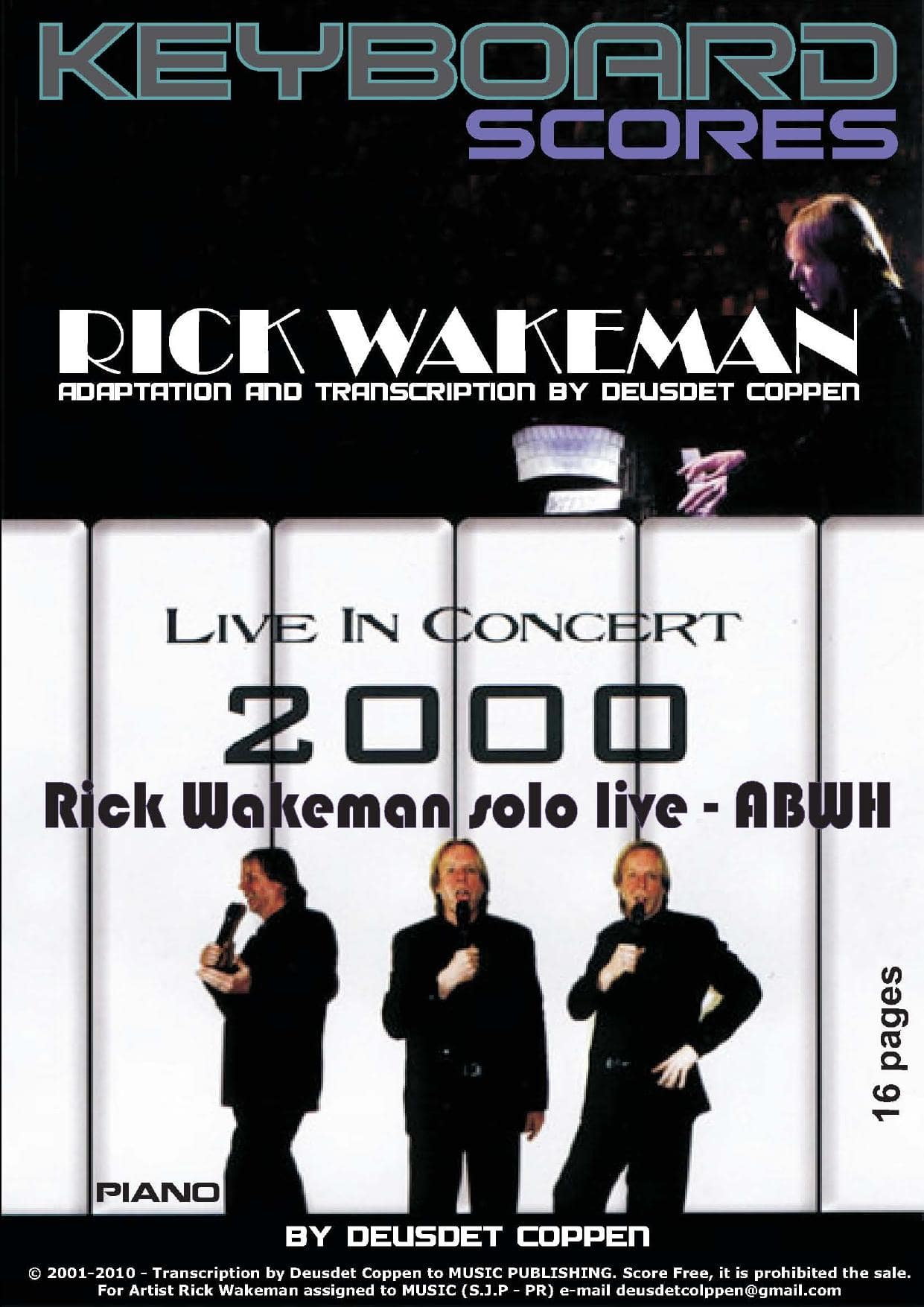
Rick Wakeman
Search your favorite sheet music in the Sheet Music Library Catalog

The best sheet music download from our Library.
For the price of a single songbook, get a full Sheet Music Library!

Please, subscribe to our Sheet Music Library. Sheet music should be accessible and affordable for all musicians, from professionals to absolute beginners.
Rick Wakeman - Journey to the Center of the Earth
Rick Wakeman: The Caped Crusader of the Keyboard
Few musicians have shaped the sound and spectacle of progressive rock as profoundly, or as flamboyantly, as Richard Christopher Wakeman (Rick Wakeman). Born on 18 May 1949 in Perivale, West London, Wakeman—universally known as Rick—has built a career that defies easy categorisation. He is, by turns, a classical piano prodigy, a session musician of legendary efficiency, the defining keyboardist of Yes, a creator of grandiose solo concept albums, a film composer, a television presenter, and a self-deprecating raconteur. Across a career spanning more than five decades and over one hundred solo albums, Wakeman has sold tens of millions of records and cemented his place as one of the most influential and recognisable instrumentalists in rock history.
A Biography in Movements
Wakeman’s musical journey began almost by accident. The only child of Cyril and Mildred Wakeman, he grew up in a house where music was a casual family activity; hearing his father and relatives play the piano on Sunday evenings sparked a lifelong obsession. His father, a former pianist in Ted Heath’s big band, took him to a performance of Prokofiev’s Peter and the Wolf, an experience that Wakeman has repeatedly cited as formative. Formal lessons with Dorothy Symes began at age seven and continued for eleven years; she recalled that he “passed everything with a distinction” but lacked discipline when it came to practising. Despite this, he won numerous competitions and awards across London, and by his teens had added the clarinet and church organ to his arsenal.
In 1968, Wakeman won a scholarship to the Royal College of Music, intending to become a concert pianist. The reality of the college—where “everyone else there was at least as good as me; and a lot of them much better”—led him to switch to a teacher’s course, though he continued to study orchestration under Philip Cannon, whose influence on his compositional approach would prove lasting. More importantly, Wakeman was already being drawn into the vibrant London session scene. A chance encounter at a music shop led to his first recording session, and he soon became one of the most in-demand keyboard players in the city, earning the nickname “One Take Wakeman” for his ability to deliver what was needed with minimal fuss.
His early session credits read like a roll call of early-1970s rock royalty. He played Mellotron on David Bowie’s “Space Oddity,” piano on Bowie’s Hunky Dory (including the iconic parts on “Changes,” “Oh! You Pretty Things,” and “Life on Mars?”), Hammond organ on Elton John’s Madman Across the Water, and the unforgettable piano introduction to Cat Stevens’ “Morning Has Broken”. He also contributed to T. Rex’s “Get It On” and albums by Lou Reed and Al Stewart. Bowie, in particular, left a deep impression: “David was incredibly influential to me,” Wakeman later said. “I learned more about how to work in a studio from David than anybody”.
In 1970, Wakeman joined the folk-rock group the Strawbs, and his virtuosity—particularly his extended solo piano piece “Temperament of Mind”—brought him national attention, with Melody Maker dubbing him “tomorrow’s superstar”. The following year, he faced a pivotal choice. On the same day, Bowie invited him to join the Spiders from Mars, and Chris Squire of Yes asked him to replace Tony Kaye. Wakeman chose Yes, and during his very first session with the band, “Heart of the Sunrise” and “Roundabout” were assembled. His arrival in August 1971 was front-page news, and his earnings immediately soared.
Wakeman’s first tenure with Yes, from 1971 to 1974, produced some of the most beloved albums in progressive rock: Fragile (1971), Close to the Edge (1972), Yessongs (1973), and Tales from Topographic Oceans (1973). His contributions—the swirling Hammond organ, the searing Moog leads, the cascading piano arpeggios—became integral to the band’s sound. Yet his solo ambitions were already pulling him away. In 1973, he released The Six Wives of Henry VIII, an instrumental concept album that became a surprising commercial triumph and established him as a solo star in his own right.
The mid-1970s were the peak of Wakeman’s commercial imperial phase. Journey to the Centre of the Earth (1974), a live recording of his Jules Verne adaptation performed with the London Symphony Orchestra and the English Chamber Choir, reached number one in the UK and number three in the US. The Myths and Legends of King Arthur and the Knights of the Round Table (1975) continued the formula of symphonic rock grandeur, reaching number two in the UK. He formed his own band, the English Rock Ensemble, and toured the world with elaborate stage productions that featured ice rinks, orchestras, and choirs—spectacles that embodied both the ambition and the excess of progressive rock’s golden age.
The late 1970s and 1980s brought uneven fortunes. The rise of punk made Wakeman’s brand of classically inflected pomp seem increasingly unfashionable, and two divorces left him in financial difficulty. Yet he remained prolific. No Earthly Connection (1976) was a more personal, science-fiction-inspired work. 1984 (1981), his adaptation of George Orwell’s novel with lyrics by Tim Rice, was his most popular album of the period, and the single “Glory Boys” from Silent Nights (1985) gave him a minor pop hit. He also expanded into television, hosting the show GasTank, and explored new age, ambient, and Christian music with albums like Country Airs (1986) and The Gospels (1987).
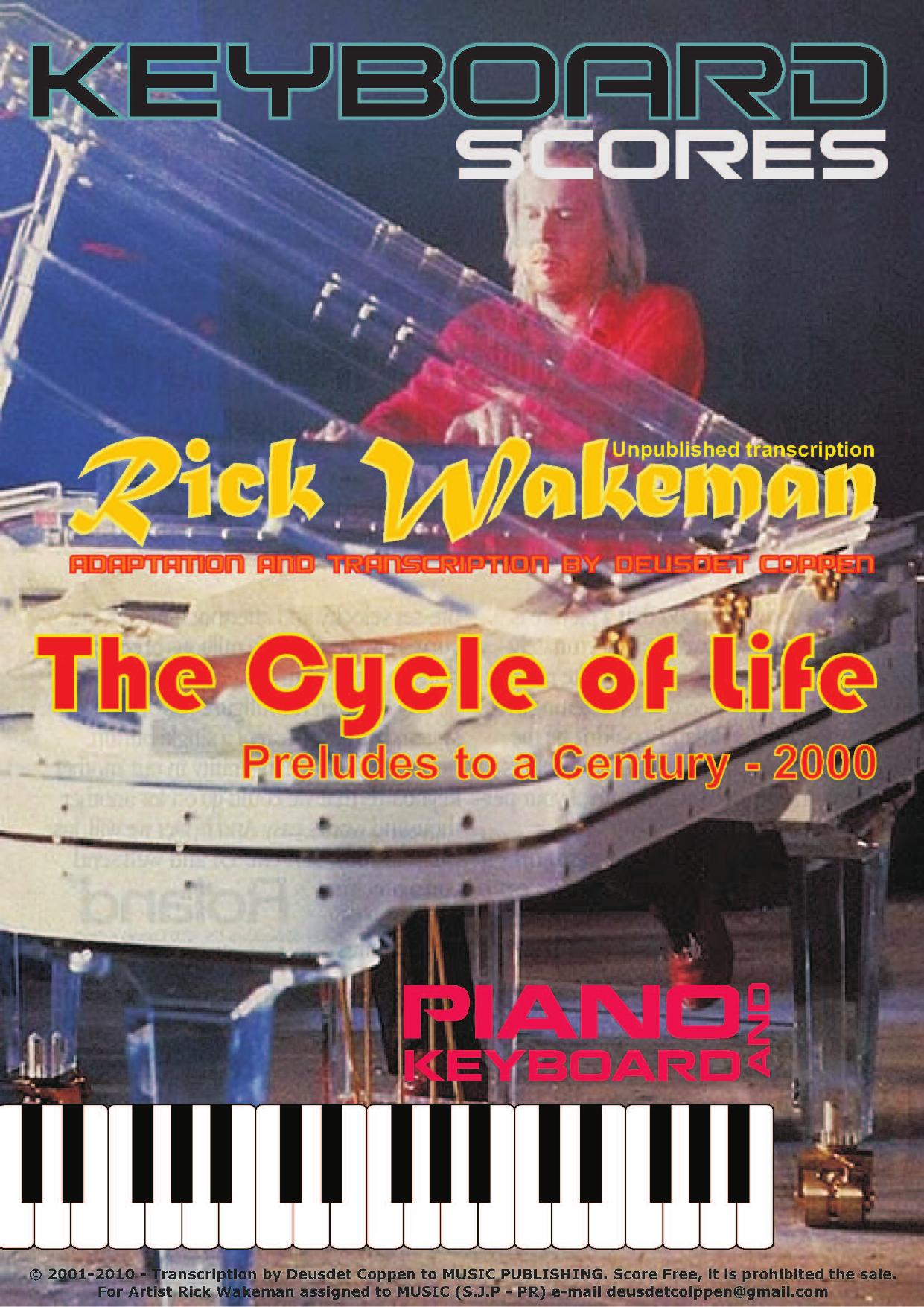
Wakeman’s relationship with Yes remained a recurring theme. He returned for a third period from 1989 to 1992, beginning with the Anderson Bruford Wakeman Howe project and culminating in the Union album. A fourth tenure followed in the mid-1990s, and a fifth between 2002 and 2004. His most significant solo album of the 1990s was Return to the Centre of the Earth (1999), a sequel to his 1974 masterpiece that gave him his first UK Top 40 album in eighteen years. In 2017, his piano album Piano Portraits achieved something even more remarkable: his first UK Top 10 album since 1975. He was inducted into the Rock and Roll Hall of Fame as a member of Yes that same year, and in 2021 he was awarded a CBE for services to music and broadcasting.
Musical Style, Harmony, and Technique
Rick Wakeman’s playing is instantly identifiable, a fusion of classical discipline, rock energy, and an almost theatrical sense of drama. His style is built on several foundational pillars, each of which can be traced to his training and his instincts as a showman.
The most famous element is his use of arpeggios. Wakeman himself has acknowledged this tendency with characteristic humour: “I’m very fond of sticking arpeggios in all over the shop, which sometimes gives the impression of chord changes when you don’t actually have any”. His arpeggios are rarely mere decoration. In a Yes context, as heard in the final verse of “Heart of the Sunrise,” his fast piano arpeggios with irregular, unpredictable changes in contour compete for the listener’s attention with the lead vocal, demonstrating what analysts have called “agential accompaniment”—the keyboardist asserting an independent melodic and rhythmic identity even within a dense ensemble. The “trademark Wakeman arpeggios” are a constant presence, whether in the frenetic solo passages of “Starship Trooper” or the more restrained flurries of his solo piano albums.
Harmonically, Wakeman’s approach is rooted in a classical understanding of voice leading and tension, filtered through a rock sensibility. He has a particular fondness for suspensions and pedal points: “I’m very fond of having suspensions, by having the same bass note under a series of chords because it always gives the impression if the chords are changing that you’re going to end up on the same spot again”. He describes building chord sequences over a static C bass—C, Ab/C, Eb/C, F/C, Ab/C, Bb/C, back to C—a technique that creates harmonic motion and ambiguity while anchoring the music to a single tonal centre. He also frequently employs a technique of playing a series of chords with the same note on top, creating a linear melodic thread through shifting harmonic colours.
His classical training under Philip Cannon instilled in him a boldness of orchestration and a refusal to play safe. “He taught me to be bold, not to be frightened of things going wrong,” Wakeman recalled. “If you go for safety you end up with safety, and safety never has any longevity”. This philosophy informs his use of the keyboard as an orchestral instrument in its own right, layering Moog synthesizers, Mellotrons, Hammond organs, and acoustic pianos to create dense, textural walls of sound. In Yes, this approach contributed to the band’s “classical principle” of composition, where large-scale forms are articulated through modal and scalar processes rather than conventional functional tonality.
Wakeman’s technique is also marked by a deliberate avoidance of idiomatic rock keys. “I always pick on keys that are alien to other instruments,” he explained. “Guitar players inherently enjoy playing… around your Es and As and your Bs and Ds. Invariably I will write in Bb, Db, or Gb”. By forcing himself out of familiar fingering patterns, he generates fresh melodic and harmonic ideas, a compositional strategy that contributes to the unconventional sound of his work. He also prefers to write on the piano, believing that “if it’ll sound good on piano you can adapt it to anything”. This piano-centric approach gives even his most synthesizer-heavy productions a strong melodic and harmonic foundation.
The Best Songs and Compositions
Wakeman’s catalogue is vast, but a handful of works stand as essential landmarks.
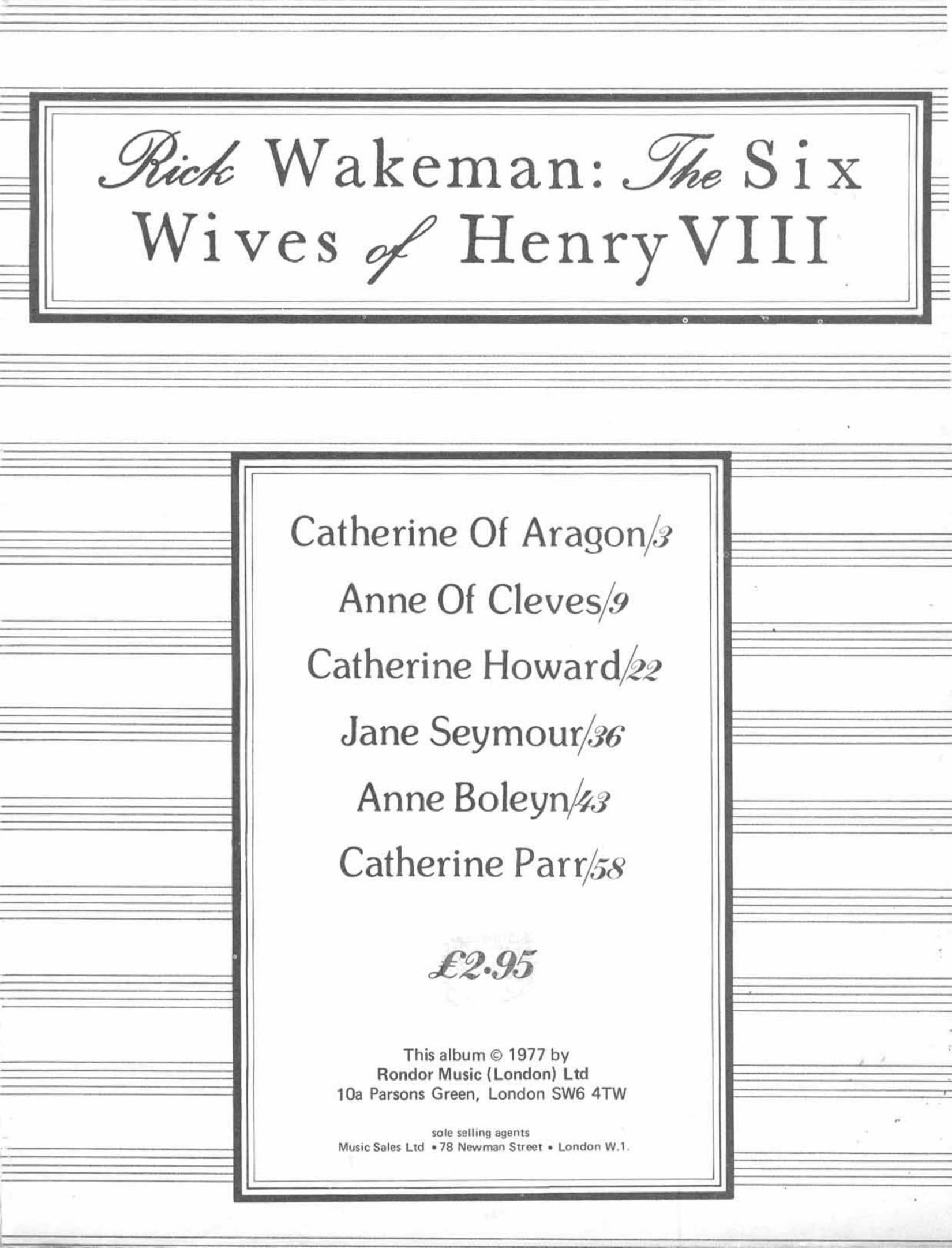
The Six Wives of Henry VIII (1973) remains his most influential solo statement. An instrumental concept album without lyrics, it consists of six pieces, each a musical portrait of one of Henry’s queens. “Catherine of Aragon” is a majestic, multi-sectional opener that showcases Wakeman’s ability to blend classical motifs with rock rhythms; it became a staple of his solo showcases during Yes concerts. The album reached number seven in the UK and number thirty in the US, earning a Gold record and proving that a keyboardist could be a headlining solo artist.
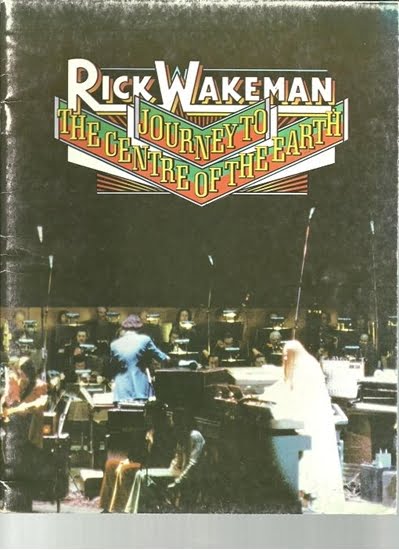
Journey to the Centre of the Earth (1974) is his most ambitious and commercially successful work. A forty-minute adaptation of Jules Verne’s novel, it is divided into four sections—“The Journey,” “Recollection,” “The Battle,” and “The Forest”—and features orchestra, choir, rock band, and narration. The music is sweeping and cinematic, moving from hushed, mysterious passages to thunderous, fortissimo climaxes. Its live premiere at the Royal Festival Hall was a cultural event, and the album’s number-one UK chart position confirmed Wakeman as a major star beyond Yes.
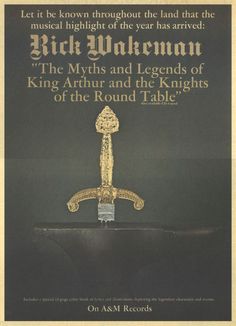
The Myths and Legends of King Arthur and the Knights of the Round Table (1975) continued the symphonic rock formula. The track “Arthur” is a quintessential Wakeman composition: a grandiose, multi-part epic with fanfare-like synthesizer leads, choral passages, and dramatic shifts in tempo and mood. The album’s stage production, which famously included a skating rink, remains one of the most extravagant in rock history.
Among his Yes contributions, “Roundabout” from Fragile is perhaps the definitive showcase of his talents. His seamless blending of Hammond organ, Moog synthesizer, piano, and Mellotron within a single song is a masterclass in keyboard orchestration. “Heart of the Sunrise,” also from Fragile, features his agential arpeggios and demonstrates his ability to be both a supportive accompanist and a competing melodic voice. On Close to the Edge, his church organ and synthesizer work contribute to the album’s monumental scale, while Tales from Topographic Oceans finds him exploring extended, through-composed structures with the band.
Later works also deserve mention. No Earthly Connection (1976) contains some of his most lyrical and emotionally direct writing, particularly the multi-part “Music Reincarnate” suite. 1984 (1981) is a darker, more song-oriented affair, with Tim Rice’s lyrics and a harder rock edge. And the Piano Portraits (2017) and Piano Odyssey (2018) albums revealed a mature, reflective side, applying his technique to interpretations of rock and pop classics with subtlety and restraint.
Music for Film and Television
Wakeman’s cinematic instincts have found a natural outlet in film and television, even if his soundtrack work has sometimes been overshadowed by his rock career. His first major film score was for Ken Russell’s Lisztomania (1975), a wildly eccentric biopic of Franz Liszt starring Roger Daltrey. Wakeman composed a soundtrack that included synthesizer arrangements of works by Liszt and Wagner, and he even appeared in the film as the Norse god of thunder, Thor. The experience was marred by a dispute with A&M Records, who rejected his soundtrack master and released their own version with minimal Wakeman input; the original recording remained unreleased for decades.
He also scored White Rock (1977), the official soundtrack to the documentary film about the 1976 Winter Olympics in Innsbruck. Unlike a typical soundtrack, White Rock functions as a coherent instrumental album, with the title track a busy, percussion-driven romp and pieces like “Ice Run” and “Montezuma’s Revenge” displaying his flair for dynamic, programmatic writing. In the 1980s, he composed the score for Crimes of Passion (1984), another Ken Russell film, a lurid thriller starring Kathleen Turner. He also contributed to the soundtrack of She (1984), alongside Motörhead and Justin Hayward. More recently, his music has been featured in The Burning (1981) and he has continued to write for independent films and television projects.
Beyond film, Wakeman’s music has been used extensively in television. He composed the theme for the UK quiz show Countdown and has written music for numerous documentaries and broadcasts, further demonstrating his versatility and his ability to craft memorable melodies within strict time constraints.
Collaborations
Wakeman’s collaborative spirit is one of the defining features of his career. As a session musician in the late 1960s and early 1970s, he worked with an astonishing array of artists. His contributions to David Bowie’s Hunky Dory are among the most celebrated session performances in rock, and his piano on Cat Stevens’ “Morning Has Broken” is instantly recognisable. He played Hammond organ on Elton John’s Madman Across the Water and appeared on albums by Lou Reed, T. Rex, and Al Stewart. He even played on Black Sabbath’s Sabbath Bloody Sabbath album, adding his keyboards to the title track and “Sabbra Cadabra”.
Within the progressive rock world, his partnership with Yes is the stuff of legend. Bassist Chris Squire, guitarist Steve Howe, drummer Bill Bruford, and vocalist Jon Anderson provided a sympathetic and challenging context for Wakeman’s keyboard explorations. His later collaborations with Yes members, including the Anderson Bruford Wakeman Howe project, continued this creative dialogue. He has also worked extensively with guitarist Gordon Giltrap, releasing the album From Brush & Stone. In recent years, he has collaborated with a new generation of musicians, including a guest appearance with the all-star metal/prog aggregation Nuclear Messiah alongside Megadeth’s Chris Poland, Steve Di Giorgio of Testament, and vocalist Ronnie Romero. He continues to tour with vocalist Hayley Sanderson and his English Rock Ensemble, bringing his music to new audiences.
Awards and Recognition
Wakeman’s achievements have been recognised with a range of honours. In 2017, he was inducted into the Rock and Roll Hall of Fame as a member of Yes, a belated but fitting acknowledgment of his role in shaping the band’s sound. In 2021, he was appointed Commander of the Order of the British Empire (CBE) in the Queen’s Birthday Honours for services to music and broadcasting. He has also received the “Spirit of Prog” award at the Classic Rock Roll of Honour Awards and was named “Prog God” at the inaugural Progressive Music Awards in 2012. While he has not won a Grammy, his album Journey to the Centre of the Earth received a nomination for Best Pop Instrumental Performance in 1975. These honours reflect not only his commercial success but also his enduring influence on the genre he helped define.
Influences and Legacy
Wakeman’s influences are a rich tapestry of classical, rock, and popular music. He has consistently named Prokofiev as a musical hero, and the Russian composer’s sense of drama and orchestral colour can be heard throughout Wakeman’s work. His classical training exposed him to the full sweep of the Western canon, from Bach to Liszt to Holst, and critics have noted the influence of Holst’s The Planets on the structural ambition of The Six Wives of Henry VIII. In the rock world, he has expressed admiration for Pete Townshend’s songwriting, Brian May’s distinctive guitar tone, and the vocal class of Freddie Mercury, Robert Plant, and Roger Daltrey. He has also praised David Bowie’s unorthodox chord structures as a major influence on his own harmonic thinking.
The legacy of Rick Wakeman is multifaceted. First and foremost, he elevated the keyboard from a supporting instrument to a lead voice in rock music. In Yes, he demonstrated that synthesizers, Mellotrons, and organs could be as expressive and virtuosic as any guitar, and his flamboyant stage presence—complete with flowing cape—made the keyboardist a focal point of the show. He helped popularise and, in some cases, helped design or modify instruments like the Minimoog and the Mellotron, leaving a lasting impact on the sonic possibilities of rock.
Second, his solo career proved that progressive rock could sustain a solo artist on a grand scale. The success of The Six Wives of Henry VIII, Journey to the Centre of the Earth, and The Myths and Legends of King Arthur opened doors for other keyboardists and composers to pursue ambitious, concept-driven projects. His willingness to embrace orchestral arrangements, choirs, and theatrical presentation expanded the boundaries of what a rock concert could be.
Third, his session work is a crucial part of the tapestry of early 1970s popular music. His contributions to Bowie’s Hunky Dory, Cat Stevens’ “Morning Has Broken,” and Elton John’s Madman Across the Water are indelible parts of those recordings, and his ability to adapt his style to vastly different artists is a testament to his versatility.
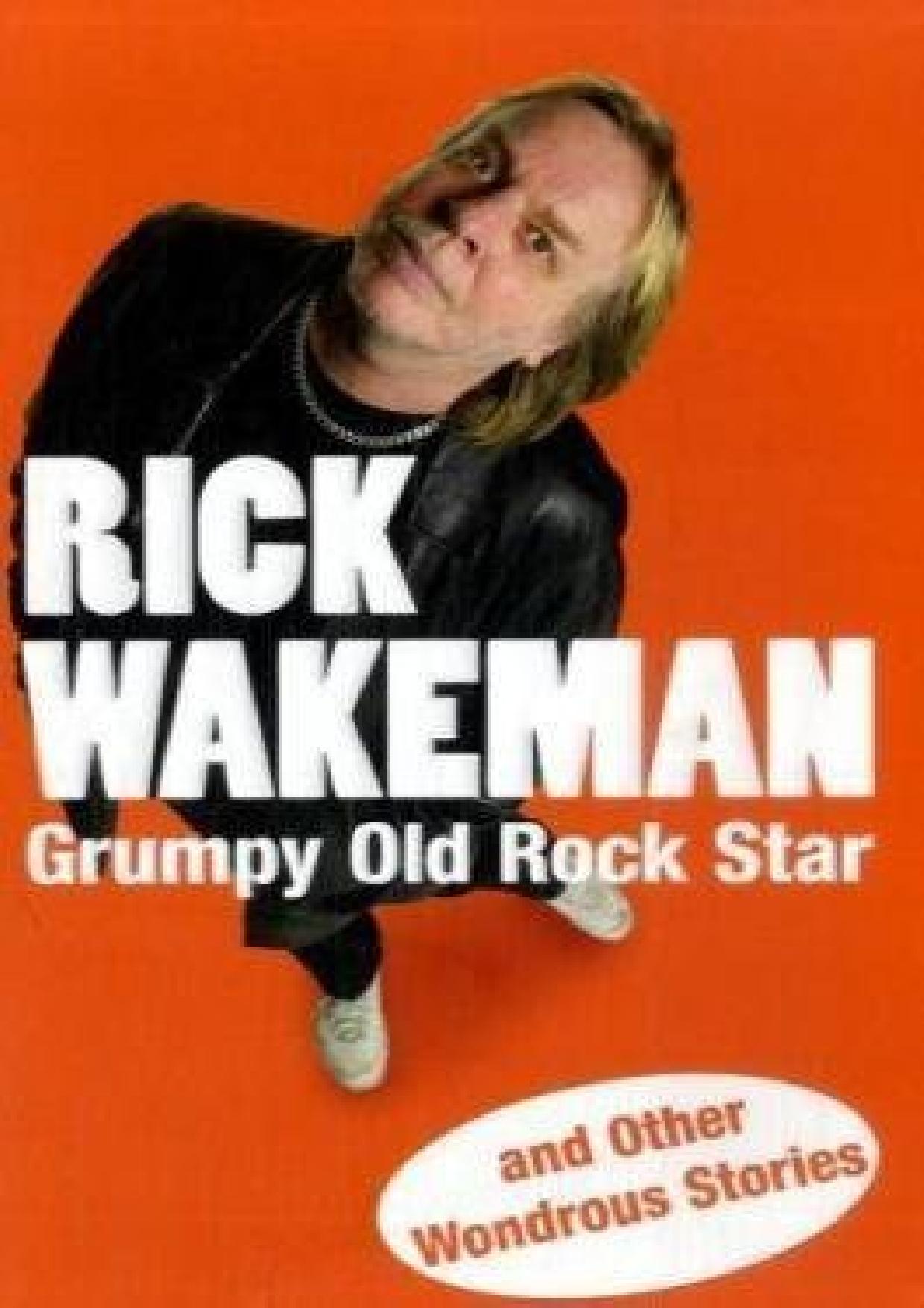
Finally, Wakeman’s personality—witty, self-deprecating, and irreverent—has made him a beloved figure beyond music. His appearances on television programmes like Grumpy Old Men and his radio show on Planet Rock have introduced him to new audiences, and his autobiography and memoirs offer a candid, often hilarious window into the excesses and eccentricities of the progressive rock era. He has become a kind of national treasure, a custodian of a particularly British strain of musical eccentricity.
At over seventy years of age, Rick Wakeman shows no signs of slowing down. He continues to record, perform, and reinvent his classic works for new generations. His latest albums, including A Gallery of the Imagination (2023) and the upcoming Yessonata, demonstrate that his creative well remains deep. Whether he is performing a solo piano recital, leading his English Rock Ensemble through a symphonic epic, or reminiscing about the old days on a television panel show, Wakeman remains a singular figure: a classically trained virtuoso who chose the path of rock and roll, and in doing so, helped to redefine what the keyboard could do. His legacy is not just a catalogue of albums, but a body of work that continues to inspire musicians to dream big, play boldly, and never be afraid to wear a cape.
Discography
For a full discography and list of guest appearances, see Rick Wakeman discography.
Selected solo releases
- Piano Vibrations (1971)
- The Six Wives of Henry VIII (1973)
- Journey to the Centre of the Earth (1974; live)
- The Myths and Legends of King Arthur and the Knights of the Round Table (1975)
- No Earthly Connection (1976)
- Rick Wakeman's Criminal Record (1977)
- Rhapsodies (1979)
- 1984 (1981)
- Cost of Living (1983)
- Silent Nights (1985)
- Country Airs (1986)
- Time Machine (1988)
- Sea Airs (1989)
- Phantom Power (1990)
- Night Airs (1990)
- Classic Tracks (1993)
- Rick Wakeman's Greatest Hits (1993)
- Light Up The Sky (1994; EP)
- The Seven Wonders of the World (1995)
- Return to the Centre of the Earth (1999)
- Piano Portraits (2017)
- Piano Odyssey (2018)
- Christmas Portraits (2019)
- The Red Planet (2020)
- A Gallery of the Imagination (2023)
- Yessonata (2024)
- Melancholia (2025)
Film scores
- Zee and Co. (1972)
- Lisztomania (1975)
- White Rock (1977)
- The Burning (1981)
- G'olé! (1983)
- She (1984)
- Crimes of Passion (1984)
- Creepshow 2 (1987; with Les Reed)
- Hero (1987)
- Phantom Power (1990)
- Bullet to Beijing (1995)
- Midnight in Saint Petersburg (1996)
- White Rock II (1999)
- Alone (2002)
- In Search of the Great Beast 666 (2007)
Video games and CD-ROM
- Microcosm (1993; Sega Mega Drive)
- Between Earth and the End of Time: The Worlds of Rodney Matthews (1996; CD-ROM)
Browse in the Sheet Music Library:
Or browse in the categories menus & download the Library Catalog PDF: