
Scores for all instruments: 16,000+ (active and growing), over 236,000 pages.
All genres and levels: Jazz & Blues, Rock & Pop, Classical & Contemporary, Film & Musicals;
books & biographies; methods, études, play-along tracks (MP3) for Jazz & Rock.
Access & benefits: US$15.99 one-time payment, valid for lifetime, full Library access.
Table of Contents
Rodgers and Hammerstein: The Architects of the American Musical
The best sheet music download from our Library.
For the price of a single songbook, get a full Sheet Music Library!
Please, subscribe to our Sheet Music Library. Sheet music should be accessible and affordable for all musicians, from professionals to absolute beginners.
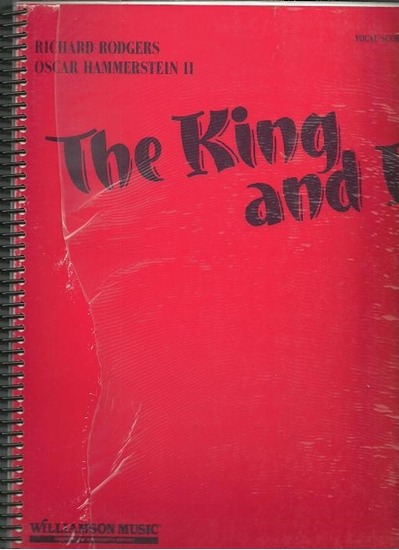
Few partnerships in the history of the arts have been as transformative as that of Richard Rodgers and Oscar Hammerstein II. Working together for less than two decades, they did nothing less than invent a new art form: the serious, integrated American musical play. Before them, the Broadway musical was predominantly a vehicle for star performers, comic sketches, and tuneful but dramatically incidental songs—a revue-style entertainment designed to divert rather than to move. After them, the musical could be a vehicle for profound storytelling, moral inquiry, and emotional depth, where every song, dance, and line of dialogue served a unified dramatic purpose. Their canon—Oklahoma!, Carousel, South Pacific, The King and I, and The Sound of Music—not only defined the Golden Age of Broadway but also provided the soundtrack to mid-century American self-confidence and came to be regarded as a quintessential expression of the nation’s cultural identity. Their names became synonymous with excellence, and their innovations established the template upon which virtually every subsequent musical would be built.


The Biographies: Two Journeys to the Same Stage
Richard Rodgers was born on June 28, 1902, in New York City, into a prosperous Jewish family. His father was a physician and his mother a keen amateur pianist, and by the age of six Rodgers was already picking out show tunes on the family piano. He was drawn to the Broadway of Jerome Kern and the Princess Shows, and a seminal experience came in 1917 when he attended the Columbia University Varsity Show, Home, James, written in part by a twenty-two-year-old Oscar Hammerstein II. It was backstage after that performance that the two first met. Rodgers studied at Columbia University before leaving to pursue music seriously at the Institute of Musical Art, later known as Juilliard. His first great partnership was with the brilliant, troubled lyricist Lorenz Hart. Beginning with The Garrick Gaieties in 1925, Rodgers and Hart produced a string of sophisticated, witty, and urbane musical comedies including Babes in Arms, The Boys from Syracuse, and Pal Joey. Their songs, such as “Manhattan,” “My Funny Valentine,” and “Bewitched, Bothered and Bewildered,” became instant standards of the Great American Songbook. By the early 1940s, however, Hart’s alcoholism and erratic behavior had made the partnership untenable. In 1943, Rodgers began working with Oscar Hammerstein II, and their first collaboration, Oklahoma!, marked the beginning of the most successful partnership in the history of musical theatre.
Oscar Hammerstein II was born on July 12, 1895, into a theatrical dynasty; his grandfather, Oscar Hammerstein I, was a famous opera impresario. Unlike Rodgers, Hammerstein’s path to Broadway was less immediately meteoric, but he possessed a visionary ambition for what the musical could achieve. He had already made history in 1927 as the librettist and lyricist for Show Boat with composer Jerome Kern, a show that tackled serious themes of racism and social injustice and is often cited as the first true integrated musical. Throughout the 1920s and 1930s, Hammerstein’s work in operetta and musical comedy was as innovative as Rodgers’s own accomplishments in musical comedy. By the early 1940s, however, Hammerstein’s career had stalled; the operetta form he championed had fallen out of fashion. As one observer noted, the two men who joined forces in 1943 were in middle age, “one with his career in tatters, the other about to lose the only partner he’d had for 20 years”. Together, they would take a failed play from the previous decade—Lynn Riggs’s Green Grow the Lilacs—and transform it into Oklahoma!, a show that would run forever and change the course of the American musical.
The Musical Style, Harmony, and Technique: The Integrated Musical
The defining characteristic of the Rodgers and Hammerstein revolution was the principle of integration. As the theatre historian Geoffrey Block has articulated, the core principles of their integrated approach were that songs must advance the plot, songs must flow directly from the dialogue, and songs must express the characters who sing them. Furthermore, dances—thanks in large part to the groundbreaking choreography of Agnes de Mille—were no longer mere divertissements but became extensions of the drama, enhancing the meaning of the songs that preceded them. The orchestra, through its accompaniment and underscoring, became an active participant in the storytelling, capable of paralleling, complementing, or advancing the action.
Richard Rodgers’s musical language was the foundation upon which this integration was built. He was renowned for creating memorable, highly lyrical, and diatonic melodies, often employing stepwise motion punctuated by expressive leaps. His harmonic palette was fundamentally tonal and diatonic, with frequent perfect cadences and occasional chromaticism that added color without destabilizing the prevailing sense of key. While his work with Lorenz Hart had been marked by a more sophisticated, jazz-inflected chromaticism, his collaboration with Hammerstein saw him adopt a more direct, “populist” harmonic style that was both accessible and dramatically potent. As one analysis of The Sound of Music notes, his scores incorporated elements of pop-jazz, including syncopated rhythmic structures, swing, and jazz harmonies such as alternated seventh chords and chords with replacement tones, all grafted onto a European harmonic foundation.
Perhaps Rodgers’s most sophisticated contribution to the integrated musical was his use of developing variation. Rather than writing a collection of isolated hits, Rodgers conceived of a score as a unified whole, with individual songs sharing “family resemblances” in their melodic and harmonic material. The musicologist Edward Green has demonstrated, for example, that the score of South Pacific is bound together by a recurring motivic cell—a prominent repeated motion of the leading tone to the tonic—that appears in diverse songs such as “A Cockeyed Optimist,” “A Wonderful Guy,” “Bali Ha’i,” and “This Nearly Was Mine,” creating a subtle but profound musical coherence across the entire evening. This technique of deriving an entire score from a small set of generative musical ideas ensured that the music itself functioned as a dramatic through-line, binding the show together in a way that had never before been attempted in the commercial musical theatre.
Hammerstein’s contribution as a lyricist and librettist was equally revolutionary. His lyrics were not merely witty or romantic; they were character-driven and often possessed a colloquial, almost poetic naturalism. He was unafraid to tackle complex and controversial subjects—domestic violence and redemption in Carousel, racial prejudice in South Pacific, the clash of cultures and the ethics of imperialism in The King and I, and the moral courage required to resist tyranny in The Sound of Music. His collaboration with Rodgers was famously characterised by the practice of writing the lyrics first, a method that allowed the rhythm and meaning of the words to shape the musical phrase, resulting in a seamless marriage of text and music.
The Best Songs and Compositions: A Canon of Standards
The Rodgers and Hammerstein songbook is one of the richest in the history of American popular music, containing a remarkable number of songs that have become enduring standards. From Oklahoma! (1943) came the radiant optimism of “Oh, What a Beautiful Mornin’,” the tender romantic declaration “People Will Say We’re in Love,” and the soaring title song that became a state anthem. The show’s groundbreaking “Dream Ballet” was a landmark in the integration of dance into musical narrative.
Carousel (1945) produced some of their most emotionally powerful work. “If I Loved You” is a masterful extended duet in which two characters circle around their feelings without ever quite confessing them directly, while “June Is Bustin’ Out All Over” provides a burst of communal energy. The show’s climactic anthem, “You’ll Never Walk Alone,” transcends its theatrical origins to become a global hymn of hope and solidarity, adopted by football fans and civil rights marchers alike.
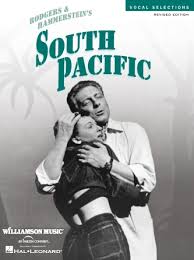
South Pacific (1949) yielded a extraordinary sequence of songs, including the haunting “Bali Ha’i,” the exuberant “I’m Gonna Wash That Man Right Outa My Hair,” the romantic “Some Enchanted Evening,” the comic “There Is Nothin’ Like a Dame,” and the heartbreaking “This Nearly Was Mine.” The score also contained one of Hammerstein’s most searing lyrical statements, “You’ve Got to Be Carefully Taught,” a direct indictment of learned racial prejudice that was controversial at the time and remains devastatingly relevant.
The King and I (1951) offered the wistful “Hello, Young Lovers,” the charming “Getting to Know You,” the dramatic “Shall We Dance?,” and the poignant “I Have Dreamed”.
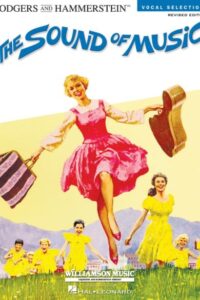
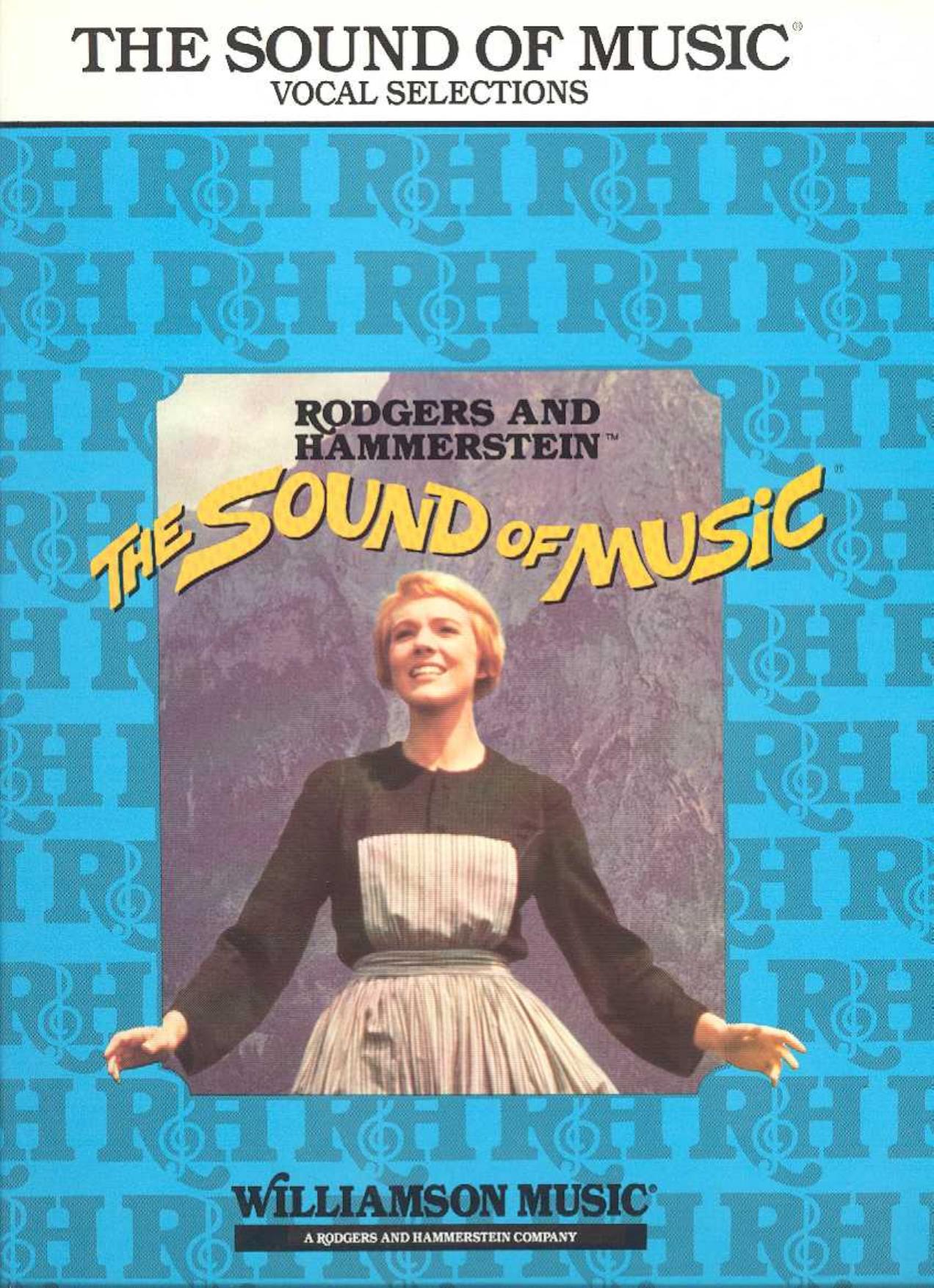
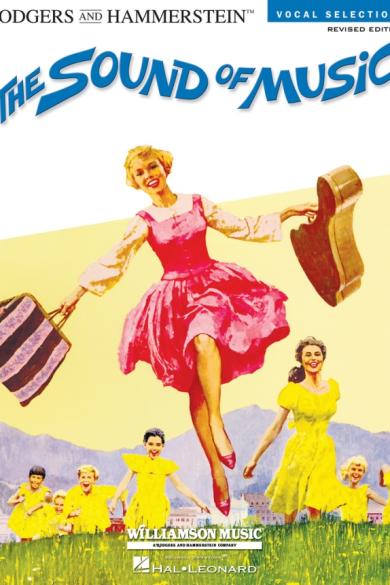
The final collaboration, The Sound of Music (1959), produced perhaps their most universally beloved collection of songs: the title song, “My Favorite Things,” “Do-Re-Mi,” “Climb Ev’ry Mountain,” “Edelweiss,” and “Sixteen Going on Seventeen,” among others. (Main article on Wikipedia: The Sound of Music)
Beyond these major works, the team also wrote songs for the film State Fair (1945), including the Academy Award-winning “It Might as Well Be Spring”.
The Musicals and Films: From Stage to Screen
The Rodgers and Hammerstein partnership produced nine stage musicals, of which five—Oklahoma!, Carousel, South Pacific, The King and I, and The Sound of Music—form the core of their enduring legacy. Oklahoma! opened on March 31, 1943, at the St. James Theatre and ran for 2,212 performances, holding the record for the longest-running Broadway musical for fifteen years. It received a special Pulitzer Prize in its first year and was the first show to have its original cast album recorded and released, creating an entirely new industry genre. Carousel, which followed in 1945, was an even more ambitious work, adapting Ferenc Molnár’s dark play Liliom into a musical about a troubled carousel barker, Billy Bigelow, and his redemptive journey in the afterlife. It was a bold choice for a follow-up to Oklahoma! and demonstrated that Rodgers and Hammerstein were unafraid to explore the tragic and the morally complex.
South Pacific opened in 1949 and won the Pulitzer Prize for Drama in 1950—marking the first time the Pulitzer committee had included a composer in the drama prize. It also won ten Tony Awards, including Best Musical, and held the record for total Tony Awards for decades. The King and I opened in 1951, starring Gertrude Lawrence and a young Yul Brynner as the King of Siam, and ran for 1,246 performances. The Sound of Music, their final collaboration, opened in 1959 and won five Tony Awards, including Best Musical. Its London production became the longest-running American musical in the West End at the time.
The film adaptations of their work were equally monumental. Oklahoma! was filmed in 1955, Carousel and The King and I in 1956, and South Pacific in 1958. The 1965 film of The Sound of Music, directed by Robert Wise and starring Julie Andrews, became the highest-grossing film of all time and won five Academy Awards, including Best Picture. Its cultural ubiquity is such that it remains one of the most popular movie musicals ever made. Rodgers, following Hammerstein’s death in 1960, oversaw the film adaptation alone, adjusting the score while adhering closely to their original stage collaboration. The team also wrote one original film musical, State Fair (1945), which, while less celebrated than their stage works, contains the Oscar-winning song “It Might as Well Be Spring”.
Collaborations Beyond the Partnership
While Rodgers and Hammerstein are justly celebrated as a duo, their individual collaborations and the wider network of artists who contributed to their shows are essential to understanding their achievement. Before Hammerstein, Rodgers’s partnership with Lorenz Hart produced a body of work that remains a cornerstone of the Great American Songbook. Their songs, including “The Lady Is a Tramp,” “Blue Moon,” and “My Romance,” are celebrated for their wit, sophistication, and harmonic adventurousness, and they remain beloved by jazz musicians for their malleability as improvisational vehicles.
Hammerstein’s early collaboration with Jerome Kern on Show Boat (1927) was a crucial precursor to the integrated musical, proving that a Broadway show could tackle serious social themes within a coherent dramatic framework.
The Rodgers and Hammerstein shows were also defined by the contributions of key creative collaborators. The choreographer Agnes de Mille was instrumental in establishing the principle that dance could be a narrative and psychological tool; her work on Oklahoma! and Carousel is widely regarded as revolutionary. Joshua Logan co-wrote the book for South Pacific and directed the original production. The orchestrator Robert Russell Bennett was responsible for the lush, distinctive sound of the Rodgers and Hammerstein orchestra, and his arrangements became a model for Broadway orchestration for decades.
After Hammerstein’s death in 1960, Rodgers continued to write for the stage, collaborating with lyricists including Stephen Sondheim (on Do I Hear a Waltz?), Sheldon Harnick, and Martin Charnin. Sondheim, in particular, had been personally mentored by Hammerstein from the age of fifteen, and Hammerstein’s fundamental rule—that every song must advance the story—became the guiding principle of Sondheim’s own revolutionary career. Andrew Lloyd Webber has also cited South Pacific as a formative influence, recalling that hearing “Some Enchanted Evening” as a child made him aspire to write a song of comparable quality.
Awards and Accolades
The awards garnered by Rodgers and Hammerstein are a testament to their extraordinary success and influence. Collectively, their musicals and their film adaptations earned 34 Tony Awards, 15 Academy Awards, two Pulitzer Prizes, two Grammy Awards, and an Emmy Award. The Pulitzer Prizes were awarded for Oklahoma! (1944) and South Pacific (1950). Richard Rodgers is also historically significant as the first person to achieve PEGOT status, having won a Pulitzer Prize, an Emmy, a Grammy, an Oscar, and a Tony Award. Individual shows were showered with honors: South Pacific won ten Tony Awards and the Pulitzer Prize for Drama; The Sound of Music won five Tony Awards, including Best Musical; and the film version of The Sound of Music won five Academy Awards, including Best Picture. These accolades reflect not only popular success but also the critical and institutional recognition of their artistic achievement.
Influences and Legacy: Shaping the American Musical and Beyond
The legacy of Rodgers and Hammerstein is immense and multifaceted. Their most significant contribution was the establishment of the integrated musical as the dominant form of Broadway storytelling. As the theatre historian Todd S. Purdum has written, they “pioneered a new art form: the serious musical play. Their songs and dance numbers served to advance the drama and reveal character, a sharp break from the past and the template on which all future musicals would be built”. Their influence conditioned audiences to accept and expect adventurous, dramatically coherent musicals, and it inspired a generation of writers who might otherwise have gone to Hollywood to return to the Broadway theatre and take up the challenge of the integrated form.
Their cultural impact extended far beyond the theatre. In the postwar era, Rodgers and Hammerstein “personified American self-confidence”. Their musicals, though often set in the past or in exotic locales, projected a radiant vision of American pluck, virtue, and enlightenment overcoming the unknown, and their songs invoked a “responsible” upward mobility in which society worked toward shared ideals of romantic fulfillment and social justice. They were cultural powerhouses whose work came to define postwar America on stage, screen, television, and radio. Their songs became embedded in the fabric of American life: “You’ll Never Walk Alone” became an anthem of solidarity, “My Favorite Things” was transformed by John Coltrane into a jazz masterpiece, and songs like “Oh, What a Beautiful Mornin’” and “People Will Say We’re in Love” were covered by artists from Bing Crosby and Frank Sinatra to contemporary performers, ensuring their continued relevance across generations.
Their influence on subsequent musical theatre composers is incalculable. Stephen Sondheim, the most important theatrical songwriter of the post-Rodgers and Hammerstein era, was directly mentored by Hammerstein, and the principle of the narrative-driven song remained central to his work. Andrew Lloyd Webber’s spectacles, though different in musical idiom, owe a debt to the ambition and scale of the Rodgers and Hammerstein model. The structure of the modern “book musical”—where the story is king and the score serves the story—is their enduring invention.
Their personal legacies are also preserved in institutions and honours. The 46th Street Theatre on Broadway was renamed the Richard Rodgers Theatre in 1990, and both Rodgers and Hart were commemorated on US postage stamps. Rodgers’s centennial in 2002 was celebrated worldwide. His daughter, Mary Rodgers, became a successful composer in her own right, writing the music for Once Upon a Mattress, and his grandson, Adam Guettel, is a Tony Award-winning musical theatre composer. The Rodgers and Hammerstein Organization continues to manage their catalogue and license their works for productions around the world.
Additional Information and Critical Perspectives
While the Rodgers and Hammerstein legacy is overwhelmingly positive, it has not been without its critics. Some scholars have examined the ways in which their musicals, for all their progressive themes, also reflected and reinforced certain mid-century American paternalism and cultural attitudes. The “R&H brand” has been analyzed as a vehicle for American paternalism, particularly in works like Flower Drum Song, which engaged with issues of assimilation and identity in ways that were both groundbreaking and, by modern standards, problematic. The King and I, too, has been critiqued for its portrayal of Eastern cultures through a Western lens, even as it critiques the abuses of absolute power. These critical perspectives do not diminish the artistry or the historical importance of the works; rather, they enrich our understanding of how these musicals functioned as complex cultural documents of their time.
The partnership itself was, by many accounts, professionally harmonious but personally distant. Rodgers was famously reserved and could be difficult, while Hammerstein was warmer and more socially engaged. Yet they presented an unbroken front to the world and forged not only a songwriting team but also one of the most profitable and powerful entertainment businesses of their era. They also experienced failures and flops—Allegro, Me and Juliet, and Pipe Dream were not successful—and more than once they feared they had lost their touch, a reminder that their extraordinary run of hits was the product of risk-taking and resilience as much as genius.
Rodgers’s personal life was marked by significant health struggles; he survived cancer of the jaw, a heart attack, and a laryngectomy, continuing to compose until near the end of his life. He died on December 30, 1979, at the age of 77. Hammerstein died on August 23, 1960, shortly after the Broadway premiere of The Sound of Music, before he could see the full extent of its global triumph. His death marked the end of one of the most consequential partnerships in the history of the performing arts.
Rodgers and Hammerstein
Richard Rodgers and Oscar Hammerstein II were more than a songwriting team; they were the architects of a new theatrical language. They took the disparate elements of the Broadway musical—song, dance, dialogue, and design—and fused them into a seamless, dramatically purposeful whole. Their songs, at once sophisticated and accessible, have entered the permanent repertoire of American popular music. Their shows, which tackled themes of love, justice, prejudice, and courage, elevated the musical to a form capable of high art and profound moral seriousness. Their influence on subsequent generations of composers, lyricists, and audiences is immeasurable. In the words of one assessment, they were “without a doubt America’s most influential, innovative and successful musical writing team”. Their work did not merely entertain; it helped to define how Americans saw themselves and how the world came to see America. The legacy of Rodgers and Hammerstein is not simply a collection of beloved songs and shows; it is the very shape and possibility of the American musical itself.
Browse in the Sheet Music Library:
Or browse in the categories menus & download the Library Catalog PDF:
My Favorite Things: The Rodgers and Hammerstein 80th Anniversary Concert
Track List and Timestamps:
1. Overture from Oklahoma! – Rodgers & Hammerstein Orchestra – 0:00:00 2. Oh, What a Beautiful Mornin’ – Patrick Wilson – 0:05:42 3. My Favorite Things – Audra McDonald – 0:08:18 4. The Surrey with the Fringe on Top – Patrick Wilson – 0:10:09 5. I Cain’t Say No – Marisha Wallace – 0:11:37 6. Out of My Dreams – Lily Kerhoas – 0:14:54 7. Mister Snow – Audra McDonald – 0:17:07 8. June is Bustin’ Out All Over – Anna-Jane Casey and Ensemble – 0:21:13 9. What’s the Use of Wond’rin’? – Lily Kerhoas – 0:23:42 10. Soliloquy – Aaron Tveit – 0:25:57 11. It Might as Well Be Spring – Lucy St. Louis – 0:27:05 12. Love, Look Away – Joanna Ampil – 0:30:14 13. The Gentleman is a Dope – Marisha Wallace – 0:32:44 14. No Other Love – Jordan Shaw – 0:35:14
15. Something Wonderful – Joanna Ampil – 0:37:03 16. You’ve Got to Be Carefully Taught – Aaron Tveit – 0:40:00 17. Younger Than Springtime – Aaron Tveit – 0:41:07 18. I’m Gonna Wash That Man Right Outa My Hair – Marisha Wallace and Ensemble – 0:44:23 19. A Wonderful Guy – Lucy St. Louis – 0:46:32 20. This Nearly Was Mine – Julian Ovenden – 0:47:54 21. You’ll Never Walk Alone – Michael Ball – 0:52:09 22. Entr’acte from South Pacific – Rodgers & Hammerstein Orchestra – 0:55:07 23. There Is Nothin’ Like A Dame – Jordan Shaw and Ensemble – 0:58:09 24. I Have Dreamed / We Kiss In A Shadow – Joanna Ampil – 1:01:57 25. A Puzzlement – Daniel Dae Kim – 1:04:10 26. Hello, Young Lovers – Maria Friedman – 1:07:41 27. Shall We Dance? – Maria Friedman and Daniel Dae Kim – 1:11:17 28. If I Loved You – Lily Kerhoas and Patrick Wilson – 1:14:25 29. In My Own Little Corner – Joanna Ampil – 1:20:48 30. Ten Minutes Ago – Aaron Tveit – 1:22:52 31. Impossible / It’s Possible – Anna-Jane Casey and Marisha Wallace – 1:24:22 32. All At Once You Love Her – Julien Ovenden – 1:25:30 33. Kansas City – Jonny Labey and Ensemble – 1:27:23 34. Some Enchanted Evening – Michael Ball – 1:30:48 35. The Sound Of Music – Lucy St. Louis – 1:34:12 36. Do-Re-Mi – Ensemble – 1:37:22 37. The Lonely Goatherd – Anna-Jane Casey – 1:38:26 38. Something Good – Maria Friedman – 1:39:40 39. Edelweiss – Ensemble – 1:41:45 40. Climb Ev’ry Mountain – Audra McDonald – 1:44:29 41. Oklahoma – Rodgers & Hammerstein Orchestra – 1:47:53 42. Carousel Waltz – Rodgers & Hammerstein Orchestra – 1:49:15