Scores for all instruments: 16,000+ (active and growing), over 236,000 pages.
All genres and levels: Jazz & Blues, Rock & Pop, Classical & Contemporary, Film & Musicals;
books & biographies; methods, études, play-along tracks (MP3) for Jazz & Rock.
Access & benefits: US$15.99 one-time payment, valid for lifetime, full Library access.
Table of Contents
Secret Garden: An Exhaustive Portrait of the Celtic-Nordic New Age Duo

The best sheet music download from our Library.
For the price of a single songbook, get a full Sheet Music Library!
Please, subscribe to our Sheet Music Library. Sheet music should be accessible and affordable for all musicians, from professionals to absolute beginners.
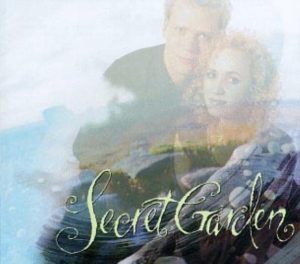
Secret Garden - Song From A Secret Garden
Secret Garden: An Exhaustive Portrait of the Celtic-Nordic New Age Duo
Secret Garden occupies a singular place in the landscape of contemporary instrumental music. Formed by Norwegian composer-pianist Rolf Løvland and Irish violinist Fionnuala Sherry, the duo rose to global prominence by winning the 1995 Eurovision Song Contest with “Nocturne.” This composition remains the only predominantly instrumental entry ever to claim victory in the contest’s history.
Over a partnership spanning more than a quarter-century, Secret Garden has sold millions of albums worldwide and created a body of work that bridges classical, Celtic, Nordic folk, and new age sensibilities.
Search your favorite sheet music in the Sheet Music Library Catalog
Biography: Two Musical Worlds Converge
Rolf Løvland: The Norwegian Architect
Rolf Løvland was born in 1955 in Kristiansand, a coastal city in southern Norway. He demonstrated precocious musical inclinations from an early age by writing music at nine and assembling his first band. His formal training took him to the Music Conservatory in Kristiansand and later to the Norwegian Institute of Music in Oslo.
By the time he encountered Fionnuala Sherry, Løvland had already established himself as one of Norway’s most successful songwriters, with compositions that had reached the top of the national radio charts more than sixty times. His Eurovision pedigree predates Secret Garden: in 1985, he wrote “La det swinge” (“Let It Swing”), which secured Norway its first-ever Eurovision victory.
This background gave Løvland a rare combination of classical discipline, pop instincts, and an intuitive understanding of how a melody can function as a vehicle for broad emotional communication.
The duo’s instrumentation reflects this dual heritage. Sherry’s violin functions as the principal melodic voice, often carrying the emotional weight of a piece with a tone that can shift from brittle folk inflection to sustained classical legato.
Løvland’s piano and keyboards provide the harmonic foundation, frequently employing arpeggiated accompaniments and sustained pads that create an enveloping, atmospheric bed. Guest instrumentalists from Ireland and Norway—including uilleann pipes, whistles, nyckelharpa, and orchestral strings—are regularly featured to reinforce the authenticity of the dual-nationality concept.
Fionnuala Sherry, the Irish violinist
Fionnuala Sherry was born in 1962 in Naas, County Kildare, Ireland. She took up the violin at eight and, by fifteen, moved to Dublin to pursue serious musical study, eventually graduating with honors from the College of Music at Trinity College.
Her professional formation was equally rigorous. She spent a decade as a member of the RTÉ Concert Orchestra, Ireland’s national broadcasting orchestra, during which she accompanied an extraordinary range of artists—from Van Morrison and The Chieftains to Sinéad O’Connor and Chris de Burgh.
This immersion in both classical ensemble playing and the Irish folk-pop milieu gave Sherry a stylistic flexibility that would become essential to Secret Garden’s sound.
The Meeting and the Eurovision Breakthrough
Sherry and Løvland met in 1994. The chemistry was immediate enough to prompt the formation of Secret Garden. The following year, they entered “Nocturne” for Norway in the Eurovision Song Contest. The piece was primarily instrumental, with only a handful of Norwegian lyrics written by screenwriter Petter Skavlan to satisfy the contest’s rules.
Norwegian singer Gunnhild Tvinnereim provided the vocal line, while Hans Fredrik Jacobsen played penny whistle and Swedish nyckelharpist Åsa Jinder guested—none of whom were regular members of the duo. The gamble paid off spectacularly: “Nocturne” won the contest, and Secret Garden was launched onto the international stage.
The commercial aftermath was swift. Their debut album, Songs from a Secret Garden (1996), sold a million copies worldwide, achieved platinum status in Norway and Korea, gold in Ireland, Hong Kong, and New Zealand, and spent a remarkable 101 weeks on the Billboard New Age chart.
Subsequent albums—White Stones (1997), Dawn of a New Century (1999), and Once in a Red Moon (2002)—consolidated their following, each reaching the upper tiers of the Billboard New Age charts. The duo remained active into the 2020s, releasing their tenth studio album, Storyteller, in 2019, and continuing to perform internationally.
Musical Style: A Delicate Fusion of Two Peripheries
Secret Garden’s music is best understood as the meeting point of two distinct folk traditions—Irish and Norwegian—filtered through a classically informed, new age aesthetic. Critics have described their sound as “lush and atmospheric, largely instrumental music,” dominated by violin and keyboards and combining “notes of Celtic and Norwegian folk, pop, and new age styles.”
Løvland himself has consistently emphasized that Celtic and Nordic folk melodies are the “roots and inspiration” of the duo’s output. Sherry has elaborated on this affinity, noting that both Ireland and Norway share “a storytelling and melancholic quality.”
The duo’s instrumentation reflects this dual heritage. Sherry’s violin functions as the principal melodic voice, often carrying the emotional weight of a piece with a tone that can shift from brittle folk inflection to sustained classical legato. Løvland’s piano and keyboards provide the harmonic foundation, frequently employing arpeggiated accompaniments and sustained pads that create an enveloping, atmospheric bed. Guest instrumentalists from Ireland and Norway—including uilleann pipes, whistles, nyckelharpa, and orchestral strings—are regularly featured to reinforce the authenticity of the dual-nationality concept. The overall texture tends toward transparency rather than density: Secret Garden rarely overwhelms the listener, preferring to let a single melodic line breathe against a modest harmonic backdrop.
Critics have sometimes positioned the duo on a “thin line between authentic Celtic and Scandinavian-inspired music and flaccid, new age claptrap.” This ambivalence is revealing: Secret Garden deliberately courts accessibility, and their music is often described as “healing” or “soothing.”
Yet the craftsmanship underlying that accessibility is substantial. Løvland’s melodic writing has a hymn-like directness, and Sherry’s playing brings a folk-derived expressive nuance that prevents the music from becoming merely decorative.
Chord Progressions and Harmonic Language
Secret Garden’s harmonic approach is conservative by classical standards but effective in its manipulation of modality and key change. The duo favors diatonic frameworks with modal coloring—particularly natural minor (Aeolian) and Dorian inflections—lending the music its characteristic blend of melancholy and hope.
A harmonic analysis of “Nocturne” identifies a predominantly minor-mode structure with a verse–chorus layout, built on a limited set of chords that emphasize the tonic and subdominant.
The piece’s power lies less in harmonic novelty than in the sustained, unhurried unfolding of a single modal atmosphere.
“You Raise Me Up” illustrates Løvland’s command of a different harmonic strategy: the strategic modulation. The song begins in E-flat major, modulates to F major, and then to G major, with each key change functioning as an emotional ascent.
This technique—the “truck driver’s modulation,” elevated to a level of sincere expressive purpose—is a hallmark of the duo’s approach to large-scale form.
Other works reveal a similar economy. “The Dream” employs a chord progression that moves through Em–D–G–C, a diatonic loop that creates a sense of circular contemplation rather than goal-directed motion.
“Song for a New Beginning” uses a sequence of C♯m–D–A–C♯m–D–F♯m–D–E, again relying on modal ambiguity and stepwise connections to generate momentum. In “Sometimes When It Rains,” the key is F major, with a progression leaning on B♭–F–Gm–F—a plagal-inflected language that feels both familiar and gently wistful.
Relationships and Collaborations with Other Artists
Secret Garden’s career has been punctuated by high-profile collaborations that expanded their audience without fundamentally altering their aesthetic. One of the most consequential is “You Raise Me Up,” originally performed by Brian Kennedy (with Tracey Campbell) on Once in a Red Moon.
The song went on to be recorded by more than a hundred artists, including Josh Groban, Westlife, and Il Divo. Westlife’s 2005 cover reached No. 1 on the UK Singles Chart, demonstrating how Secret Garden’s chamber-like original could be transformed into a global pop phenomenon.
The Barbra Streisand connection is equally significant. Streisand adapted the Secret Garden instrumental “Heartstrings” as “I’ve Dreamed of You,” with lyrics by Ann Hampton Calloway, and used the piece at her wedding to James Brolin.
The collaboration was included on Secret Garden’s 2007 vocal album Inside I’m Singing, which also featured contributions from Elaine Paige and Niamh Kavanagh.
Listen to Secret Garden music on Spotify to experience their unique blend of melody and atmosphere.
Secret Garden’s relationship with the Irish singer-songwriter Brian Kennedy has been particularly enduring. Kennedy sang the original “You Raise Me Up” and returned for the track “Beautiful” on Storyteller (2019).
The duo has also collaborated with Norwegian singers, reinforcing the bilateral Irish–Norwegian identity underpinning their work.
Influences and Musical Lineage
Secret Garden’s influences can be traced along two axes: the folk traditions of their respective homelands and the Western art-music and popular traditions that shaped their professional formation.
On the folk side, the melodic contours of Irish traditional music—its preference for modal scales and narrative phrasing—are audible throughout Sherry’s violin lines. Norwegian folk music contributes a distinct sensibility.
On the classical side, critics have noted affinities with Maurice Ravel—particularly the intimate, pavane-like restraint of Songs from a Secret Garden—as well as with the broader tradition of French Impressionism’s coloristic harmony.
Løvland’s melodic writing also bears the imprint of hymnody and popular song. In the new age and world-music marketplace, Secret Garden is often grouped with artists such as Enya and Clannad.
Works on Film and Documentary
Secret Garden’s music has found a natural home in visual media, where its atmospheric and narrative qualities can be paired with image. The most celebrated example is the use of “Adagio” in Wong Kar-wai’s 2004 film 2046.
The piece, featuring David Agnew on cor anglais, appears on the film’s soundtrack and illustrates how Secret Garden’s music can function as an emotional amplifier.
The duo’s most significant documentary project is A Night with Secret Garden, a concert film directed by Stanley Dorfman and released in 2000. Recorded live in Lillehammer, Norway, the DVD offers over 170 minutes of concert footage, music videos, a photo gallery, and documentaries.
The film captures the duo performing signature pieces and provides insight into their creative process, making A Night with Secret Garden an essential document of their early career.
Discography and Major Works
Secret Garden’s studio discography spans nearly three decades and reveals a consistent commitment to their core aesthetic. The studio albums include Songs from a Secret Garden (1996), White Stones (1997), and others.
Among the most known compositions, several stand out, including “Nocturne,” “You Raise Me Up,” and “Adagio.” These pieces have become staples of their concert repertoire and have been widely arranged.
Among the most known compositions, several stand out. “Nocturne” remains historically significant as the Eurovision winner that proved an instrumental piece could triumph in a song contest. “You Raise Me Up” is the duo’s most commercially successful song, a modern standard that has been covered across genres and languages. “Adagio” achieved a second life through its inclusion in 2046. “Songs from a Secret Garden,” the title track of the debut album, established the template for the duo’s instrumental balladry. “The Promise,” “Heartstrings,” “Serenade to Spring,” and “Sleepsong” are among the works that have become staples of their concert repertoire and have been widely arranged for solo instruments and ensembles.
Notable performances include the Eurovision victory itself (1995), the twentieth-anniversary concert at Kilden (2015, released as Live at Kilden in 2016), and a 2025 debut concert in Hanoi, Vietnam, where the duo performed a two-hour set of more than twenty pieces spanning their thirty-year career, including the live premiere of “Tree of Secrets”. The Vietnam concert demonstrated that Secret Garden’s appeal extends well beyond their traditional European and East Asian markets, filling a 4,000-seat hall with an audience responsive to their distinctive blend of melody and atmosphere.
Secret Garden’s legacy rests on several interrelated achievements. They demonstrated that instrumental music rooted in folk traditions could achieve mass-market success without compromising its essential character.
Their influence can be heard in the broader fields of neo-classical, Celtic, and new age music—genres in which their example continues to encourage the fusion of folk roots with classical technique and popular accessibility.
Secret Garden’s legacy rests on several interrelated achievements. First, they demonstrated that instrumental music rooted in folk traditions could achieve mass-market success without compromising its essential character. Songs from a Secret Garden spent 101 weeks on the Billboard New Age chart—a figure that speaks to the depth and durability of their audience. Second, they expanded the expressive range of the Eurovision Song Contest by proving that a predominantly instrumental composition could win, thereby opening space for subsequent entries that prioritized atmosphere and musicianship over conventional pop-song structures. Third, “You Raise Me Up” became a genuine standard of the twenty-first century, a song that has been performed at ceremonies, concerts, and informal gatherings across the world, and whose harmonic architecture—with its ascending key changes—has become a recognizable template for aspirational balladry.
Critically, Secret Garden has sometimes been dismissed as soft or commercial, a judgment that misses the craftsmanship and emotional intelligence of their best work. The duo’s music is not designed to challenge listeners harmonically or rhythmically; it is designed to move them, and at its best it does so through a combination of melodic sincerity, instrumental timbre, and a patient, unhurried sense of pacing. In an era of increasingly fragmented musical consumption, Secret Garden has maintained a coherent artistic identity for over twenty-five years, and their influence can be heard in the broader fields of neo-classical, Celtic, and new age music—genres in which their example continues to encourage the fusion of folk roots with classical technique and popular accessibility.
Secret Garden
Secret Garden is that rare phenomenon: a duo whose music is rooted in specific national traditions yet legible to a global audience. Rolf Løvland’s melodic gift and harmonic instincts, combined with Fionnuala Sherry’s expressive violin playing, produced a sound that is instantly recognizable.