
Scores for all instruments: 16,000+ (active and growing), over 236,000 pages.
All genres and levels: Jazz & Blues, Rock & Pop, Classical & Contemporary, Film & Musicals;
books & biographies; methods, études, play-along tracks (MP3) for Jazz & Rock.
Access & benefits: US$15.99 one-time payment, valid for lifetime, full Library access.
Table of Contents
Sondheim
Search your favorite sheet music in the Sheet Music Library Catalog
The best sheet music download from our Library.
For the price of a single songbook, get a full Sheet Music Library!

Please, subscribe to our Sheet Music Library. Sheet music should be accessible and affordable for all musicians, from professionals to absolute beginners.
Stephen Sondheim’s “Company” with the New York Philharmonic
Stephen Sondheim: The Architect of the Modern American Musical
Stephen Joshua Sondheim, who lived from March 22, 1930, to November 26, 2021, is widely regarded as the most transformative figure in the history of the American musical theatre. More than just a composer and lyricist, he was a dramatic architect who fundamentally redefined what a Broadway musical could be, both in form and in content. Over a career spanning more than six decades, Sondheim shattered conventions, intellectualized the art form, and created a body of work that continues to challenge, provoke, and enchant audiences and artists alike. His legacy is not merely a catalogue of hit songs, but a reinvention of the very grammar of musical storytelling, earning him a place as one of the most significant artists in American cultural history.
Search your favorite sheet music in the Sheet Music Library Catalog




Biography: From a Lonely Childhood to Theatrical Titan
Born in New York City to a prosperous but emotionally distant family, Stephen Sondheim’s childhood was marked by isolation. His parents divorced when he was ten, and he had a famously fraught relationship with his mother. A pivotal moment occurred at around the same age when he befriended Jimmy Hammerstein, the son of the legendary lyricist and playwright Oscar Hammerstein II. Hammerstein became a surrogate father to the young Sondheim, profoundly influencing his development and instilling in him a deep love for musical theatre. This mentorship was foundational; Sondheim would later say that he learned everything he knew about songwriting from Hammerstein, who taught him that a song must serve the story and the character above all else.
Stephen Sondheim attended the George School, a Quaker preparatory school, and later graduated from the New York Military Academy in 1946. He went on to study music at Williams College, where he wrote the music and lyrics for two college shows. His intellectual curiosity led him to further study at Princeton University with the renowned composer Milton Babbitt, an experience that sharpened his already formidable technical skills and broadened his harmonic vocabulary. This combination of a theatrical upbringing under Hammerstein and rigorous classical training under Babbitt created the unique foundation for his singular voice.


A Revolutionary Musical Style
Stephen Sondheim’s musical style is notoriously difficult to pigeonhole, which is a testament to its originality. Often described as "unmelodic" by his early critics, his work is actually characterized by a sophisticated and expressive chromaticism rather than atonality or dissonance for its own sake. He is celebrated for his dramatic truthfulness; his music and lyrics are inextricably linked to the psychology of his characters and the narrative arc of his shows. This approach, sometimes called the "concept musical," prioritized thematic cohesion and character-driven storytelling over the traditional book musical's plot-and-song formula.
His intellectual ambition led him to tackle subjects previously considered taboo for musical theatre, including nonconformism (Anyone Can Whistle), the complexities of marriage and urban life (Company), the clash of tradition and modernity (Pacific Overtures), and even cannibalism as a metaphor for social decay (Sweeney Todd). In doing so, he "intellectualized the musical," elevating it to a serious dramatic art form that could explore the same dark and complex themes as the spoken stage.
Harmony and Technique: The Composer’s Craft
Stephen Sondheim’s technical prowess as a composer is legendary, and his harmonic language is one of the most distinctive in musical theatre. His work is marked by a decided preference for extended diatonic and chromatically-altered chords, using simple, pure triadic harmony only on rare occasions. This dense harmonic palette allows him to reflect the tension, ambiguity, and psychological complexity inherent in his dramatic situations.
Analyses of his scores reveal several signature techniques. He frequently creates diagonal dissonances by juxtaposing treble and bass lines that clash, producing a subtle but pervasive unease. He employs what are known as "effect harmonies" —dramatically striking chords used to heighten a specific moment of narrative revelation or emotional climax. Despite the chromatic excursions and complex harmonies, Sondheim achieves a sense of middleground harmonic cohesion through masterful use of pedal points and long-range chromatic voice leading, often keeping a song or a score anchored in a single key even as it ventures far afield.

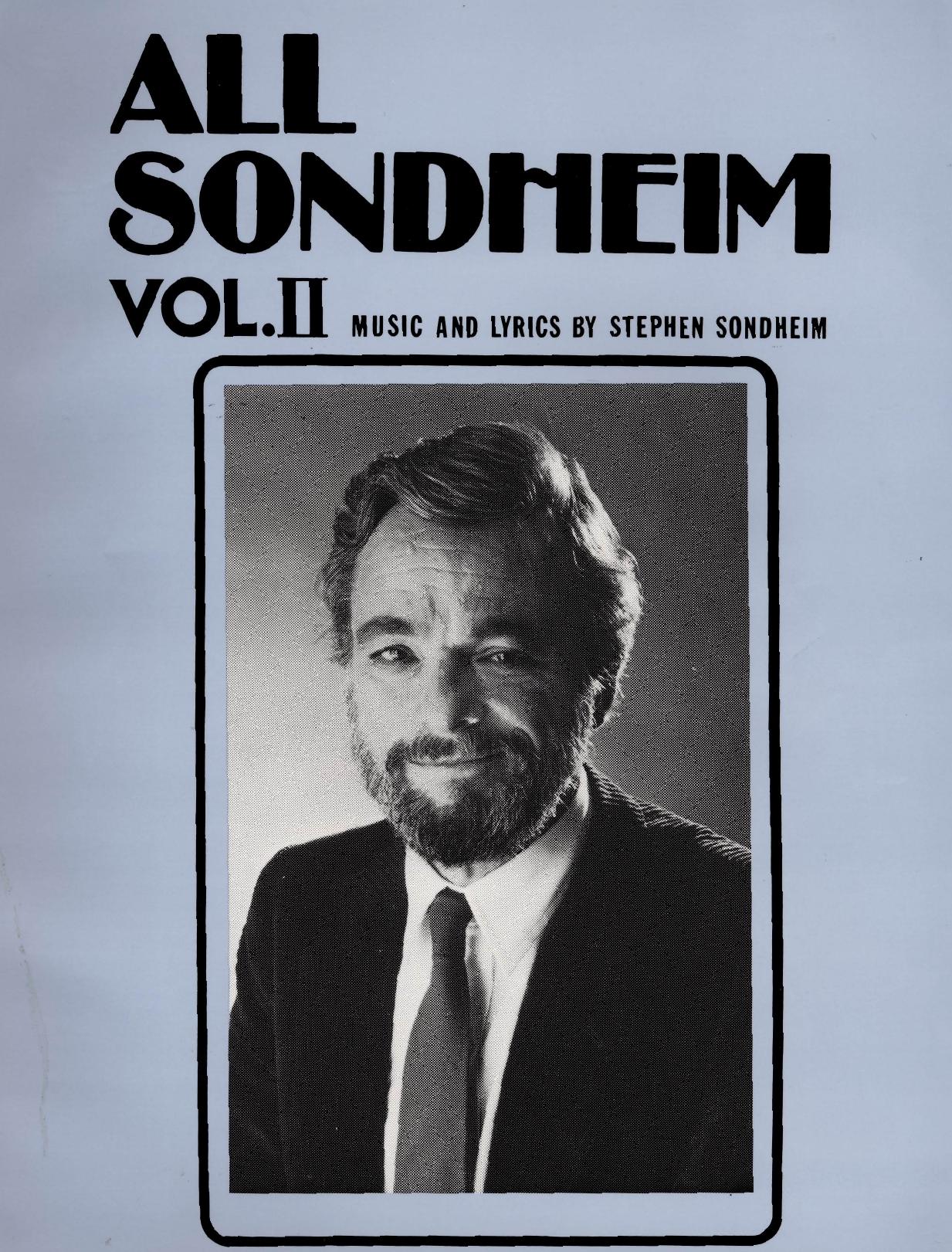

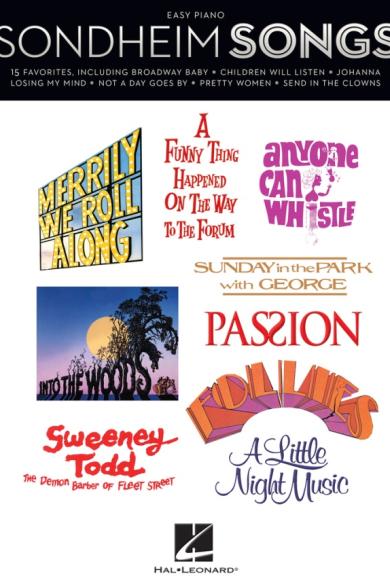

His melodic writing is equally sophisticated. He often defies conventional melodic trends, writing short, motivic units that are repeated and developed for dramatic effect. He is not afraid to use large, angular intervals that outline complex harmonies, and he frequently disrupts meter and hypermeter to match the natural rhythm of speech and the psychological state of his characters. His approach to form is also highly flexible, as seen in the continuous, rhapsodic structure of some of his longer sequences, designed to avoid applause and maintain dramatic momentum.
The Best Songs and Compositions
Main article on Wikipedia: Works of Stephen Sondheim
The breadth and quality of Sondheim’s songbook are staggering. As a lyricist, he wrote the words for two of the most beloved scores in history: Leonard Bernstein’s West Side Story and Jule Styne’s Gypsy. Songs like "Somewhere," "Maria," "Tonight," and "Everything's Coming Up Roses" are masterclasses in lyrical craftsmanship and dramatic economy.
As a composer-lyricist, his catalogue is a treasure trove of dramatic songs that function as miniature plays. Highlights include:
- "Send in the Clowns" from A Little Night Music: A hauntingly beautiful and deceptively simple ballad that became his only genuine pop hit, capturing a moment of bittersweet romantic reckoning.
- "The Ladies Who Lunch" from Company: A searing, drunken aria of self-loathing and social commentary, famous for its intricate internal rhymes and devastating character arc.
- "Being Alive" from Company: A soaring, emotionally cathartic anthem about the terrifying necessity of human connection, driven by jazz-inflected harmonies and characteristic Sondheim chromaticism.
- "Losing My Mind" from Follies: A poignant ballad of obsession and regret, built on a sophisticated chromatic foundation.
- "A Little Priest" from Sweeney Todd: A gruesome yet hilarious comic duet that exemplifies his ability to blend horror and humor through brilliant wordplay and a jaunty, music-hall-inflected melody.
- "Finishing the Hat" from Sunday in the Park with George: A profound meditation on the artist’s solitary devotion to his craft, perfectly marrying music and lyric to the character of Georges Seurat.
- "Rose's Turn" from Gypsy: A shattering eleven-o'clock number that deconstructs the stage mother archetype, blending vaudeville pastiche with raw psychological fury.
- "Not a Day Goes By" from Merrily We Roll Along: A heartbreakingly beautiful ballad of enduring love and loss, praised for its melodic elegance and emotional directness.
Sondheim in Film and Musical Adaptations
While Sondheim’s primary domain was the stage, his work has had a significant presence in film. He composed the scores for Alain Resnais’s Stavisky (1974) and co-composed the score for Warren Beatty’s Reds (1981). He also wrote songs for the cult classic The Seven-Per-Cent Solution (1976) and The Birdcage (1996). His most notable cinematic achievement as a songwriter was for Warren Beatty’s Dick Tracy (1990), for which the sultry ballad "Sooner or Later" won the Academy Award for Best Original Song.
Several of his stage musicals have been adapted into films. The 1961 film of West Side Story (for which he wrote the lyrics) is a landmark of the genre. Later adaptations include A Little Night Music (1977), Sweeney Todd: The Demon Barber of Fleet Street (2007, directed by Tim Burton), Into the Woods (2014), and Steven Spielberg’s acclaimed 2021 remake of West Side Story. The documentary Original Cast Album: Company (1970) by D.A. Pennebaker is also a crucial record of his creative process.
Key Collaborations
Sondheim’s genius was often sparked by fruitful partnerships. His most important early mentor was Oscar Hammerstein II, who provided both a surrogate family and a rigorous artistic education. He had a legendary, decade-long collaboration with producer-director Hal Prince, a partnership that produced a staggering run of innovative shows including Company, Follies, A Little Night Music, Pacific Overtures, Sweeney Todd, and Merrily We Roll Along. After his partnership with Prince ended, Sondheim found a vital new collaborator in playwright and director James Lapine. Together they created Sunday in the Park with George (which won the Pulitzer Prize), Into the Woods, and Passion, shows that are often considered his most emotionally resonant and artistically mature works.
Awards and Honors
Main article on Wikipedia: List of awards and nominations received by Stephen Sondheim
Stephen Sondheim’s trophy cabinet is one of the most crowded in the history of the arts. He won a record-setting eight Tony Awards (more than any other composer), including a Special Tony Award for Lifetime Achievement in the Theatre in 2008. He also received an Academy Award for "Sooner or Later," eight Grammy Awards, a Laurence Olivier Award, and the Pulitzer Prize for Drama for Sunday in the Park with George. Beyond these competitive awards, he was honored with the Kennedy Center Honors in 1993 and the Presidential Medal of Freedom, the nation's highest civilian honor, awarded by President Barack Obama.
Influences and Legacy
Sondheim’s influences were as eclectic as his output. He drew from classical music of the Romantic and Impressionist eras, the Great American Songbook of Tin Pan Alley and Broadway, and the theatrical innovations of Hammerstein and his contemporaries. He synthesized these sources into a style that was entirely his own, one that has in turn become a primary influence for subsequent generations.
His legacy is immeasurable. He "changed the very nature of the American musical," proving that it could be a vehicle for profound psychological insight, intellectual rigor, and moral complexity. Artists from Lin-Manuel Miranda, who considered Sondheim a mentor, to Jonathan Larson (Rent) and countless others have built upon the foundation he laid. The documentary Best Worst Thing That Ever Could Have Happened and the recent film adaptation of Merrily We Roll Along attest to the enduring fascination with his creative process and his work. Tributes from figures like Hugh Jackman, who said Sondheim "fundamentally shifted an entire art form," and Uzo Aduba, who called him "the best there ever was," capture the profound respect and love he commanded.
Additional Notes
Beyond his work as a composer and lyricist, Sondheim was a celebrated teacher and mentor, generously sharing his knowledge with younger artists. He was also a noted author, publishing two volumes of annotated lyrics, Finishing the Hat and Look, I Made a Hat, which offer invaluable insight into his creative process and the craft of songwriting. His wit and intelligence were legendary, as evidenced by his frequent appearances on television and in interviews, where he could dissect the mechanics of a song with the precision of a surgeon and the passion of a devoted fan.
Stephen Sondheim did not just write songs; he wrote dramatic truths set to music. He took the American musical from a place of escapist entertainment and forged it into a crucible for exploring the human condition in all its messy, contradictory, and beautiful complexity. His work remains a towering achievement, a standard of excellence that will continue to inspire and challenge for generations to come. He was, and remains, the undisputed master of the modern musical.
Browse in the Sheet Music Library:
Or browse in the categories menus & download the Library Catalog PDF: