
Scores for all instruments: 16,000+ (active and growing), over 236,000 pages.
All genres and levels: Jazz & Blues, Rock & Pop, Classical & Contemporary, Film & Musicals;
books & biographies; methods, études, play-along tracks (MP3) for Jazz & Rock.
Access & benefits: US$15.99 one-time payment, valid for lifetime, full Library access.
Table of Contents
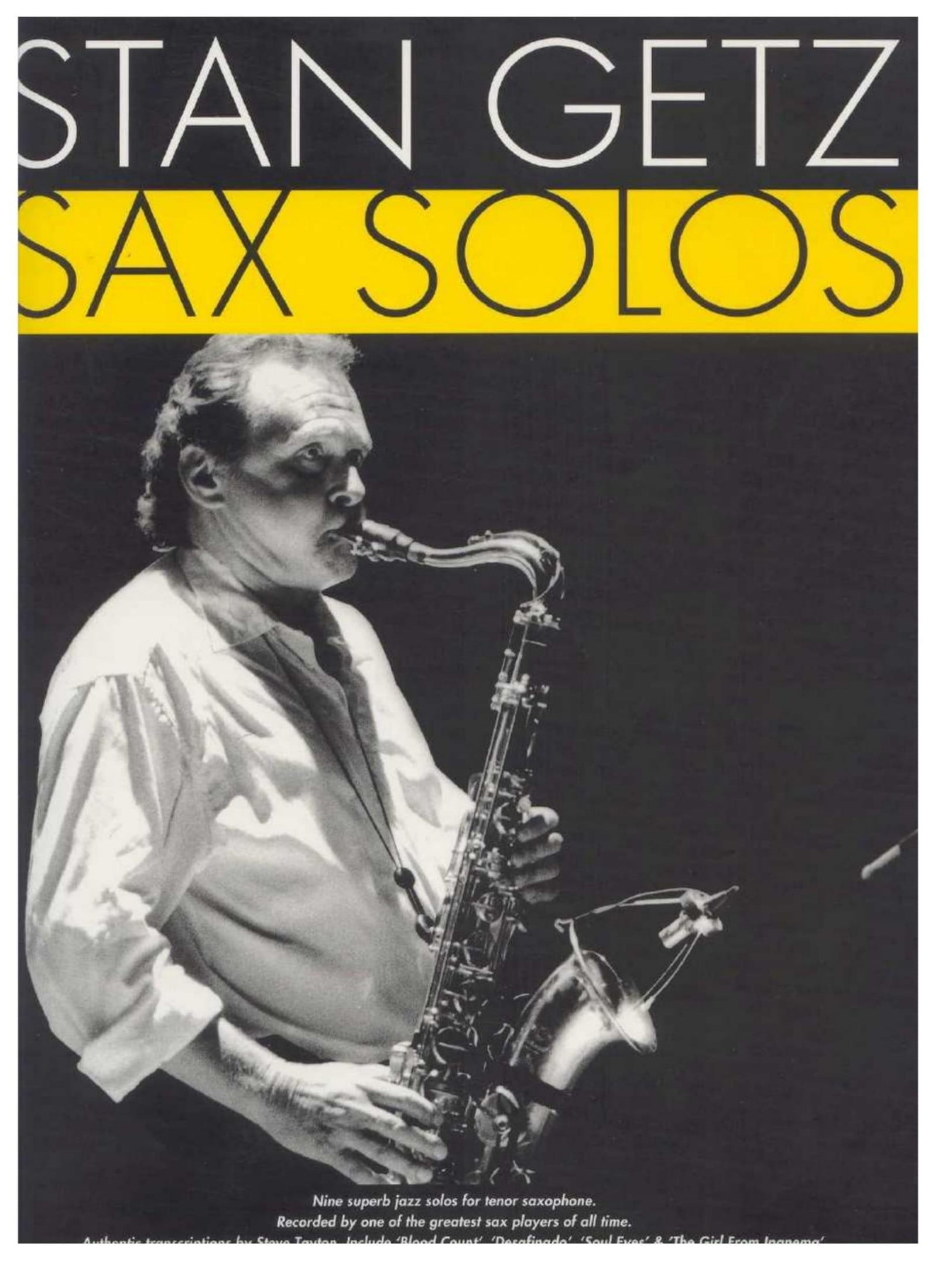
Stan Getz (1927-1991)

The best sheet music download from our Library.
For the price of a single songbook, get a full Sheet Music Library!
Please, subscribe to our Sheet Music Library. Sheet music should be accessible and affordable for all musicians, from professionals to absolute beginners.
Stan Getz - Soul Eyes | Live at Munich Philharmonie | 1990
Stan Getz: The Sound of Cool, the Soul of Bossa Nova, and the Melodic Genius of the Tenor Saxophone
Few instrumentalists in jazz history have been defined by a single, transcendent quality as completely as Stan Getz was by his sound. Known simply as “The Sound,” Getz possessed a warm, lyrical, and feathery tone that was instantly recognizable and unsurpassably beautiful. His career, spanning from the big band era of the 1940s to his death in 1991, was a remarkable journey through swing, bebop, cool jazz, bossa nova, and post-bop fusion. While the general public most readily associates him with the global bossa nova craze he helped ignite with “The Girl from Ipanema,” Getz was a far more complex and profound artist. He was a melodic storyteller of the highest order, a sophisticated harmonic improviser, and a musician whose personal struggles with addiction only seemed to deepen the poignancy of his art. As John Coltrane famously said, “We would all play like Stan Getz, if we could”.
Search your favorite sheet music in the Sheet Music Library Catalog

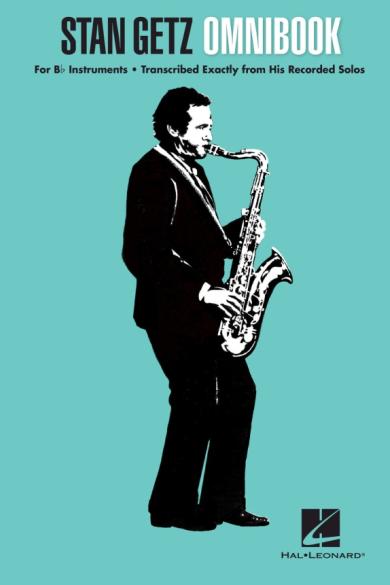



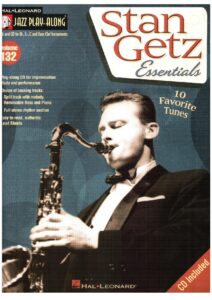
Early Life and the Birth of "The Sound"
Stanley Getz was born on February 2, 1927, in Philadelphia, Pennsylvania, to Russian Jewish immigrants, and grew up in the Bronx, New York. Encouraged by his mother, he initially experimented with several instruments, including the harmonica, bass, and bassoon, before settling on the tenor saxophone as a teenager. A prodigious talent, Getz quit school in the ninth grade to pursue music professionally, and by the age of fifteen, he was already working in big bands. He received his initial big-band training in the orchestras of Jack Teagarden and Stan Kenton, but it was his stint with Woody Herman’s Second Herd from 1947 to 1949 that catapulted him to national prominence. As a member of the celebrated “Four Brothers” saxophone section, alongside Herbie Steward, Zoot Sims, and Serge Chaloff, Getz became a star. His solo on the ballad “Early Autumn” was a revelation, showcasing a mellow, “cool” style that stood in stark contrast to the aggressive, fiery bebop that was then in vogue. This was the first full flowering of “The Sound”—a tone that combined the airy lightness of Lester Young with a burnished, intimate quality that was entirely Getz’s own.
The Architect of Cool: Style, Harmony, and Technique
Main article on Wikipedia: Stan Getz discography
Stan Getz’s musical identity was built upon a foundation of lyrical melodicism, but his artistry was far more sophisticated than his “cool jazz” label often suggests. His approach to the saxophone was a unique fusion of disparate influences. He deeply absorbed Lester Young’s relaxed, melodic conception and phrasing, but he was also one of the first tenor saxophonists to fully master the harmonic vocabulary of Charlie Parker’s bebop. A 2009 dissertation argues that Getz was, in fact, a “forgotten bebop tenor saxophonist,” whose improvisational vocabulary in the early 1950s was a sophisticated synthesis of swing-era melodicism and Parker’s harmonic innovations.
His improvisational technique was characterized by a remarkable internal logic and a conversational quality. He constructed solos with clear antecedent-consequent structures, using question-and-answer phrases, call-and-response patterns, and masterful tension-and-release dynamics to tell a story. He would often use sustained pitches to highlight harmonic tensions or delay resolutions, creating a profound sense of expectancy. Another hallmark of his style was the use of step-wise melodic motion, often chromatically or diatonically descending, which provided a lyrical framework for his more complex harmonic ideas. His rhythmic feel was also highly personal, marked by a fluid sense of swing that could be both relaxed and intensely driving. Even when navigating complex, modal, or fusion-oriented harmonic structures—as he did on later collaborations with Chick Corea—his improvisations remained strictly melodic, never sacrificing lyricism for technical display. His technique was never an end in itself; it was always in service of pure emotional expression.
The Bossa Nova Revolution and the Hits
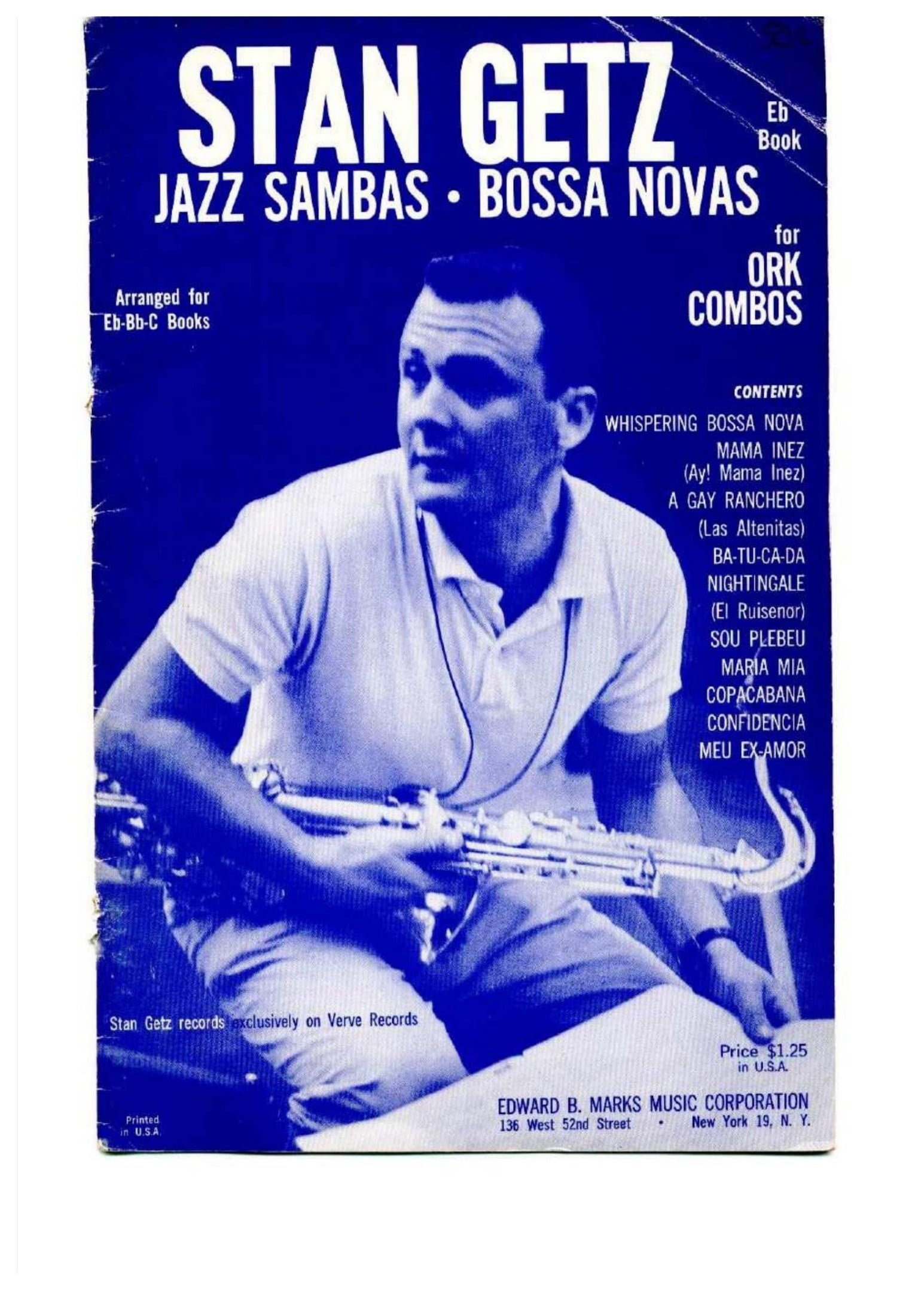
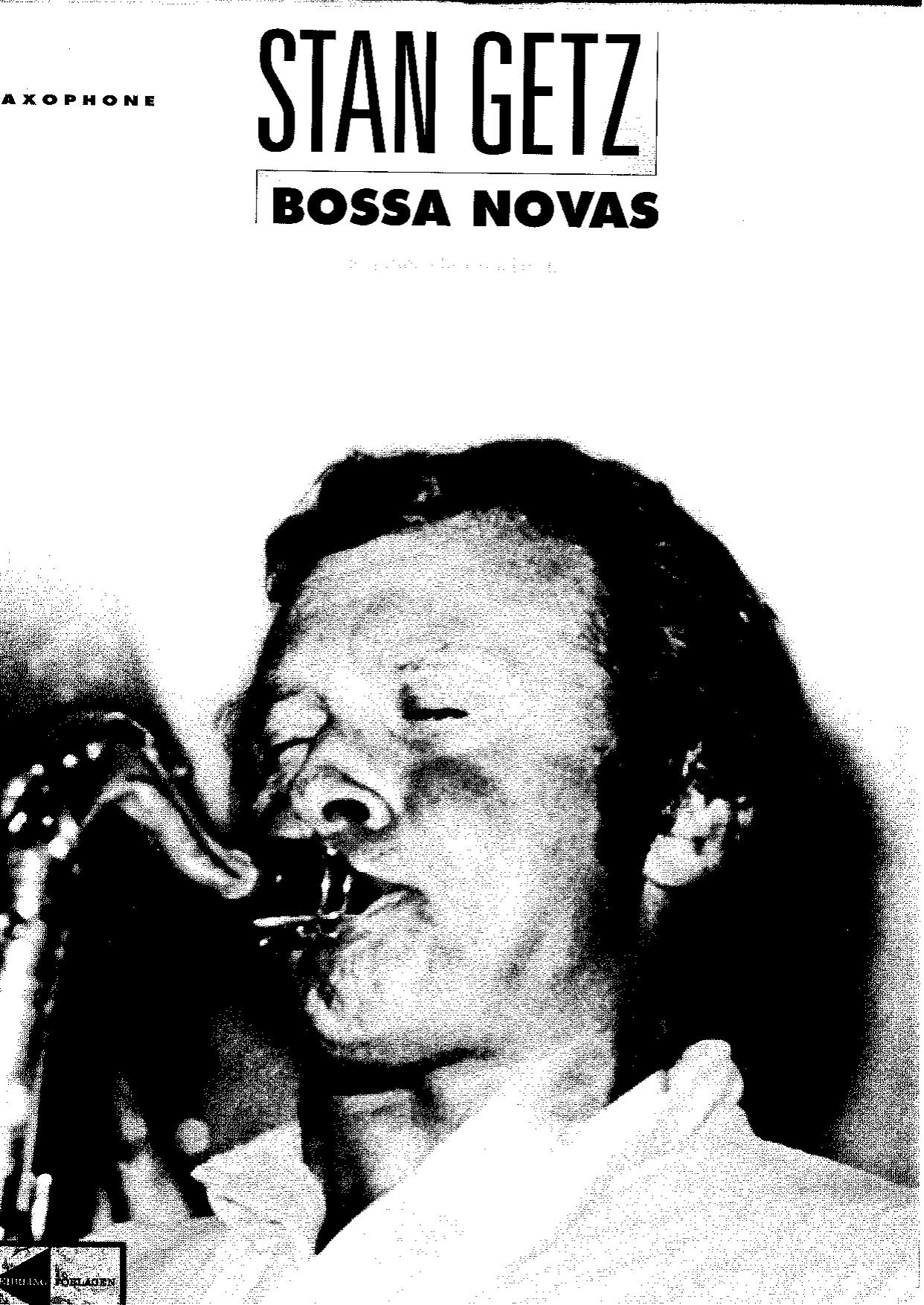
While Getz was already a respected jazz artist, his career reached a new commercial and cultural zenith in the early 1960s when he became the primary American popularizer of bossa nova. The pivotal moment came through a collaboration with guitarist Charlie Byrd, who had recently toured Brazil and introduced Getz to the music of Antonio Carlos Jobim. Their 1962 album, Jazz Samba, was a groundbreaking success, featuring the hit “Desafinado,” which won Getz his first Grammy Award for Best Jazz Performance – Soloist or Small Group.
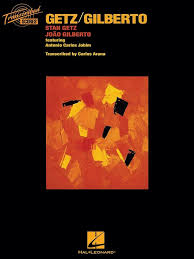
The follow-up, 1964’s Getz/Gilberto, recorded with João Gilberto, Antonio Carlos Jobim, and the then-unknown Astrud Gilberto, became one of the best-selling jazz albums of all time. It contained the immortal “The Girl from Ipanema,” a global phenomenon that won the Grammy for Album of the Year and made Getz a household name. The album’s success cemented his association with bossa nova, a style perfectly suited to his gentle, rhythmic, and melodically luxuriant approach. Other essential recordings from this vein include Jazz Samba Encore! with Luiz Bonfá and the hit “Samba de Uma Nota Só” (One Note Samba). However, Getz’s definitive recordings extend far beyond bossa nova. His 1961 album Focus, a chamber jazz suite composed and arranged by Eddie Sauter, is a singular masterpiece where Getz was the sole improviser over sophisticated string arrangements, pushing the boundaries of jazz with strings. Later in his career, albums like Sweet Rain (1967) and Captain Marvel (recorded 1972, released 1975) showcased his adaptability, with the latter featuring his fiery interplay with Chick Corea’s compositions like “La Fiesta” and “500 Miles High”. His final studio recording, the 1991 duet album People Time with pianist Kenny Barron, is a poignant and intimate capstone to his artistry.
Film, Television, and a Life in Collaborations
Stan Getz was a ubiquitous presence on screen and in the recording studio. From the mid-1950s, his music and his persona were featured in films and on television. He appeared in the 1956 film The Benny Goodman Story, performed on TV shows like The Perry Como Show and Shindig!, and his music was prominently featured in films such as the French Les Tricheurs (1958) and Death of a Corrupt Man (1977). He composed and performed the score for Arthur Penn’s 1965 existential noir Mickey One, a demanding and innovative jazz soundtrack, and even appeared on screen in Get Yourself a College Girl (1964) and The Marrying Man (1991).
His genius was fueled and reflected by his collaborations. He worked with an astonishing array of talent: the guitarists Charlie Byrd, João Gilberto, and Luiz Bonfá; the pianists Oscar Peterson, Chick Corea, and Kenny Barron; the vibraphonist Gary Burton; and the drummers Roy Haynes and Tony Williams. He also recorded with icons like Dizzy Gillespie and Gerry Mulligan. These partnerships were not mere side-projects; they were the “Getz laboratory of extended complex harmony,” where he constantly challenged himself and his peers. His personal life, however, was often turbulent. He struggled with heroin addiction until his late twenties and then with severe alcoholism for many years, a battle that led to a period of imprisonment in 1954 and contributed to his complex, sometimes volatile temperament. He achieved sobriety in the final five years of his life, a period that coincided with some of his most profound and spiritually searching music.
Awards, Influence, and an Enduring Legacy
Getz’s contributions were recognized with five Grammy Awards (from seventeen nominations) and induction into the DownBeat Jazz Hall of Fame. His influence on the tenor saxophone is immeasurable. He demonstrated that a “cool,” lyrical approach could be just as virtuosic and harmonically sophisticated as the more aggressive hard bop style. He inspired a generation of saxophonists who prioritized beauty of tone and melodic storytelling. His popularization of bossa nova permanently expanded the rhythmic and harmonic palette of jazz, creating a lasting bridge between North American jazz and Brazilian music. Beyond music, his life story—a saga of extraordinary genius intertwined with self-destruction and eventual redemption—has become a part of jazz lore.
When Stan Getz died of liver cancer on June 6, 1991, at the age of 64, the jazz world mourned a true original. Dizzy Gillespie eulogized him simply as “sheer genius” and “the most melodic player,” a sentiment echoed by countless peers and fans. His legacy is not just the iconic hits that defined an era, but the hundreds of recordings that reveal a restless, searching artist who never stopped growing. From the breathtaking purity of “Early Autumn” to the knowing, tender wisdom of People Time, Stan Getz’s music remains a testament to the power of a beautiful sound and a singing heart. He was, and remains, a singular voice—a pioneer who changed the face of jazz, not through revolution, but through the irresistible pull of pure melody.
Browse in the Sheet Music Library:
Or browse in the categories menus & download the Library Catalog PDF: