
Scores for all instruments: 16,000+ (active and growing), over 236,000 pages.
All genres and levels: Jazz & Blues, Rock & Pop, Classical & Contemporary, Film & Musicals;
books & biographies; methods, études, play-along tracks (MP3) for Jazz & Rock.
Access & benefits: US$15.99 one-time payment, valid for lifetime, full Library access.
Table of Contents
Stevie Wonder (b. 1950)
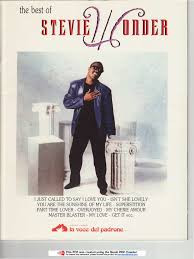
The best sheet music download from our Library.
For the price of a single songbook, get a full Sheet Music Library!
Please, subscribe to our Sheet Music Library. Sheet music should be accessible and affordable for all musicians, from professionals to absolute beginners.
Stevie Wonder Greatest Hits
Stevie Wonder: The Definitive Portrait of a Musical Visionary
Few artists in the history of popular music have exerted as profound and pervasive an influence as Stevie Wonder. Born Stevland Hardaway Judkins on May 13, 1950, in Saginaw, Michigan, and later known as Stevland Hardaway Morris, Wonder emerged from the Motown hit factory as a child prodigy and evolved into one of the most creative, self-contained, and socially conscious musical figures of the twentieth century. Blind from birth due to retinopathy of prematurity, he was a skilled multi-instrumentalist by the age of eight, mastering the harmonica, piano, and drums before he had reached double digits. His journey from “Little Stevie Wonder,” the thirteen-year-old sensation who topped the charts with “Fingertips, Pt. 2,” to the mature architect of a run of albums in the 1970s that remain a benchmark for artistic autonomy in popular music, is a story of prodigious talent, fierce independence, and an unwavering commitment to humanity.
Search your favorite sheet music in the Sheet Music Library Catalog
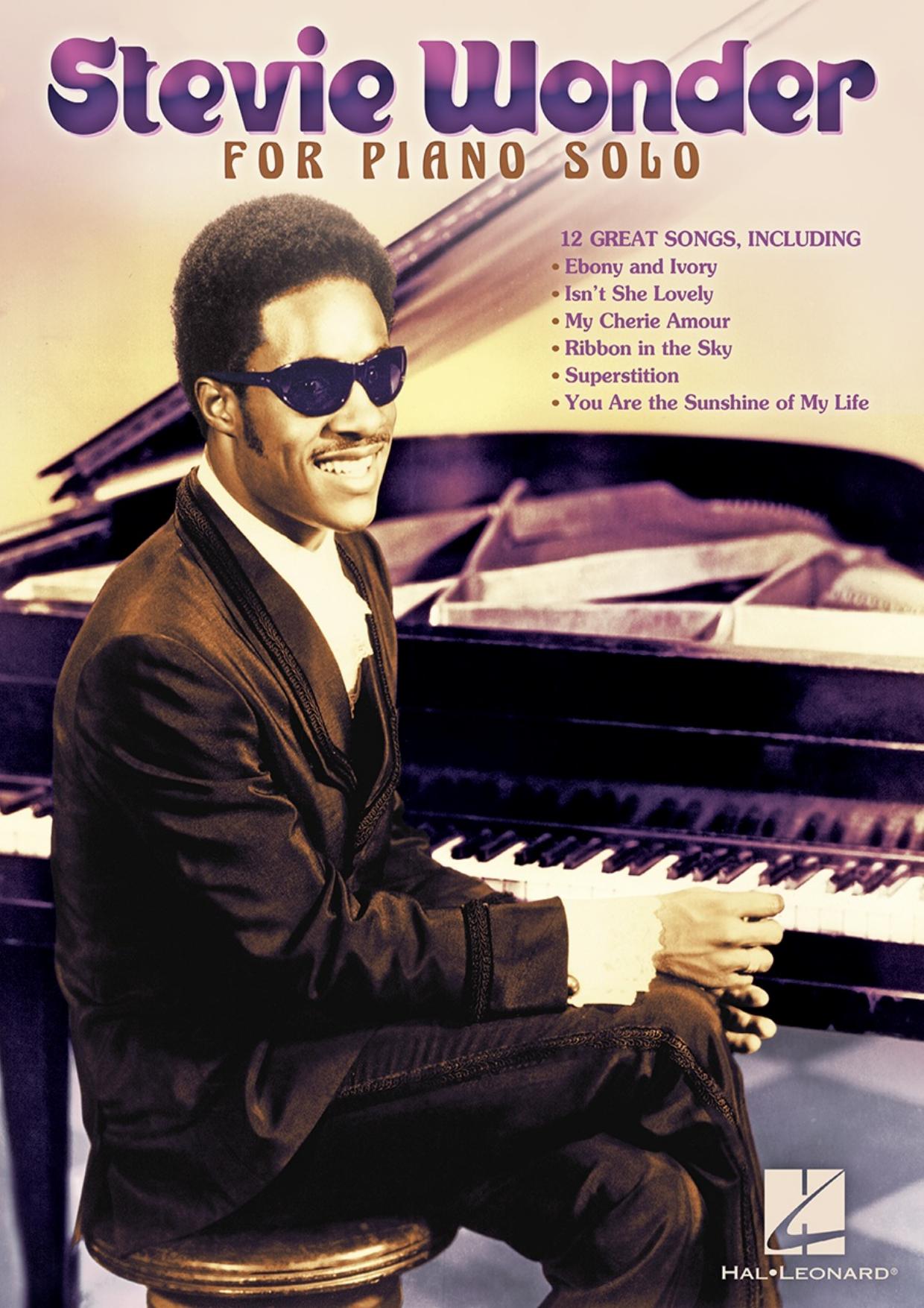
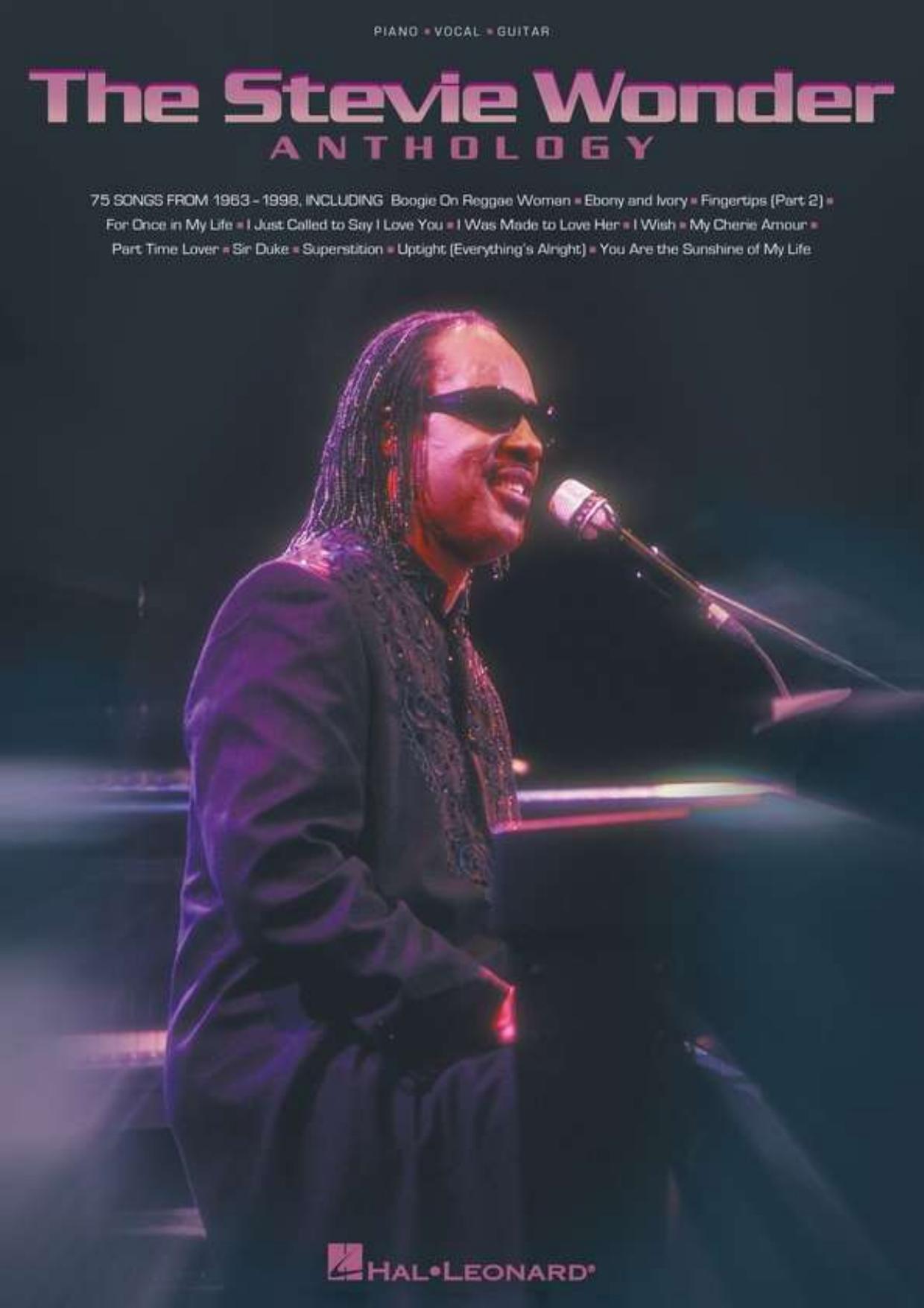


From Prodigy to Auteur: The Motown Years and Creative Liberation
Wonder was introduced to Motown Records by Ronnie White of the Miracles and signed by label president Berry Gordy, Jr., at the age of eleven. His early hits, including “Uptight (Everything’s Alright),” “I Was Made to Love Her,” and “My Cherie Amour,” showcased a maturing talent, but they were produced within Motown’s collaborative “hit factory” system. The turning point came as Wonder approached his twenty-first birthday in 1971, when his original contract expired. Armed with leverage and a newfound artistic vision—partly inspired by Marvin Gaye’s landmark album What’s Going On—Wonder renegotiated with Motown, securing complete creative control over his music. From that point forward, he would write, produce, and largely perform his own material, releasing albums only when he deemed them finished.
This liberation inaugurated an unparalleled creative streak. Music of My Mind (1972) and Talking Book (1972) were the first fruits, with the latter yielding the iconic “Superstition” and proving that Wonder could achieve a pop blockbuster without Motown’s traditional methods. This was followed by the remarkable trio of Innervisions (1973), Fulfillingness’ First Finale (1974), and Songs in the Key of Life (1976), each of which won the Grammy Award for Album of the Year—a feat unmatched by any other artist for three consecutive studio albums. These albums were not merely collections of songs but cohesive, thematically ambitious works that fused soul, funk, jazz, gospel, rock, and reggae into a singular musical language.



Musical Style and Harmony: A Jazz-Influenced Pop Vocabulary
Stevie Wonder’s musical style is defined by its encyclopedic range and its seamless synthesis of African-American musical traditions. He draws from rhythm and blues, soul, funk, rock, and jazz, but the foundation of his art is rooted in the gospel music he absorbed in a Baptist church during his Detroit childhood. This gospel sensibility manifests in his ecstatic vocal delivery, his use of call-and-response, and the emotional intensity that permeates even his most celebratory songs.
His harmonic language, however, is where his sophistication as a composer is most strikingly evident. Analyses of his “classic period” (1972–1976) reveal a composer whose melodic relationships are frequently governed by a fundamentally pentatonic process, while his harmonic relationships are largely governed by jazz-influenced tonal processes. Wonder’s music is replete with advanced harmonic devices rarely found in pop music: modal interchange, constant structure, chromatic progressions, and backdoor cadences. His chord progressions often employ sophisticated voice leading, as heard in the jazz harmony of “You Are the Sunshine of My Life,” where triads and extended chords move with a smoothness that belies their complexity. Furthermore, his use of unconventional modulations and his incorporation of Dorian and other modal colors demonstrate a deep understanding of jazz theory that he deployed in the service of accessible, melodic pop. This harmonic richness, combined with his pioneering use of state-of-the-art synthesizers and studio effects, allowed him to orchestrate his songs with startlingly novel sounds, making him a vanguard figure in the evolution of Black popular music.
The Guitarist and Multi-Instrumentalist: A Groove Architect
While Stevie Wonder is most celebrated as a keyboardist, vocalist, and harmonica player, his approach to the guitar—and his overall multi-instrumental methodology—is integral to his sound. Wonder is a virtual one-man band, and his understanding of the guitar is that of a composer and arranger rather than a virtuoso soloist. His guitar parts, often performed on record by him or crafted for his touring band, are celebrated for their rhythmic precision and their role in constructing the “autotelic groove”—self-generating, repeated figures that form the rhythmic and harmonic foundation of songs like “I Wish” and “Golden Lady”.
His influence on guitarists is most clearly seen in the way his music has been adapted for solo fingerstyle guitar. Arrangers must grapple with his keyboard-based voicings and basslines, translating them into techniques such as walking basslines, harp-like chordal passages, and percussive “pop, click, and slap” effects to capture the funk and groove of his compositions. The iconic riff of “Superstition,” while often associated with the clavinet, is underpinned by a clean guitar part that locks in with the keyboard to create its signature timbre, illustrating how Wonder conceptualized guitar as a crucial component of his rhythmic palette. His rhythmic sensibility also extends to reggae, with his “Master Blaster (Jammin’)” featuring a “skank” guitar part that is doubled by clavinet, demonstrating his ability to absorb and reinterpret global musical idioms.
The Essential Compositions: A Canon of Classic Songs
The breadth of Wonder’s songbook is staggering, encompassing era-defining funk anthems, tender ballads, and socially piercing narratives. Any list of his best songs must include the clavinet-driven “Superstition” (1972), a masterclass in funk groove and one of the most recognizable riffs in popular music. “Living for the City” (1973) is a cinematic soul epic that traces the journey of a young Black man from Mississippi to the urban North, only to encounter systemic injustice, its narrative power matched by its musical ambition.
His romantic songwriting is equally definitive. “You Are the Sunshine of My Life” (1972) is a jazz-inflected ballad of pure devotion, while “My Cherie Amour” (1969) remains one of the most enduring love songs of the Motown era. “Isn’t She Lovely” (1976), written for his daughter Aisha, captures a joy so infectious it has become a universal anthem of paternal love. The jazz homage “Sir Duke” (1976) is a celebratory roll call of jazz greats, powered by a horn section and an irrepressible groove. Later hits like “Part-Time Lover” (1985) and “I Just Called to Say I Love You” (1984) demonstrated his continued ability to craft chart-topping pop, the latter winning him an Academy Award. Rolling Stone’s ranking of his fifty greatest songs underscores the depth of his catalog, which includes everything from the synth-funk of “Race Babbling” to the straight-ahead jazz-funk of “Contusion”.
Film, Soundtrack, and Theatrical Contributions
While Wonder’s primary legacy is as a recording artist, he has made significant, if occasionally overlooked, contributions to film music. His first major soundtrack work was for the 1978 documentary The Secret Life of Plants, an ambitious project that yielded the exploratory synth-funk of “Race Babbling,” a track that prefigured the rhythmic innovations of Detroit techno. He achieved his most commercially successful film moment with the 1984 romantic comedy The Woman in Red, for which he wrote and performed the score and the smash hit “I Just Called to Say I Love You,” a song that won both the Academy Award and the Golden Globe for Best Original Song.
His most critically acclaimed soundtrack work arrived in 1991 with Spike Lee’s Jungle Fever. The album was a significant critical comeback, featuring a diverse array of styles from bubbly funk hits like “Gotta Have You” to sentimental power ballads and jazzy slow jams, demonstrating his continued vitality as a composer. Wonder’s music has also found a home in musical theater; his songs were featured in the Broadway jukebox musical Hot Feet (2006), and his compositions have been interpreted by cast recordings, such as his harmonica and vocal contribution to the Rent Original Broadway Cast Recording. In 2016, he recorded “Faith” with Ariana Grande for the animated film Sing, marking his first film recording in over twenty-five years.
A Life in Collaboration: Generous Genius
Wonder’s collaborative spirit is vast, extending across generations and genres. One of his most famous duets is “Ebony and Ivory” (1982) with Paul McCartney, a pop anthem for racial unity on which Wonder also played piano, synthesizers, drums, and percussion. He lent his unmistakable harmonica to Elton John’s “I Guess That’s Why They Call It the Blues” (1983) and to Chaka Khan’s “I Feel for You” (1984). He was a key voice and instrumentalist on the charity single “That’s What Friends Are For” (1985) alongside Dionne Warwick, Gladys Knight, and Elton John, helping to raise millions for AIDS research.
His collaborations span the spectrum of popular music. He played on and wrote for The Beach Boys, contributed harmonica to tracks by Sting, Herbie Hancock, and Drake, and duetted with Whitney Houston on “We Didn’t Know” (1990). He has worked with everyone from Frank Sinatra and Tony Bennett to Daft Punk (on “Get Lucky”) and Ariana Grande, and even contributed to a song by The Rolling Stones with Lady Gaga in 2023. This willingness to share his gifts has made him a beloved figure across the musical universe.
Awards, Honors, and a Legacy of Activism
Stevie Wonder’s trophy cabinet is one of the most crowded in music history. He has won twenty-five Grammy Awards, a tally that places him among the most honored artists of all time. He is one of only three artists—alongside Paul Simon and Frank Sinatra—to win Album of the Year three times, and the only one to do so with three consecutive studio albums. He received the Grammy Lifetime Achievement Award in 1996, was inducted into the Rock and Roll Hall of Fame in 1989, and has six recordings in the Grammy Hall of Fame. In 2009, he was designated a United Nations Messenger of Peace.
His legacy, however, extends far beyond awards. Wonder is a pivotal figure in the struggle for racial and social justice. His 1980 song “Happy Birthday” was a crucial catalyst in the campaign to establish Martin Luther King Jr. Day as a national holiday in the United States, and his lobbying efforts are widely credited with helping to make it a reality. He was a vocal opponent of apartheid and has consistently used his platform to advocate for AIDS charities, homelessness, and other causes.
Musically, his influence is incalculable. He is credited as a pioneer by musicians across R&B, pop, soul, gospel, funk, and jazz, and his early adoption of synthesizers, drum machines, and samplers paved the way for hip-hop and modern production. His catalog has been a deep well for hip-hop producers, with his songs sampled by everyone from Notorious B.I.G. to J. Cole and Drake. As a Black artist who secured complete creative control and used it to create a body of work that was both deeply personal and universally resonant, Wonder provided a template for artistic self-determination that continues to inspire.
Stevie Wonder’s story is one of triumph over circumstance, of genius refined by discipline, and of a profound humanity that radiates through every note he plays and every word he sings. From the blind child prodigy in Saginaw to the elder statesman of American song, he has not only soundtracked generations but has fundamentally expanded the possibilities of popular music itself. His is a legacy of vision—artistic, technological, and social—that will endure as long as people seek to be moved, challenged, and uplifted by the power of a song.
Discography
Main article on Wikipedia: Stevie Wonder discography
- The Jazz Soul of Little Stevie (1962)
- Tribute to Uncle Ray (1962)
- With a Song in My Heart (1963)
- Stevie at the Beach (1964)
- Up-Tight (1966)
- Down to Earth (1966)
- I Was Made to Love Her (1967)
- Someday at Christmas (1967)
- Eivets Rednow (1968)
- For Once in My Life (1968)
- My Cherie Amour (1969)
- Signed, Sealed & Delivered (1970)
- Where I'm Coming From (1971)
- Music of My Mind (1972)
- Talking Book (1972)
- Innervisions (1973)
- Fulfillingness' First Finale (1974)
- Songs in the Key of Life (1976)
- Stevie Wonder's Journey Through "The Secret Life of Plants" (1979, soundtrack)
- Hotter than July (1980)
- The Woman in Red (1984, soundtrack)
- In Square Circle (1985)
- Characters (1987)
- Jungle Fever (1991, soundtrack)
- Conversation Peace (1995)
- A Time to Love (2005)
Browse in the Sheet Music Library:
Or browse in the categories menus & download the Library Catalog PDF: