
Scores for all instruments: 16,000+ (active and growing), over 236,000 pages.
All genres and levels: Jazz & Blues, Rock & Pop, Classical & Contemporary, Film & Musicals;
books & biographies; methods, études, play-along tracks (MP3) for Jazz & Rock.
Access & benefits: US$15.99 one-time payment, valid for lifetime, full Library access.
Table of Contents
Taylor Swift
Taylor Swift - The Tortured Poets Department
Please, subscribe to our Sheet Music Library. Sheet music should be accessible and affordable for all musicians, from professionals to absolute beginners.


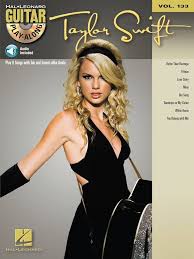
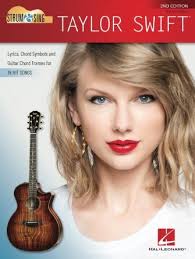
The best sheet music download from our Library.
For the price of a single songbook, get a full Sheet Music Library!
Few artists in the 21st century have reshaped the landscape of popular music, celebrity, and industry economics quite like Taylor Swift. From her origins as a teenage country songwriter in Nashville to her current status as a generational pop polymath and cultural force, Swift’s career is a study in perpetual reinvention, narrative control, and an almost unprecedented connection with a global audience.
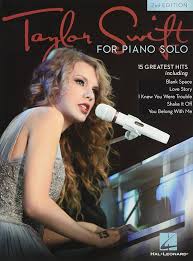

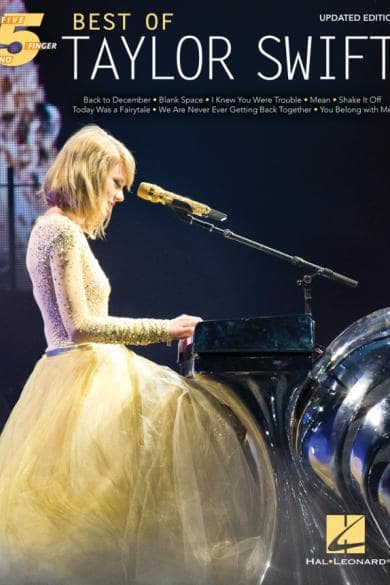


Search your favorite sheet music in the Sheet Music Library Catalog
Biography: From Pennsylvania to the Pinnacle of Pop
Taylor Swift (born Taylor Alison Swift) was born on December 13, 1989, in West Reading, Pennsylvania, to Scott, a stockbroker, and Andrea, a marketing executive. Her grandmother, Marjorie Finlay, was an opera singer whose performances left one of Swift’s earliest musical memories. Though she briefly aspired to a career in musical theater, a documentary about Faith Hill redirected her ambition toward country music and Nashville. At age 11, she traveled to Music City with her mother to submit demo tapes, only to be rejected by every label she visited—a setback that pushed her toward songwriting. She learned guitar at 12 and soon began writing her own material. By 14, she had signed a publishing deal with Sony/ATV Tree, becoming the youngest person in the company’s history to do so, and her family relocated to Hendersonville, Tennessee, to support her career.
After leaving RCA Records, which wanted to keep her in development until she turned 18, Swift performed at the Bluebird Cafe in 2004, where she caught the attention of Scott Borchetta. She signed with his fledgling Big Machine Records in 2005, famously on the condition that she would write her own songs. Her self-titled debut arrived in 2006, and its lead single, “Tim McGraw,” announced a confessional, diaristic voice that would define her career. Fearless (2008) transformed her into a mainstream phenomenon, becoming the best-selling album of 2009 in the United States and earning her a historic Album of the Year Grammy at just 20 years old—the youngest artist ever to win the category at the time.
The subsequent decade saw a series of deliberate artistic pivots. Speak Now (2010) was written entirely by Swift alone, a rare feat for a major-label pop artist, and Red (2012) began folding rock, dubstep, and maximalist pop into her country foundation. The full crossover arrived with 1989 (2014), a synth-pop record inspired by the shimmering grandeur of 1980s top 40. Media scrutiny following 1989 fueled the trap-imbued, “goth-punk moment of female rage” that was Reputation (2017). In 2018, she moved to Republic Records and released the eclectic Lover (2019), before the COVID-19 pandemic yielded the indie-folk excursions Folklore and Evermore (both 2020), which showcased a more restrained, narrative-driven mode.
Midnights (2022) returned to mellower pop subgenres, while The Tortured Poets Department (2024) and The Life of a Showgirl (2025) continued her exploration of soft rock and theatrical pop. Her Eras Tour (2023–2024) became the highest-grossing concert tour of all time, and its accompanying film achieved the same distinction in the concert-film category. In 2023, she became the first individual from the arts to be named Time Person of the Year.


Musical Style: A Shapeshifter’s Grammar
Swift’s stylistic evolution is not merely a matter of genre tourism; it reflects a consistent underlying philosophy: the song’s emotional truth dictates its sonic clothing. As GRAMMY.com observed, she has become one of music’s most notable shapeshifters by refusing to limit herself to one genre, moving between country, pop, folk, and beyond. Her country debut was rooted in acoustic instruments and storytelling conventions, but even then she avoided the tropes of the genre, writing about adolescent observation rather than idealized rural life. Red marked a transitional phase where country roots coexisted with rock and electronic textures, while 1989 was an “unflinching” pop record that drew heavily on the synthesized grandeur of the 1980s. Folklore and Evermore revealed a pastoral, indie-folk sensibility that prioritized atmosphere and character-driven narration, and Midnights folded in subdued electronic pop and confessional nocturnal introspection. This restlessness has allowed her to remain commercially dominant while continually resetting audience expectations.


Harmony, Melody, and Technique: The Architecture of Accessibility
Beneath the diaristic lyrics and era-defining production lies a sophisticated, often deliberately economical, approach to musical construction. Swift’s harmonic language frequently relies on the “axis” progression—I–V–vi–IV—which an academic noted gives her songs a certain “emotional flow”. This four-chord loop, heard in countless pop hits, provides a stable bed over which her melodic and lyrical details can shift. She is also fond of the F–C–Am–G progression, a close relative of the axis pattern, which appears in songs like “Patient Zero”. In more conventional pop settings, she has used the I–relative minor–IV–V structure, as heard in “ME!”. These choices are not naive; they are the harmonic equivalent of a welcoming front door, allowing listeners immediate emotional entry.
Her melodic technique is equally distinctive. Swift frequently employs what critics call the “one-note melody,” where the vocal line sustains a single pitch for extended phrases, particularly in verses. This device, which becomes more frequent as her music moves from country to pop, mimics the natural cadence of speech and emphasizes the conversational intimacy of her lyrics. By keeping the melody static while the chords shift underneath, she creates a subtle sense of movement—like “moving a light around the room casts different shadows”—and reserves the melodic ascent for choruses, making their emotional release feel earned. In her later collaborations with Max Martin and Shellback, this technique evolved into what analysts call “melodic math,” where choruses pair lyric-dense writing with exceptionally simple vocal contours, using devices like Alternating Melodic Patterns and End-of-Line Accentuators to maximize hookiness without sacrificing verbal complexity. Her bridges, often the emotional climax of a song, frequently introduce background harmonies and chordal tensions that lift the arrangement into a new register, as heard in tracks from The Life of a Showgirl.


The Best Songs and Compositions: A Canon in Motion
Main articles on Wikipedia: Taylor Swift albums discography, Taylor Swift singles discography, and List of songs by Taylor Swift
Any list of Swift’s best songs is inevitably partial, but certain compositions have become inextricable from the cultural record. “Our Song” (2006) announced her knack for self-referential storytelling and made her, at 17, the youngest artist to single-handedly write and sing a number-one country single. “Love Story” (2008) became the first country song to top the Pop Songs chart, while “You Belong with Me” (2009) fused adolescent longing with a melody that remains one of her most instantly recognizable. “All Too Well” (2012), particularly in its ten-minute Taylor’s Version, is widely regarded as her masterpiece of narrative specificity and emotional excavation, a breakup ballad that functions as a short story. “Blank Space” (2014) demonstrated her ability to weaponize media caricature into a sharp, self-aware pop hit, and “Shake It Off” became a ubiquitous anthem of resilience. The pandemic era yielded “Cardigan” and “Willow,” which showcased her folk-inflected storytelling, while “Anti-Hero” (2022) distilled modern self-loathing into a deceptively catchy synth-pop confession. More recent chart-toppers like “Cruel Summer,” “Fortnight,” and “The Fate of Ophelia” confirm that her melodic instincts remain as sharp as ever.
Film, Soundtracks, and Musical Theater
Main article on Wikipedia: Taylor Swift videography
This section lists select works only. Refer to the main article for further information.
| Films Valentine's Day (2010) The Lorax (2012) The Giver (2014) Cats (2019) All Too Well: The Short Film (2021) Amsterdam (2022) | Documentaries Miss Americana (2020) Taylor Swift: City of Lover (2020) Folklore: The Long Pond Studio Sessions (2020) Taylor Swift: The Eras Tour (2023) Taylor Swift: The Official Release Party of a Showgirl (2025) Taylor Swift: The End of an Era (2025) |
Swift’s relationship with cinema has been twofold: as a soundtrack songwriter and as an occasional actor. She wrote “Crazier” and “You’ll Always Find Your Way Back Home” for Hannah Montana: The Movie (2009), performing the former on screen. For Valentine’s Day (2010), in which she made her acting debut, she contributed “Today Was a Fairytale”. Her most significant film-musical collaboration came with Cats (2019), for which she and Andrew Lloyd Webber wrote “Beautiful Ghosts,” a new song performed by Francesca Hayward in the film and by Swift over the end credits. Swift also starred as Bombalurina in the adaptation. She contributed “Safe & Sound” (with The Civil Wars) to The Hunger Games soundtrack and “I Knew It, I Knew You” to Toy Story 5. While she has not written a full stage musical, her theatrical instincts—the era-based album rollouts, the narrative arcs of her tours, and her dramatic bridge constructions—suggest a sensibility that is deeply musical-theater adjacent, even as her primary canvas remains the pop album.
Collaborations: The Writer and the Co-Conspirator
Swift’s collaborative history reveals two distinct modes. As a songwriter-for-hire or featured artist, she has written for or appeared with a strikingly diverse roster: Colbie Caillat (“Breathe”), John Mayer (“Half of My Heart”), Ed Sheeran (“Everything Has Changed”), B.o.B (“Both of Us”), Tim McGraw and Keith Urban (“Highway Don’t Care”), Kendrick Lamar (“Bad Blood” remix), Zayn Malik (“I Don’t Wanna Live Forever”), Future (“End Game”), Brendon Urie (“ME!”), The Civil Wars (“Safe & Sound”), and Ice Spice (“Karma” remix), among others. She has also penned songs for other artists, including Kellie Pickler’s “Best Days of Your Life,” Hannah Montana’s “You’ll Always Find Your Way Back Home,” and tracks for Little Big Town and Sugarland. In the studio, her most sustained creative partnerships have been with producers Jack Antonoff and Aaron Dessner. Antonoff, who has co-written and produced much of her work from 1989 onward, shares her instinct for bridging confessional songwriting with meticulous pop production. Dessner, of The National, became a key collaborator on Folklore, Evermore, and later records, introducing a more experimental, indie-folk palette that expanded her sonic vocabulary. These relationships have allowed Swift to function as both a singular auteur and a generous co-creator, depending on the needs of the project.
Awards and Accolades: A Record-Breaking Ledger
Swift’s awards cabinet is among the most crowded in music history. As of 2026, she has won 14 Grammy Awards from 58 nominations. Her most historic achievement is her record four Album of the Year wins—for Fearless (2010), 1989 (2016), Folklore (2021), and Midnights (2024)—making her the first and only artist to win the category four times. She is the most-awarded artist in the history of the American Music Awards, the Billboard Music Awards, and the MTV Video Music Awards. Her Eras Tour became the first concert tour to gross over one billion dollars, and its film counterpart is the highest-grossing concert film of all time. She has been named the IFPI Global Recording Artist of the Year a record six times, and a record eight of her albums have each sold over one million copies in their first week in the US. In 2026, she became the youngest female inductee into the Songwriters Hall of Fame.
Influences and Legacy: The Taylor Effect
Swift’s own influences span the country storytelling of Shania Twain, Faith Hill, and the Dixie Chicks; the lyrical knife-twist of emo songwriters like Dashboard Confessional’s Chris Carrabba and Fall Out Boy’s Pete Wentz; and the classic pop-rock craftsmanship of Paul McCartney and Bruce Springsteen. From these sources she synthesized a voice that is at once intimately conversational and arena-sized, capable of whispering a diary entry and then filling a stadium with a chorus.
Her legacy, however, extends far beyond record sales. The “Taylor effect” has become a defining economic and cultural force of the 21st century. By re-recording her first six albums as “Taylor’s Versions” after a dispute over the ownership of her masters, she fundamentally altered the conversation about artists’ rights and catalog ownership, demonstrating that a superstar could reclaim her work and bring her audience along with her. She has been credited with paving the way for women in music to demand ownership and control, and her business acumen—from touring strategies to direct-to-fan engagement—has set new precedents for the industry. Her fanbase, the Swifties, operates as a interpretive community that decodes Easter eggs, lyrical references, and era-specific aesthetics, turning each album rollout into a participatory cultural event. Publications such as Rolling Stone and Billboard have ranked her among the greatest artists of all time, and her ability to remain at the commercial and critical center of gravity for nearly two decades is without parallel among her contemporaries.
Additional Notes and Current Horizon
As of late 2026, Swift’s future plans remain a subject of intense speculation. Reports suggest that her next album, provisionally referred to by fans as TS13, is highly anticipated, with some insiders indicating she may release multiple albums over the next four years while prioritizing her personal life and deliberately avoiding a large-scale tour in the immediate future. She has continued to release new music, including the single “Patient Zero” and an encore edition of The Life of a Showgirl, demonstrating that her creative output shows no sign of slowing. Whether she is writing a quiet folk ballad, constructing a maximalist pop confection, or re-recording a past era with new perspective, Taylor Swift remains a artist whose next move is always the most anticipated in popular music—a testament to a career built not on a single sound, but on the enduring power of a well-told story.
Browse in the Sheet Music Library:
Or browse in the categories menus & download the Library Catalog PDF: