Scores for all instruments: 16,000+ (active and growing), over 236,000 pages.
All genres and levels: Jazz & Blues, Rock & Pop, Classical & Contemporary, Film & Musicals;
books & biographies; methods, études, play-along tracks (MP3) for Jazz & Rock.
Access & benefits: US$15.99 one-time payment, valid for lifetime, full Library access.
Table of Contents
Tchaikovsky
Pyotr Ilyich Tchaikovsky: The Architect of Emotional Sound, blending traditional Russian folk melodies with Western classical forms.
Pyotr Ilyich Tchaikovsky stands as one of the most beloved and universally recognized composers in the history of Western music. Born in 1840 in the small industrial town of Votkinsk, Russia, and dying just 53 years later in 1893, Tchaikovsky’s life was a turbulent journey of profound emotional extremes, personal crises, and unparalleled musical genius. He was the first Russian composer to achieve a lasting international impression, bridging the gap between the nationalist traditions of his homeland and the formal structures of Western European music. His ability to translate raw, often painful human emotion into sound—whether through the soaring melodies of his ballets, the dramatic intensity of his symphonies, or the intimate lyricism of his chamber works—has cemented his legacy as a master of the Romantic era.
The best sheet music download from our Library.
For the price of a single songbook, get a full Sheet Music Library!
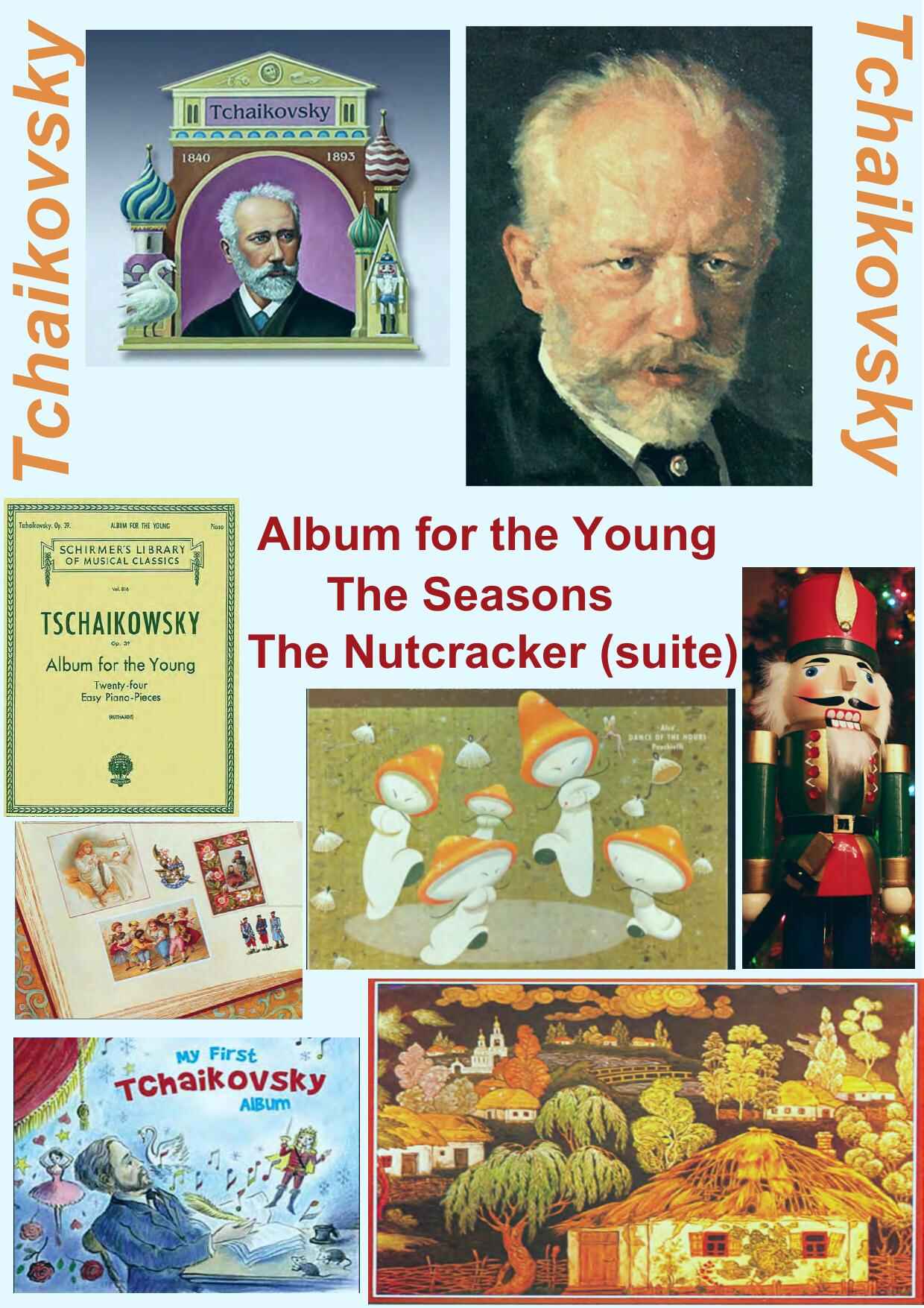
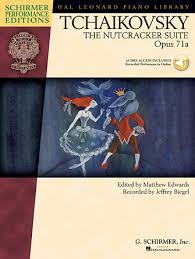
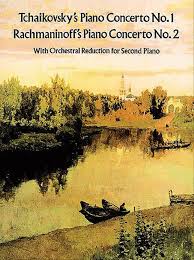
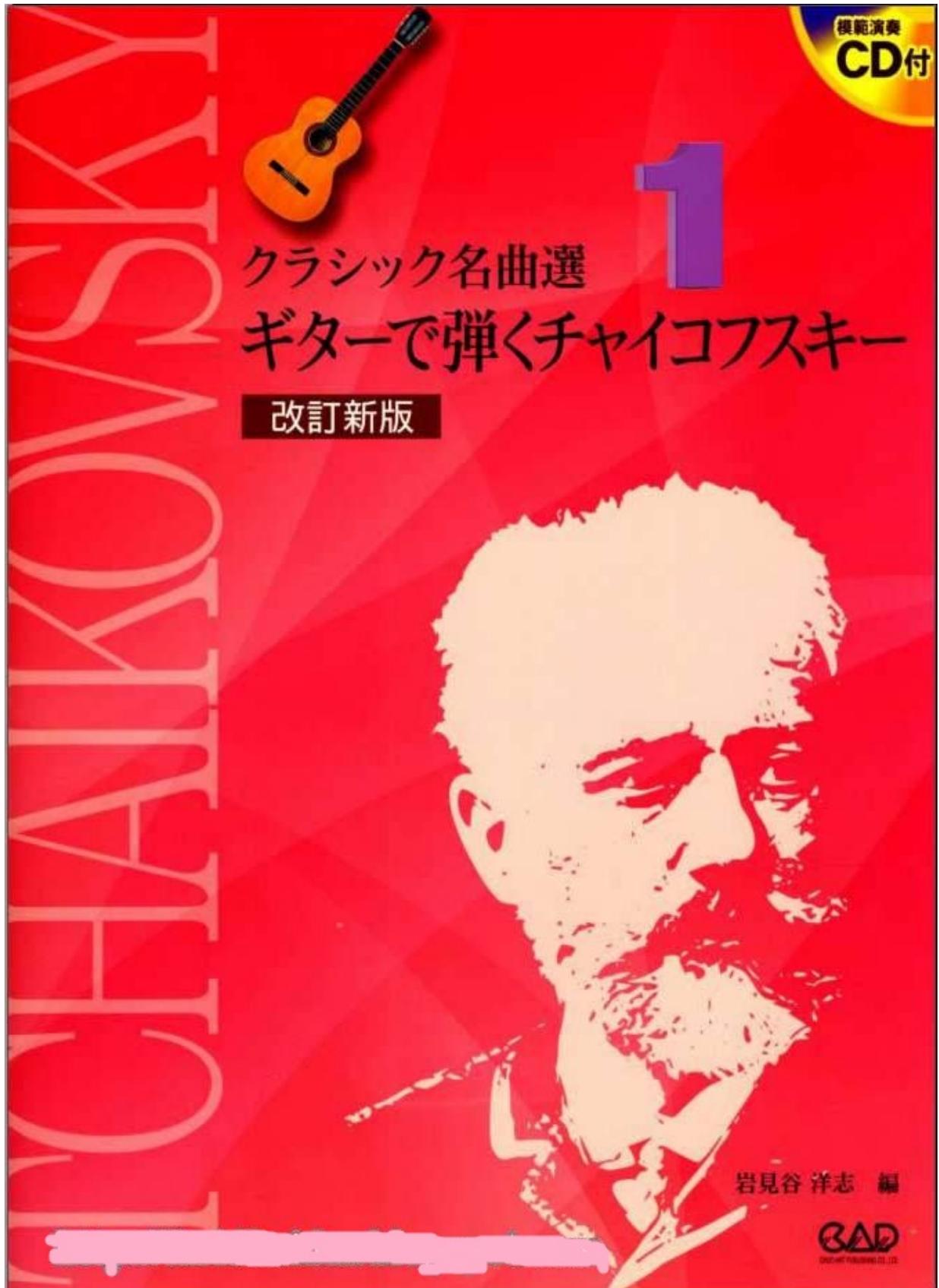
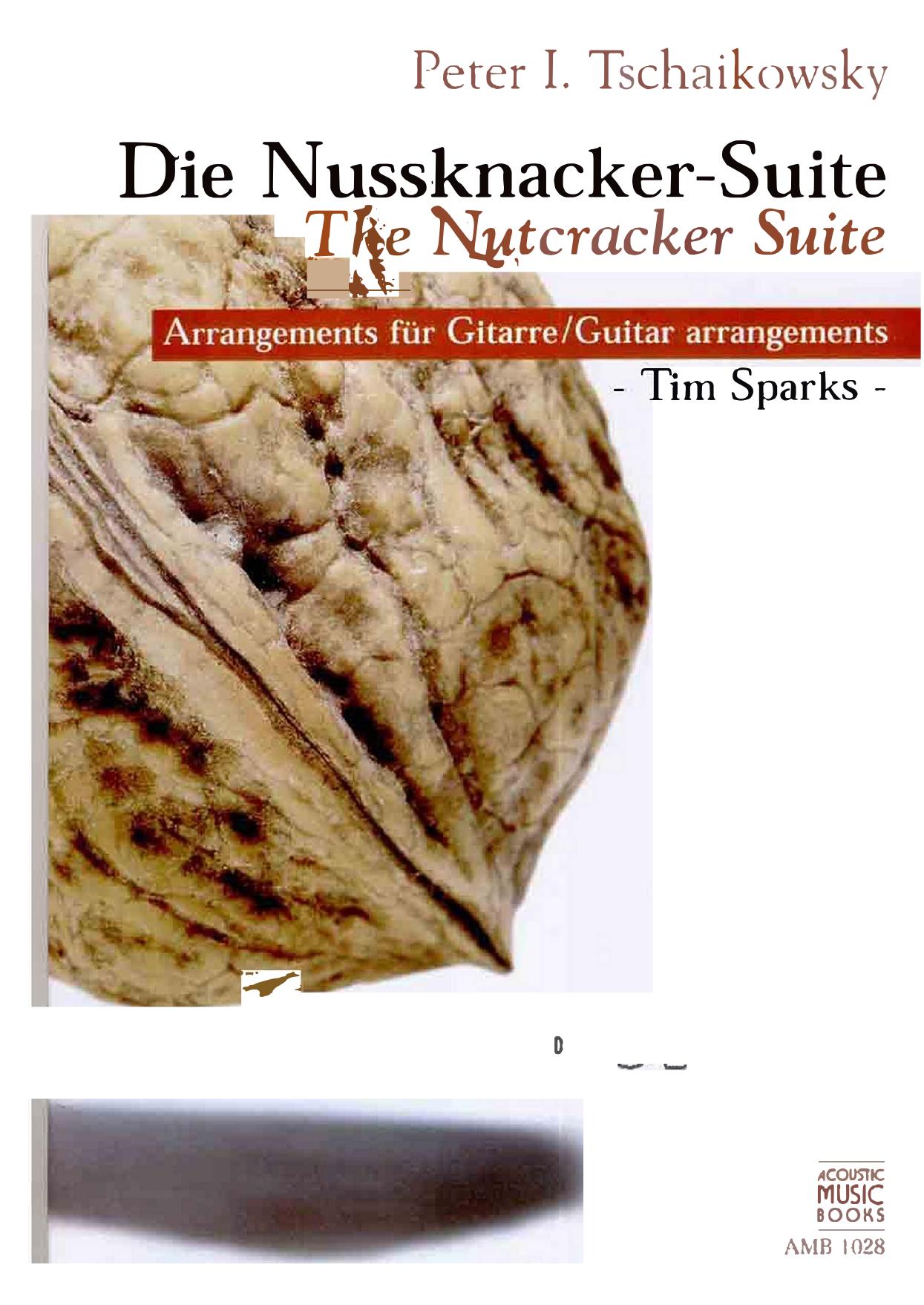
Please, subscribe to our Sheet Music Library. Sheet music should be accessible and affordable for all musicians, from professionals to absolute beginners.
Early Life and the Path to Music
Tchaikovsky’s childhood was marked by a duality that would define much of his adult life: a deep sensitivity and a painful sense of loss. His father, Ilya Petrovich, was an engineer and lieutenant colonel in the Department of Mines, while his mother, Alexandra, was of French ancestry and 18 years her husband’s junior. The family was cultured, and Tchaikovsky showed an early, almost neurotic sensitivity to music. The Kennedy Center notes a telling anecdote: after a party, his mother found the young boy awake, pointing to his forehead and crying, “Oh this music, this music! Take it away! It’s here and it won’t let me sleep!”. His parents were initially supportive, hiring tutors and buying an orchestrion, a mechanical instrument that introduced him to the works of Mozart—a composer he would admire for life.
Despite this precocious talent, a career in music was not considered a viable path in the Russia of his time. Consequently, in 1850, at the age of ten, Tchaikovsky was sent to the Imperial School of Jurisprudence in Saint Petersburg, a move that separated him from his family and, most traumatically, from his mother. Her death from cholera in 1854 devastated him, an event he later called “the crucial event” that shaped his life. This early loss, compounded by the emotional distance of his schooling, sowed the seeds of the lifelong melancholia and emotional volatility that would permeate his music.
Search your favorite sheet music in the Sheet Music Library Catalog
After graduating in 1859, Tchaikovsky dutifully entered the Ministry of Justice as a civil servant. He was, by all accounts, bored and unsuited to the bureaucratic life, but he continued to nurture his musical passion by attending the opera and taking private lessons. The turning point came in 1861 when he began studying music theory under Nikolai Zaremba at the newly formed Russian Musical Society.
In 1862, he enrolled in the Saint Petersburg Conservatory, a decision that fundamentally altered his life. Here, under the rigorous tutelage of Anton Rubinstein and Zaremba, Tchaikovsky received a formal, Western-oriented education in harmony, counterpoint, and composition. This training set him apart from the self-taught nationalist composers of “The Five” (The Mighty Handful) and gave him the tools to forge a unique synthesis of Russian spirit and European form.
Career, Personal Turmoil, and the Art of Emotion
Tchaikovsky’s professional life began in earnest in 1866 when Nikolai Rubinstein, Anton’s brother, offered him a professorship in harmony at the newly established Moscow Conservatory. The ensuing decades were a whirlwind of creative output punctuated by intense personal crises. His life was characterized by a constant struggle with his same-sex orientation, which he kept private, and bouts of severe depression. A disastrous marriage to Antonina Milyukova in 1877, a union he entered into partly out of a misguided sense of pity and partly in an attempt to “cure” his homosexuality, lasted only weeks and drove him to the brink of a nervous breakdown.
A crucial source of stability came in 1876 through his extraordinary relationship with Nadezhda von Meck, a wealthy widow who became his patroness. She provided him with a generous annual annuity that allowed him to abandon teaching and devote himself entirely to composition. Their relationship was conducted almost exclusively through letters, with the stipulation that they never meet in person. This platonic, yet deeply intimate, correspondence provided Tchaikovsky with both financial freedom and emotional support for over a decade, though the relationship ended abruptly in 1890, a blow that deeply wounded him.
Despite the personal turmoil, Tchaikovsky’s creative powers never waned; in fact, they seemed to draw fuel from his emotional volatility. He overcame a lifelong aversion to conducting and embarked on triumphant tours of Europe and the United States, culminating in his conducting the inaugural concert of Carnegie Hall in New York City in 1891. His final years saw the creation of some of his most profound and despairing works, including his Sixth Symphony, the Pathétique, which he conducted just days before his sudden death in November 1893. The cause of death was officially recorded as cholera, though debate continues to this day about whether it was accidental or self-inflicted.
Musical Style and Technique: The Fusion of Heart and Structure
Tchaikovsky’s musical style is a unique and potent blend of Russian national character and Western European compositional technique. While his formal training was Western, he never lost touch with the folk songs, dances, and Orthodox choral traditions of his homeland. His great achievement, as noted by the Kennedy Center, was in bridging the gulf between the musician and the general public, creating music that was both intellectually rigorous and immediately emotionally accessible.
Harmony and Melody
Tchaikovsky possessed what his tutor Rudolph Kündinger called “a flair for harmony” that “astonished” him. His harmonic language is characterized by its expressive richness and its ability to create intense drama. He often employed chromatic mediants—chords built on the third degree of a scale—to produce a sense of wonder, longing, or emotional instability. Furthermore, he was not averse to using more “progressive” techniques, such as the whole-tone scale, as seen in the finale of his Second Symphony, a practice more commonly associated with the nationalist composers of The Five. His melodies are perhaps his most defining feature: long, sweeping, and intensely lyrical lines that seem to breathe with human passion. Whether the tender love theme from Romeo and Juliet or the triumphant, brass-laden opening of his First Piano Concerto, his tunes are unforgettable.
Rhythm, Structure, and Orchestration
Rhythmically, Tchaikovsky often relied on firm, regular meters, which served him exceptionally well in his ballet music, where danceability was paramount. However, he could also use rhythm as a powerful expressive tool, creating a sense of “synthetic propulsion” that drives large-scale symphonic movements forward. His approach to musical structure, particularly sonata form, was innovative. Rather than adhering strictly to the Germanic ideal of organic thematic development, Tchaikovsky often placed blocks of dissimilar musical material side-by-side, creating what has been described as “new and violent contrasts” between themes, keys, and harmonies. This technique of juxtaposition, rather than smooth transition, was a radical new kind of symphonic experience that built drama through accumulation rather than summation.
His orchestration is a masterclass in color and character. He had an uncanny ability to use the individual timbres of the orchestra to define mood and character, from the delicate, celesta-led dance of the Sugar Plum Fairy to the thunderous, cannon-fire finale of the 1812 Overture. His writing for strings, in particular, is renowned for its warmth and expressivity, as evidenced in his Serenade for Strings.
The Best and Most Famous Compositions
Main article on Wikipedia: Music of Pyotr Ilyich Tchaikovsky
See also: List of compositions by Pyotr Ilyich Tchaikovsky and Symphonies by Pyotr Ilyich Tchaikovsky
Tchaikovsky’s oeuvre spans a wide range of genres, but he is perhaps most celebrated for his three great ballets, which revolutionized the art form by elevating the music to a status equal to that of the choreography. Swan Lake (1876) was his first full-length ballet score and remains a cornerstone of the repertoire. The Sleeping Beauty (1889) is often cited as the most elegant and structurally rich of the three, a masterpiece of classical ballet. The Nutcracker (1892), with its suite of characterful dances, is arguably his most universally known work, a perennial holiday favorite.
His symphonies are central to the concert repertoire. The last three—No. 4, No. 5, and No. 6 (Pathétique)—are especially revered. The Fourth is a dramatic exploration of fate, the Fifth is a journey from darkness to a hard-won triumph, and the Sixth is a profound, heartbreaking work that ends not with a triumphant finale but with a slow, despairing fade into silence. The Manfred Symphony is a psychologically charged, programmatic work that deserves more attention.
Among his concertos, the Piano Concerto No. 1 and the Violin Concerto are two of the most popular works in the genre, combining virtuosic display with soaring lyricism. His orchestral works include the fantasy-overture Romeo and Juliet, with its immortal love theme, and the 1812 Overture, a festive and bombastic piece that is a staple of outdoor concerts. In the realm of opera, Eugene Onegin is considered a masterpiece of lyrical opera, while The Queen of Spades is a dramatically effective and intense psychological thriller.
Tchaikovsky in Film and Popular Media
The sheer emotional power and melodic memorability of Tchaikovsky’s music have made it a favorite of filmmakers for nearly a century. His music has been used in countless films, both as source music and as the basis for adaptations. Disney’s Fantasia (1940) famously featured an animated segment set to The Nutcracker Suite. Disney again drew heavily on his music for its 1959 animated film Sleeping Beauty, adapting themes from the ballet for the score.
The Romeo and Juliet love theme has appeared in a diverse array of films, from the James Bond movie Moonraker to Wayne’s World and The Jazz Singer (1927). His music has also been central to biopics and films about the composer himself, such as The Music Lovers (1970), and has been used to underscore dramatic moments in films like V for Vendetta (2006) and Misery (1990). While full-blown Broadway musicals based directly on Tchaikovsky’s life or works are rare, his ballets, particularly The Nutcracker, have inspired numerous stage adaptations, mini-musicals, and holiday extravaganzas.
Collaborations and Professional Relationships
Tchaikovsky’s professional life was marked by a complex web of relationships with other musicians. His relationship with The Five (Balakirev, Cui, Mussorgsky, Rimsky-Korsakov, and Borodin) was mixed. He was initially drawn to their nationalist ideals, and it was Mily Balakirev who suggested the idea for Romeo and Juliet and championed his early music. However, his Western training created an aesthetic gulf between them.
He had a significant and supportive relationship with Sergei Rachmaninoff, whom he met in 1886. Tchaikovsky recognized the younger composer’s talent, recommended him for the Gold Medal at the Moscow Conservatory, and was instrumental in popularizing Rachmaninoff’s graduation opera, Aleko, which was performed at the Bolshoi Theatre. Tchaikovsky was also friends with Edvard Grieg and Antonín Dvořák, and he later invited both of them, along with Johannes Brahms, to conduct at the Russian Musical Society concerts. His relationship with his former teacher, Anton Rubinstein, was fraught with tension, as Rubinstein was often critical of Tchaikovsky’s more progressive tendencies.
Awards, Honors, and a Lasting Legacy
Tchaikovsky’s genius was recognized during his lifetime with numerous honors. In 1884, he was honored by Emperor Alexander III and awarded a lifetime pension of 3,000 rubles. He received the Order of St. Vladimir, 4th degree. In 1892, he was elected a member of the French Académie des Beaux-Arts, only the second Russian subject to be so honored. In 1893, the University of Cambridge awarded him an honorary Doctor of Music degree.
Tchaikovsky’s influence on subsequent generations of composers is immense. He demonstrated that a distinctly Russian musical voice could be expressed through the highest forms of Western art music, paving the way for composers like Rachmaninoff, Shostakovich, and Prokofiev. His influence was not limited to Russia; composers as diverse as Benjamin Britten and Claude Debussy felt the imprint of his late-Romantic harmonic language and emotional intensity. He redefined what Russian music could sound like and, in doing so, secured a permanent place for it in the global canon. His music remains a psychological mirror for listeners, offering a direct and powerful connection to the universal human experiences of love, loss, longing, and triumph.
Pyotr Ilyich Tchaikovsky was a composer whose life was as dramatic and emotionally charged as his music. He successfully reconciled the competing forces of his time—the nationalist fervor of Russian music and the structural demands of Western composition—to create a unique and enduring artistic legacy. His ballets forever changed the art form, his symphonies plumb the depths of human psychology, and his concertos and overtures thrill audiences with their melodic brilliance. Despite the personal demons that haunted him, Tchaikovsky produced a body of work that continues to captivate, console, and exhilarate listeners around the world, ensuring his status as one of the most important and beloved composers of all time.
According to Wiley, Tchaikovsky was a pioneer in several ways. "Thanks in large part to Nadezhda von Meck", Wiley writes, "he became the first full-time professional Russian composer". This, Wiley adds, allowed him the time and freedom to consolidate the Western compositional practices he had learned at the Saint Petersburg Conservatory with Russian folk song and other native musical elements to fulfill his own expressive goals and forge an original, deeply personal style. He made an impact in not only complete works such as the symphony but also program music and, as Wiley phrases it, "transformed Liszt's and Berlioz's achievements ... into matters of Shakespearean elevation and psychological import".
Wiley and Holden both note that Tchaikovsky did all this without a native school of composition upon which to fall back. They point out that only Glinka had preceded him in combining Russian and Western practices and his teachers in Saint Petersburg had been thoroughly Germanic in their musical outlook. He was, they write, for all intents and purposes alone in his artistic quest.
Browse in the Sheet Music Library:
Or browse in the categories menus & download the Library Catalog PDF:
Tchaikovsky: Piano Concerto No. 1 | Daniel Barenboim, Zubin Mehta & the Staatskapelle Berlin
(00:00) Arrival on stage (00:26) I. Allegro non troppo e molto maestoso (23:22) II. Andantino semplice (31:03) III. Allegro con fuoco