
Scores for all instruments: 16,000+ (active and growing), over 236,000 pages.
All genres and levels: Jazz & Blues, Rock & Pop, Classical & Contemporary, Film & Musicals;
books & biographies; methods, études, play-along tracks (MP3) for Jazz & Rock.
Access & benefits: US$15.99 one-time payment, valid for lifetime, full Library access.
Table of Contents
Tete Montoliu
Tete Montoliu: The Blind Pianist Who Made Catalan Jazz a Global Language
Tete Montoliu is not merely a footnote in the history of European jazz; he is its founding monument. Born blind in Barcelona (Catalonia) in 1933, he became the first Cataland and Spanish jazz musician to achieve genuine international stature, a pianist whose technique, harmonic imagination, and emotional directness earned him the respect of American giants and the devotion of Catalan audiences alike. Over a career spanning four decades and roughly one hundred recordings, Montoliu translated the language of bebop and hard bop into a distinctly Mediterranean idiom, proving that jazz could flourish far from its American birthplace without becoming a mere imitation.
Please, subscribe to our Sheet Music Library. Sheet music should be accessible and affordable for all musicians, from professionals to absolute beginners.


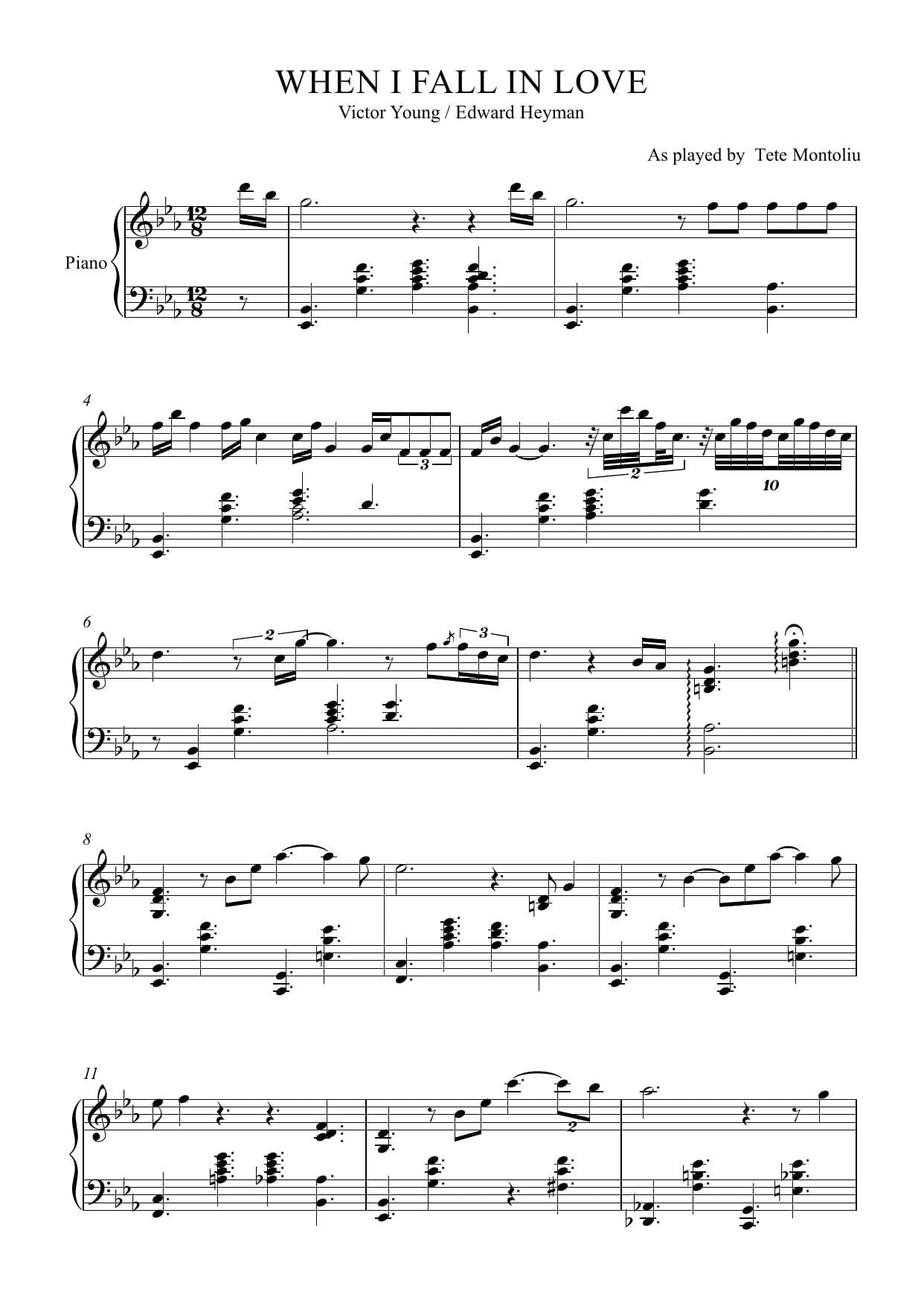

The best sheet music download from our Library.
For the price of a single songbook, get a full Sheet Music Library!
Tete Montoliu Trio - The Shadow Of Your Smile
Tete Montoliu (p), Horacio Fumero (b), Peer Wyboris (d).
Biography: From Blind Prodigy to International Standard-Bearer
Vicenç “Tete” Montoliu i Massana was born in Barcelona on 28 March 1933, into a household saturated with music. His father, Vicenç Montoliu, played several instruments in the orchestra of the Gran Teatre del Liceu and led the Orquesta Montoliú Jazz; his mother was a singer and ukulele player who introduced the young Tete to jazz recordings, particularly those of Duke Ellington. Blind from birth, Montoliu was nevertheless playing the piano with unusual fluency by the age of four. He entered the Conservatori Superior de Música de Barcelona in 1946, where he studied classical piano and, crucially, learned to read music in Braille. His classical training would remain a foundation of his technique throughout his career, visible in the clarity of his articulation and the structural logic of his improvisations.
The decisive encounter of his youth was with the American saxophonist Don Byas, who lived for a time in the Montoliu family home after settling in Barcelona. Byas’s lessons and advice were, by Montoliu’s own account, fundamental to his musical development, and the relationship exemplifies the transatlantic dialogue that would define his career. Montoliu began leading jam sessions at a Barcelona theater at seventeen and became a fixture at the Hot Club de Barcelona, where he played frequently with Byas and other visiting American musicians. In 1956, the vibraphonist and bandleader Lionel Hampton heard him and invited him to record Jazz Flamenco, an album that marked Montoliu’s first significant international exposure and set in motion a prolific recording career. He toured with Hampton through Spain and France, and by 1958 he had performed outside Spain for the first time, in Cannes, accompanied by Art Taylor and Doug Watkins.
The 1960s were a period of intensive collaboration and widening reputation. Montoliu played frequently in Berlin with Albert Mangelsdorff, Chet Baker, Sahib Shihab, and Herb Geller, and in Copenhagen with Dexter Gordon, Archie Shepp, and Kenny Dorham. He also traveled to New York, where he recorded for Impulse! with Elvin Jones and Richard Davis, though these sessions were not released as an album at the time. His debut at the Village Gate in New York on 7 April 1967 was, by his own account, the high point of his career. By then he had already been recognized as one of Europe’s finest jazz pianists, and his reputation continued to grow through the 1970s and 1980s with a stream of recordings for European labels such as SteepleChase, Enja, and Timeless. He returned to the United States in 1979 and 1980, recording Lunch in L.A. for Concord, his only album for an American label, and performing with Bobby Hutcherson, Ben Webster, Lucky Thompson, Anthony Braxton, and George Coleman.
Tete Montoliu’s personal life was marked by deep attachment to Barcelona, its culture, and its language. He was a fervent supporter of FC Barcelona, and although he toured internationally, he never remained long away from his city. His first wife was the Cuban bolero singer Pilar Morales, whom he met when she left Cuba with an artistic company touring Europe; their daughter, Núria, is the dedicatee of one of his most celebrated compositions. Montoliu died in Barcelona on 24 August 1997, at the age of sixty-four, of lung cancer. His death prompted an outpouring of tributes and inaugurated a process of institutional recognition that continues to this day.


Musical Style, Harmony, and Technique
Montoliu’s style is a synthesis of several distinct lineages. His earliest pianistic models were Art Tatum and Earl Hines, the two pillars of pre-bop jazz piano, and their influence is audible in his fondness for stride-derived left-hand patterns, his ornamental flourishes, and his capacity for sustained melodic invention at fast tempos. The more immediate foundation of his mature style, however, was Bud Powell, whose bebop vocabulary Montoliu absorbed and adapted with uncommon fidelity. From Powell he took the principle that the right hand should function as a horn-like solo voice, articulating long, rhythmically buoyant lines that are independent of the left hand’s harmonic role. A detailed analytical study of Montoliu’s improvisations confirms this orientation: “Utilizando su mano derecha como un instrumento solista similar a un saxo o una trompeta, el pianista expresa sus ideas musicales mediante un uso natural de los recursos técnicos inherentes a la melodía bebop, coloreando sus líneas melódicas con tensiones, cromatismos y giros característicos” (“Using his right hand as a solo instrument similar to a saxophone or trumpet, the pianist expresses his musical ideas through a natural use of the technical resources inherent in bebop melody, coloring his melodic lines with tensions, chromaticisms, and characteristic turns”).
This horn-like conception of the right hand is complemented by a left hand that Montoliu deployed with considerable flexibility. In trio settings, he often left the harmonic accompaniment to the bass and used his left hand for sparse punctuations, counter-melodies, and rhythmic accents, reserving its full harmonic weight for solo introductions and ballads. When accompanying a guitarist, he inverted the traditional division of labor: during the guitarist’s solo, Montoliu accompanied freely with both hands, and during his own solos he left the left hand inactive as a harmonic function, allowing the guitarist to provide the accompaniment. This adaptability reflects a chamber-musician’s sensitivity to texture and a refusal to treat the piano as a self-sufficient harmonic machine.
Harmonically, Montoliu operated within the functional tonal language of bebop and hard bop, but he enriched it with substitutions, anticipations, and retardations that reveal a sophisticated ear for color and motion. Analytical transcriptions of his solos show a consistent use of harmonic enlaces (linkages) that favor the left hand’s harmonic movement, and a tendency to introduce chord substitutions in the later choruses of a solo, gradually intensifying the harmonic density as the improvisation unfolds. In his blues improvisations, he was fond of anticipating chords from the following measure, creating a sense of forward lean, and of employing ii–V cadences with melodic prolongation that keeps the underlying form audible even as the surface harmony grows more complex. He also made frequent use of descending glissandi to embellish melodic lines and of call-and-response patterns between the right hand and the accompanying instruments, often built from arpeggios.
Rhythmically, Montoliu was a master of the double-time feel, a device he deployed with particular intensity in ballads, where he would suddenly double the perceived tempo of his right-hand lines while the rhythm section maintained the original pulse. This technique, inherited from the bebop tradition, allowed him to generate dramatic contrast within a single chorus and to create the impression of a rapid, fluent musical discourse emerging from a slower temporal frame. His rhythmic language was fundamentally binary rather than ternary—that is, he phrased eighth notes with their exact notated value rather than with the swung, triplet-derived inflection of earlier jazz—which placed him squarely within the post-bop rhythmic aesthetic.
The overall effect of these techniques is a style that is at once intellectually rigorous and emotionally immediate. Montoliu’s playing has been described as possessing “astonishing technique” combined with “warmth, deep feeling, and humor”. He could be percussive and driving in up-tempo bebop, lyrical and spacious in ballads, and bluesy and earthy in his own compositions. The critic who noted that his style was “muy influenciado por artistas como Duke Ellington, John Coltrane y Thelonious Monk” captured the breadth of his frame of reference: Ellington for color and orchestral imagination, Coltrane for harmonic restlessness and spiritual intensity, Monk for angular wit and rhythmic dislocation. Montoliu did not imitate these figures, but he absorbed their lessons into a pianistic voice that was unmistakably his own.
Best Compositions and Interpretations
Montoliu’s recorded output is vast, but a core repertoire of compositions and interpretations has come to define his legacy. Among his original compositions, “Blues for Núria” is perhaps the most beloved. Written for his daughter, it is a slow, deeply felt blues that showcases his capacity for melodic economy and emotional directness; it appears on the album Piano for Nuria and has been revisited by later Catalan musicians as a standard. “Napoleon” is a dazzling, percussively savvy original that demonstrates his wit and his command of the keyboard’s full registral and dynamic range. “Jo vull que m’acariciïs” (“I Want You to Caress Me”) is one of the few original pieces Montoliu particularly liked to perform, a Catalan-flavored ballad that reveals the Mediterranean lyricism beneath his bebop surface; it was performed by pianist Marco Mezquida in the 2025 documentary Tete, tocar lo invisible as a tribute. Other notable originals include “Blues for Myself,” “Tranquillogy,” and “Music for Perla,” each of which has been taken up by other pianists as a vehicle for improvisation.
As an interpreter, Montoliu left definitive readings of a wide swath of the standard repertoire. His versions of “Body and Soul,” “Round Midnight,” “Cherokee,” “Oleo,” “Have You Met Miss Jones?,” “I’ll Remember April,” and “The Way You Look Tonight” are models of how a pianist can honor a melody while subjecting it to rigorous harmonic and rhythmic transformation. His album Lunch in L.A. (1979) captures him in particularly fine form, playing solo standards and originals with warmth and humor, and includes a delightful duet with Chick Corea on “Put Your Little Foot Right Out”. His interpretations of Catalan and Spanish popular songs—including albums devoted to the music of Joan Manuel Serrat and collections of boleros—demonstrate that his jazz language could be applied to vernacular material without condescension.
Film, Documentary, and Multimedia Work
Montoliu’s music has had a modest but meaningful presence in film and television. The documentary Tete Montoliu, una mirada (2007) uses his recordings extensively, including “Paraules d’amor,” “Rhythm-A-Ning,” “Round Midnight,” “Blues for Núria,” “A Time for Love,” “The Shadow of Your Smile,” and “Tiptoe”. His composition “Margareta” appears in the film Laredo, Costa Esmeralda, and his performances are featured in the television program Memòries de la tele and the film No me la puc treure del cap. He also contributed music to Tot és gris, further evidence of his willingness to engage with visual media.
The most significant documentary treatment of his life is Tete, tocar lo invisible (“Tete, Touching the Invisible”), directed by Anna Solana and Jero Rodríguez and released in 2025. The film, which runs approximately seventy-one minutes, combines archival footage and recordings with contemporary testimonies from family members, producers, musicians, and historians. It traces his career from his early years through his final days and presents his blindness not as a limitation to be overcome but as a condition that shaped a fiercely independent artistic vision: the documentary frames his relationship to jazz and to his blindness as “un acto de rebeldía y libertad” (“an act of rebellion and freedom”). The film was broadcast on RTVE’s Imprescindibles series and screened at jazz festivals, extending Montoliu’s reach to new generations of listeners.
Collaborations: A Transatlantic Network
Montoliu’s career was defined by his collaborations with American musicians passing through Europe and with Catalan and Spanish artists with whom he shared a cultural and linguistic home. The American connections are the most celebrated. Lionel Hampton gave him his first major international recording opportunity in 1956, and the association introduced him to the touring circuits of France and Spain. Dexter Gordon was a particularly close collaborator; Gordon used to introduce him to audiences as “El Gran Señor from Catalonia,” and their recordings together are among the finest documents of Montoliu’s accompanying and soloing in a hard-bop context. He also worked with Roland Kirk, Kenny Dorham, Archie Shepp, Ben Webster, Lucky Thompson, Anthony Braxton, George Coleman, Elvin Jones, Richard Davis, Bobby Hutcherson, Stan Getz, Paquito D’Rivera, and Stéphane Grappelli, among many others. The admiration was mutual: Chick Corea, one of Montoliu’s great admirers, recorded a duet with him on Lunch in L.A., and the two pianists can be heard delighting in each other’s company on “Put Your Little Foot Right Out”. Dizzy Gillespie, Gordon, Phil Woods, and Corea all paid tribute to him in various ways, a testament to his standing among the American jazz establishment.
On the Spanish and Catalan side, Montoliu’s most enduring musical relationship was with the singer Núria Feliu, with whom he recorded a significant body of work, and with his regular trio, featuring the bassist Horacio Fumero and various drummers. He also collaborated with the pianist Jordi Sabatés on Vampyria and with the singer Elia Fleta on Tete Montoliu presenta Elia Fleta. These collaborations were not merely professional conveniences; they were expressions of a cultural commitment to Catalan song and to the idea that jazz could be a language for local expression as well as international communication.
Awards and Institutional Recognition
Montoliu received significant institutional recognition during his lifetime and after his death. In 1983, he was awarded the Creu de Sant Jordi, one of Catalonia’s highest civil distinctions, and the Medalla d’Or al Mèrit Artístic from the Barcelona City Council. In 1988, he received the Premi Ciutat de Barcelona for his entire oeuvre, and in 1990 the Creu de Sant Jordi was followed by further honors. Shortly before his death, in 1997, he was awarded a prize by the SGAE (Sociedad General de Autores y Editores), and he had long been a fixture on lists of the best European jazz pianists of all time. After his death, the Biennal Premis Tete Montoliu de Jazz was established to recognize new talent, and the Premio de Jazz Tete Montoliu was created by the SGAE to honor his memory. These awards reflect not only his artistic achievement but also his role as a cultural ambassador for Catalonia and Spain.
Influences, Legacy, and Additional Information
Montoliu’s influences were multiple and layered. From Duke Ellington he took a sense of color and orchestral breadth; from Art Tatum and Earl Hines he inherited the virtuoso piano tradition; from Bud Powell he learned the grammar of bebop; and from John Coltrane and Thelonious Monk he absorbed lessons about harmonic adventure and rhythmic wit. He was also shaped by the Catalan popular song tradition and by the bolero, forms he treated with the same seriousness he brought to American standards. This synthesis made him a model for later Spanish and Catalan jazz musicians, who saw in his career proof that a local artist could achieve international recognition without abandoning local roots.
His legacy is both musical and institutional. Musically, his recordings remain a benchmark for jazz pianism in Spain, and his compositions—particularly “Blues for Núria” and “Jo vull que m’acariciïs”—have entered the repertoire of younger Catalan musicians. Institutionally, the awards and competitions named after him ensure that his name is associated with the nurturing of new talent, while the documentary Tete, tocar lo invisible has introduced his story to a new generation. The scholar who described him as “el primer músico de jazz español en alcanzar fama mundial” and “el jazzero español de mayor trascendencia y prestigio” captured the consensus: Montoliu was not merely a great pianist who happened to be Spanish, but a musician whose Spanish and Catalan identity was integral to his art.
Several additional facets of his career deserve mention. Montoliu was a prolific recording artist whose discography includes A Tot Jazz (1965), Piano for Nuria (1968), Body & Soul (1971), Tete! (1974), Tête à Tête (1976), Yellow Dolphin Street (1977), Catalonian Folksongs (1978), Al Palau (1979), Catalonian Nights (1980), The Man From Barcelona (1990), Music for Anna (1992), Tete en el San Juan (1995), and Free Boleros (1996), among many others. He was also a gifted accompanist, capable of adapting his harmonic and rhythmic approach to the needs of a vocalist or a horn player while never relinquishing his own musical personality. His blindness, far from limiting his engagement with the world, seemed to sharpen his other senses and his memory: he navigated the keyboard with unerring accuracy, learned vast repertoires by ear, and maintained a busy international schedule that would have challenged a sighted musician of comparable energy. In the end, Tete Montoliu’s achievement was to make jazz speak Catalan—not by decorating it with local color, but by infusing it with the rhythmic suppleness, melodic directness, and emotional gravity of the Mediterranean tradition he never left behind.
Browse in the Sheet Music Library:
Or browse in the categories menus & download the Library Catalog PDF:
Discography
As leader/co-leader
- 1965: A Tot Jazz (Concentric, 1966)
- 1965: A Tot Jazz/2 (Concentric, 1966)
- 1966: Tete Montoliu Presenta Elia Fleta with Elia Fleta (Concentric, 1966)
- 1968: Piano for Nuria (SABA, 1968)
- 1969: Tete Montoliu Interpreta a Serrat (Discophon, 1969)
- 1970?: Lliure Jazz (Discophon, 1970)
- 1971: Body & Soul (Enja, 1983) – live
- 1971: That's All (SteepleChase, 1985)
- 1971: Lush Life (SteepleChase, 1986)
- 1971: Songs for Love (Enja, 1974)
- 1971: Recordando a Line (Discophon, 1972)
- 1973: Temas Hispanoamericanos (Ensayo, 1974)
- 1973: Temas Brasilenos (Ensayo, 1974)
- 1974?: Vampyria with Jordi Sabatés (BASF, 1974)
- 1974: Catalonian Fire (SteepleChase, 1974)
- 1974: Music for Perla (SteepleChase, 1974)
- 1974: Tete! (SteepleChase, 1975)
- 1976: Tête à Tete (SteepleChase, 1976)
- 1976: Tootie's Tempo (SteepleChase, 1979)
- 1976: Words of Love (SteepleChase, 1978)
- 1977: Blues for Myself (Ensayo, 1977)
- 1977: Meditation with George Coleman (Timeless, 1977)
- 1977: Yellow Dolphin Street (Timeless, 1977)
- 1977: Secret Love (Timeless, 1978) – live
- 1977: Boleros (Ensayo, 1977) – live
- 1977: Catalonian Folksongs (Timeless, 1978)
- 1979: Al Palau (Zeleste-Edigsa, 1979)
- 1979: Live at the Keystone Corner (Timeless, 1981) – live
- 1979: Lunch in L.A. (Contemporary, 1980)
- 1980: Boston Concert (SteepleChase, 1981) – live
- 1980: I Wanna Talk About You (SteepleChase, 1980)
- 1980: Catalonian Nights Vol. 1 (SteepleChase, 1981) – live
- 1980: Catalonian Nights Vol. 2 (SteepleChase, 1985) – live
- 1980: Catalonian Nights Vol. 3 (SteepleChase, 1998) – live
- 1982: Face to Face with Niels-Henning Ørsted Pedersen (SteepleChase, 1984)
- 1984: Carmina (Jazzizz, 1984)
- 1986: The Music I Like to Play Vol. 1 (Soul Note, 1987)
- 1986: The Music I Like to Play Vol. 2 (Soul Note, 1989)
- 1988: Orquestra Taller de Músics de Barcelona amb Tete Montoliu with Orquestra Taller de Músics de Barcelona (Justine, 1988)
- 1989: New Year's Morning '89 with Peter King (Fresh Sound, 1989) – live
- 1989: Sweet 'n Lovely 1 with Mundell Lowe (Fresh Sound, 1991)
- 1989: Sweet 'n Lovely 2 with Mundell Lowe (Fresh Sound, 1991)
- 1990: The Music I Like to Play Vol. 3 (Soul Note, 1991)
- 1990: The Music I Like to Play Vol. 4 (Soul Note, 1992)
- 1990: The Man from Barcelona (Timeless, 1991)
- 1991: A Spanish Treasure (Concord Jazz, 1992)
- 1992: Catalonian Rhapsody (Alfa, 1992)
- 1992: Music for Anna (Mas i Mas, 1993)
- 1995: Tete en la Trompetilla: En Vivo (SRP Discos, 1995) – live
- 1995: Tete Montoliu en El San Juan (Nuevos Medios, 1996) – live
- 1996: T'Estimo Tant (DiscMedi, 1999) – studio live
- 1997: Per Sempre Tete (DiscMedi, 1997) – live
- 1997: Palau de la Musica Catalana (DiscMedi, 1999) – live
Posthumous compilations
- Momentos Inolvidables de una Vida: Barcelona 1965-1992 (Fresh Sound, 1997)[2CD]
- Montoliu Plays Tete (DiscMedi, 2005)[2CD]
- Jazz en Espana (Rtve, 2005)[2CD]
As sideman
With Anthony Braxton
- In the Tradition (SteepleChase, 1974)
- In the Tradition Volume 2 (SteepleChase, 1977) – rec. 1974
With Dexter Gordon
- 1964: Cheese Cake (SteepleChase, 1979)
- 1964: King Neptune (SteepleChase, 1979)
- 1964: I Want More (SteepleChase, 1980)
- 1964: Love for Sale (SteepleChase, 1981)
- 1964: It's You or No One (SteepleChase, 1983)
- 1964: Billie's Bounce (SteepleChase, 1983)
- 1975: Bouncin' with Dex (SteepleChase, 1976)
With Rahsaan Roland Kirk
- Kirk in Copenhagen (Mercury, 1963)
- Dog Years in the Fourth Ring (32 Jazz, 1997) – appears on one track only
With Charlie Mariano
- It's Standard Time Volume 1 (Fresh Sound)
- It's Standard Time Volume 2 (Fresh Sound)
With Ben Webster
- Ben Webster Meets Don Byas (MPS, 1968) with Don Byas
- Live at The Haarlemse Jazz Clib (Timeless, 1972)
- Ben Webster in Hot House (Hot House, 1979) – rec. 1972
- Gentle Ben (Ensayo, 1972)
With others
- Núria Feliu, Núria Feliu with Booker Ervin (Edigsa, 1965) with Booker Ervin
- Eddie Harris, Steps Up (SteepleChase, 1981)
- Jordi Sabatés, Tot l'Enyor de Dema (Edigsa, 1976)
- Archie Shepp and Lars Gullin, The House I Live In (SteepleChase, 1980)
- Buddy Tate, Tate a Tete (Storyville, 1975)
- Lucky Thompson, Soul's Nite Out (Ensayo, 1969)
- Barney Wilen, Barney Wilen Quartet - Live
- Jerome Richardson, Groovin' High In Barcelona (Fresh Sound, 1988)