Scores for all instruments: 16,000+ (active and growing), over 236,000 pages.
All genres and levels: Jazz & Blues, Rock & Pop, Classical & Contemporary, Film & Musicals;
books & biographies; methods, études, play-along tracks (MP3) for Jazz & Rock.
Access & benefits: US$15.99 one-time payment, valid for lifetime, full Library access.
Table of Contents
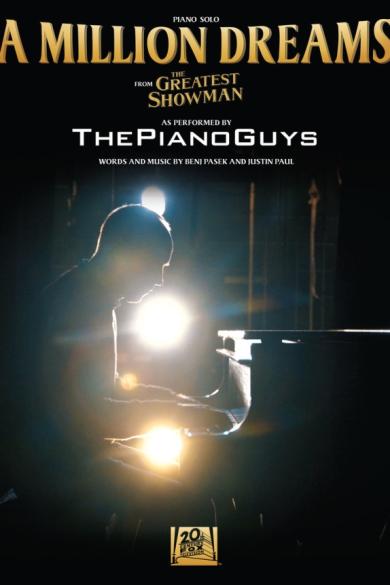
The Piano Guys
Please, subscribe to our Sheet Music Library. Sheet music should be accessible and affordable for all musicians, from professionals to absolute beginners.
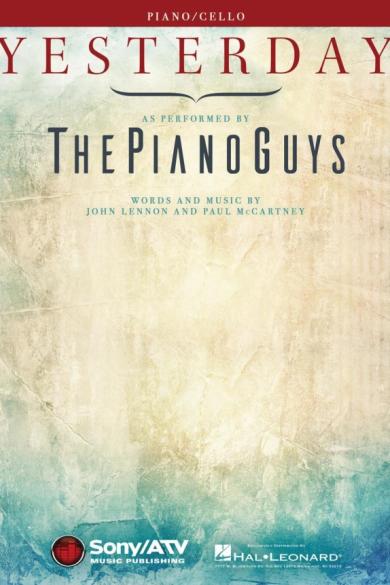
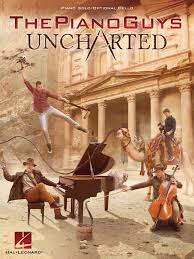


The best sheet music download from our Library.
For the price of a single songbook, get a full Sheet Music Library!
The Piano Guys: An Exhaustive Critical Portrait of the Classical Crossover Phenomenon
Few musical acts of the twenty-first century have so thoroughly redefined the boundaries between the concert hall and the smartphone screen as The Piano Guys.
Born from a modest piano store in St. George, Utah, and propelled by the algorithmic currents of YouTube, the group has transformed the classical crossover genre into a multimedia enterprise that combines virtuosic instrumental performance, cinematic videography, and a near-evangelical commitment to family-friendly entertainment. With over 2.5 billion YouTube views, seven million subscribers, and eight consecutive major-label albums reaching number one on Billboard’s Classical or New Age charts, The Piano Guys represent a singular case study in how traditional musical training can be repackaged for a digital-age audience without sacrificing technical rigor.


Lord of the Rings (Piano & Cello Mashup) - The Piano Guys (Howard Shore)
Biography and Formation: From Marketing Strategy to Global Stage
The Piano Guys did not begin as a band in any conventional sense. Their origin lies in the commercial imagination of Paul Anderson, the owner of a piano store in St. George, Utah, also named The Piano Guys. Anderson, a Yamaha dealer with a self-taught fluency in videography and social marketing, was searching for an unconventional way to promote his inventory. He had observed the exponential reach of viral videos and envisioned a strategy in which professionally filmed performances, set in visually arresting locations, would function as both entertainment and advertisement. The arrival of pianist Jon Schmidt into his store—asking to practice on one of the instruments before a local concert—provided the first catalytic encounter.
Schmidt was already a seasoned solo pianist with eight albums and seven piano books to his credit, having spent two decades performing and building a reputation for genre-blurring arrangements. He had also uploaded a video to YouTube titled “Love Story Meets Viva la Vida,” a mashup of Taylor Swift’s country-pop hit and Coldplay’s anthemic “Viva la Vida,” performed with cellist Steven Sharp Nelson. The video logged more than one million views, convincing Anderson that a sustained collaborative venture could reach far beyond the local piano market. Nelson, whom Schmidt had first met at age fifteen when they shared a stage, was a multi-instrumentalist who had pioneered an idiosyncratic approach to the cello, treating it as a vehicle for percussive, textural, and melodic experimentation. The final piece of the quartet arrived through domestic happenstance: Nelson’s neighbor, Al van der Beek, a songwriter, arranger, and studio engineer, invited Nelson to write in his home studio, and the two discovered what they describe as a “supernatural songwriting partnership”.
The group’s early output was released under the name The Piano Guys, initially as a vehicle for Anderson’s store. In June 2011, they won the “Most Up-and-Coming Channel” award in YouTube’s “On the Rise” contest, gaining 25,000 new subscribers in a single stroke. By September 2012, they had uploaded more than thirty music videos, accumulated 134 million views, and attracted 757,000 subscribers. That month, facilitated by manager David Simoné, they signed with Sony Masterworks and released their self-titled major-label debut, which eventually sold over 500,000 copies in the United States alone. The piano store closed in March 2012, a symbolic surrender of the original commercial pretext to the cultural phenomenon it had inadvertently midwifed.
The Members and Their Division of Labor
The Piano Guys are frequently described as a duo of pianist Jon Schmidt and cellist Steven Sharp Nelson, but their creative and commercial operation is a four-part organism. Schmidt serves as the primary keyboard arranger and on-screen comedic foil, known for his showmanship—playing upside down, with his toes, or with a theatrical disregard for concert-hall decorum. Nelson is the group’s sonic architect, a cellist capable of layering dozens of prerecorded tracks to simulate entire orchestras; for “Michael Meets Mozart,” he recorded one hundred separate cello parts, including percussion effects produced by drumming on the instrument’s body. Al van der Beek functions as producer, engineer, mixer, and occasional vocalist, translating the duo’s live ideas into polished studio recordings and contributing original songs. Paul Anderson, the founder of the original piano store, oversees video production and, alongside Nelson, manages the group’s content and business strategy.
This division of labor is not merely logistical; it is aesthetic. Anderson’s videography is inseparable from the group’s identity. His stated ambition was “to put pianos and cellos in places nobody would ever expect to see them,” and the resulting videos—filmed on cliff edges, atop speeding trains, in ice caves, at Iguazu Falls, and before such wonders as the Great Wall of China, Christ the Redeemer, Chichen Itza, and Petra—constitute a parallel visual repertory as significant as the audio recordings themselves. The group’s Mormon faith and family-oriented ethos are also central to their public persona: all four are devout members of the Church of Jesus Christ of Latter-day Saints, have served proselytizing missions, and collectively raise sixteen children. They pray together before recording sessions, video shoots, concerts, and songwriting sessions, and they have consistently prioritized family time over exhaustive touring.
Musical Style: The Mashup as Aesthetic Philosophy
The Piano Guys’ signature is the classical-pop mashup, a form they have refined into something approaching a compositional method. Their sources range from Mozart, Beethoven, Vivaldi, Bach, Liszt, Tchaikovsky, Fauré, and Pachelbel to Adele, Coldplay, OneRepublic, Taylor Swift, Michael Jackson, David Guetta, Swedish House Mafia, and Shawn Mendes, along with film scores by John Williams and Hans Zimmer and folk and hymn traditions. The group’s cellist has articulated a genealogical justification for this practice: “We believe that all the music that we listen to today is really a descendent of classical music — it’s the great ancestor”. Schmidt, meanwhile, describes the process in culinary terms: “You’ve got all the ingredients that you love and go to as a chef, and you create from those something new. I think our palate is really wide in the ingredients that we have in front of us — pop, classical, hip hop, any music”.
The mashup is not, however, a naive juxtaposition of unrelated fragments. The group’s most successful arrangements are built upon structural and affective correspondences between the source materials. “Let It Go / Vivaldi’s Winter” is a particularly instructive case: Nelson has explained that the arrangement was difficult precisely because one piece is “intensely minor” and connotes “an intense blizzard,” while the other is “energetic major” and connotes “emancipation.” The tension between these affective poles became, in his account, the dramatic engine of the arrangement: “it was seriously schizophrenic, and you can hear that too, but then it was so cool because it was like her conflict. So the music ended up telling the story so well”. Similarly, “Beethoven’s 5 Secrets” grafts OneRepublic’s “Secrets” onto the rhythmic and motivic scaffolding of Beethoven’s Fifth Symphony, while “Michael Meets Mozart” constructs a dialogue between Jackson’s pop phrasing and Mozart’s classical gestures.
Chord Progressions and Harmonic Technique
An analysis of The Piano Guys’ harmonic practice reveals a consistent set of strategies that serve their crossover aesthetic. The group tends to operate within clear diatonic major or minor keys, using functional harmony as a stable frame within which classical and pop materials can be interchanged. Available harmonic profiles for their arrangements show a strong preference for major modes: the album Uncharted, for example, employs nine different key signatures across twelve songs, with seven in major keys, while So Far, So Good uses ten key signatures across thirteen songs, nine of them major. This diatonic orientation is not a limitation but a condition of legibility: it allows listeners without formal training to follow the harmonic logic of arrangements that might otherwise feel forbiddingly dense.
Within individual arrangements, the harmonic language is often built upon primary triads and their functional relationships. An analysis of the group’s arrangement of One Direction’s “Story of My Life” in D major identifies a tonal construction that “prioritizes diatonic primary chords, balancing G Major warmth against dominant A Major tension,” with motion into B minor and dominant reinforcement via A major. Their setting of Lauren Daigle’s “You Say” similarly relies on “fundamental triad relationships (G Major and A Major) around the tonic root”. The group’s arrangement of “Over the Rainbow / Simple Gifts” in C major employs a progression that includes F, G/B, G, and A minor seventh, illustrating their willingness to incorporate secondary dominants and added-seventh colors within an essentially tonal framework.
More ambitious mashups introduce chromatic and modal contrasts that mirror the dramatic or narrative tensions between the source songs. “In My Blood / Swan Lake” moves through a harmonic field encompassing D minor, F major, A-sharp major, C major, G minor, A minor, and several chromatic alterations, reflecting the collision of Shawn Mendes’s pop confession and Tchaikovsky’s balletic minor-mode melancholy. The group’s harmonic practice can thus be described as a kind of tonal diplomacy: it establishes a shared diatonic ground and then uses carefully managed modal inflections, secondary dominants, and pivot chords to negotiate between stylistic worlds that might otherwise remain incommensurable.
Influences and Collaborative Relationships
The individual influences of the four members are as diverse as their roles. Van der Beek draws on both classical music and hip-hop; Schmidt takes inspiration from blues and jazz; Anderson is a devotee of Top 40 pop; and Nelson gravitates toward “fun types” of bands such as U2. These divergent tastes are not resolved into a single stylistic consensus but are held in productive tension, which helps explain the group’s unusually broad palette. The group’s broader musical influences include Beethoven, Mozart, Prince, and the classical tradition broadly, while their own influence has been registered by artists such as Inside Roy’s Mind, Eyeglasses, and Paul Hankinson Covers.
Collaboration has been a recurring feature of The Piano Guys’ recording career, particularly in their Christmas projects and deluxe editions. The Piano Guys 2 (2013) featured Lindsey Stirling on a “Mission Impossible” arrangement that also drew on Mozart, as well as vocalists Megan Nicole and Alex Goot on a version of Taylor Swift’s “Begin Again”. Christmas Together (2017) assembled an unusually broad roster of guests, including Plácido Domingo, the King’s Singers, David Archuleta, Peter Hollens, Lexi Walker, Craig Aven, and the Mormon Tabernacle Choir and Orchestra at Temple Square. These collaborations function both as artistic cross-pollinations and as demonstrations of the group’s commitment to a multi-generational, family-oriented audience; the Christmas albums in particular position The Piano Guys within a lineage of middle-of-the-road holiday entertainment that stretches from Andy Williams to the Mormon Tabernacle Choir itself.
Christina Perri - A Thousand Years (Piano & Cello Cover) - The Piano Guys
Discography: A Chart-Dominated Catalogue
The Piano Guys’ discography is remarkable for its consistency at the top of Billboard’s classical and new-age charts. Following the self-released Hits Volume 1 (2011), their major-label debut The Piano Guys (2012) reached number one on both the Classical and New Age charts and was certified gold in the United States. The Piano Guys 2 (2013) debuted at number 38 on the Billboard 200 and likewise topped the classical and new-age charts, followed by A Family Christmas (2013), which reached number 20 on the Billboard 200. Wonders (2014) achieved the group’s highest Billboard 200 debut at number 12 and reached the top ten in several international markets, while Uncharted (2016) debuted at number 15. Christmas Together (2017) continued the pattern, and Limitless (2018) reached number 58 on the Billboard 200 while topping the New Age chart. The anniversary album 10 (2020) marked a decade of activity, and subsequent releases including Chill (2021) and Unstoppable (2023) have maintained the group’s chart presence. A live album, Live! Carnegie Hall Audio + Red Rocks Concert Video (2015), documents the group’s dual identity as a chamber-music act and an arena-scale multimedia spectacle.
Notable Compositions and Performances
Certain compositions have become defining statements of the group’s aesthetic. “Michael Meets Mozart” (2011) announced the arrival of Nelson’s hundred-track cello technique and established the template for the classical-pop dialogue. “Beethoven’s 5 Secrets” (2012) became one of their most widely recognized arrangements, demonstrating how a pop vocal melody could be recontextualized within a canonical symphonic structure. “Titanium / Pavane” merges David Guetta’s EDM anthem with Fauré’s “Pavane,” while “Code Name Vivaldi” and “Cello Wars” display the group’s inclination toward playful, cinematic framing. Their cover of Christina Perri’s “A Thousand Years” is their most-watched video, having surpassed 223 million views by early 2024, and it exemplifies the group’s capacity to transform a pop ballad into a cello-and-piano duet of sustained lyrical intensity. “Let It Go / Vivaldi’s Winter” remains a signature performance, both for its technical difficulty and for its explicit dramatization of harmonic and affective conflict.
Live performance is central to the group’s identity, though it is carefully managed to accommodate their family commitments. They have toured the United States, Canada, the United Kingdom, Germany, Hungary, Japan, Korea, Australia, and Russia, and have performed at Carnegie Hall, the Greek Theatre, the Royal Albert Hall, and the Grand Ole Opry. Their concerts combine live piano and cello performance with large-screen video projections, comedic stage banter, and occasional audience participation; a Deseret News review of a 2016 hometown show noted the “comedic, often corny antics and goofy, if rehearsed, rapport between Schmidt and Nelson,” as well as Schmidt’s party tricks and Nelson’s use of a disco-era talk box. The group’s decision to perform at Donald Trump’s 2017 inauguration drew criticism, but they denied that the appearance constituted a political endorsement, framing it as a performance of “Fight Song” in a non-partisan spirit.
Film, Soundtrack, and Multimedia Work
The Piano Guys’ relationship with film music is both direct and indirect. Directly, they have produced a substantial body of arrangements of movie themes, including “Themes from Pirates of the Caribbean,” “The Jungle Book / Sarabande,” “Indiana Jones and the Arabian Nights,” “Jurassic World Sonata,” “Batman Evolution,” and “Avengers / Portals”. Their “Jurassic World Sonata” is a particularly self-conscious exercise in cinematic homage: the group described John Williams’s original theme as “an infallible recipe for an epic movie” and arranged a “chill, almost reverent version” filmed in Crawdad Canyon, Utah, as a substitute for a prehistoric landscape. “Batman Evolution” creatively threads together themes from the 1960s television series, the Tim Burton and Joel Schumacher films, and the Christopher Nolan trilogy, using piano, cello, handheld cameras, a radio-controlled helicopter, and practical effects to emulate three distinct eras of the character.
Indirectly, the group’s entire videography operates with a cinematic grammar. Anderson’s direction treats each music video as a short film, complete with narrative framing, location scouting, and visual spectacle. This cinematic orientation extends to the group’s concert presentations, which frequently incorporate video projections behind the live performers. The Piano Guys have not composed an original feature-film score, but their arrangements have become a de facto soundtrack for a certain kind of aspirational, family-friendly visual culture, and their videos are frequently used in educational and devotional contexts.
Documentaries and Behind-the-Scenes Media
The group’s documentary output is modest but revealing. The Piano Guys: Fight Song/Amazing Grace Behind the Scenes (2016) documents the making of their Scotland-set music video, filmed at an old castle on a loch with a marching band of bagpipers, and candidly records the logistical and creative difficulties the group encountered during production. A more substantial KSL-TV documentary, The Piano Guys: The Miracle of Music, explores the group’s formation, their songwriting process, and their deliberate refusal of exhaustive touring in favor of family life. The documentary frames their success as a “miracle” and situates it within the group’s Mormon faith and communal values. A further short documentary, The Piano Guys Behind ThePianoGuys, produced for BYUtv’s Studio C, offers a compact introduction to the four members and their collaborative dynamic. These documentaries collectively construct a narrative of ordinary men—fathers, husbands, and small-business owners—whose extraordinary success is presented as an extension of their domestic and spiritual commitments rather than a departure from them.
Legacy and Critical Assessment
The Piano Guys’ legacy is inseparable from the platform that made them. They were among the first instrumental acts to recognize that YouTube was not merely a distribution channel but a creative medium in its own right, one that rewarded visual ambition, emotional directness, and regularity of release. Their weekly-to-biweekly video schedule in 2011 and 2012 anticipated the content rhythms of the later streaming era, and their willingness to place grand pianos and cellos in extreme and unexpected locations helped establish the music-video-as-spectacle model that countless classical crossover artists have since imitated. Their commercial achievements—over two billion global streams, multiple platinum albums in six countries, and sold-out concerts on several continents—are evidence of a genuinely global audience for instrumental music that might once have been confined to niche classical markets.
Critically, however, their work raises questions about the politics of crossover. The group’s harmonic language is conservative, its formal structures are designed for accessibility, and its visual aesthetic leans heavily on a rhetoric of uplift and familial virtue. For some classical purists, this amounts to a dilution of the tradition; for the group’s defenders, it represents a democratic opening of classical music to audiences who might never otherwise encounter a Beethoven symphony or a Vivaldi concerto. The academic literature has begun to take the group seriously as an object of study, with dissertations examining their mashups as a “symbiosis between popular music and Western classical music” and as a new style within the classical crossover genre. The Piano Guys thus occupy a paradoxical position: they are at once a popular phenomenon and a subject of scholarly inquiry, a commercial enterprise and a case study in musical pedagogy, a family-friendly brand and a destabilizing force within the hierarchies of classical taste.
Their most durable contribution may be methodological rather than compositional. By demonstrating that a cellist could record one hundred tracks in a home studio, that a pianist could perform upside down on a cliff edge, and that a piano store owner could become a globally distributed media producer, The Piano Guys expanded the imaginative horizon of what an instrumental ensemble could be in the twenty-first century. Whether their arrangements endure as repertoire or remain artifacts of a particular digital moment, their model of classical-pop synthesis, visual storytelling, and family-centered entrepreneurship has permanently altered the landscape of classical crossover. In that sense, the piano store in St. George was never merely a marketing pretext; it was the first stage of a genuinely new kind of musical institution, one built not around the concert hall or the record label but around the screen, the family, and the unlikeliest of ensembles: four “dorky dads” who made classical music cool for a global audience.
Browse in the Sheet Music Library:
Or browse in the categories menus & download the Library Catalog PDF: