
Scores for all instruments: 16,000+ (active and growing), over 236,000 pages.
All genres and levels: Jazz & Blues, Rock & Pop, Classical & Contemporary, Film & Musicals;
books & biographies; methods, études, play-along tracks (MP3) for Jazz & Rock.
Access & benefits: US$15.99 one-time payment, valid for lifetime, full Library access.
Table of Contents
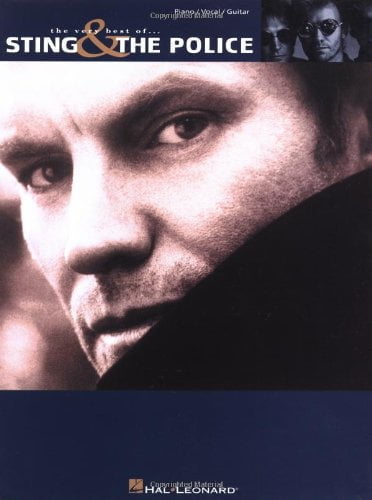
The Police
The Police - Every Breath You Take
The Police stand as one of the most consequential and paradoxical bands of the rock era: a trio of virtuoso musicians who dressed as punks, a new-wave act rooted in jazz and reggae, and a group whose internal chemistry was as combustible as it was creatively fruitful. Over a remarkably compressed career—five studio albums in five years—they sold more than 75 million records worldwide, became the biggest band in the world, and then dissolved at their commercial peak. Their story is one of extraordinary musical synthesis, volatile personal dynamics, and a legacy that continues to shape popular music.
The best sheet music download from our Library.
For the price of a single songbook, get a full Sheet Music Library!


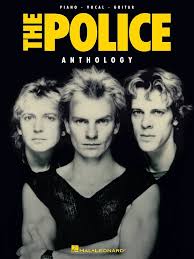
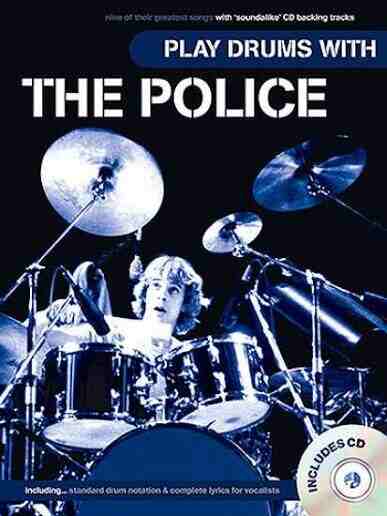
Please, subscribe to our Sheet Music Library. Sheet music should be accessible and affordable for all musicians, from professionals to absolute beginners.
Formation and Biography
The Police were founded in early 1977 by American-born drummer Stewart Copeland, formerly of the progressive rock band Curved Air. Copeland was eager to form a three-piece group and insert himself into the burgeoning London punk scene. He began rehearsing with singer-bassist Sting (Gordon Sumner), a former secondary-school English teacher from Newcastle with a background in jazz-rock combos, and guitarist Henry Padovani. Their debut single, “Fall Out”/“Nothing Achieving,” was recorded in February 1977 and financed by acting manager Paul Mulligan.
The classic lineup crystallized through a series of overlapping projects. In May 1977, ex-Gong musician Mike Howlett invited Sting and veteran guitarist Andy Summers to form Strontium 90 for a Gong reunion; Sting brought Copeland along. Summers, a vastly experienced session player who had worked with Zoot Money’s Big Roll Band, Dantalian’s Chariot, Soft Machine, and The Animals, possessed a sophistication that immediately elevated the group. By August 1977, Padovani had departed, and the trio of Copeland, Sting, and Summers—the configuration that would define The Police—was in place. The bleached-blonde hair that became their trademark was an accident, the result of a Wrigley’s Spearmint commercial for which they dyed their hair for £600.
Their early years were marked by relentless touring, including a grueling first American tour in a Ford Econoline van, playing clubs like CBGB in New York and The Rat in Boston. The re-release of “Roxanne” in 1979 broke them in the UK, and their second album, Reggatta de Blanc (1979), delivered their first UK number ones with “Message in a Bottle” and “Walking on the Moon”. By 1983, following the release of Synchronicity, they had become the biggest band in the world. But egos, arguments, and the gravitational pull of Sting’s solo ambitions took their toll; after the Synchronicity tour ended in March 1984, the band effectively dissolved, with Sting launching a massively successful solo career. A brief reunion for Amnesty International in 1986 produced only re-recorded versions of old songs, and a full-scale reunion tour did not occur until 2007–2008.
Search your favorite sheet music in the Sheet Music Library Catalog



Musical Style and Influences
The Police were, from the outset, a band of musical contradictions. They were marketed as punks but were, in the words of Britannica, “skilled musicians” who blended reggae, jazz, funk, punk, and world music into hook-laden pop-rock. Their sound was a hybrid that defied easy categorization: Stewart Copeland’s reggae-inflected, polyrhythmic drumming; Andy Summers’s textured, often chorused guitar voicings; and Sting’s melodic, jazz-inflected bass lines and distinctive near-falsetto vocals.
Reggae was the most immediately audible ingredient. The Police, along with The Clash, were among the first mainstream white bands to adopt reggae as a predominant musical form and to score major international hits with reggae-styled material. Copeland’s hi-hat-driven grooves and the band’s use of space and syncopation drew directly from Jamaican music, but they filtered it through a punk energy and a jazz-trained rhythmic sophistication. Sting’s jazz background—he had played with the Newcastle Big Band and jazz fusion groups—informed his harmonic vocabulary and melodic phrasing. Summers brought a progressive-rock and classical-guitar sensibility, favoring unusual chord voicings, add9 and sus2 shapes, and a “less is more” approach that became a signature of the band’s texture.
World music was another crucial strand. Zenyatta Mondatta (1980) and Ghost in the Machine (1981) incorporated African drum patterns, layered saxophones, and atmospheric instrumentals that nodded toward new age music. The band’s willingness to tour extensively in Japan, Hong Kong, Australia, India, Egypt, and South America—territories often overlooked by Western pop acts—further internationalized their sound and their audience.
Chord Progressions and Music Harmony
The Police’s harmonic language was far richer than the punk label might suggest. Sting’s songwriting frequently employed jazz-influenced extended chords, modal shifts, and unexpected key changes, while Summers’s guitar arrangements often avoided standard power-chord riffing in favor of fragmented, voice-led chord stabs.
“Roxanne” is a case study in their sophisticated approach. The intro and verses are built on a descending progression of Gm – F6 – Ebmaj7 – Dm7 – Cm7 – Fsus4 – Gsus4, with the guitar playing staccato partial chords that imply the harmony without stating it fully. The chorus shifts to power-chord-based shapes—Bb5, Eb5, F5, G5, C5, F5, Gsus4, Gm—creating a stark textural contrast between the verse’s jazz-inflected chromaticism and the chorus’s raw, punk-adjacent directness. The song’s harmonic tension mirrors its lyrical ambiguity, a love song addressed to a sex worker that is simultaneously tender and uneasy.
“Can’t Stand Losing You” operates in a more austere harmonic space, its main progression revolving around three minor chords—Dm, Gm, and Am—that create a moody, obsessive sound perfectly matched to the song’s theme of possessive despair. “Message in a Bottle” begins with a C♯ chord, moves to A, shifts up two frets to Badd9, then slides down to F♯, a progression that repeats throughout the song and gives it its searching, unresolved quality. “So Lonely” is harmonically unusual in that it changes keys—from C to D—while keeping the chord progression the same, a technique that creates a sense of emotional escalation without altering the underlying harmonic architecture.
“Every Breath You Take” is perhaps the most harmonically deceptive of their hits. Its soothing, almost lullaby-like surface is built on Summers’s trademark add9 and sus2 voicings, which create an open, shimmering texture. The progression is relatively simple, but the voicings and the hypnotic guitar line give it a distinctive, floating quality that belies the song’s dark lyrical content—a ballad of surveillance and obsession that is often mistaken for a love song. Summers’s use of a Roland guitar synthesizer and chorused arpeggios on tracks like “Synchronicity II” further expanded the band’s harmonic palette, allowing them to create atmospheric layers that were both modern and unsettling.
Band Dynamics and Relationships with Other Artists
The Police were never a comfortable democracy. Sting emerged as the dominant songwriter and creative force, a fact that generated persistent resentment from Copeland and Summers. Copeland, the band’s founder, was a restless, polyrhythmic innovator whose jazz and progressive-rock background clashed with Sting’s pop instincts; Summers, the seasoned session veteran, brought a level of musicianship that both elevated the band and intensified the tensions. The trio’s interpersonal chemistry was, in Copeland’s words, a matter of “good musicianship and bad blood”.
The tensions were creative as well as personal. Copeland and Summers sued Sting in England, claiming that under band songwriting agreements dating back to 1977 they were owed $2 million in unpaid royalties; Summers has been particularly outspoken about feeling he should have received a songwriting credit for “Every Breath You Take”. Yet Copeland has also insisted that the three “get along just fine” today—“as long as we’re not trying to make music together”. The reunion tour of 2007–2008 was assisted by what Copeland described as “band therapy,” with professionals brought in to mediate the trio’s longstanding conflicts.
Beyond the band, each member forged significant relationships and collaborations. Sting became one of the most successful solo artists of the era, working with jazz musicians such as Branford Marsalis and Kenny Kirkland and later incorporating Latin and folk influences. Andy Summers recorded two albums with King Crimson guitarist Robert Fripp—I Advance Masked (1982) and Bewitched (1984)—and composed scores for films including Down and Out in Beverly Hills (1986) and Weekend at Bernie’s (1989). Stewart Copeland composed the score for Francis Ford Coppola’s Rumble Fish (1983), collaborated with Stan Ridgway on the film’s theme song “Don’t Box Me In,” and later wrote music for a 60-piece orchestra and composed for the Star Wars Ewok and droid animated series. In 2025, Summers and Copeland were still engaged in a royalties dispute with Sting, a reminder that the band’s business relationships remained fraught decades after their musical partnership ended.
Discography
Main articles on Wikipedia: The Police discography and List of songs recorded by the Police
The Police’s studio discography is compact but remarkably consistent in quality and ambition. Their five albums trace a clear arc from punk-reggae minimalism to layered, psychologically complex pop-rock.
Outlandos d’Amour (1978) introduced the band’s signature fusion of reggae rhythms, punk energy, and jazz-inflected harmony. Tracks like “Roxanne,” “Can’t Stand Losing You,” and “So Lonely” established Sting’s literary sensibility and the band’s knack for marrying dark subject matter to infectious melodies.
Reggatta de Blanc (1979) was the commercial breakthrough, topping the UK album chart and spawning the number-one singles “Message in a Bottle” and “Walking on the Moon.” The instrumental title track won the Grammy for Best Rock Instrumental Performance, the first of the band’s five Grammys.
Zenyatta Mondatta (1980) was recorded under pressure from the record company and produced the UK number one “Don’t Stand So Close to Me,” a song inspired by Nabokov’s Lolita, and the transatlantic hit “De Do Do Do, De Da Da Da”. The album earned two Grammy Awards: Best Rock Performance by a Duo or Group for “Don’t Stand So Close to Me” and Best Rock Instrumental for Andy Summers’s “Behind My Camel”.
Ghost in the Machine (1981) marked a shift toward thicker, more layered production, with saxophones, synthesizers, and vocal textures inspired by Arthur Koestler’s book of the same name. It produced the hits “Every Little Thing She Does Is Magic,” “Invisible Sun,” and “Spirits in the Material World.”
Synchronicity (1983) was the band’s commercial and critical peak. Inspired by the writings of Carl Jung, it debuted at number one in both the UK and the US and sold over 15 million copies worldwide. “Every Breath You Take” spent eight weeks at number one on the Billboard Hot 100 and won two Grammys, including Song of the Year. “Synchronicity II” won the Grammy for Best Rock Performance by a Duo or Group, and the album was later added to the Library of Congress’s National Recording Registry.
In addition to the studio albums, the band released three live albums, seven compilations, fourteen video albums, four soundtrack albums, and twenty-six singles. The 1986 compilation Every Breath You Take: The Singles featured a re-recorded version of “Don’t Stand So Close to Me” and became a massive seller in its own right.
Most Known Compositions and Performances
The Police’s catalog is anchored by a handful of songs that have become permanent fixtures of popular culture. “Roxanne” remains their signature: a reggae-rock ballad with a jazz-inflected harmonic structure and a vocal performance of striking vulnerability. “Message in a Bottle” transforms a loneliness metaphor into a reggae-inflected anthem of isolation and hope. “Every Breath You Take” is a masterclass in deceptive simplicity—a song that sounds like a love ballad but is actually a study in obsession, its harmonic smoothness masking a deeply unsettling lyric. “Walking on the Moon” showcases Copeland’s dub-influenced drumming and the band’s ability to create vast sonic space from minimal ingredients. “Don’t Stand So Close to Me” and “De Do Do Do, De Da Da Da” demonstrate Sting’s gift for pairing literary ambition with irresistible pop hooks.
Live, the band was a formidable power trio. The 1983 Synchronicity tour was captured on the concert film The Police: Synchronicity Concert, recorded over two nights at The Omni in Atlanta and widely regarded as the band at their absolute peak of performance and popularity. Their 1982 performance at Gateshead, during the Ghost in the Machine tour, highlighted their ability to translate studio precision into a dynamic live experience. The 2007–2008 reunion tour, which opened in Vancouver and included a headline slot at the 2007 Grammy Awards, was one of the highest-grossing tours of the decade and demonstrated that the band’s chemistry, however fraught, remained potent onstage.
Film and Multimedia Works
The Police’s members were unusually active in visual media, both as a band and individually. Stewart Copeland composed the score for Francis Ford Coppola’s Rumble Fish (1983) and contributed the theme song “Don’t Box Me In” with Stan Ridgway. He later scored numerous other films and video games, and in 2025 became the subject of a documentary, Copeland, which premiered at the Raindance Film Festival. Andy Summers composed scores for Down and Out in Beverly Hills and Weekend at Bernie’s, and recorded the theme song for the film 2010 (though it was not used in the final film). Sting pursued an acting career alongside his solo music, appearing in Quadrophenia (1979), Radio On (1979), Dune (1984), and The Adventures of Baron Munchausen (1988).
The band’s music videos were also pioneering. The Police were among the first acts to fully exploit the nascent MTV, using the medium to craft distinctive visual identities for songs like “Every Breath You Take” and “Don’t Stand So Close to Me”. “Every Breath You Take” was one of the most-nominated videos at the 1984 MTV Video Music Awards, and the band’s visual presentation—Summers’s chorused guitar textures, Sting’s bleached hair, Copeland’s frenetic energy—became inseparable from their musical identity.
Documentaries
The Police have been the subject of several documentaries, each offering a different perspective on the band’s history. The Police: Around the World (1982), directed by Derek Burbidge, captured the band on tour in 1979 and 1980 across Japan, Hong Kong, Australia, India, Egypt, Greece, France, South America, and the United States. A restored and expanded version, The Police: Around The World Restored & Expanded, was released in 2022 with remastered audio and bonus performances.
Everyone Stares: The Police Inside Out (2006), directed by Stewart Copeland, is an intimate rockumentary assembled from Copeland’s own Super 8 footage shot during the band’s late-1970s and early-1980s tours. The film offers a first-person view of the band’s rise, capturing both the camaraderie and the strain that success placed on their relationships; Copeland deconstructed and remixed Police tracks for the soundtrack, creating dubbed-out, looped versions that stand as an inventive musical work in their own right. Can’t Stand Losing You: Surviving the Police (2012), based on Andy Summers’s memoir One Train Later, chronicles the band’s rise and includes interviews with all three members. Henry Padovani’s Rock’n’Roll of Corsica (2010) offers a view of the band’s earliest days from the perspective of the original guitarist.
Legacy and Influence
The Police’s legacy is multifaceted. Musically, they were one of the most innovative bands of the new-wave era, demonstrating that punk’s energy could be fused with jazz sophistication, reggae rhythm, and world-music texture without sacrificing pop accessibility. Their commercial success—five consecutive UK number-one albums, five UK number-one singles, and global sales of over 75 million records—made them one of the definitive rock groups of all time. They spearheaded the second British Invasion of the United States and helped establish the music video as a central promotional tool for popular music.
Their influence extends across genres and generations. Artists from Puff Daddy to Gwen Stefani have cited The Police and Sting as major influences, and the band’s hybrid approach to rhythm, harmony, and texture has been absorbed into the DNA of alternative rock, post-punk, and modern pop. Sting’s literary lyrics—drawing on Nabokov, Koestler, Jung, and Paul Bowles—elevated the intellectual ambitions of pop songwriting, while Copeland’s polyrhythmic drumming and Summers’s textural guitar work expanded the sonic possibilities of the power trio.
The band was inducted into the Rock and Roll Hall of Fame in 2003, and Synchronicity was added to the Library of Congress’s National Recording Registry in 2023. Rolling Stone ranked them number 70 on its list of the 100 Greatest Artists of All Time. Their music remains a staple of radio, film, and television, and their reunion tour of 2007–2008 demonstrated that the songs had lost none of their power to connect with audiences.
In the end, The Police were a band defined by tension: between punk and jazz, between reggae and rock, between three strong personalities whose creative friction produced some of the most enduring music of the late twentieth century. They burned briefly and brilliantly, and the music they left behind continues to reward close listening—for its harmonic sophistication, its rhythmic invention, and its capacity to make complexity feel effortless.
Browse in the Sheet Music Library:
Or browse in the categories menus & download the Library Catalog PDF: