
Scores for all instruments: 16,000+ (active and growing), over 236,000 pages.
All genres and levels: Jazz & Blues, Rock & Pop, Classical & Contemporary, Film & Musicals;
books & biographies; methods, études, play-along tracks (MP3) for Jazz & Rock.
Access & benefits: US$15.99 one-time payment, valid for lifetime, full Library access.
Table of Contents
The Rolling Stones: An Exhaustive Portrait of the World’s Greatest Rock and Roll Band
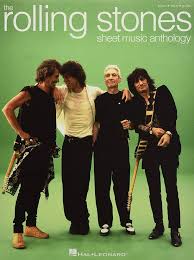
The best sheet music download from our Library.
For the price of a single songbook, get a full Sheet Music Library!

Please, subscribe to our Sheet Music Library. Sheet music should be accessible and affordable for all musicians, from professionals to absolute beginners.
The Rolling Stones – Essential Songs
Tracks 00:00:00 (I Can't Get No) Satisfaction 00:03:44 Jumpin' Jack Flash 00:07:28 Route 66 00:09:50 The Last Time 00:13:32 It's All Over Now 00:16:59 Sympathy For The Devil 00:23:18 Gimme Shelter 00:27:51 She's a Rainbow 00:32:03 Paint It, Black 00:35:50 Play with Fire 00:38:05 Ruby Tuesday 00:41:21 Angie 00:45:54 She's So Cold 00:50:08 Miss You 00:53:43 It's Only Rock 'N' Roll
Few musical entities have shaped the cultural landscape of the past sixty years as profoundly as The Rolling Stones.
Formed in London in 1962, the band emerged from the post-war British blues underground to become the archetypal rock and roll group—a symbol of rebellion, hedonism, and enduring musical vitality.
While the Beatles captured the sunny optimism of the 1960s, the Stones offered its darker, bluesier, and more sexually charged counterpoint.
From their early R&B covers to their latter-day global stadium tours, the Stones have remained a singular force, marrying a deep reverence for American roots music with a swaggering, distinctly British sensibility.
Search your favorite sheet music in the Sheet Music Library Catalog





Biography and Historical Arc
The origins of The Rolling Stones lie in the boyhood friendship of Mick Jagger and Keith Richards, forged in Dartford, Kent, in 1951. Their acquaintance was interrupted when both families moved, but a chance encounter at a train station in October 1960 rekindled the connection. Richards noticed the imported R&B albums under Jagger’s arm, and the two discovered a shared, obsessive passion for the music of Muddy Waters, Chuck Berry, and Howlin’ Wolf. Jagger, then a student at the London School of Economics, was a hardcore blues aficionado, while Richards leaned toward Chuck Berry-style rock and roll. Richards soon joined Jagger’s group, Little Boy Blue and the Blue Boys.
The pivotal moment came when the pair met Brian Jones, a multi-instrumentalist and charismatic blues purist. The three clicked immediately.
Jones, who had already been performing in London’s blues clubs, became the nascent band’s leader and name-giver.
The name was taken from a Muddy Waters song, “Rollin’ Stone”.
With the addition of drummer Charlie Watts and bassist Bill Wyman, the classic early lineup was solidified.
The band made its formal debut on July 12, 1962, at London’s Marquee Club.
A young, inexperienced producer named Andrew Loog Oldham soon took them under his wing and famously marketed them as the anti-Beatles—a rougher, more dangerous alternative.
The 1960s were a period of rapid evolution and escalating notoriety. Early hits like “(I Can’t Get No) Satisfaction” and “Paint It Black” established their global reach.
Albums such as Aftermath (1966) and Between the Buttons (1967) showcased a growing sophistication in songwriting.
The psychedelic detour of Their Satanic Majesties Request (1967) was followed by a decisive return to roots with Beggars Banquet (1968), an album that marked the fading importance of Brian Jones.
Jones, increasingly alienated and struggling with substance abuse, was dismissed from the band in June 1969 and tragically drowned less than a month later.
He was replaced by guitarist Mick Taylor, whose virtuosic playing expanded the band’s sonic palette on masterpieces like Let It Bleed (1969) and Sticky Fingers (1971).
The 1970s saw the Stones at their commercial and creative peak but also marked the beginning of a nomadic existence as tax exiles from Britain.
The departure of Taylor in 1974 led to the recruitment of Ronnie Wood, formerly of The Faces, who completed the band’s most stable and enduring lineup.
Despite internal tensions, highly publicized drug busts, and shifting musical tides, the Stones endured.
The 1980s brought a temporary rift between Jagger and Richards, but they reconciled for the massively successful Steel Wheels album and tour in 1989.
The subsequent decades have seen the band settle into a role as elder statesmen of rock, continuing to tour stadiums worldwide and releasing new material, including the critically acclaimed Hackney Diamonds in 2023, their first album of original songs in eighteen years.
Following the death of Charlie Watts in 2021, the band has continued with Steve Jordan on drums, a testament to their enduring, almost elemental, drive.
Musical Style, Chord Progressions, and Harmony
The Rolling Stones’ musical identity is built upon a foundation of American blues, R&B, and rock and roll, integrated into a uniquely British style. Tracing the distinctive sound that runs through their catalog reveals a sophisticated approach to chord progressions, open guitar tunings, polyrhythmic beats, and innovative instrumentation. Their music is characterized by a raw, unpolished feel, a quality that stems from their deep immersion in the blues tradition and their intuitive, almost telepathic interplay as a rhythm section.
The Blues Foundation and Harmonic Language. At its core, the Stones’ harmony is blues-based. A general feeling of the blues permeates their work, evident in their shouting vocal style and use of the blues scale. Their songs frequently employ the twelve-bar blues structure, sometimes extended to twenty-four bars with added measures at the end. When chromatic chords do occur, they are almost always blues scale-induced, a hallmark of their harmonic vocabulary. For instance, the use of the minor seventh scale degree in a major key is a characteristic bluesy move that gives their music its distinctive grit. Their approach to harmony is not about complex jazz voicings but about the raw, expressive power of the blues idiom, often utilizing I-IV-I chord riffs and passing diminished chords to create a gospel-like feel, as heard in songs like “Let It Bleed”.
Keith Richards’ Guitar Style and Chord Progressions. The most distinctive harmonic element of the Stones’ sound is the guitar work of Keith Richards. His style gravitates toward chordal progressions and rhythmic riffing rather than flashy solos. A key component of this sound is his use of open G tuning (D-G-D-G-B-D), a technique he began using in 1969. In this tuning, Richards often removes the lowest string, allowing him to create powerful, ringing chords with simple barre shapes. This approach defines many of the band’s later hits, including “Brown Sugar,” “Honky Tonk Women,” and “Can’t You Hear Me Knocking”. The “Keith Richards’ chord changes,” first fully audible on “Street Fighting Man,” represent a peculiar guitar style that became a defining feature of the Stones’ music from Beggars Banquet onward. These progressions often involve moving chord shapes and embellishments that create a hypnotic, riff-driven harmonic landscape. The band also experimented with a I-vi-V-IV gospel progression, as in “Shine a Light,” and a C major to F major progression that relies on intervals from the key of F, creating a bluesy ambiguity.
Rhythm and Texture. Beyond the guitar, the Stones’ sound is defined by the interplay of Charlie Watts’s jazz-inflected, swinging drumming and the rock-solid bass of first Bill Wyman and later Darryl Jones. Their use of polyrhythmic Afro-Caribbean beats and nontraditional instruments further enriched their texture. The combination of these elements—the blues-based harmony, the open-tuned guitar riffs, and the supple, driving rhythm section—created an unmistakable sonic identity that has remained remarkably consistent even as they explored disco (“Miss You”), reggae (“Luxury”), and punk (“Shattered”).
Relationships with Other Artists
The Rolling Stones’ career has been defined by a complex web of rivalries, friendships, and collaborations with their peers, most notably The Beatles and Bob Dylan.
The Beatles. The relationship between the Stones and The Beatles is one of the most fascinating in rock history.
Publicly, they were positioned as rivals—the bad boys versus the good boys.
The Beatles represented a broader, more pop-oriented audience, while the Stones appealed to a more rebellious, sexually explicit sensibility.
However, the reality was far more collaborative and comradely.
In 1963, John Lennon and Paul McCartney donated the song “I Wanna Be Your Man” to the Stones, providing them with an early hit.
The two bands often collaborated in the studio: Lennon and McCartney contributed backing vocals to the Stones’ 1967 single “We Love You,” and two of the Fab Four sang on tracks from Their Satanic Majesties Request.
Despite occasional friction and harsh words exchanged in the press over the years, the bond born from shared, extreme fame remained.
Bob Dylan. The relationship with Bob Dylan was equally significant. All parties were great admirers of each other, and Dylan was a profound influence on Jagger’s lyricism. In the late 1960s, Dylan proposed a collaborative album featuring himself, The Beatles, and The Rolling Stones. The idea was appealing to members of both bands but was ultimately rejected by John Lennon, Paul McCartney, and Mick Jagger, leaving one of the greatest “what-if” projects in rock history unrealized. Jagger’s vocal delivery and lyrical preoccupations with cynicism, sexuality, and social decay owe a clear debt to Dylan’s example.
Other Artists. The Stones’ orbit included numerous other key figures. They shared manager Andrew Loog Oldham with other acts and were part of a vibrant London scene that included The Yardbirds, The Who, and later, The Faces.
Their 1968 Rock and Roll Circus television special featured performances by The Who, Taj Mahal, and Jethro Tull, showcasing their connections across the musical spectrum.
In later years, they collaborated with a wide range of artists, from Chuck Leavell (keyboards, since 1989) to Lisa Fischer (vocals, 1989-2015), and recorded with everyone from Eric Clapton to Buddy Guy, cementing their status as a central hub of the rock world.
Discography and Most Known Compositions
Main articles on Wikipedia: The Rolling Stones discography and List of songs recorded by the Rolling Stones
The Rolling Stones’ discography is a monumental body of work. They have released 25 studio albums (27 in the US), 12 contemporary live albums, 27 archival live albums, 28 compilation albums, and 125 singles. Their catalog is a journey through the evolution of rock music itself.
Key Studio Albums:
- The Rolling Stones (1964) / England’s Newest Hit Makers (US): A collection of blues and R&B covers that announced their arrival.
- Out of Our Heads (1965): Featured the global breakthrough “(I Can’t Get No) Satisfaction”.
- Aftermath (1966): The first album of entirely Jagger/Richards originals, featuring “Paint It Black”.
- Beggars Banquet (1968): A return to bluesy roots, containing “Sympathy for the Devil” and “Street Fighting Man.”
- Let It Bleed (1969): A dark, masterful album featuring “Gimme Shelter” and the title track.
- Sticky Fingers (1971): Their first album on their own label, featuring “Brown Sugar,” “Wild Horses,” and “Can’t You Hear Me Knocking.”
- Exile on Main St. (1972): A sprawling, critically revered double album often cited as their magnum opus.
- Some Girls (1978): A disco-inflected comeback featuring “Miss You” and “Beast of Burden”.
- Tattoo You (1981): Featured the iconic “Start Me Up”.
- Steel Wheels (1989): The album that launched their record-breaking comeback tour.
- Hackney Diamonds (2023): Their first album of original material since 2005, proving their creative spark remains undimmed.
Most Known Compositions: The Stones’ setlists are built on a foundation of songs that have become rock standards. “(I Can’t Get No) Satisfaction” defined a generation with its defiant riff and anti-establishment frustration. “Jumpin’ Jack Flash” is a masterclass in open-G riffing and has been performed live over 1,150 times. “Gimme Shelter” is a haunting, apocalyptic masterpiece, while “Sympathy for the Devil” is a seductive, sinister groove. “Paint It Black” showcased their ability to blend dark psychedelia with an infectious melody. “Brown Sugar” and “Honky Tonk Women” are swaggering, riff-driven rockers, and “You Can’t Always Get What You Want” is a gospel-tinged epic that has become a stadium singalong.
Works on Film and Documentaries
The Rolling Stones have a rich and complicated relationship with cinema, both as subjects of documentaries and as actors.
For those who want to dive deeper into the world of The Rolling Stones, numerous resources are available to explore their impactful history, discography, and influence on the music industry.
Documentaries and Concert Films: The band’s on-screen legacy is anchored by several landmark films.
- Charlie Is My Darling (1966): A fly-on-the-wall tour documentary capturing the band as young up-and-comers.
- Sympathy for the Devil (1968): Jean-Luc Godard’s experimental film juxtaposing the recording of the song with political imagery.
- Gimme Shelter (1970): Directed by the Maysles brothers, this is widely considered one of the greatest rock films ever made. It documents the band’s 1969 US tour, culminating in the disastrous Altamont Free Concert, where a fan was murdered by Hell’s Angels providing security.
- Cocksucker Blues (1972): Robert Frank’s notorious, cinéma-vérité portrait of the 1972 tour, so explicit that the band sued to prevent its official release.
- Ladies and Gentlemen: The Rolling Stones (1973): A concert film from the 1972 tour.
- At the Max (1991): Filmed during the Steel Wheels/Urban Jungle Tour, it was the first concert film shot in IMAX format.
- Shine a Light (2008): Martin Scorsese’s concert film documenting a 2006 benefit concert in New York.
- Crossfire Hurricane (2012): Brett Morgen’s official documentary celebrating the band’s 50th anniversary, featuring new interviews and unseen archive footage.
- Olé Olé Olé! A Trip Across Latin America (2016) and Havana Moon (2016): Documentaries covering their historic 2016 tour of Latin America, including a free concert in Havana, Cuba.
Acting Roles: Mick Jagger has had a notable acting career, starring in Performance (1970), Ned Kelly (1970), and Freejack (1992). Keith Richards achieved a new level of pop-culture fame with his cameo as Captain Teague, the father of Johnny Depp’s Jack Sparrow, in the Pirates of the Caribbean sequels.
The Rolling Stones:
Main article on Wikipedia: List of awards and nominations received by the Rolling StonesLegacy and Influence
The Rolling Stones’ legacy is immeasurable. They were inducted into the Rock and Roll Hall of Fame in 1989, introduced by Pete Townshend of The Who, who said, “The Stones were the first rock band. I mean, a real rock band. They had the sound, the image, and they were dangerous.”
They have sold an estimated 200 million records worldwide and are regularly featured at the top of lists of the most influential acts in popular music history.
Their influence extends far beyond record sales. They played a core role in establishing the generic conventions of rock, particularly through their reverential dedication to the blues and its importance to their musical development.
They are the archetypal, prototypical rock group, defining the attitude, the sound, and the lifestyle for generations of musicians.
Their countless awards include four Grammys, three MTV Music Awards, and nine NME Awards, and they were the first band to be commemorated on a set of UK stamps marking their 60th anniversary.
Musically, their integration of blues, R&B, rock and roll, country, psychedelia, disco, and reggae into a uniquely British style changed the landscape of pop music forever.
Their willingness to experiment while maintaining a core identity—the “swagger” fueled by the Glimmer Twins, Jagger and Richards—has been a blueprint for artistic longevity.
As The Cambridge Companion to the Rolling Stones notes, they are one of the most influential, prolific, and enduring rock and roll bands in the history of music, and their cultural impact continues to be felt across the globe.
In summary, The Rolling Stones are not merely a band; they are a living, breathing institution.
From the blues-obsessed teenagers of 1962 to the global icons of the 21st century, they have embodied the spirit of rock and roll—rebellious, resilient, and eternally captivating.
Their music, marked by innovative chord progressions, open tunings, and a raw, rhythmic power, will continue to inspire and provoke for generations to come.
Browse in the Sheet Music Library:
Or browse in the categories menus & download the Library Catalog PDF: