
Table of Contents
Scores for all instruments: 16,000+ (active and growing), over 236,000 pages.
All genres and levels: Jazz & Blues, Rock & Pop, Classical & Contemporary, Film & Musicals;
books & biographies; methods, études, play-along tracks (MP3) for Jazz & Rock.
Access & benefits: US$15.99 one-time payment, valid for lifetime, full Library access.
Vangelis - The Best of Vangelis
The best sheet music download from our Library.
TrackList A: 00:04 1. PULSTAR 5´47 05:53 2. SPIRAL 6´58 12:53 3. TO THE UNKNOWN MAN 9´04 22:00 4. ALBEDO 0.39 4´24
B: 26:24 1. BACCHANALE 4´43 31:07 2. ARIES 8´43 39:45 3. BEAUBOURG EXCERPT 7´44 47:30 4. SO LONG AGO, SO CLEAR 5´06
Who was Vangelis?
Vangelis: The Composer Who Painted Sound
Evángelos Odysséas Papathanassíou, known to the world simply as Vangelis, remains one of the most influential and distinctive voices in the history of electronic music and film scoring. A self-taught Greek composer whose career spanned over five decades, Vangelis defied conventional musical education to become a pioneer of symphonic electronica—a style that merged the grandeur of orchestral composition with the limitless possibilities of synthesizer technology. His music, characterized by sweeping melodies, emotional depth, and an almost spiritual sense of scale, left an indelible mark on cinema, popular music, and the broader landscape of electronic sound.
Please, subscribe to our Sheet Music Library. Sheet music should be accessible and affordable for all musicians, from professionals to absolute beginners.
From his early days as a progressive rock keyboardist in Greece to his Oscar-winning score for Chariots of Fire, and from his ethereal work on Blade Runner to his cosmic collaborations with NASA, Vangelis crafted a body of work that continues to resonate with audiences around the globe. This article explores the full breadth of his life, his musical language, his most celebrated compositions, and the legacy he left behind.
The best sheet music download from our Library.

Early Life and Musical Awakening
Vangelis was born on March 29, 1943, in the coastal town of Agria, near Volos, Greece. His parents, both music lovers—his mother a trained soprano who never pursued a career, his father an amateur sprinter and property professional—created a home environment where music was a constant presence. Young Evangelos began playing the piano at the age of four and gave his first public performance at just six years old. Remarkably, he never received formal musical training, resisting instruction in favor of what he called the "immediate, wild, unpredictable, multidimensional" nature of music. He preferred to play from memory rather than manuscript, and as a child, he would place household objects inside the piano to alter its resonance and explore new sonic textures.
This intuitive, experimental approach would define his entire career. Even as he studied classical music, painting, and film directing at the Fine Arts Academy in Athens, he remained fundamentally self-taught as a musician. His early influences were eclectic: the jazz and rock music of the 1950s and 1960s, traditional Greek music, and the classical repertoire he absorbed without formal study.



The Forminx and the Greek Scene
In the early 1960s, Vangelis formed his first band, The Forminx, which became one of the most popular rock groups in Greece. Though their success was largely regional, The Forminx allowed Vangelis to hone his skills as a keyboardist and arranger. During this period, he also began composing for films, scoring his first feature, My Brother, the Traffic Policeman, in 1963. These early experiences laid the groundwork for his future career, teaching him how to write music that served a narrative while retaining its own identity.
Aphrodite's Child and the Paris Years
In 1968, amid the political turmoil of the Greek military coup, Vangelis moved to Paris, where he formed the progressive rock band Aphrodite's Child with fellow Greek expatriates Demis Roussos (bass and vocals), Loukas Sideras (drums), and Anargyros "Silver" Koulouris (guitar). The band achieved immediate international success with their debut single, "Rain and Tears," a haunting baroque-pop ballad built on the chord progression of Pachelbel's Canon. The song became a massive hit across Europe, and Aphrodite's Child quickly established themselves as one of the continent's most intriguing new acts.
However, the band's magnum opus—and their swan song—was 666 (1972), a sprawling double concept album inspired by the Book of Revelation. The recording process was fraught with tension, and the band effectively disintegrated during its creation. Yet the resulting album, with its ambitious blend of progressive rock, psychedelia, and experimental electronic textures, remains a landmark of the genre. Tracks like "The Four Horsemen" and "Aegian Sea" showcased Vangelis's emerging talent for creating atmospheric, subtly intense soundscapes that foreshadowed his later solo work. The album also earned notoriety for Greek actress Irene Papas's visceral vocal performance on the track "Infinity".
The Solo Career and Nemo Studios
Following the dissolution of Aphrodite's Child, Vangelis launched his solo career in earnest. His first "official" solo album was Earth (1973), which featured contributions from ex-Aphrodite's Child guitarist Silver Koulouris and vocalist Robert Fitoussi. The following year, Vangelis was famously approached to replace Rick Wakeman in the progressive rock band Yes. He rehearsed with the band for a couple of weeks but ultimately declined, reluctant to commit to the rigors of extensive touring. This decision proved fortuitous: it led to a lifelong friendship and creative partnership with Yes's lead vocalist, Jon Anderson.
In 1975, Vangelis relocated to London and established Nemo Studios, which he affectionately called his "laboratory". It was here that he would create the bulk of his solo work, composing in a space that allowed him complete control over his sonic environment. His first album recorded at Nemo, Heaven and Hell (1975), marked the debut of the mononymous "Vangelis" and featured the ethereal "So Long Ago, So Clear," with vocals by Jon Anderson. The album's "Symphony to the Powers B" would later be repurposed as the theme for Carl Sagan's landmark television series Cosmos: A Personal Voyage.
The late 1970s saw a remarkable outpouring of solo albums: Albedo 0.39 (1976), a space-rock opus whose title refers to the Earth's reflectivity; Spiral (1977); Beaubourg (1978), an experimental album inspired by the Pompidou Centre; and China (1979). During this period, Vangelis also scored a series of wildlife documentaries by French filmmaker Frédéric Rossif, including L'Apocalypse des animaux (1973) and Opéra sauvage (1979). The music from these documentaries brought Vangelis to the attention of major filmmakers and contained some of his most beloved compositions, including "La Petite Fille de la Mer" and "L'Enfant".


Musical Style and Harmonic Language
Vangelis's musical style defies easy categorization. The most accurate term, perhaps, is symphonic electronica—a synthesis of classical orchestration, progressive rock, ambient textures, and electronic sound design. Unlike many of his contemporaries in electronic music, who often prioritized rhythmic experimentation or conceptual abstraction, Vangelis remained fundamentally a melodist. His compositions are built on strong, memorable themes that carry emotional weight, and his harmonies, while often simple, are deployed with a sense of dramatic timing and resolution that recalls the Romantic composers.
His harmonic language is characterized by a preference for modal progressions, often drawing on the modes of ancient Greek music, as well as the minor keys and suspended chords that give his work its characteristic blend of melancholy and grandeur. He frequently employed pedal points—sustained bass notes over which harmonies shift—to create a sense of stability and expansiveness. His use of choirs, both real and synthetic, added a layer of spiritual transcendence to many of his compositions.
Vangelis's approach to composition was famously intuitive. He did not write notation, and he often composed in real-time, reacting to visual imagery or emotional impulses rather than working from a predetermined plan. For the Blade Runner score, he reportedly watched the film's scenes on a large screen in his studio and improvised his responses, adding flourishes as the images progressed. This method gave his music a remarkable sense of immediacy and emotional authenticity.
The Yamaha CS-80 and the Vangelis Sound
Central to Vangelis's sonic identity was his beloved Yamaha CS-80, a polyphonic analog synthesizer that he began using in 1977 and continued to employ throughout his career. Vangelis described the CS-80 as "the most important synthesizer in my career—and for me the best analogue synthesizer design there has ever been". The instrument's distinctive ribbon controller allowed him to create expressive vibrato and pitch bends by varying finger pressure, and its rich, warm brass and string sounds became the hallmark of his orchestral-synth aesthetic.
Vangelis's studio at Nemo was a carefully curated collection of synthesizers, organs, pianos, and electronic keyboards, including two grand pianos (an Imperial Bösendorfer and a Steinway Concert model), Moog and ARP synthesizers, Roland and Korg models, and later the E-mu Emulator sampler. He was notably skeptical of purely programming-oriented instruments like the Fairlight CMI, preferring instruments that could be played expressively in real-time.
The Film Scores: Chariots of Fire and Blade Runner
If Vangelis had composed nothing beyond his scores for Chariots of Fire and Blade Runner, his place in musical history would still be secure. These two works, released within a year of each other, fundamentally changed the possibilities of film music and brought electronic synthesis to the mainstream in ways that few could have anticipated.
Chariots of Fire (1981)
Vangelis was drawn to Chariots of Fire because he saw it as "a very humble, low-budget film". The story of British runners at the 1924 Paris Olympics, including the devout Eric Liddell, resonated with Vangelis personally: his own father had been an amateur sprinter. The decision to score a period drama with synthesizers rather than a traditional orchestral palette was unorthodox, but the result was nothing short of revolutionary.
The main theme—with its iconic, fluttering piano ostinato and ascending synth melody—became a global phenomenon. It topped the Billboard Hot 100, sold a million copies in the US, and won Vangelis the Academy Award for Best Original Score. The soundtrack album reached the top of the Billboard 200, an extraordinary feat for an instrumental electronic album. The theme's association with slow-motion athletic achievement became so pervasive that it transcended the film itself, becoming a cultural shorthand for triumph against the odds.
Blade Runner (1982)
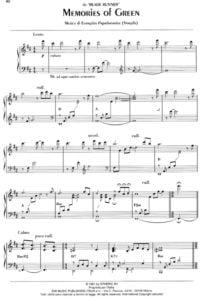
Vangelis's score for Ridley Scott's Blade Runner is, by many accounts, even more influential than Chariots of Fire. Director Ridley Scott has described Vangelis as "the soul of the movie," and the music is inseparable from the film's dystopian vision of Los Angeles. The score's Main Titles and End Titles deploy the Yamaha CS-80's brass and string patches to create a sound that is simultaneously futuristic and ancient, evoking both the neon-lit cityscape and the existential questions at the film's heart.
The score's centerpiece, "Tears in Rain," accompanies Roy Batty's famous "time to die" monologue and stands as one of the most emotionally devastating pieces of film music ever composed. Its slow, descending chords and ethereal textures capture the film's meditation on mortality, memory, and what it means to be human. The Blade Runner score was not officially released in its complete form until 1994, but its influence on electronic music and film scoring has been immense.
1492: Conquest of Paradise and Other Film Work
Vangelis reunited with Ridley Scott for 1492: Conquest of Paradise (1992), a film about Christopher Columbus. The soundtrack, which featured the English Chamber Choir and Flamenco guitarists, was initially a commercial disappointment. However, three years later, the title track was adopted by German boxer Henry Maske as his entrance music. When Maske became IBF world champion, "Conquest of Paradise" became a massive hit, topping charts in Germany, the Netherlands, Belgium, and Switzerland. The single sold 1.5 million copies in Germany alone, and the album eventually went gold and platinum in over 17 countries. The track has since been used as a theme for the Crusaders rugby team, the Wigan Warriors, and the 2011 Cricket World Cup.
Other notable film scores include "Titans" from Oliver Stone's Alexander (2004), a piece of enormous scale that blends orchestra, choir, and Vangelis's signature synths to evoke the grandeur of the ancient world; "Bitter Moon" (1992) for Roman Polanski; and "El Greco" (2007), a return to his Greek heritage.
Collaborations: Jon & Vangelis and Beyond
Vangelis's most significant and sustained collaboration was with Jon Anderson, the lead vocalist of Yes. Their partnership began when Anderson contributed vocals to "So Long Ago, So Clear" on Heaven and Hell (1975) and blossomed into a full-fledged duo, Jon & Vangelis, which released four albums between 1980 and 1991.
Their debut, Short Stories (1980), produced the hit "I Hear You Now," which reached the UK Top 10. The follow-up, The Friends of Mr Cairo (1981), contained their biggest successes: the title track, the anthemic "State of Independence" (later covered by Donna Summer), and "I'll Find My Way Home," which became a UK Top 10 hit. Their third album, Private Collection (1983), and the later Page of Life (1991) continued the partnership, though the duo's output became sporadic as Anderson returned to Yes and Vangelis focused on film work.
Vangelis also collaborated with Greek rock band Socrates Drank the Conium on the album Phos (1976) and contributed to projects by Yes-related acts, including Anderson Bruford Wakeman Howe. In 2002, he composed the official anthem for the FIFA World Cup held in Korea and Japan, further cementing his status as a composer capable of writing music for the grandest of occasions.
Space, Science, and NASA
Vangelis's fascination with space and science was a recurring theme throughout his career. His album Albedo 0.39 was named after the Earth's reflectivity, and his music was prominently featured in Carl Sagan's Cosmos series. In 2001 and again in 2013, Vangelis collaborated with NASA, composing music for its space missions. His final album, Juno to Jupiter (2021), was inspired by NASA's Juno space probe and its mission to the gas giant. This lifelong engagement with the cosmos gave his music a sense of scale and wonder that few other composers have matched.
Influence and Legacy
Vangelis's influence extends far beyond his own recordings. He is widely regarded as one of the pioneers of electronic music, a figure whose work demonstrated that synthesizers could be used to create music of emotional depth and orchestral grandeur. His use of the Yamaha CS-80 set a standard for expressive synthesizer performance that remains influential today.
His impact on film music is particularly profound. Before Chariots of Fire and Blade Runner, electronic scores were often relegated to science fiction or horror films, and were rarely associated with prestige projects or period dramas. Vangelis proved that synthesizers could carry the emotional weight of a traditional orchestra, and his success opened doors for countless composers who followed. His influence can be heard in the work of Hans Zimmer, James Newton Howard, and Cliff Martinez, among many others.
In the broader electronic music world, Vangelis's ambient and atmospheric compositions informed the development of techno, trance, and dubstep, and he provided a blueprint for modern experimental producers such as Oneohtrix Point Never and Armin van Buuren. His music has been sampled, covered, and referenced across genres, from hip-hop to classical.
Vangelis died on May 17, 2022, in Paris, at the age of 79, from heart failure. Tributes poured in from around the world. Greek Prime Minister Kyriakos Mitsotakis wrote that "Vangelis Papathanassiou is no longer among us," while Culture Minister Lina Mendoni noted that his music "moved people of different backgrounds, nationalities and cultures". Perhaps the most fitting tribute came from the music itself: a body of work that continues to inspire, comfort, and transport listeners to worlds both real and imagined.
Search your favorite sheet music in the Sheet Music Library Catalog
Vangelis was, in the truest sense, a composer who painted with sound. He took the raw materials of electronic music—oscillators, filters, envelopes—and shaped them into music of extraordinary emotional power. His melodies are unforgettable, his harmonies evocative, and his sonic landscapes vast enough to encompass the sweep of history, the mysteries of space, and the depths of the human heart. He was a Greek composer who became a citizen of the world, an untutored musician who mastered the most advanced technology of his time, and a private man whose music spoke to millions. His legacy is not merely a collection of recordings, but a way of hearing the world: as a place of wonder, of melancholy, and of transcendent beauty.
Search your favorite sheet music in the Sheet Music Library Catalog
Browse in the Sheet Music Library:
Or browse in the categories menus & download the Library Catalog PDF:
Listen to Vangelis music on Spotify
Discography
Main article on Wikipedia: Vangelis discography
Studio albums
- Fais que ton rêve soit plus long que la nuit (1972)
- Earth (1973)
- Heaven and Hell (1975)
- Albedo 0.39 (1976)
- Spiral (1977)
- Beaubourg (1978)
- Hypothesis (1978; unofficial)
- The Dragon (1978; unofficial)
- China (1979)
- See You Later (1980)
- Soil Festivities (1984)
- Mask (1985)
- Invisible Connections (1985)
- Direct (1988)
- The City (1990)
- Foros Timis Ston Greco (1995)
- Voices (1995)
- Oceanic (1996)
- El Greco (1998)
- Mythodea – Music for the NASA Mission: 2001 Mars Odyssey (2001)
- Rosetta (2016)
- Nocturne: The Piano Album (2019)
- Juno to Jupiter (2021)
Soundtracks
- 5000 Lies (1966)[144]
- L'Apocalypse des animaux (1973)
- Ignacio (aka "Do You hear the Dogs Barking?" and "Entends-tu les chiens aboyer") (1975)
- La Fête sauvage (1976)
- Opéra sauvage (1979)
- Chariots of Fire (1981)
- Blade Runner (1994; official)
- Antarctica (1983)
- The Bounty (1984)
- Francesco (1989)
- 1492: Conquest of Paradise (1992)
- Alexander (2004)
- Blade Runner Trilogy: 25th Anniversary (2007)
- El Greco: Original Motion Picture Soundtrack (2007)
- Chariots of Fire – The Play: Music from the Stage Show (2012)