
Scores for all instruments: 16,000+ (active and growing), over 236,000 pages.
All genres and levels: Jazz & Blues, Rock & Pop, Classical & Contemporary, Film & Musicals;
books & biographies; methods, études, play-along tracks (MP3) for Jazz & Rock.
Access & benefits: US$15.99 one-time payment, valid for lifetime, full Library access.
Table of Contents
Vince Guaraldi
Please, subscribe to our Sheet Music Library. Sheet music should be accessible and affordable for all musicians, from professionals to absolute beginners.

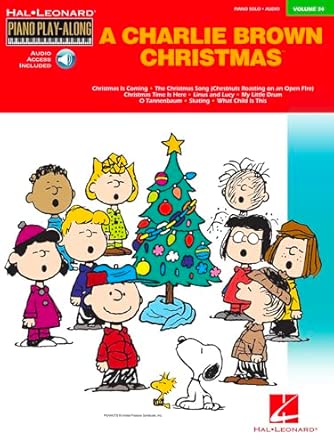
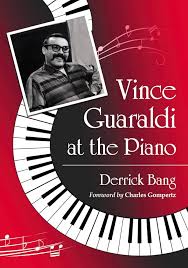


The best sheet music download from our Library.
For the price of a single songbook, get a full Sheet Music Library!
Vince Guaraldi: The Jazz Pianist Who Gave Charlie Brown His Swing
Few musicians have shaped the sound of American childhood as indelibly as Vince Guaraldi. For generations, the opening piano riff of “Linus and Lucy” has signaled the arrival of Charlie Brown, Snoopy, and the entire Peanuts gang, while the wistful, snowy textures of A Charlie Brown Christmas have become as essential to the holiday season as mistletoe and eggnog. Yet to remember Guaraldi only as “the Peanuts guy” is to overlook one of the most distinctive and quietly influential voices in West Coast jazz—a Grammy-winning composer, a sensitive accompanist, and a pianist whose deceptive simplicity concealed a sophisticated harmonic mind. Guaraldi’s music was never merely background for cartoons; it was jazz that slipped past the guard of an unsuspecting public, embedding complex rhythms and elegant voicings into the cultural bloodstream of America. This is the story of a “reformed boogie-woogie piano player” who became an unlikely architect of the American soundtrack.
A Charlie Brown Christmas | Soundtrack Suite (Vince Guaraldi)
Original Motion Picture Soundtrack (1965). Composed and Conducted by Vince Guaraldi, performed by the Vince Guaraldi Trio.
Early Life and the Making of a San Francisco Jazzman
Vincent Anthony Guaraldi was born Vincent Anthony Dellaglio on July 17, 1928, in San Francisco’s North Beach, a neighborhood that would remain central to his musical identity throughout his life. His surname changed to Guaraldi after his mother, Carmella, divorced his biological father and remarried Tony Guaraldi, who adopted the boy. Music ran in the family: his maternal uncles, Joe and Maurice “Muzzy” Marcellino, were prominent jazz bandleaders in San Francisco, and their influence sparked Guaraldi’s early passion for the piano. He graduated from Lincoln High School, briefly attended San Francisco State College, and served as a cook in the U.S. Army during the Korean War. Even before completing his formal education, Guaraldi was already performing in the vibrant clubs of the Bay Area, haunting sessions at the Black Hawk and Jackson’s Nook, sometimes alongside the Chubby Jackson–Bill Harris band or in combos with Sonny Criss.
His first serious booking came at the Black Hawk, where he worked as an intermission pianist—a gig that required him to fill in for the legendary Art Tatum. “It was more than scary,” Guaraldi later recalled. “I came close to giving up the instrument”. He persevered, and his first recorded work appeared on “Vibratharpe,” a 1953 release by the Cal Tjader Trio. By the mid-1950s, Guaraldi had formed his first trio with guitarist Eddie Duran and bassist Dean Reilly, performing regularly at the hungry i, a North Beach bohemian club where he accompanied vocalist Faith Winthrop. His debut as a bandleader came in August 1955 at the Black Hawk, where he recorded original compositions “Ginza” and “Calling Dr. Funk”; these tracks were included in Modern Music from San Francisco, released by Fantasy Records in 1956. Impressed with his work, Fantasy offered Guaraldi an exclusive contract, leading to his first album, Vince Guaraldi Trio, featuring Duran and Reilly without a drummer.
The “Guaraldi Sound”: Style, Harmony, and Technique
Guaraldi forever described himself as “a reformed boogie-woogie piano player,” and that self-deprecating phrase contains a key to his art. His musical style drew from an unusually broad well: boogie-woogie, bebop, Brazilian bossa nova, Afro-Cuban jazz, blues, swing, and rock ‘n’ roll all flowed into his playing and writing. What emerged was a sound that felt immediately accessible—childlike, even—yet was built on sophisticated rhythmic and harmonic foundations. As Guaraldi historian Derrick Bang has observed, misperceptions of the music as bland easy-listening have concealed the innovations beneath its surface simplicity; unwrapped, the music reveals abundant complexity.
One of the defining features of Guaraldi’s style was his use of bass ostinatos drawn from boogie-woogie, over which he layered Afro-Cuban rhythms of mambo and montuno, Brazilian bossa nova, blues inflections, swing, bebop, and boogaloo. His left hand, though often sparse in solo passages, could anchor a composition with a relentless, hypnotic groove; in his up-tempo Peanuts pieces, that strong left hand frequently reflected his early boogie-woogie influences. When playing a solo, Guaraldi tended to use his left hand without complex harmonies, favoring single notes in the right hand and relying on rhythmic displacement and melodic invention rather than dense chordal textures.
Harmonically, Guaraldi favored open voicings—spreading the notes of a chord over a range wider than one octave to create a richer, more “open” sound. He was physically short with small hands, and he accomplished through finger movement what he could not otherwise stretch to cover. His chordal vocabulary included intervals of fourths, fifths, and major thirds that sounded childlike but were carefully intended effects. A hallmark of his improvisational idiom was the chromatically approached minor-third double stop: two notes played at once, the top note held or repeated while the bottom note slides up the keyboard, creating a bluesy minor third. He also used enclosures—bebop-derived figures in which a tone within a chord is preceded and followed by neighboring tones—and descending chromatic bass lines that often embedded tritone walkdowns between chords sharing a common tone.
The analytical literature on Guaraldi’s music has begun to codify these devices. A study of “The Guaraldi Sound” identifies the tritone walkdown in “The Great Pumpkin Waltz” as a representative example: the bass begins on the fourth degree and descends chromatically, with first-inversion major and diminished chords alternating over the moving bass, and Guaraldi omitting the V chord to preserve the stepwise motion of the line. In “You’re in Love, Charlie Brown,” a three-voice reduction of the B section reveals similarly sophisticated voice-leading beneath the tuneful surface. Guaraldi gently pushed rhythms with slight pauses between notes to complement melodic leaps, and his rhythm section writing often switched between straight eighth notes and swing. The cumulative effect was a music that Jean Schulz, widow of Peanuts creator Charles M. Schulz, said captured the way children “walk and bounce a little bit”—a music that felt effortless precisely because its craft was so deeply internalized.
Key Compositions and# the Art of the Trio
Main articles: Vince Guaraldi discography, List of songs recorded by Vince Guaraldi, and List of Charlie Brown Records releases
Studio albums
- Modern Music from San Francisco (1956)
- Vince Guaraldi Trio (1956)
- A Flower Is a Lovesome Thing (1957)
- Jazz Impressions of Black Orpheus (1962)
- Vince Guaraldi, Bola Sete and Friends (1964)
- The Latin Side of Vince Guaraldi (1964)
- From All Sides (1965)
- Vince Guaraldi with the San Francisco Boys Chorus (1967)
- Oh Good Grief! (1968)
- The Eclectic Vince Guaraldi (1969)
- Alma-Ville (1969)
Peanuts scores
- Jazz Impressions of A Boy Named Charlie Brown (1964)
- A Charlie Brown Christmas (1965)
- Charlie Brown's All Stars! (1966)
- It's the Great Pumpkin, Charlie Brown (1966)
- You're in Love, Charlie Brown (1967)
- He's Your Dog, Charlie Brown (1968)
- Charlie Brown and Charles Schulz (1969)
- It Was a Short Summer, Charlie Brown (1969)
- A Boy Named Charlie Brown (1970)
- Play It Again, Charlie Brown (1971)
- You're Not Elected, Charlie Brown (1972)
- There's No Time for Love, Charlie Brown (1973)
- A Charlie Brown Thanksgiving (1973)
- It's a Mystery, Charlie Brown (1974)
- It's the Easter Beagle, Charlie Brown (1974)
- Be My Valentine, Charlie Brown (1975)
- You're a Good Sport, Charlie Brown (1975)
- It's Arbor Day, Charlie Brown (1976)
Vince Guaraldi’s catalog is anchored by a handful of pieces that have become American standards. The most famous is undoubtedly “Linus and Lucy,” a jazz instrumental that debuted on his 1964 album Jazz Impressions of a Boy Named Charlie Brown and rose to prominence the following year in A Charlie Brown Christmas. Widely recognized as the signature theme of the Peanuts franchise, the piece has become one of Guaraldi’s most enduring compositions, a burst of joyous, buoyant energy that never fails to evoke the world of Charles Schulz. “Christmas Time Is Here,” written with Lee Mendelson, is the other pillar of the Guaraldi songbook—a wistful, minor-key melody that has become a holiday standard in its own right.
But Guaraldi’s finest work extends well beyond the Peanuts universe. His 1962 composition “Cast Your Fate to the Wind” was originally released as the B-side to “Samba de Orpheus” on the album Jazz Impressions of Black Orpheus; it became a radio hit, reached No. 22 on the Billboard Hot 100, and won the 1963 Grammy Award for Best Original Jazz Composition—a rare crossover achievement for a jazz instrumental. The piece remains one of the biggest-selling jazz records to cross over to the pop charts, and it has been recorded by dozens of musicians in instrumental and vocal versions. Other notable Guaraldi compositions include “Ginza,” “Calling Dr. Funk” (which earned him the nickname “Dr. Funk”), “El Matador,” “The Great Pumpkin Waltz,” “Skating,” “Baseball Theme,” “Oh, Good Grief!,” “Blue Charlie Brown,” and “Peppermint Patty”.
Guaraldi’s trio recordings remain the primary vehicle through which his pianistic voice is heard. The original trio with Eddie Duran and Dean Reilly produced The Vince Guaraldi Trio (1956) and A Flower Is a Lonesome Thing (1957). Later trios featured bassist Monty Budwig and drummer Colin Bailey, among others, and the interplay between Guaraldi’s piano and his sidemen was marked by a chamber-like sensitivity—a conversational give-and-take that suited both his introspective ballads and his more extroverted Latin-tinged workouts.
The Peanuts Revolution: Film, Television, and the Jazz Mass
Guaraldi’s association with Peanuts began when producer Lee Mendelson tapped him to score the animated television special A Charlie Brown Christmas, which first aired on December 9, 1965. The collaboration was transformative. A Charlie Brown Christmas is said to have gifted jazz to more new listeners than even Miles Davis’s Kind of Blue, slipping sophisticated music past the unsuspecting public under the guise of children’s entertainment. The soundtrack album, featuring “Linus and Lucy,” “Christmas Time Is Here,” “O Tannenbaum,” and “Skating,” has been certified quadruple-platinum by the RIAA, inducted into the Grammy Hall of Fame in 2007, and added to the Library of Congress’s National Recording Registry in 2012; it is the second best-selling jazz album of all time.
Guaraldi went on to compose music for seventeen Peanuts animated specials, six of which peaked in the top 15 of Billboard’s Traditional Jazz Albums chart. His scores for It’s the Great Pumpkin, Charlie Brown (1966), Charlie Brown’s All-Stars (1966), You’re in Love, Charlie Brown (1967), He’s Your Dog, Charlie Brown (1968), It Was a Short Summer, Charlie Brown (1969), Play It Again, Charlie Brown (1971), and You’re Not Elected, Charlie Brown (1972), among others, expanded the vocabulary of the Peanuts sound while remaining unmistakably his own. For the 1969 feature film A Boy Named Charlie Brown, Guaraldi adapted several signature themes—“Skating,” “Baseball Theme,” “Charlie Brown and His All-Stars,” “Oh, Good Grief!,” “Air Music,” and “Blue Charlie Brown”—and incorporated multiple variations of “Linus and Lucy”; he also reworked “Lucifer’s Lady” from his album The Eclectic Vince Guaraldi into “Kite Music (Lucifer’s Lady)” for the film. Producer Lee Mendelson enlisted arranger John Scott Trotter to supplement Guaraldi’s jazz with orchestral elements for the theatrical audience, but the core of the score remained Guaraldi’s trio. Notably, Snoopy Come Home (1972) was the only Peanuts film during Guaraldi’s lifetime that did not have a score composed by him.
Guaraldi’s film and television work also extended beyond Peanuts. He scored the live-action television film adaptation of the musical You’re a Good Man, Charlie Brown in 1973 and contributed music to industrial films such as Bicycles Are Beautiful. His Peanuts themes have since been used in subsequent adaptations, including The Peanuts Movie (2015), for which his original compositions were credited.
In May 1965, four months before A Charlie Brown Christmas aired, Guaraldi premiered an Episcopal Jazz Mass at San Francisco’s Grace Cathedral—a landmark event that preceded Duke Ellington’s First Sacred Concert. Commissioned by the Diocese of Grace Cathedral, the Mass fused Guaraldi’s mainstream and Latin strains beneath Gregorian melodies and Anglican plainchant sung by a 68-member chorus; the performance was recorded live and released as At Grace Cathedral. Critics have noted that among the jazz-based sacred works of the era—including pieces by Dave Brubeck and Lalo Schifrin—Guaraldi’s Mass may be the most effective, an unpretentious and undeniably emotional response with plenty of jazz content. The Jazz Mass remains a lesser-known but significant chapter in his career, evidence of his ambition to carry jazz into spaces where it had rarely ventured.
Collaborations: From Cal Tjader to Bola Sete
Guaraldi’s career was shaped by a series of fruitful collaborations. He cut his jazz teeth as a member of combos fronted by Cal Tjader and Woody Herman, and his early work with Tjader’s Latin jazz ensembles—featuring Mongo Santamaría, Willie Bobo, and Paul Horn—gave him a deep grounding in Afro-Cuban rhythms that would later surface throughout his own music. He toured and recorded with Woody Herman’s big band in 1956–57 and again in 1959, experiences that sharpened his ensemble playing and his sense of dynamics. In 1962, Guaraldi’s trio backed Jimmy Witherspoon and Ben Webster on an episode of Ralph J. Gleason’s Jazz Casual program on PBS, and although Guaraldi did not solo on that occasion, his accompaniment was superb.
The most significant collaborative partnership of Guaraldi’s mature career was with Brazilian guitarist Bola Sete. The two first recorded together in the early 1960s and went on to make three albums for Fantasy Records, including From All Sides (1965) and a live date from 1966. From All Sides captures the inspired partnership between Guaraldi and Sete at the height of their mid-1960s collaboration, blending West Coast cool piano with Sete’s Latin jazz and bossa nova influences. The collaboration was a natural extension of Guaraldi’s long-standing engagement with Brazilian music, and it produced some of his most lyrical and rhythmically buoyant playing. Guaraldi also worked with vocalist Faith Winthrop early in his career and maintained a close relationship with the San Francisco jazz community throughout his life.
Awards, Recognition, and Posthumous Honors
Guaraldi’s commercial and critical recognition during his lifetime was highlighted by the 1963 Grammy Award for Best Original Jazz Composition for “Cast Your Fate to the Wind”. The A Charlie Brown Christmas soundtrack has since become one of the most celebrated albums in jazz history: quadruple-platinum, Grammy Hall of Fame inductee (2007), and Library of Congress National Recording Registry selection (2012). In 2009, a previously unreleased single, “Calling Dr. Funk,” was posthumously issued on the chart-topping compilation The Definitive Vince Guaraldi. Guaraldi’s music has continued to reach new audiences through reissues, streaming, and tribute projects; pianist George Winston paid tribute to Guaraldi on two cover albums, released in 1996 and 2010, that peaked at No. 1 and No. 2 respectively on Billboard’s New Age Albums chart.
Influences and Legacy
Vince Guaraldi’s influences were as eclectic as his output. He absorbed the blues and boogie-woogie of his youth, the bebop language of the 1940s and 1950s, the Latin rhythms he encountered with Cal Tjader, and the bossa nova he explored with Bola Sete. From Art Tatum—whom he once had to follow at the Black Hawk—he learned something about the daunting standards of pianistic excellence; from Nat King Cole and other trio pianists, he learned the art of accompaniment; from the church and from the San Francisco beat scene, he learned that jazz could be both sophisticated and communitarian.
Guaraldi’s own influence is difficult to overstate, precisely because it is so pervasive. “Linus and Lucy” has become an American standard, a piece that is instantly recognizable to listeners who could not name its composer, and it remains the signature melody of the Peanuts franchise. His Peanuts scores demonstrated that jazz could speak to children without condescension, and his Christmas album is for many listeners the gateway into jazz—a record that is played in millions of homes every December, introducing new generations to the sound of a piano trio swinging through a snowy night. His drummer in an early trio, Jerry Granelli, went on to form the free-jazz band Light Sound Dimension, recognized by the Rock & Roll Hall of Fame as pioneers of psychedelic music—a testament to the exploratory spirit that Guaraldi fostered in his sidemen. And the scholarly attention his music has received, including Derrick Bang’s biography Vince Guaraldi at the Piano and analytical studies of his improvisational idiom, has begun to give Guaraldi the “long-overdue recognition” that his career deserves beyond the Peanuts association.
Final Years and Enduring Presence
Guaraldi died of a heart attack on February 6, 1976, at the age of 47, moments after concluding the first half of a nightclub performance in Menlo Park, California. His sudden death cut short a career that was still evolving—he had recently been exploring electric piano and synthesizer textures, and his late recordings suggest a musician unwilling to stand still. Yet the body of work he left behind is remarkably coherent. Whether he was writing a jaunty theme for Snoopy, improvising a blues-drenched solo over a boogie-woogie bass line, or setting the Latin mass to jazz, Guaraldi remained himself: a melodist with a gift for the memorable phrase, a harmonist with a taste for open, airy voicings, and a rhythm section player who understood that swing is as much about space as it is about notes.
Today, Vince Guaraldi’s music is everywhere—in holiday playlists, in television specials, in the fingers of pianists who learned to play jazz by figuring out “Linus and Lucy.” He was, in the words of his own self-description, a reformed boogie-woogie piano player, but he was also something more: a San Francisco jazz original who found a way to make complex music feel like play, and in doing so, gave Charlie Brown—and the rest of us—a sound to walk and bounce to.
Browse in the Sheet Music Library:
Or browse in the categories menus & download the Library Catalog PDF: