
Scores for all instruments: 16,000+ (active and growing), over 236,000 pages.
All genres and levels: Jazz & Blues, Rock & Pop, Classical & Contemporary, Film & Musicals;
books & biographies; methods, études, play-along tracks (MP3) for Jazz & Rock.
Access & benefits: US$15.99 one-time payment, valid for lifetime, full Library access.
Table of Contents
The best sheet music download from our Library.

Please, subscribe to our Sheet Music Library. Sheet music should be accessible and affordable for all musicians, from professionals to absolute beginners.
Wynton Marsalis: The Trumpeter Who Redefined America’s Classical Music
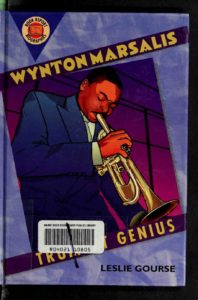
Wynton Learson Marsalis was born on October 18, 1961, in New Orleans, Louisiana, into a family that would become American jazz royalty. His father, Ellis Marsalis Jr., was a respected pianist and educator who directed the jazz program at the New Orleans Center for Creative Arts. His older brother Branford became a celebrated saxophonist, while younger brothers Delfeayo and Jason established themselves as a trombonist and drummer, respectively. Growing up in the city that gave birth to jazz, Wynton absorbed the music’s DNA before he could articulate what it meant.
By age six, he had picked up the trumpet. By fourteen, he was performing with the New Orleans Philharmonic. By seventeen, Wynton Marsalis had been accepted into the Tanglewood Music Center—one of the youngest musicians ever admitted—where he won the prestigious Harry Shapiro Award. In 1979, he moved to New York to study classical music at The Juilliard School. He was barely out of his teens when Art Blakey invited him to join the legendary Jazz Messengers for their 1980 tour, an experience that would redirect his life’s work.
“Art Blakey’s inspirational leadership made a lasting impression,” Marsalis later reflected, “and led to Marsalis’ primary focus becoming jazz”.
That focus would transform not only his own career but also the entire landscape of American music.
Search your favorite sheet music in the Sheet Music Library Catalog
The Prodigy Who Became a Movement
Marsalis signed his first recording contract in 1980, and by 1981 he had assembled his own quintet. His self-titled debut album arrived in 1981, featuring a rhythm section that included pianist Herbie Hancock, bassist Ron Carter, and drummer Tony Williams—the same trio that had backed Miles Davis in the 1960s. Even then, the statement was clear: Marsalis was not merely a young talent; he was positioning himself in direct lineage with the music’s most hallowed traditions.
The early 1980s were a pivotal moment for jazz. Fusion had dominated the 1970s, and acoustic jazz had been pushed to the cultural margins. Marsalis, barely twenty years old, emerged as the standard-bearer for a return to acoustic traditions. The press dubbed him and his peers the “Young Lions”—a generation of musicians who looked backward to move forward.
His technical command was immediately apparent. Chris Sheridan, writing in Jazz Journal in 1982, observed that “Marsalis is as well-equipped as two previous Messengers, Lee Morgan and Freddie Hubbard,” but noted that his technique “is simply the means to an expressive end.” Sheridan heard something deeper: Marsalis’s rhythmic sense underpinned his entire approach to improvisation, lending his work “impressive unity… and variety”.
Musical Style and Harmonic Language
Marsalis’s style is rooted in post-bop, the evolution of hard bop that incorporates modal harmony, extended rhythmic structures, and a synthesis of jazz elements from multiple eras. Unlike many of his contemporaries, he combined deep academic training in classical music with immersion in jazz tradition—a dual background that gave him a unique voice.
His harmonic approach is marked by complex chord sequences and unconventional metrorhythms. He is equally comfortable with dense, dissonant harmonic structures and the elegant simplicity of a triad. “I believe a triad can be great too,” he told an interviewer. “A four-bar phrase, nothing wrong with it if you’re dealing with it”. This philosophy reflects his refusal to equate complexity with quality—a stance that has sometimes placed him at odds with avant-garde orthodoxy.
His improvisational language combines traditional melodic contours with modern harmonic solutions, frequently containing intertextual allusions to Miles Davis, John Coltrane, and other jazz innovators. Critics have noted echoes of Kenny Dorham and Booker Little in his playing, particularly his “ringing melody” and “tart lyricism”. Yet he has increasingly forged his own sound, transcending mere imitation.
Rhythmically, Marsalis is unusually adventurous. In his composition “Big Train,” he employed 5- and 6-bar phrases, 3-bar phrases, and extended odd-meter passages. “The challenge is to improvise on it,” he explained. His approach to rhythm is not merely intellectual—it is visceral, rooted in the swing feel that he regards as jazz’s essential heartbeat.
The Composer: From Small Group to Symphony Hall
While Marsalis first gained fame as a trumpet virtuoso, his ambitions as a composer have defined his mature career. His compositions span intimate quintet pieces, extended suites, ballet scores, string quartets, and symphonic works.
His early small-group compositions—including “Father Time,” “Hesitation,” and “Twilight”—revealed a sophisticated compositional mind at work. “Father Time” combines 4/4, 3/4, and Latin sections, with the structure repeated during solos. “Hesitation” is essentially a rhythmic sequence, a “chase” between trumpet and tenor saxophone exchanging asymmetric passages.
The 1985 album Black Codes (From the Underground) is widely regarded as his magnum opus from the early period. The title track’s “disorienting hits and transitions” finally settle into “a breezy but angular 20-bar blues,” while the album’s closer, “Blues,” featuring just trumpet and bass, “sounds like a reassertion of traditionalist principles”. The album captured a quintet at its peak, with Branford Marsalis on tenor, Kenny Kirkland on piano, Charnett Moffett on bass, and Jeff “Tain” Watts on drums.
As the 1980s progressed, Marsalis’s ambitions expanded. The Majesty of the Blues (1988) contained the 36-minute three-movement suite The New Orleans Function, a work that drew on his hometown’s funeral traditions. Blue Interlude (1991) featured a 37-minute title track that achieved “the grace and romance of Duke Ellington’s classic years”. In This House, On This Morning (1992) was an extended piece based on the form of a traditional gospel service, commissioned by Jazz at Lincoln Center.
His most celebrated large-scale work is undoubtedly Blood on the Fields (1997), a jazz oratorio that tells the story of slavery. The composition won the Pulitzer Prize for Music, making Marsalis the first jazz composer to receive the award. Scored for the Jazz at Lincoln Center Orchestra with vocalists Jon Hendricks and Cassandra Wilson, the work reflects what Marsalis has called “the link between music and the human experience that it represents”.
Other major compositions include All Rise (1999), an epic for big band, gospel choir, and symphony orchestra performed by the New York Philharmonic; The Abyssinian Mass (2008), commissioned for the bicentennial of Harlem’s Abyssinian Baptist Church; Swing Symphony (2010), inspired by Ives, Gershwin, Copland, Bernstein, and Ellington; and The Democracy! Suite (2020), which celebrates “jazz as the ultimate metaphor for American democracy”.
His classical compositions include a Concerto in D for violin and orchestra (2015), written for Nicola Benedetti, and a Concerto for Tubist and Orchestra (2021), composed for Carol Jantsch. These works demonstrate his fluency in classical forms while retaining the rhythmic vitality of jazz.
Essential Recordings and Songs
Marsalis’s discography encompasses more than 127 recordings across jazz, classical, and alternative categories. Among his most significant albums and compositions:
Wynton Marsalis (1981) – His debut, featuring Herbie Hancock, Ron Carter, and Tony Williams. The compositions “Father Time” and “Twilight” announced a major new compositional voice.
Think of One (1983) – A quintet album with Branford Marsalis, Kenny Kirkland, and Jeff “Tain” Watts. The title track won the Grammy for Best Jazz Instrumental Performance.
Black Codes (From the Underground) (1985) – His fiery magnum opus, “arguably the single greatest document of what became known as the Young Lions era”.
J Mood (1985) – A scaled-down quartet with pianist Marcus Roberts, less charming than its predecessor but still effective.
The Majesty of the Blues (1988) – Contains the 15-minute title piece and the 36-minute New Orleans Function suite.
Blue Interlude (1991) – The 37-minute title composition achieves “the grace and romance of Duke Ellington’s classic years”.
Citi Movement (1992) – A three-movement ballet score created with choreographer Garth Fagan, marking a departure from the Ellington model toward a “post-modernist cacophony”.
In This House, On This Morning (1993) – A neoclassical mass inspired by black church music, including the 28-minute In the Sweet Embrace of Life.
Blood on the Fields (1997) – Pulitzer Prize-winning jazz oratorio.
All Rise (1999) – Epic composition for big band, gospel choir, and symphony orchestra.
The Abyssinian Mass (2008) – Commissioned for the bicentennial of Harlem’s Abyssinian Baptist Church.
Swing Symphony (2010) – A symphonic work inspired by the American masters.
Among his individual compositions, “Father Time,” “Hesitation,” “Black Codes,” “Delfeayo’s Dilemma,” “Phryzzinian Man,” “Chambers of Tain,” “For Wee Folks,” “Aural Oasis,” and “Blues” remain essential listening for anyone seeking to understand his early voice.
Discography
Main article on Wikipedia: Wynton Marsalis discography
Published works
- Sweet Swing Blues on the Road with Frank Stewart (1994)
- Marsalis on Music (1995)
- Jazz in the Bittersweet Blues of Life with Carl Vigeland (2002)
- To a Young Jazz Musician: Letters from the Road with Selwyn Seyfu Hinds (2004)
- Jazz ABZ: An A to Z Collection of Jazz Portraits with Paul Rogers (2007)
- Moving to Higher Ground: How Jazz Can Change Your Life with Geoffrey Ward (2008)
- Squeak, Rumble, Whomp! Whomp! Whomp!: A Sonic Adventure with Paul Rogers (2012)
Music in Film
Marsalis’s relationship with cinema extends beyond mere soundtrack contributions. In 2019, director Edward Norton enlisted him for the film Motherless Brooklyn, a noir set in 1950s New York. Norton “didn’t fool around,” hiring both Marsalis and Radiohead’s Thom Yorke, with Daniel Pemberton stitching together an original score.
“He was an automatic call for me when it came to accurately depicting not only what those clubs were like but what would have been played,” Norton said of Marsalis.
Marsalis arranged period jazz tunes—Clifford Brown and Max Roach’s “Blues Walk,” Charles Mingus’s “Jump Monk,” and others—and assembled a five-piece band mixing veterans and Juilliard students. Members of his band appear on screen in the club scenes, with Marsalis himself serving as “the secret real trumpet behind Michael K. Williams”. His arrangement for a dance sequence impressed Norton so deeply that it became a pivotal moment in the film.
Earlier film work includes the soundtrack for Tune in Tomorrow (1990), set in New Orleans, which featured “sonorous Ellingtonian orchestrations with a spicy New Orleans accent”. More recently, he contributed to the soundtrack for Marshall (2017), performing on tracks including “Justice Is Coming,” “YMCA Swing,” and “Choices”.
Collaborations Across Boundaries
Marsalis’s collaborative spirit has extended across genres, generations, and institutions. In 1993, he began a series of partnerships with other Lincoln Center constituents, composing ballet scores for Peter Martins of the New York City Ballet (Jump Start and Jazz: Six Syncopated Movements). In 1995, he collaborated with the Chamber Music Society of Lincoln Center on the string quartet At the Octoroon Balls, and in 1998 created A Fiddler’s Tale as a response to Stravinsky’s A Soldier’s Tale.
His work with choreographer Judith Jamison and the Alvin Ailey American Dance Theater produced Sweet Release (1996) and Ghost Story (1998). Them Twos (1999) was his first symphonic work, another collaboration with New York City Ballet.
In 2006, following Hurricane Katrina, Marsalis collaborated with Ghanaian drummer Yacub Addy on Congo Square, a composition dedicated to his native New Orleans. The piece was premiered by the Jazz at Lincoln Center Orchestra in New Orleans with Addy’s group Odadaa!.
His classical collaborations include performances with the New York Philharmonic, Los Angeles Philharmonic, Boston Pops, Cleveland Orchestra, and London’s Royal Philharmonic. In 2015, he composed Concerto in D for violinist Nicola Benedetti.
Jazz at Lincoln Center’s 2010 residency in Cuba represented a significant cultural exchange, with performances alongside Cuban musicians including Chucho Valdés and Omara Portuondo. The orchestra has since recorded Live in Cuba (2015) for the Blue Engine label.
Influences and the Weight of Tradition
Marsalis’s influences are both obvious and complex. His early trumpet style drew from Clifford Brown, Freddie Hubbard, and pre-fusion Miles Davis. Critics have also noted affinities with Kenny Dorham and Booker Little. But his deepest influence may be Louis Armstrong—not merely as a trumpeter but as a cultural figure who defined what it meant to be a jazz artist in America.
“Blues,” the closing track of Black Codes, “sounds like a reassertion of traditionalist principles, harkening back to Marsalis’ native New Orleans—as well as the father of all trumpet influences: Louis Armstrong”.
Marsalis has been explicit about his philosophical debt to Duke Ellington, whose extended compositions provided a model for treating jazz as concert music. But he has also drawn from unexpected sources: Stravinsky’s rhythmic innovations, the orchestral color of Ives and Copland, and the spiritual depth of gospel music.
His relationship with Miles Davis was more fraught. Marsalis has acknowledged Davis’s influence while criticizing his turn to fusion—a position that generated considerable controversy. Yet his own playing contains unmistakable echoes of Davis’s mid-1960s quintet, particularly in his use of space and his approach to ballads.
The Legacy: Advocate, Educator, Institution Builder
The question of Marsalis’s influence is, as one critic observed, “tricky”. Even without him, young musicians in the 1980s might have looked back to acoustic traditions. But Marsalis’s emergence identified that impulse as a movement, and his peers and successors—Branford Marsalis, Donald Harrison, Terence Blanchard, Wallace Roney, and countless others—are, in a real sense, his children.
His influence extends far beyond trumpet playing. As Managing and Artistic Director of Jazz at Lincoln Center, he has built the world’s first entertainment complex solely dedicated to jazz. Frederick P. Rose Hall, which opened in 2004, contains three state-of-the-art performance spaces, including the first concert hall designed specifically for jazz. Jazz at Lincoln Center’s induction as a constituent organization of Lincoln Center in 1996—equal in stature to the New York Philharmonic, Metropolitan Opera, and New York City Ballet—marked a historic moment for jazz as an art form.
He serves as Director of Jazz Studies at The Juilliard School and President of the Louis Armstrong Educational Foundation. He has received 41 honorary degrees, been appointed UN Messenger of Peace, and been named Chevalier de la Légion d’honneur. Wynton Marsalis received both the National Medal of Arts (2005) and the National Humanities Medal (2016).
His advocacy for jazz as “America’s classical music” has been both celebrated and contested. Critics have accused him of dogmatism, of policing boundaries, of privileging tradition over innovation. Yet even his detractors acknowledge that he has done more than any living musician to secure jazz’s place in American cultural life.
“Wynton is someone who can guide us,” saxophonist Wes Anderson said in 1990. “He’s one of the shepherds of this music”.
More than three decades later, that assessment holds. Marsalis has performed in 858 cities across 65 countries. He has composed hundreds of works, from three-minute blues to hour-long oratorios. He has taught generations of musicians, built institutions, and argued—relentlessly, passionately, sometimes infuriatingly—that jazz matters.
Whether one agrees with his aesthetic judgments or not, the case for his significance is closed. Wynton Marsalis did not merely play the trumpet. He changed the conversation about what American music could be.
Browse in the Sheet Music Library:
Or browse in the categories menus & download the Library Catalog PDF:
Grammy Awards
Source: Wikipedia
- Think of One (1983)
- Hot House Flowers (1984)
- Black Codes (From the Underground) (1985)
Best Jazz Instrumental Album, Individual or Group
- Black Codes (From the Underground) (1985)
- J Mood (1986)
- Marsalis Standard Time, Vol. I (1987)
Best Instrumental Soloist(s) Performance (with orchestra)
- Raymond Leppard (conductor), Wynton Marsalis and the National Philharmonic Orchestra for Haydn, Hummel, L. Mozart: Trumpet Concertos (1983)
- Raymond Leppard (conductor), Wynton Marsalis and the English Chamber Orchestra for Wynton Marsalis, Edita Gruberova: Handel, Purcell, Torelli, Fasch, Molter (1984)
Best Spoken Word Album for Children
- Listen to the Storytellers (2000)
Learning the Blues with Wynton Marsalis
Listen to Wynton Marsalis music on Spotify
Published works
Sweet Swing Blues on the Road with Frank Stewart (1994)
Marsalis on Music (1995)
Jazz in the Bittersweet Blues of Life with Carl Vigeland (2002)
To a Young Jazz Musician: Letters from the Road with Selwyn Seyfu Hinds (2004)
Jazz ABZ: An A to Z Collection of Jazz Portraits with Paul Rogers (2007)
Moving to Higher Ground: How Jazz Can Change Your Life with Geoffrey Ward (2008)
Squeak, Rumble, Whomp! Whomp! Whomp!: A Sonic Adventure with Paul Rogers (2012)