Table of Contents
Scores for all instruments: 16,000+ (active and growing), over 236,000 pages.
All genres and levels: Jazz & Blues, Rock & Pop, Classical & Contemporary, Film & Musicals;
books & biographies; methods, études, play-along tracks (MP3) for Jazz & Rock.
Access & benefits: US$15.99 one-time payment, valid for lifetime, full Library access.
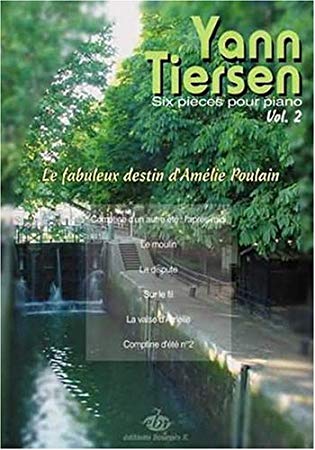
Yann Tiersen: 'Pour Amélie' Piano Music (Full Album) played by Jeroen van Veen
The best sheet music download from our Library.
Tracklist: 00:00:00 Comptine d`un autre été: l`après midi 00:02:42 Comptine d`été No.2 00:05:09 Comptine d`été No.3 00:07:40 Le vieux en veut encore 00:09:20 Toujours la 00:10:45 Comptine d`été No.1 00:13:07 La piece vide 00:15:02 La dispute 00:17:19 Sur le fil 00:22:34 Les jours heureux 00:24:54 chute 00:30:57 L`absente 00:34:17 Le retour 00:36:09 La valse d`Amélie 00:38:52 Le Moulin 00:42:32 Le matin 00:44:39 La plage 00:46:52 Les retrouvailles 00:49:13 La jetee 00:50:16 Tabarly 00:53:02 8 mmm 00:55:27 Point Zero 00:58:34 Summer 78 01:02:34 Coma 01:04:33 Childhood (1) 01:06:27 From Prison to Hospital 01:07:51 Mother 01:09:34 Watching Lara
01:11:26 Selling Dishes 01:12:17 First Rendez-Vous 01:13:50 The Decant Session 01:14:43 Lara's Castle 01:16:45 The Deutsch Mark is Coming 01:18:01 I saw Daddy today 01:20:21 Birthday Preparations 01:22:07 Good Bye Lenin 01:27:37 Childhood (2) 01:30:21 Letters 01:31:53 Mother's Journey 01:33:27 Preparations for the Last TV Fake 01:36:39 Mother Will Die 01:40:09 Father is Late 01:41:51 Father and Mother 01:45:20 Finding the Money 01:46:52 Summer 78
Who is Yann Tiersen (b. 1970)?

Please, subscribe to our Sheet Music Library. Sheet music should be accessible and affordable for all musicians, from professionals to absolute beginners.
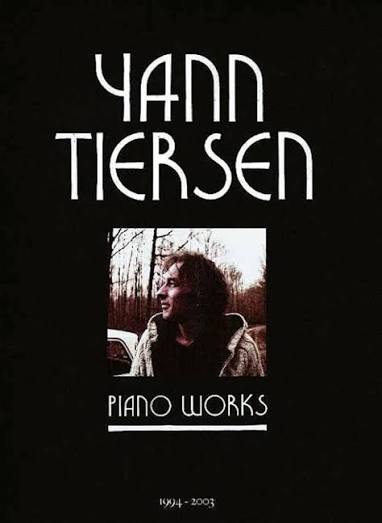
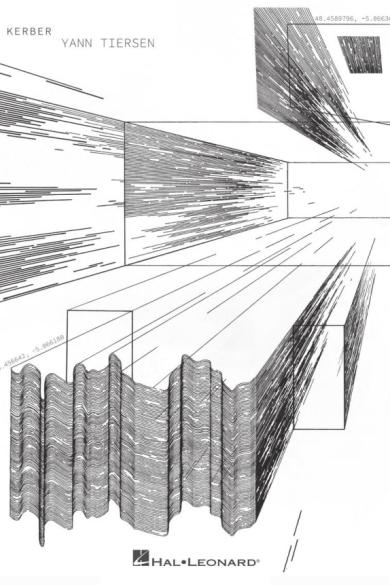
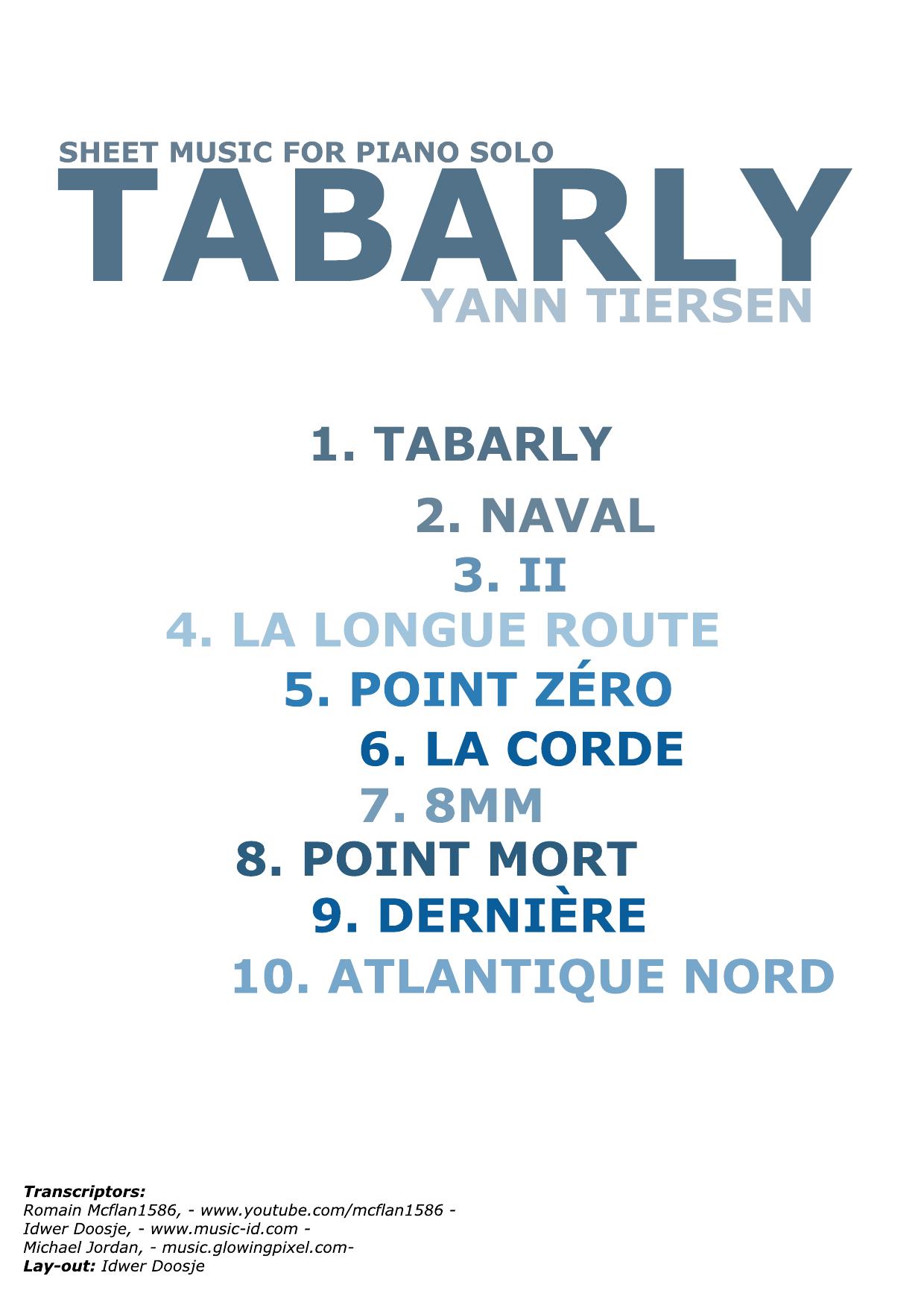



Search your favorite sheet music in the Sheet Music Library Catalog
Yann Tiersen: From the Lighthouses of Brittany to the Cafés of Montmartre—A Portrait of a Sonic Alchemist
In the landscape of contemporary French music, Yann Tiersen occupies a singular and frequently misunderstood position. To millions worldwide, he is the man who scored Amélie—the composer of accordion-and-piano melodies that have become synonymous with a certain romanticized vision of Paris. Yet Tiersen himself has consistently resisted the "film composer" label, insisting he is "not a composer" and has "no classical background." This tension between public perception and artistic self-definition is central to understanding him. His true identity is that of a sonic alchemist: a punk who infiltrated the classical establishment, a multi-instrumentalist who uses toy pianos and typewriters to challenge musical hierarchies, and a artist who moves between minimalist precision and post-rock ferocity.
Early Years in Brittany: Between Classical and Punk
Yann Pierre Tiersen was born on June 23, 1970, in the port city of Brest in Brittany, northwestern France. His family background carried cross-cultural markers—French heritage blended with Belgian and Norwegian origins—a Nordic and Celtic mixture that would later surface repeatedly in his fascination with oceans, islands, and cold landscapes.
His musical education began remarkably early. He started piano at four, took up violin at six, and received rigorous classical training at conservatories in Rennes, Nantes, and Boulogne-sur-Mer. By conventional logic, he was destined to become an institutional classical performer. The punk wave of the 1980s changed everything. Influenced by The Stooges and Joy Division, the teenage Tiersen made a symbolic break at thirteen: he smashed his violin, bought an electric guitar, and formed a rock band. Living in Rennes, home to the annual Rencontres Trans Musicales festival, he saw Nirvana, Einstürzende Neubauten, Nick Cave, The Cramps, Television, and Suicide perform live—experiences that planted the seed of "music without rules".
Years later, Tiersen distilled this experience into something approaching a manifesto: "Let's live in an enormous world of sound we can use randomly, with no rules at all. Let's play with sound, forget all knowledge and instrumental skills, and just use instinct—the same way punk did." This statement explains a core contradiction uniting his work: academic rigor deliberately hidden beneath punk intuition.
From Theater to Studio: The Alchemical Experiments of Early Albums
In the summer of 1993, Tiersen stayed in his apartment and recorded over forty tracks alone, using an electric guitar, a violin, and an accordion on an eight-track reel-to-reel recorder. Most of this material formed his debut album, 《La Valse des Monstres》 (1995). Limited to 1,000 copies, the album was written for theatrical adaptations of Tod Browning's 1932 cult film Freaks and Yukio Mishima's Noh play The Damask Drum. Its seventeen instrumental pieces already revealed Tiersen's signature method: using the crisp texture of toy piano to offset string melancholy, planting uneasy variations within minimalist repetition.
《Rue des Cascades》 (1996) further expanded his sonic palette. The title track introduced vocals for the first time, sung by Claire Pichet, and was later used in the Palme d'Or-nominated film The Dreamlife of Angels. The album's layering of toy piano, harpsichord, mandolin, and accordion established Tiersen's one-man-band recording methodology: nearly all instruments were played by him, building intimate yet complex textures through overdubbing.
The real breakthrough came with 《Le Phare》 (1998). The album was born during two months of self-imposed exile on the isle of Ushant (Ouessant), at the northwesternmost point of France. There, Tiersen rented a house and watched the Créac'h lighthouse—one of the most powerful in the world—sweep its beam across the sea each night. "I was amazed how the rays of light from the lighthouse revealed some hidden details of the land, how we can rediscover something we have in front of us every day, only thanks to a light pointing at it." This fascination with "difference within repetition" translated directly into the album's musical logic. 《Le Phare》 sold over 160,000 copies, with the single "Monochrome" (sung by Dominique A) becoming a radio hit—his first album to enter the French charts, climbing to number 50. Three tracks from this album—"La Dispute," "La Noyée," and "Sur le fil"—would later become among the most globally recognized Tiersen melodies through Amélie.
Amélie: Global Fame Arrives accidentally
In 2001, Tiersen's life was transformed by a phone call. Director Jean-Pierre Jeunet was preparing Amélie, and one of his production assistants happened to play a Tiersen CD. Jeunet "found it absolutely superb," bought all of Tiersen's albums, and contacted him to ask if he would be interested in writing the film score. Tiersen composed nineteen new pieces for the film in two weeks, while also allowing the production to freely select from his older records.
The resulting soundtrack was a peculiar hybrid: new compositions interwoven with older material, not a traditional "film score" but rather a curated tour through Tiersen's musical world. The accordion's Parisian gaiety ("J'y suis jamais allé"), the piano's rippling flow ("Comptine d'un autre été"), the melancholy dialogue between violin and harmonica ("La Valse d'Amélie")—together they wove a soundscape of saturated color and dreamlike reverie. The album topped the French charts and charted in many countries; Tiersen received the César Award for Best Film Music and the World Soundtrack Award for Best Original Soundtrack, plus a BAFTA nomination.
Yet this enormous success brought lasting identity anxiety. Tiersen repeatedly emphasized that "I'm not a composer and I really don't have a classical background," and that his creative center remains touring and studio albums, with film merely being a container that his music "happens to fit". This self-defense is not affectation. From Le Phare to L'Absente, his albums possess complete internal logic and independent artistic life; film adoption is one link in their dissemination chain, not the point of origin.
Musical Style and Harmonic Language: A Punk Variation on Minimalism
Tiersen's music resists easy categorization. It refuses to be filed under "classical crossover," "neoclassical," or "post-rock," though each label captures a facet. Understanding its core requires examining several interwoven dimensions.
Instrumental ecology is Tiersen's most visible signature. His instrumentation includes piano, violin, accordion, electric guitar, toy piano, melodica, harpsichord, vibraphone, mandolin, typewriter, bicycle wheel, pots and pans. This selection is not mere novelty. The mechanical, cool timbre of the toy piano creates counterpoint against the warmth of a standard piano; the rhythmic striking of a typewriter transforms "writing" into "percussion." What he is truly doing is dismantling the hierarchy between "musical" and "non-musical" sound, extending the Dadaist gesture of Satie's 1917 ballet Parade with its typewriter.
Harmonic language: Tiersen's foundation is the intersection of French Impressionism and minimalism. His melodies are often built on a short motive cell—a two-to-four-bar phrase that develops through repetition, transposition, and rhythmic transformation. The piano arpeggios of "Comptine d'un autre été," the string ostinato of "La Dispute," the violin line of "Sur le fil"—all follow this logic. This bears kinship with Philip Glass's additive processes and Michael Nyman's Baroque repetition, but Tiersen's distinctiveness lies in wrapping a minimalist skeleton in the melodic sensibility of French chanson. His harmonic progressions are typically simple—basic tonic, dominant, subdominant functions—but added-tone chords (add9, maj7) and pedal points create ambiguous tonal color, maintaining a suspended tension between brightness and sorrow. As one scholarly analysis of his compositional style notes, the omission of the third in certain chord voicings "confers a certain modal diffusion," while the brevity of motives and their repetition give the music "a concentric and circular sense".
Rhythmically, Tiersen favors the sway of 6/8 or 3/4 time, granting his music a persistent "waltz quality"—even the most melancholic passages carry a potential for dance. This rhythmic choice connects to Breton folk traditions and to his fascination with images of "rotation": the lighthouse's sweep, the waltz's spin, the tide's recurrence are all variants of the same motif.
The Art of Collaboration: From Black Session to Portrait
Tiersen's solo-artist image (one man playing all instruments) often obscures his role as a collaborative musician. Throughout his career, he has engaged in deep collaborations with French and international artists, often serving as catalysts for stylistic shifts.
The 1998 《Black Session》 is a document of particular value, recorded at Rennes' Trans Musicales festival. The roster reads like a who's who of French independent music: Neil Hannon of The Divine Comedy, Bertrand Cantat of Noir Désir, Françoiz Breut, The Married Monk, Les Têtes Raides, and a string quartet. This lineup—spanning rock, folk, and chamber music—prefigured Tiersen's borderless collaborative philosophy.
The 1999 《Tout est calme》 was a joint creation with The Married Monk, Claire Pichet, and Olivier Mellano. The 26-minute mini-album presented a rawer rock texture, peaking at number 45 on the French chart. In 2003, he collaborated with Tindersticks' Stuart Staples, Jane Birkin, Christophe Miossec, and Dominique A on 《3 titres inédits au profit de la FIDH》, a benefit for the International Federation for Human Rights.
The 2004 《Yann Tiersen & Shannon Wright》 is an underrated work. American indie-rock guitarist and vocalist Shannon Wright's abrasive guitar and voice collided with Tiersen's instrumental textures over just ten days, producing a kind of "dissonant beauty"—Wright's explosiveness constrained by Tiersen's minimalist frame, Tiersen's lyrical tendencies cut by Wright's edges. The 2005 《Les Retrouvailles》 welcomed Elizabeth Fraser of Cocteau Twins, whose ethereal voice on "Kala" achieves an almost religious sublimation against Tiersen's string backdrop.
The 2019 《Portrait》 was a systematic revisit and re-creation of Tiersen's own work across two decades. He invited Gruff Rhys (Super Furry Animals), Blonde Redhead, Stephen O'Malley of Sunn O))), and John Grant to deconstruct and rebuild older pieces. "La Dispute" was rewritten as an accordion-and-piano "duel/duet"; "Comptine d'un Autre Été" was infused with more warmth and melancholy; the toy piano returned "charmingly and slightly sinister" on "Waltz of the Monsters." The album's significance lies not in nostalgia but in Tiersen re-examining, as both performer and listener, the dimensions of his own work obscured by cinematic halo.
Image and Sound: An Alternative Path in Film Music
Tiersen's relationship with cinema has always been indirect and incidental. He has never positioned himself as a composer "serving the image," instead allowing directors to select from his existing catalog. This model continued after Amélie, producing a distinctive "Tiersen-style soundtrack aesthetic": music is not an appendage to the image but an independent narrative layer running parallel to it.
The 2003 《Good Bye, Lenin!》 score was another practice of this model. Wolfgang Becker's tragicomedy about East German transformation borrowed the nostalgic texture and light melancholy of Tiersen's music, providing a French, depoliticized emotional annotation to the era around the fall of the Berlin Wall. The score won the German Film Award for Best Music.
The 2008 《Tabarly》 documentary score returned to Tiersen's lifelong fascination with the sea. The film about French sailing legend Éric Tabarly uses piano as its core instrument, supplemented by over a dozen instruments, presenting a more restrained, spatial sound than Amélie. The tracks "Tabarly" and "Point Zéro" are mirror images—the latter slowed down, stripped of instrumental accompaniment, ending with nothing but high-strung violin alone.
Ushant and Subsequent Explorations: From Dust Lane to Kerber
Around 2008, Tiersen experienced the deaths of his mother and a close friend. He returned to Brittany, settled on Ushant, and completed most of 《Dust Lane》 (2010) there, finishing the rest in the Philippines. The album marked a tilt toward more atmospheric, post-rock directions through a fusion of "simple songs and lush electro-acoustic arrangements." The 2011 《Skyline》 continued this path, with contributions from Efterklang and Peter Broderick adding Nordic austerity; bands like Neu!, Kraftwerk, and Can were particular influences. The 2014 《∞》 (Infinity) was recorded in Iceland and the Faroe Islands, pushing Tiersen's "cold landscape aesthetic" to an extreme—"Ar Maen Bihan" features French spoken word over ominous, restless violin and deliberately repetitive beats.
The 2016 《Eusa》 was a return and a distillation. This solo piano album, named after Breton place names on Ushant, drew inspiration from his life on the island. A score was published first, followed by a version incorporating field recordings; it reached number five on the Billboard New Age chart. The 2019 《ALL》 was recorded in a converted disco on Ushant, mixing field recordings from Brittany, England, and California, with Anna von Hausswolff adding Gothic organ dimensions. The 2023 《Kerber》 and its subsequent solo piano and remix versions continued Tiersen's exploration of the tension between electronic textures and piano purity.
Legacy and Influence: A Reluctant Icon
Yann Tiersen's influence is difficult to measure within conventional "musical legacy" frameworks. He never founded a genre or cultivated a school of imitators. His impact has occurred more through osmosis.
First, he redefined the sonic image of "French music" in an international context. The Amélie soundtrack presented global listeners with a French sound that was neither chanson tradition nor electronic dance music: accordion nostalgia, piano clarity, string melancholy, and an emotional texture critics have called "bittersweet ecstasy." This sonic image became so powerful that for two decades, virtually any cinematic narrative involving Paris, Montmartre, or French romance could not escape Tiersen's shadow.
Second, his multi-instrumental practice and studio methodology offered a paradigm for independent musicians: one person can build orchestral complexity in a bedroom with cheap toy instruments and an eight-track machine. This "one-man orchestra" model was prescient for the bedroom-pop and lo-fi era.
More importantly, Yann Tiersen's entire career constitutes a sustained resistance to musical classification. He refuses to be called a classical composer despite conservatory training; he refuses the film-composer label despite his César; he refuses the rock-musician category despite punk energy in his live shows. His very existence asks: when we speak of "classical" versus "popular," "soundtrack" versus "album," "instrumental" versus "song," what exactly are we dividing? The lighthouse on Ushant sweeps the same sea every night, but what it illuminates is never quite the same. Yann Tiersen's music works the same way: revealing difference within repetition, hiding complexity within simplicity, and always leaving a light rotating, waiting to illuminate the next unnoticed corner.
Browse in the Sheet Music Library:
Or browse in the categories menus & download the Library Catalog PDF:
Film scores
Tiersen's ability to compose music that can be easily used for film scores was evident from the beginning. All tracks from his debut album, La Valse des monstres, were conceived for stage adaptations and plays. The title track of his second album, Rue des cascades, was used for The Dreamlife of Angels by Erick Zonca, and several tracks from both albums plus three songs from Le Phare are featured on the soundtrack to Jean-Pierre Jeunet's film Amélie. Another track from Le Phare, "L'Homme aux bras ballants", is the soundtrack to a short animation film by Laurent Gorgiard. Tiersen's pieces are also featured on Alice et Martin by André Téchiné, and Qui plume la lune? by Christine Carrière.
Following the box-office success of Amélie, Tiersen's skills as a composer of film scores were much in demand, and this led him to compose the music for Good Bye, Lenin! by Wolfgang Becker. Although the soundtrack for Amélie consisted mainly of pieces that Tiersen had previously released on his first two albums, the soundtrack for Good Bye, Lenin! was conceived from scratch, except for "Comptine d'un autre été : L'après-midi", which is also featured on Amélie's soundtrack.
Tiersen returned to making film soundtracks in 2008 after a years-long break, creating the score for a documentary about the sailor Éric Tabarly.