
Scores for all instruments: 16,000+ (active and growing), over 236,000 pages.
All genres and levels: Jazz & Blues, Rock & Pop, Classical & Contemporary, Film & Musicals;
books & biographies; methods, études, play-along tracks (MP3) for Jazz & Rock.
Access & benefits: US$15.99 one-time payment, valid for lifetime, full Library access.
Table of Contents
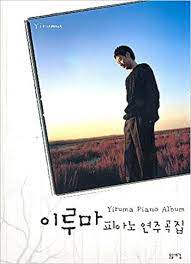
The best sheet music download from our Library.
Please, subscribe to our Sheet Music Library.
Yiruma - May Be + Kiss The Rain + River Flows In You
Search your favorite sheet music in the Sheet Music Library Catalog
Yiruma: The Poet of the Piano
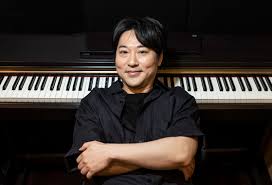
In an age where music is often defined by spectacle and volume, Yiruma stands as a quiet revolutionary. The South Korean pianist and composer, born Lee Ru-ma, has built an extraordinary career on a foundation of restraint, melody, and emotional honesty. His compositions—delicate, repetitive, and profoundly moving—have transcended the boundaries of genre and geography, finding homes in concert halls, film soundtracks, YouTube playlists, and the intimate spaces of millions of listeners' daily lives. With over two decades of recording and performing, Yiruma has become one of the most recognizable names in contemporary classical and new-age music, a figure whose work is often described not as mere entertainment but as emotional sustenance. This article explores the full arc of his life and artistry: his upbringing between two worlds, his distinctive musical language, his most enduring compositions, his forays into film and television, his collaborations across genres, and the legacy he continues to shape.
The best sheet music download from our Library.


Early Life and Education
Yiruma was born on 15 February 1978 in Seoul, South Korea. His introduction to music came early: at the age of five, he began learning the piano, displaying a natural affinity for the instrument that would define his life. When he was just eleven years old, his family moved to the United Kingdom, a decision that would profoundly shape his musical development. In London, he enrolled at the Purcell School for Young Musicians, one of Britain's most prestigious specialist music schools, where he studied composition and piano. The Purcell School, known for nurturing young talent with an emphasis on creativity and individuality, provided Yiruma with an environment that valued potential over rigid technical perfection—a philosophy he would later cite as formative.
After graduating from Purcell in 1997, Yiruma continued his studies at King's College London, where he majored in composition. There, he studied under the renowned British composer Harrison Birtwistle, a figure known for his complex, modernist works. The contrast between Birtwistle's avant-garde sensibilities and Yiruma's emerging lyrical voice might seem stark, but it was precisely this tension that helped Yiruma clarify his own artistic identity. He was not interested in following the path of academic modernism; instead, he was drawn to music that could communicate directly with listeners, music that prioritized emotional resonance over intellectual abstraction. Yiruma graduated from King's College in June 2000, armed with a rigorous compositional training and a clear sense of the kind of music he wanted to create.
Career Beginnings and Breakthrough
Yiruma returned to South Korea after his graduation and released his debut album, Love Scene, in 2001. The album introduced listeners to his signature style: solo piano pieces that were gentle, melodic, and accessible without being simplistic. Later that same year, he released his second album, First Love, which contained the composition that would become his most famous work: "River Flows in You". Although the piece did not achieve immediate global recognition, it laid the groundwork for what would become a remarkable career.
Yiruma's breakthrough in his home country came when the track "When Love Falls" was used as the theme for Choi Ji-woo's character in the immensely popular television drama Winter Sonata. The drama, a cornerstone of the Korean Wave that swept across Asia in the early 2000s, introduced Yiruma's music to a vast new audience. The gentle, melancholic quality of his piano writing perfectly matched the emotional tone of the series, and demand for his music surged. In April 2002, he held his first solo concert, a milestone that confirmed his transition from recording artist to live performer.
That same year, Yiruma made history by becoming the first Korean artist to receive an invitation to perform at MIDEM in Cannes, France, one of the world's most important music industry events. This invitation signaled not only his growing prominence in Asia but also his potential for international recognition. In 2002, he also composed the scores for two films: Oasis, a romance directed by Lee Chang-dong, and Doggy Poo, a claymation feature. Both soundtracks received releases, with the Oasis album titled Oasis & Yiruma. His work on Oasis was particularly significant: the film went on to win five awards at the 2002 Venice Film Festival, and Yiruma's score was praised for its sensitive, understated accompaniment to the film's complex emotional narrative.
Musical Style and Technique
Yiruma's music occupies a unique space between classical tradition and popular accessibility. He is frequently classified as a "new-age" or "contemporary classical" artist, labels that capture his blend of classical technique with the melodic directness of pop and the atmospheric textures of ambient music. His style is characterized by several distinctive features: an emphasis on melody, a preference for repetition and pattern, a restrained harmonic vocabulary, and a deep sensitivity to emotional expression.
At the heart of Yiruma's compositional approach is the melody. His pieces are built around singable, memorable lines that often unfold over simple chord progressions. Unlike much classical piano music, which can be dense with harmonic movement and contrapuntal complexity, Yiruma's music strips away ornamentation to focus on the essential emotional core of a musical idea. This is not a limitation but a deliberate aesthetic choice. As one analysis of his work notes, his compositions often feature "simple harmonies with repeated chords designed to highlight the movement of the right-hand melody". The left hand typically provides a steady, arpeggiated accompaniment that creates a flowing, almost hypnotic foundation, while the right hand carries the melodic content.
The technical demands of Yiruma's music are moderate, often falling around Grade 7 level according to the Royal Conservatory system. This accessibility is part of his music's appeal: pianists of varying skill levels can attempt his pieces, and listeners who are not classical music aficionados can appreciate them without specialized knowledge. Yet within this apparent simplicity, there is considerable subtlety. The use of legato playing, dynamic control, and nuanced pedaling is essential to capturing the expressive quality of his work. As one pedagogical analysis of "Kiss the Rain" notes, the piece requires careful attention to legato technique and dynamic variation, with the main section using an 8-beat rhythm pattern and the chorus intensifying through 16th-note figures.
Harmony and Compositional Approach
Yiruma's harmonic language is rooted in the tonal tradition but colored with touches of modal and chromatic writing that give his music its distinctive emotional flavor. Analyses of his compositions reveal a blend of Baroque, Romantic, and modern harmonic elements. A study of "Kiss the Rain" found that the piece employs a combination of triads, seventh chords, and extended chords, with both regular and irregular chord progressions. The harmonic rhythm is often slow, allowing each chord to resonate and creating a sense of spaciousness that is central to the music's meditative quality.
One of the key features of Yiruma's harmonic style is what might be called "diatonic dissonance"—the use of notes outside the basic triad that add tension and emotional depth without disrupting the overall consonance of the sound. This technique, shared with composers like Ludovico Einaudi, creates a sense of yearning or bittersweet reflection that is central to the emotional impact of his music. The chords are often voiced with open intervals, particularly in the lower register, which gives the music a warm, resonant quality.
Repetition is another fundamental aspect of Yiruma's compositional method. His pieces frequently use recurring melodic and harmonic patterns that evolve gradually over time, creating a sense of continuity and flow. This approach is evident in "River Flows in You," which is built on a small number of repeating figures that are subtly varied throughout the piece. The effect is both hypnotic and emotionally cumulative: the listener is drawn into a meditative state, and the gradual changes in texture and dynamics create a sense of journey and discovery. As one scholarly analysis puts it, the harmony in "River Flows in You" is "simple with repeated chords, using arpeggios to highlight the melodic movement, creating a regular rhythm and harmonious sound".
Key Works and Compositions
Yiruma's catalog spans over two decades and includes numerous albums, each offering variations on his signature style. The following are among his most enduring and significant compositions.
"River Flows in You"
Without question Yiruma's most famous piece, "River Flows in You" was originally released on his 2001 album First Love. The piece is written in A major and is structured more like a pop song than a traditional classical composition, with recurring patterns and clear sectional divisions. It is inspired by the French composer Samuel Vallée's 1999 composition "Une rivière coule en toi," which translates to "River Flows in You". The piece has become one of the most popular contemporary classical works on streaming platforms, accumulating millions of YouTube views and Spotify streams. Its association with the Twilight film series—where it was frequently mistaken for "Bella's Lullaby" by Carter Burwell—further propelled its global recognition.
"Kiss the Rain"
Released on the 2003 album From the Yellow Room, "Kiss the Rain" is another of Yiruma's most beloved compositions. The piece is characterized by its melancholic melody and delicate piano writing, evoking a sense of nostalgia and longing. It reached No. 11 on the Korean album charts, a significant achievement for a solo piano track. The harmonic structure of "Kiss the Rain" has been the subject of academic study, with researchers noting its combination of Baroque-Romantic and modern harmonic elements. The piece is a staple of Yiruma's live performances and remains one of his most streamed works.
"May Be"
Also from First Love, "May Be" is a meditative piece that showcases Yiruma's ability to create emotional depth through simplicity. The melody unfolds gradually, building in intensity over time, and the piece has been described as "an extension of his language, a musical embodiment of his inner being". Its serene, soothing quality makes it one of his most accessible and comforting works.
"Love Me"
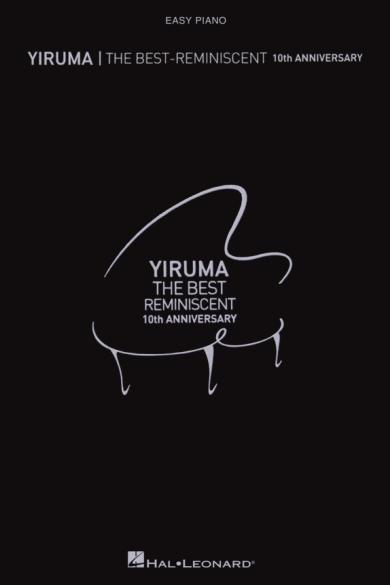
"Love Me" is a sentimental piece with a tranquil, languid feel. It has been described as "intimate music implying a sense of searching". The piece was later included on Yiruma's compilation album The Best: Reminiscent, 10th Anniversary (2011), which brought it to a wider audience. Its gentle, contemplative character exemplifies Yiruma's gift for capturing subtle emotional states.
"Reminiscent"
The title track from his 2011 compilation album, "Reminiscent" is a velvety, airy piece with a "divine rhythm" and "intuitive honesty". It has been described as "an intrinsically valuable gem if you're experiencing anything, especially being worn out or weary of an uphill battle". The piece reflects Yiruma's mature style: refined, emotionally direct, and deeply comforting.
"Do You?"
Originally featured on the Oasis & Yiruma album in 2002, "Do You?" is a pensive ballad that was later included on The Best: Reminiscent, 10th Anniversary. The piece is "sensitive and alluring in the right places," with a melodic expressiveness that has made it a favorite among his fans.
"Stay in Memory"
From the 2012 album of the same name, "Stay in Memory" is a deeply resonant piece that lingers in the listener's mind. The music video's closing words—"With a long period of scars, agony, and many thoughts, I still stay in memory"—capture the emotional weight of the composition.
"Room with a View"
From his 2020 album Room with a View, this piece was written while Yiruma remembered his childhood: "When I was in my room, just doing nothing, just lying on my bed, looking out the window, seeing the scenery… I think it helps". The piece is a return to the simple, nostalgic lyricism that has defined his career.
"Spring Waltz"
Composed for the 2006 television drama Spring Waltz, this piece is a bright, waltz-like composition that captures the optimistic spirit of the series. The Spring Waltz soundtrack album, which Yiruma produced, features both piano and string versions of the piece, showcasing his ability to write for different instrumental forces.
Film and Television Music
Yiruma's contributions to film and television have played a significant role in his career, introducing his music to audiences who might not otherwise encounter solo piano works. His first major soundtrack project was for the 2002 film Oasis, directed by Lee Chang-dong. The film, a complex romance about a man with a criminal record and a woman with cerebral palsy, required a score that could navigate emotional terrain ranging from tenderness to despair. Yiruma's music, with its understated beauty and emotional honesty, proved to be an ideal match. The soundtrack album, Oasis & Yiruma, includes tracks such as "Small Steps," "Do You?," "The Things I Really...," and "Beloved". The album was notable for including vocal tracks, with Yiruma himself singing on "The Things I Really..." and featuring singer Jung Jae-wook on "Beloved".
That same year, Yiruma composed the soundtrack for Doggy Poo, a claymation film based on a Korean children's book. The soundtrack, released as Doggy Poo OST, features fifteen tracks including "All Myself to You," "I'm Just A...," "One Day I Will...," and "Dream". The music for Doggy Poo is gentler and more whimsical than his work on Oasis, reflecting the film's childlike perspective and philosophical themes about finding purpose in life.
Yiruma's most high-profile television work came with the 2006 drama Spring Waltz, the final installment of director Yoon Suk-ho's season-themed series that also included Autumn in My Heart, Winter Sonata, and Summer Scent. Yiruma contributed an album's worth of music to the soundtrack, including piano and string versions of the title theme, as well as pieces like "Dreaming Island's Story" and "Lost in Island". The Spring Waltz soundtrack was a significant commercial success and further cemented Yiruma's reputation as a composer of emotionally resonant music for visual media.
Film soundtracks
Live albums
- Yiruma: Live at HOAM Art Hall (2005)
Collaborations
While Yiruma is best known as a solo artist, he has collaborated with a diverse range of musicians across genres, demonstrating his willingness to move beyond the conventional boundaries of a classical pianist. In the K-pop world, he has written songs for numerous acts, including 2AM, AILEE, and Baek Z Young. His collaboration with Baek Ji-young on the ballad "Hate It" (also known as "I Hate It") was particularly notable, with Yiruma featuring as a pianist on the track. The song, co-written and composed with producer 2Face, was described as an "emotional ballad" and marked the first collaboration between the two artists.
Yiruma has also worked with SISTAR's Hyorin, accompanying her on a cover of Beyoncé's "Halo". He assisted AILEE on her single "Higher" and has been a regular guest pianist on various K-pop projects. These collaborations have allowed him to reach audiences who might not typically listen to solo piano music, and they reflect his belief that "working with other musicians brings in more diverse and new ideas".
In 2024, Yiruma announced a collaboration with Vietnamese singer Ha Anh Tuan for the live concert "Sketch a Rose" in Saigon in 2025. This marked the first time Yiruma had collaborated with a Vietnamese artist and represented a further expansion of his international reach. The collaboration included the song "Dear, Memory," composed and produced by Yiruma.
Influences and Legacy
Yiruma's musical influences are eclectic, reflecting his classical training and his openness to popular forms. He has cited the French composer Samuel Vallée as a direct inspiration for "River Flows in You," and his music is often compared to that of Italian pianist Ludovico Einaudi, another composer who has found success bridging the gap between classical and popular music. The comparison is apt: both composers share a gift for simple, emotionally resonant melodies, a preference for repetitive structures, and an ability to create music that feels both intimate and universal.
Yiruma's legacy is already substantial. He has been credited with helping to popularize contemporary classical piano music in South Korea and beyond, inspiring a generation of pianists and composers who are drawn to his accessible yet emotionally sophisticated style. His music has influenced artists such as Daniele Meneghello, Marcel Sebastian Kaufmann, João Balouta, and Jacob's Piano. His compositions are widely studied and performed by amateur and professional pianists alike, and his sheet music is among the best-selling in the contemporary classical genre.
The resurgence of Yiruma's music during the COVID-19 pandemic lockdowns in 2020 introduced his work to a new generation of listeners. His album The Best: Reminiscent, 10th Anniversary debuted at number three on the Billboard classical charts in July 2020 and reached number one just two weeks later. This achievement was particularly remarkable given that the album had been originally released in 2011; its chart success was made possible by Billboard's decision to relax its rules regarding the age of albums eligible for its charts. The pandemic-era interest in Yiruma's music underscored the enduring appeal of his work and its capacity to provide comfort and solace in difficult times.
Yiruma has also been recognized as the first Korean artist to perform at MIDEM in Cannes, a historic achievement for Korean music on the international stage. He has held sold-out performances at prestigious venues including Carnegie Hall in 2025 and the Sydney Opera House in 2024. His annual year-end solo concerts, which he has held since December 2003, have become a cherished tradition for his Korean fans.
Awards and Recognition
While Yiruma's commercial success and cultural impact are undeniable, his relationship with traditional music awards has been relatively modest. He has not been a frequent recipient of major industry awards, which may reflect the difficulty of categorizing his music within conventional genres. However, his achievements have been recognized in other ways: his inclusion on Billboard's classical charts, his sold-out performances at major international venues, and his enduring popularity on streaming platforms all attest to his significance. The commercial success of his albums, particularly From the Yellow Room and The Best: Reminiscent, 10th Anniversary, further demonstrates the breadth of his audience.
Personal Life
Yiruma's personal life has been marked by both joy and challenge. In April 2007, while on leave from his mandatory military service, he married his girlfriend Son Hye-im, the older sister of actress and former Miss Korea contestant Son Tae-young. The couple welcomed a daughter in 2008. Yiruma had previously held British citizenship, which he voluntarily renounced in order to enlist in the Republic of Korea Navy in July 2006, fulfilling his mandatory military service obligation.
In 2010, Yiruma filed a civil suit against his then-label Stomp Music to terminate his exclusive contract, citing unfair payment percentages. The judge mediated an agreement requiring the company to pay him 30% of the profits. However, Stomp Music failed to fulfill this condition, leading Yiruma to file a second lawsuit in 2018. The case eventually reached the Supreme Court, which in April 2024 dismissed Stomp Music's appeal and ordered the company to pay Yiruma his overdue share of profits, amounting to 2.6 billion won (approximately US$2.2 million).
Additional Facts and Activities
Beyond his work as a composer and performer, Yiruma has engaged in various other activities that reflect his multifaceted interests. From 2010 to 2011, he co-presented the MBC music program Wednesday Art Stage alongside singer Bobby Kim. The duo's unlikely partnership—a classical pianist and a pop singer—initially raised eyebrows, but their genuine chemistry won audiences over. They returned when the program was revived in 2013 as TV Art Stage, joined by actress and former newsreader Kim Sung-kyung.
In January 2009, Yiruma launched his own radio show, All Around the World, on KBS1 Classic FM, where he shared his eclectic musical tastes with listeners. He has also expressed interest in establishing a music school modeled after The Purcell School, the institution where he received his formative musical education. He has spoken admiringly of Purcell's philosophy of choosing students based on potential rather than demonstrated talent and of respecting students' creativity to the utmost.
Yiruma has described his music as "poem music," a term he uses to describe his interest in the intersection between music and poetry. This concept reflects his belief that music should communicate directly with the listener's emotions, bypassing intellectual analysis in favor of immediate, felt experience. As he stated in a 2019 interview, "I just want my music to be the energy that makes many people want to live a better life. And I want to make them happy. That's all".
Yiruma
Yiruma's career is a testament to the power of simplicity and sincerity in music. In a world that often equates artistic value with complexity, he has demonstrated that a simple melody, played with feeling, can touch millions of lives. His journey—from a young piano student in Seoul to a student at one of Britain's most prestigious music schools, to a composer whose music has become part of the global emotional landscape—is a story of artistic integrity and unwavering vision. His compositions, from the ubiquitous "River Flows in You" to the more recent Room with a View, continue to provide comfort, solace, and beauty to listeners around the world. As Yiruma himself has said, his goal is not to impress but to move, not to dazzle but to heal. In that, he has succeeded beyond measure.
Browse in the Sheet Music Library:
Or browse in the categories menus & download the Library Catalog PDF: