
Scores for all instruments: 16,000+ (active and growing), over 236,000 pages.
All genres and levels: Jazz & Blues, Rock & Pop, Classical & Contemporary, Film & Musicals;
books & biographies; methods, études, play-along tracks (MP3) for Jazz & Rock.
Access & benefits: US$15.99 one-time payment, valid for lifetime, full Library access.
Table of Contents
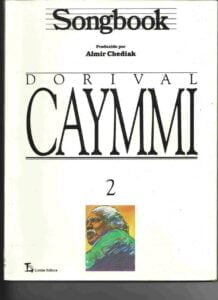
Dorival Caymmi
MPB Especial com Dorival Caymmi
Programa musical em comemoração ao centenário de Dorival Caymmi, exibido na TV Cultura em 24 de abril de 2014.

The best sheet music download from our Library.
Please, subscribe to our Sheet Music Library.
Dorival Caymmi: The Soul of Bahia and the Voice of the Sea
A Life Between the Shore and the Song
On April 30, 1914, in Salvador, the sun-drenched capital of Bahia, a child was born who would grow up to become one of the most essential voices in the history of Brazilian music. Dorival Caymmi — singer, songwriter, guitarist, painter, and storyteller — spent over seven decades weaving together the rhythms of the sea, the warmth of Afro-Brazilian culture, and the gentle melancholy of saudade into a body of work. It remains as vivid today as when it was first heard on the radio waves of 1930s Brazil.
He was the grandson of Italian immigrants — his grandfather had worked on the renovation of the iconic Elevador Lacerda in Salvador — and the son of a civil servant and amateur musician. Music was present in his home from the beginning: his father played, and his mother sang while doing housework. From that domestic soundtrack grew one of Brazil's most distinctive artistic voices.
From Bahia to Rio: A Journey That Shaped a Legend
In the 1930s, like many ambitious young Brazilians, Caymmi made his way to Rio de Janeiro in search of an audience. He found far more than that. He found fame, friendship, and a platform from which to make the entire world fall in love with Bahia — a place he would never truly leave, even when he never returned to it.
His first major breakthrough came through a most unexpected vehicle: Carmen Miranda. Caymmi wrote "O Que É Que a Baiana Tem?" ("What Does the Bahian Woman Have?"), a spirited, playful ode to the women of Bahia. Miranda recorded and performed the song, and it became her first major hit — the springboard that launched her Hollywood career and brought Bahian culture to international stages. The song made Caymmi's name overnight, and with good reason: in just a few verses, he had captured something irreducible about a people and a place.
He would become a contemporary of composer Ary Barroso, occasionally a rival, and a lifelong friend of the great Bahian writer Jorge Amado. That friendship was not incidental — both men were devoted to portraying the richness of Bahian life, its people, its mixture of African and European traditions, its humor and its sorrow.
The Music: Sea, Sand, and Samba
Caymmi's catalogue is relatively small — he composed around 100 songs over a lifetime — yet almost miraculous in its quality and consistency. His music falls into two broad, deeply interconnected streams.
The first is his canções praieiras, or beach songs: ballads about the sea, fishermen, and the women who wait for them. Songs like "Promessa de Pescador" ("Fisherman's Promise"), "O Vento" ("The Wind"), and "Milagre" ("Miracle") possess an almost mythological quality. In them, the ocean is not a backdrop but a living presence — capricious, generous, and deadly. Caymmi gave voice to a world of men and women who lived in intimate, dangerous communion with the sea, and he did so with a simplicity that borders on the sacred.
The second stream is samba: warm, unhurried, and rooted in Bahian identity. "Samba da Minha Terra," "Doralice," and "Saudade da Bahia" have become pillars of Música Popular Brasileira (MPB), standards that every subsequent generation of Brazilian musicians has returned to. These songs are not frantic or showy — they breathe slowly, like someone rocking in a hammock by the shore.
What unified both streams was Caymmi's guitar playing and voice. His accompaniment was sparse, almost conversational, leaving abundant space around every melody. His baritone was rich and unhurried, carrying the weight of stories without ever straining for effect. There was no performance anxiety in Caymmi — only presence.
A Godfather of Bossa Nova
When bossa nova emerged in the late 1950s as Brazil's most revolutionary musical movement, Caymmi was already in his mid-forties — yet his influence on the genre was profound and acknowledged by its own architects. Bossa nova pioneer Antônio Carlos Jobim once called him "a universal genius," high praise from a man who himself became one of the most celebrated composers of the twentieth century.
João Gilberto, the defining voice and guitarist of bossa nova, covered many of Caymmi's songs in the 1960s. In Caymmi's sparse guitar style — its rhythmic subtlety and harmonic openness — one can hear the seeds of the bossa nova sound. He did not invent bossa nova, but bossa nova is unimaginable without him.
Caetano Veloso and Gilberto Gil, the two towering figures of the Tropicália movement that followed, also claimed Caymmi as a formative influence. Ben Ratliff of The New York Times summed it up memorably, writing that Caymmi was "perhaps second only to Antônio Carlos Jobim in establishing a songbook of the twentieth century's Brazilian identity."
A Man of Many Arts
Music was not Caymmi's only language. He was also an accomplished visual artist — a painter whose canvases, like his songs, returned again and again to the landscapes and people of Bahia. His painting and his music fed each other: both were rooted in observation, in love for a specific place, in the desire to preserve something beautiful before the tide could take it.
He was also an actor, appearing in Brazilian films and television productions across several decades. His physical presence — large, calm, deeply at ease with himself — translated naturally to the screen.
At home, he built a remarkable family. He married Brazilian singer Stella Maris, and the couple spent 68 years together. Their three children — Nana, Danilo, and Dori Caymmi — all became prominent musicians in their own right, carrying the family's gift into the next generation.
Legacy: An Eternal Bahia
Dorival Caymmi died on August 16, 2008, at his home in Copacabana, Rio de Janeiro. He was 94 years old. The cause was kidney cancer and multiple organ failure. Brazil mourned the loss with the kind of grief reserved for those who have given a country something of itself.
What he left behind is extraordinary not only in its artistic quality but in what it accomplished culturally. Through his songs, Caymmi made Bahia — its smell of salt water and acarajé, its fishermen and Bahian women, its Candomblé rhythms and Catholic promises — into a place that all Brazilians could claim as part of their identity, even those who had never set foot there. He was Bahia's ambassador to Brazil, and Brazil's ambassador to the world.
In a career spanning more than seven decades, he recorded for labels including Odeon, Columbia, RCA Victor, and EMI, leaving a discography that begins with the late 1930s and stretches into the 2000s. Albums like Canções Praieiras (1954), Caymmi e o Mar (1957), and Caymmi e seu Violão (1959) are considered among the essential records of Brazilian music.
But perhaps the truest measure of his legacy is simpler: whenever a guitarist in Brazil strums a quiet chord by the sea, whenever someone hums a melody about fishermen and waves, Dorival Caymmi is there. He did not just write songs about Bahia. He became the sound of it.
"Quem não viu Salvador não viu coisa igual." ("Whoever hasn't seen Salvador has not seen anything like it.") — Dorival Caymmi, "Saudade da Bahia"
Search your favorite sheet music in the Sheet Music Library Catalog
Who was Almir Chediak?
Almir Chediak was a fascinating and essential figure in Brazilian music — one of those rare people who work quietly behind the scenes yet leave an enormous mark.
Born on June 21, 1950, in Rio de Janeiro, to Lebanese immigrant parents, Chediak began studying guitar as a child and by his late teens was already performing professionally while teaching harmony and musical theory. He grew up in the state of Minas Gerais before returning to Rio de Janeiro at age 13.
His training was serious and eclectic: he studied violão under Dino 7 Cordas (Horondino Silva), a legendary figure in Brazilian guitar, and later deepened his understanding of harmony, arrangement, and solfège with professor Ian Guest.
He became a gifted teacher, and his students read like a who's who of MPB: Nara Leão, Gal Costa, Tim Maia, Cazuza, and even the children of Caetano Veloso and Gilberto Gil passed through his hands.

But what made Chediak truly immortal was his publishing project. He recognized a troubling gap: there was almost no reliable educational material for popular music in Brazil. Classical harmony was taught with rigid rules, but musicians had no structured foundation for playing in real-world settings. In response, he founded his own publishing house, Lumiar Editora, in 1986, and launched his first book, a dictionary of guitar chords, followed by a landmark work on harmony and improvisation.
The Songbook series, launched in 1988, was his crowning achievement. The idea was born when Chediak was giving guitar lessons to Caetano Veloso's son and discovered that Veloso himself often couldn't remember the exact chords or words to his own songs. This led Chediak to undertake a monumental effort: working directly with living composers to verify and correct scores measure by measure, ensuring fidelity to the original works and correcting inaccuracies found in other publications. Antonio Carlos Jobim expressed relief that his compositions were finally being documented accurately after years of distortions by careless editors — Jobim himself called the collection of his works "an act of patriotism."
The scope of the series was staggering. It covered Caetano Veloso (135 songs), Bossa Nova (312 songs across 5 volumes), Tom Jobim, Gilberto Gil, Vinicius de Moraes, Noel Rosa, Chico Buarque (222 songs), Djavan, Ary Barroso — and Dorival Caymmi, whose complete works were compiled with companion CDs featuring over 80 artists.
His end was tragic. On May 25, 2003, Chediak was murdered during a robbery at his country house in Petrópolis, near Rio de Janeiro. He was 52 years old, and at the time of his death he was working on a songbook for João Bosco.
His legacy is immense. Without Almir Chediak, much of Brazil's greatest music might exist only in fading memories and corrupted transcriptions. He was the man who made sure that the songs of Caymmi, Jobim, and their generation would be playable — accurately, faithfully — by every guitarist who came after.