
Scores for all instruments: 16,000+ (active and growing), over 236,000 pages.
All genres and levels: Jazz & Blues, Rock & Pop, Classical & Contemporary, Film & Musicals;
books & biographies; methods, études, play-along tracks (MP3) for Jazz & Rock.
Access & benefits: US$15.99 one-time payment, valid for lifetime, full Library access.
Table of Contents
Who is Richard Clayderman (b. 1953)?


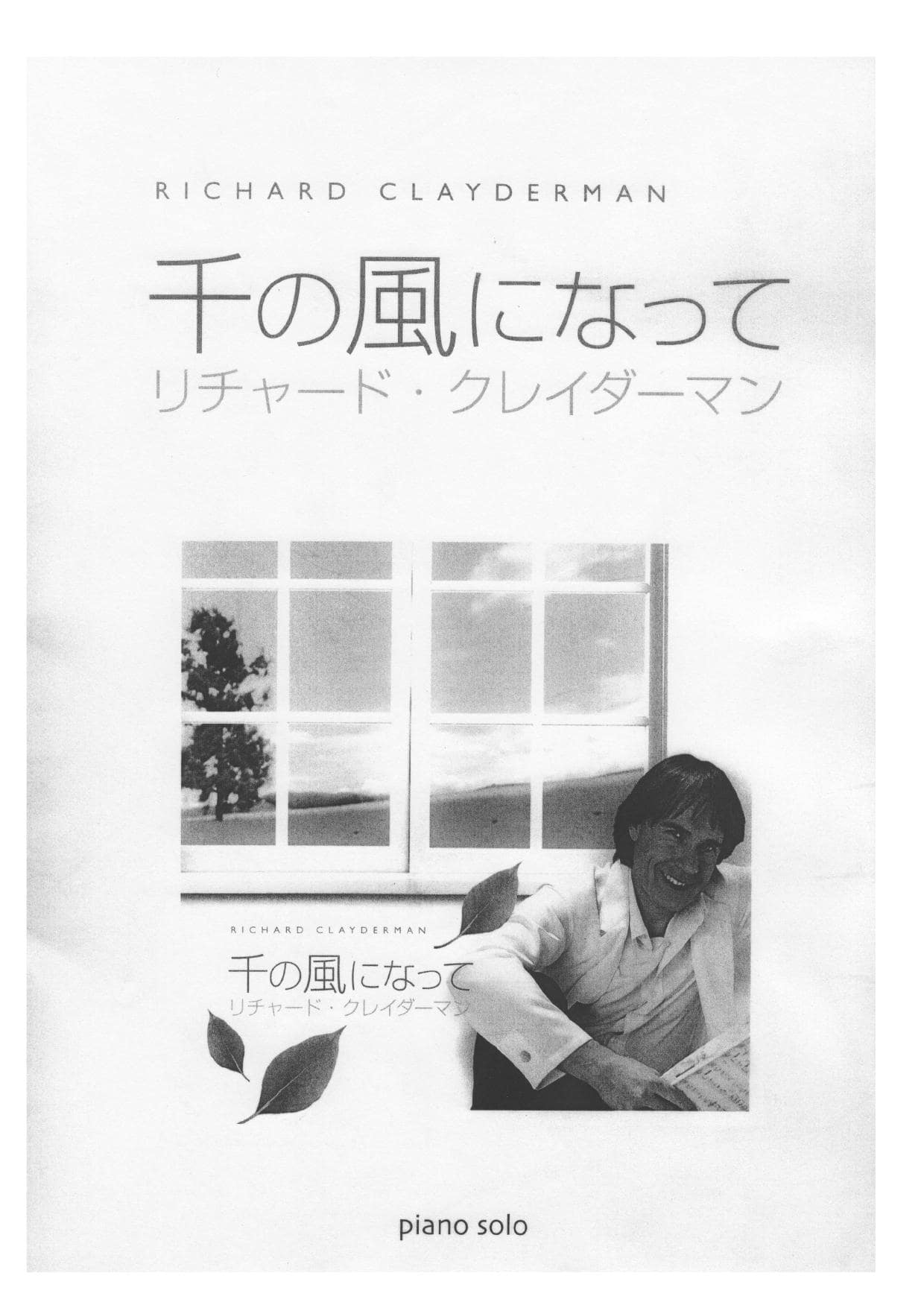
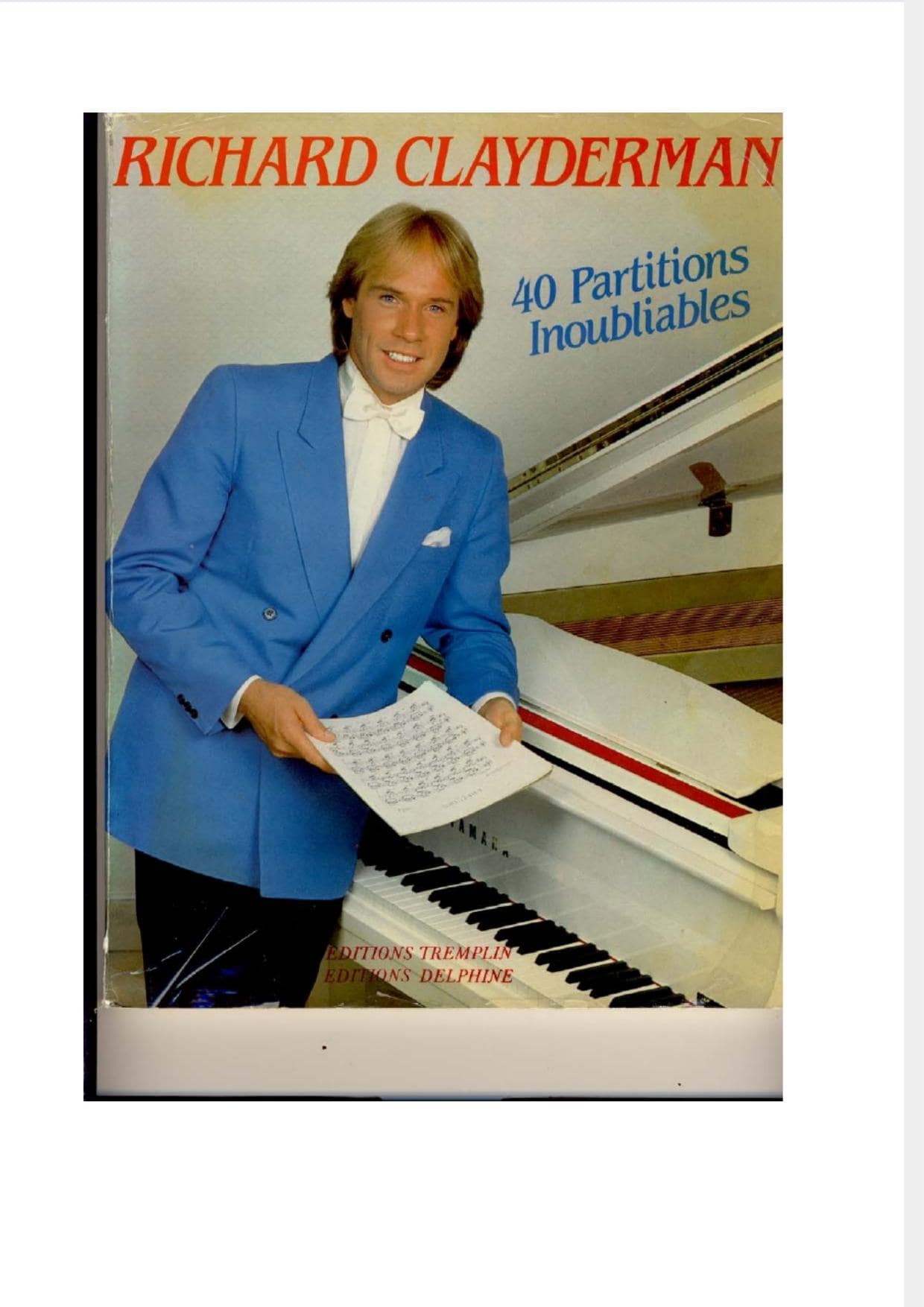
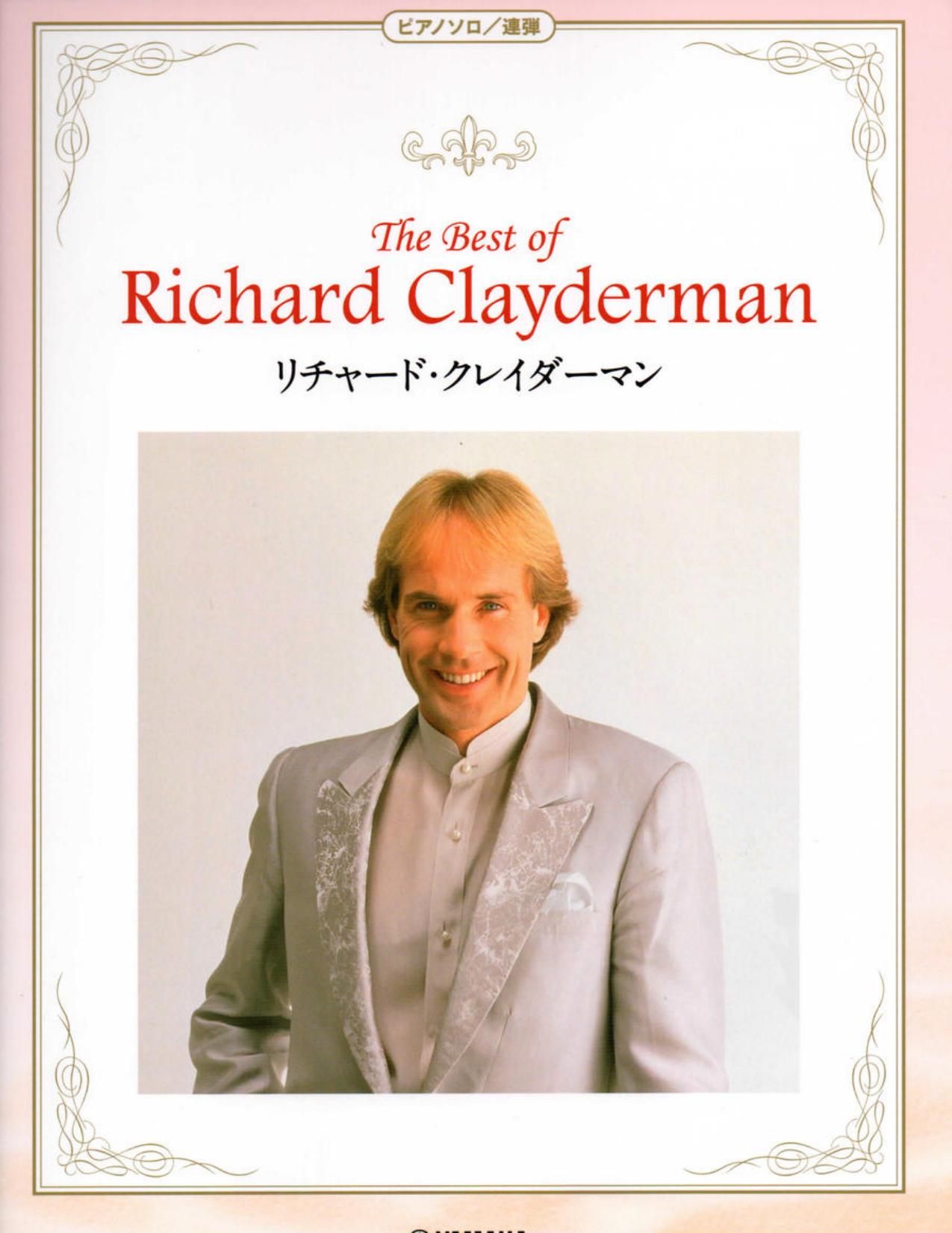

Richard Clayderman: The Prince of Romance and the World's Most Successful Pianist
Richard Clayderman is a name that evokes images of candlelit evenings, romantic melodies, and the gentle caress of piano keys. Born Philippe Robert Louis Pagès on December 28, 1953, in Paris, France, he has become one of the most recognizable and commercially successful pianists in the history of recorded music. With worldwide record sales exceeding 90 million albums, 267 gold discs, and 70 platinum discs to his credit, Clayderman holds a unique position in the music industry: he is not a classical virtuoso in the traditional sense, nor is he a pop star, but rather the creator of a "New Romantic" style that has brought piano music to millions of people who might never have otherwise listened to instrumental music. Recognized by the Guinness Book of World Records as "the most successful pianist in the world," his career spans nearly five decades of relentless touring, recording, and musical exploration.
The best sheet music download from our Library.
Please, subscribe to our Sheet Music Library. Sheet music should be accessible and affordable for all musicians, from professionals to absolute beginners.
Early Life and Musical Formation
Philippe Pagès was born into a musical household in Paris. His father was a piano teacher, and it was under his guidance that the young Philippe first encountered the instrument that would define his life. The story goes that by the age of six, he could read music more adeptly than his native French, a testament to his precocious musical talent. His father laid the foundation for what would become a legendary career, instilling in him both technical discipline and a deep love for melody.
At the age of twelve, Philippe was accepted into the prestigious Conservatoire de Paris, one of Europe's most renowned musical institutions. There, he studied under demanding professors and was deeply inspired by the Romantic composers, particularly Frédéric Chopin, whose lyrical piano writing would leave an indelible mark on his own musical sensibility. At sixteen, he won first prize in piano at the Conservatory, a remarkable achievement that seemed to herald a promising career as a classical concert pianist.
However, fate had other plans. Financial difficulties and his father's illness forced Philippe to abandon his classical studies and seek work to support his family. He took on various jobs, including work as a bank clerk and as an accompanist, but the piano remained his true calling. During this period, he played in recording sessions and small venues, honing his skills in popular music and developing the versatility that would later become his trademark.
Search your favorite sheet music in the Sheet Music Library Catalog
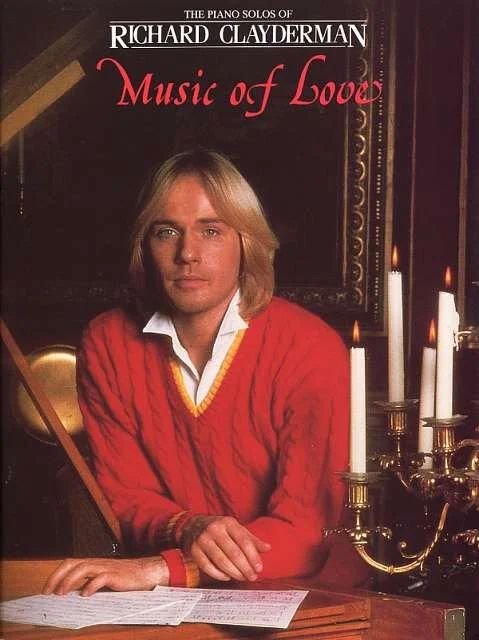


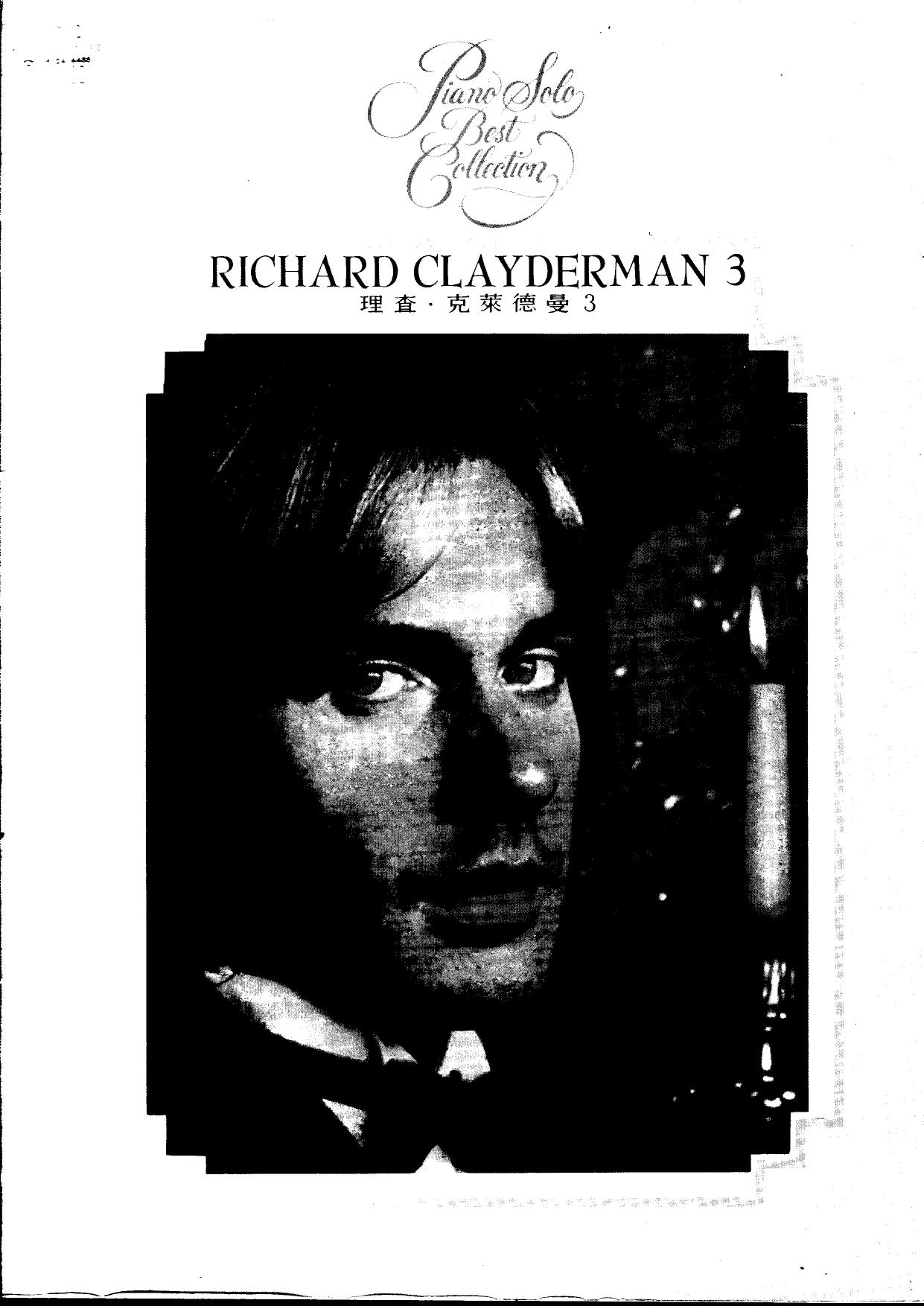
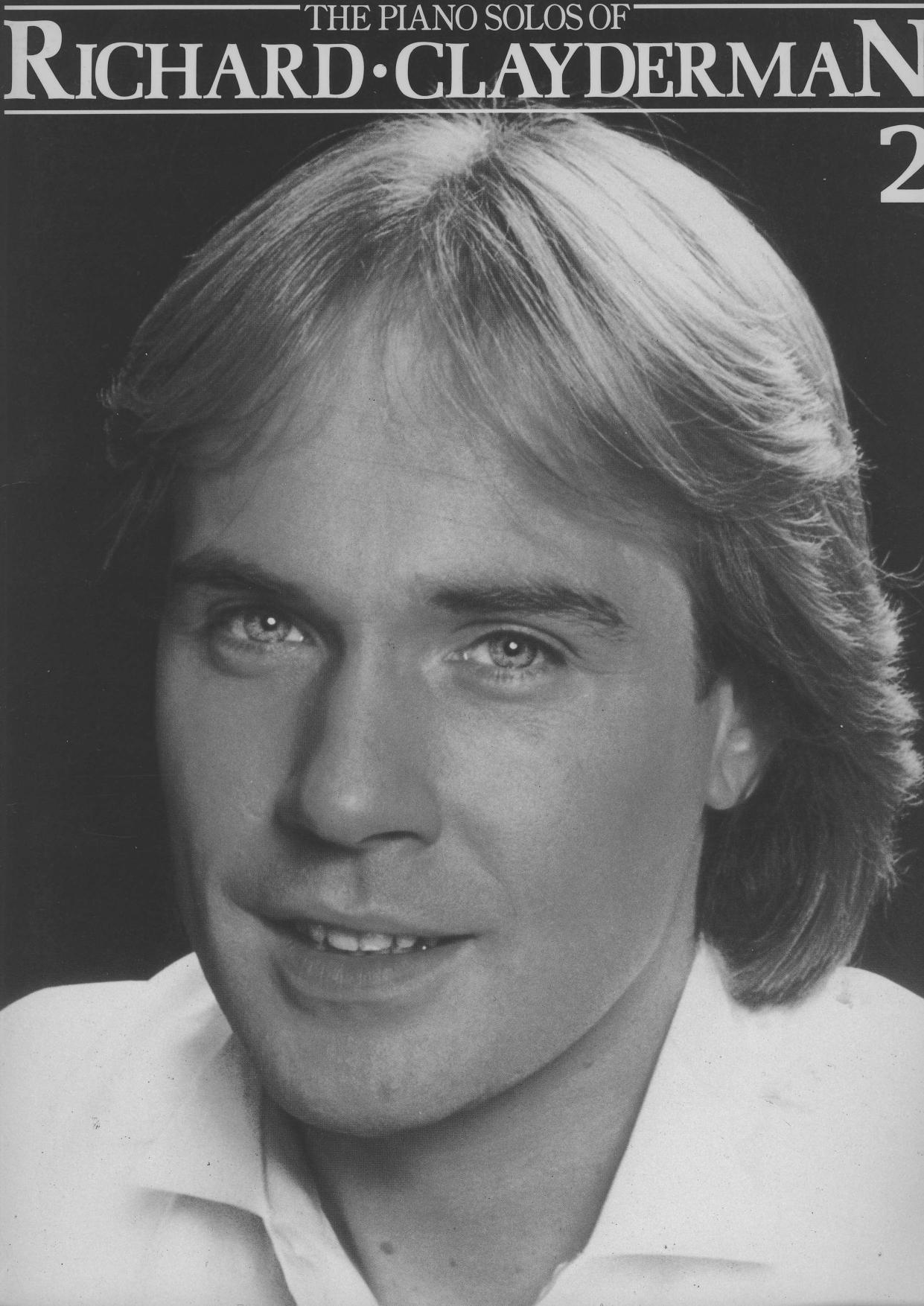
The Birth of Richard Clayderman
The turning point in Philippe Pagès's life came in 1976. The French record producer Olivier Toussaint and the composer Paul de Senneville were searching for a pianist to record a gentle, romantic ballad that de Senneville had written for his newborn daughter, Adeline. They auditioned numerous pianists, but none seemed to capture the delicate, emotional quality they were seeking. When Philippe Pagès auditioned, they knew immediately that they had found their pianist.
There was one problem: his name. Toussaint and de Senneville were concerned that "Philippe Pagès" would be difficult for international audiences to pronounce. They suggested he adopt a stage name, and Philippe chose "Clayderman," derived from his great-grandmother's maiden name. Thus, Richard Clayderman was born.
The recording of "Ballade pour Adeline" was released in 1976 and became a phenomenal success. The record sold over 20 million copies in 38 countries, catapulting the unknown pianist to international fame almost overnight. The piece, with its simple yet affecting melody and gentle arpeggiated accompaniment, struck a chord with listeners around the world who were seeking accessible, beautiful instrumental music. It was the beginning of a career that would span decades and continents.
Musical Style and Technique
Richard Clayderman's musical style is often described as "easy listening," "light music," or "crossover," but these labels only partially capture the essence of his approach. In his own words, his style "is somewhere between classical and popular music, but more popular". He has created what has been called a "New Romantic" style, a repertoire that combines his trademark original compositions with arrangements of classical pieces, pop standards, film themes, and folk melodies from around the world.
The Clayderman Method
What distinguishes Clayderman's playing is a set of characteristic techniques that he has refined over decades. The most prominent feature is the contrast between a single-line melody in the right hand and flowing arpeggios in the left hand. This texture, while not technically complex, is executed with a consistency and clarity that has become his signature. As one analysis notes, his approach involves "focusing on melodies and underlining the beautiful with decorative piano runs and a distinctly romantic touch".
A key element of his technique is the use of octaves in the melody. Clayderman frequently plays the melody in octaves or with the melody note doubled at the octave, which gives his sound a rich, full quality while maintaining clarity. As one Chinese analysis observes, his characteristic technique involves "raising the melody by an octave under the accompaniment of the left hand, allowing the intervals to enter the high register". This technique, while it can be challenging to execute with nuance in the high register, allows the melody to sing above the accompaniment with a bell-like purity.
The left-hand accompaniment typically consists of arpeggiated patterns that provide harmonic foundation and rhythmic momentum. These arpeggios are not merely functional; they are shaped and voiced to create a continuous flow of sound that supports the melody without overwhelming it. The result is a texture that is at once simple and sophisticated, accessible and artistic.
Touch and Tone
Clayderman's touch at the piano is another distinguishing feature of his style. He possesses what critics have described as a "velvety touch," a quality that produces a warm, singing tone rather than the percussive attack sometimes associated with classical performance. This touch is particularly evident in his slower, more contemplative pieces, where each note seems to be caressed rather than struck.
His approach to dynamics is similarly nuanced. Rather than exploiting the full range of the piano's dynamic capabilities, he tends toward the softer end of the spectrum, using subtle gradations to create intimacy and emotional depth. This restrained approach to dynamics is one reason his music is often described as "relaxing" or "soothing," but it is also a deliberate artistic choice that reflects his aesthetic priorities.
Harmony and Compositional Approach
The harmonic language of Clayderman's music is deceptively simple. His most famous piece, "Ballade pour Adeline," is built on a handful of diatonic chords: I (C), ii (D minor), V (G), and vi (A minor), with occasional suspensions such as Csus9 and Gsus4. This harmonic vocabulary is closer to the language of pop music than to the chromatic richness of Romantic classical music, but it is deployed with a sensitivity to voice leading and emotional effect that elevates it beyond mere formula.
A detailed analysis of "Ballade pour Adeline" reveals a carefully constructed musical form. The piece is in two parts, A and B, each with its own phrase structure. The melody is constructed from nine distinct motifs that are developed through repetition, diminution, and augmentation. This motivic development, while not as complex as that found in classical sonata form, gives the piece a sense of unity and coherence that contributes to its enduring appeal.
The right-hand writing in Clayderman's arrangements often features dyads—intervals of sixths or thirds played simultaneously—that function as a melodic duet, with the lower note carrying equal importance to the upper. This technique, which is particularly prominent in "Ballade pour Adeline," adds richness and depth to the melody line, creating a sound that is fuller than a single-note melody would allow. As one analysis notes, "the dyads are the most important notes, so need to be emphasized vertically and horizontally".
Clayderman's original compositions and arrangements are typically crafted by his long-time collaborators, Paul de Senneville and Olivier Toussaint, who have written much of his repertoire. Their compositions are tailored to his strengths: memorable melodies, clear harmonic structures, and textures that allow his distinctive touch to shine.
The Best Songs and Compositions
Richard Clayderman's discography is vast, encompassing over 1,300 recorded melodies. While "Ballade pour Adeline" remains his signature piece, many other compositions and arrangements have become staples of his concert repertoire and beloved by fans around the world.
Original Compositions
"Ballade pour Adeline" (1976) is undoubtedly the cornerstone of Clayderman's career. Written by Paul de Senneville for his newborn daughter, the piece is a gentle, flowing ballad in C major that showcases all the hallmarks of Clayderman's style: a memorable melody, arpeggiated accompaniment, and a tender, romantic mood. It has been recorded countless times and remains one of the best-selling piano pieces of all time.
"Souvenirs d'enfance" (Memories of Childhood) is another original composition that has become a fan favorite. The piece evokes a nostalgic, wistful mood, with a melody that seems to recall distant memories. Its popularity is reflected in its inclusion in numerous "best of" collections and streaming playlists.
"Mariage d'amour" (Wedding of Love) is a graceful piece in triple meter that has become a popular choice for weddings and romantic occasions. Its lyrical right-hand phrases float above flowing arpeggiated accompaniment, with subtle harmonic shifts and expressive rubato creating a sense of intimacy that grows into sweeping emotional peaks.
"Hungarian Sonata" showcases a different side of Clayderman's artistry, featuring fiery Hungarian-inspired rhythms, sweeping romantic melodies, and dazzling virtuoso passages. The piece alternates between singing cantabile lines and rapid ornamental flourishes, demonstrating his technical facility and his ability to bring drama to his performances.
"Jardin Secret" (Secret Garden) is a study in legato playing and balance between melody and accompaniment. Its flowing harmonic patterns provide richness without overwhelming the principal theme, and it has become a favorite among pianists studying Clayderman's style.
Arrangements of Classical and Popular Music
Clayderman's repertoire also includes numerous arrangements of well-known classical pieces, pop songs, and film themes. His versions of Beethoven's "Für Elise," Debussy's "Clair de Lune" and "Arabesque," and Bach's "Badinerie" bring a lighter, more accessible touch to these canonical works. While some classical purists have criticized his approach—one piano forum commenter accused him of "bastardization" of famous concertos—his arrangements have introduced millions of listeners to classical melodies they might never have encountered otherwise.
His pop arrangements include versions of The Beatles' "Yesterday," Elton John's "Nikita" and "Candle in the Wind," Chris de Burgh's "Lady in Red," and many others. These arrangements typically preserve the melodic essence of the original songs while adapting them to his characteristic piano style, making them accessible to listeners who appreciate instrumental music.
Music in Films and Soundtracks
While Richard Clayderman has not composed original scores for major motion pictures, his music has been extensively featured in films and television programs, and he has recorded numerous albums of film themes. His "Movie Favourites" album and similar collections feature his interpretations of some of the most beloved cinematic melodies of all time.
Among the film themes he has recorded are "Love Story" (from the film of the same name), "Chariots of Fire" by Vangelis, "Merry Christmas, Mr. Lawrence" by Ryuichi Sakamoto, "Romeo and Juliet," and "Titanic Symphony". His version of "Lara's Theme" from Doctor Zhivago, composed by Maurice Jarre, was included on his 1980 album French Favourites and has become one of his most requested concert pieces.
Clayderman has also recorded themes from "The Thorn Birds," "Gone with the Wind" (Tara's Theme), "The Deer Hunter" (Cavatina), "The Phantom of the Opera," "Schindler's List," and "Pride and Prejudice" (Greensleeves). His ability to distill the emotional essence of a film theme into a solo piano arrangement has made him a favorite among listeners who appreciate cinematic music in a more intimate setting.
In addition to recording film themes, Clayderman's music has been used in films and television programs as background music, contributing to the romantic atmosphere of countless scenes. His ubiquity in public spaces—shopping malls, hotel lobbies, elevators—has made his music a kind of ambient soundtrack to contemporary life, particularly in Asia.
Collaborations with Other Musicians
Throughout his career, Richard Clayderman has collaborated with a diverse array of musicians from different genres and cultural backgrounds. These collaborations have allowed him to explore new musical territories while maintaining his distinctive style.
The Confluence with Rahul Sharma
One of his most notable collaborations is The Confluence, an album recorded with Indian santoor maestro Rahul Sharma, son of the legendary Pandit Shiv Kumar Sharma. Released in 2003, the album blends Clayderman's classical-influenced piano with the shimmering, exotic sound of the santoor, along with elements of jazz, pop, and world music. The opening track "Together" weaves together piano, percussion, orchestral elements, and the santoor in a way that one reviewer described as "a unique vision that one can imagine resulting from a chance meeting at a train station where tracks from many cultures merge". The album also features a mystical version of The Beatles' "Norwegian Wood," which brought the sound of India to rock & roll.
Clayderman and Sharma have performed together on multiple occasions, including a 2019 concert in Chennai, India, where they played selections from The Confluence alongside Bollywood hits and Beatles music. Their collaboration represents a genuine meeting of musical cultures, with neither artist subsuming their identity to the other.
Amour pour Amour with Berdien Stenberg
In 1995, Clayderman recorded Amour pour Amour, a studio album of duets with Dutch flautist Berdien Stenberg. The album contains eleven tracks composed by Paul de Senneville, featuring Clayderman's piano in dialogue with Stenberg's flute. The combination of piano and flute creates a delicate, airy texture that perfectly suits the romantic character of the compositions.
Collaborations with Vocalists and Other Artists
Clayderman has also collaborated with vocalists, including a duet with German singer Claudia Jung on "Je t'aime mon amour" in 1994. He has worked with Chinese guzheng player Peng Jingxuan on a performance of the classic Chinese folk song "Liuyang River," which Clayderman described as "an interesting dialogue" between Chinese and Western musical instruments. Other collaborations include work with Chinese musician Shao Rong on the album Chinese Garden and duets with guitarist Nicolas de Angelis.
In 2025, Clayderman filmed a music video for "Wedding of Love" with ten-year-old Romanian pianist Miriam Alice Vultur, who also performed as the opening act at his concert in Cluj-Napoca. This collaboration reflects Clayderman's continued commitment to nurturing young talent and his willingness to share the stage with the next generation of musicians.
Influences and Musical Roots
Richard Clayderman's musical influences are rooted in both classical and popular traditions. His classical training at the Paris Conservatory exposed him to the great composers of the Western canon, and he has spoken of his particular affinity for Chopin, whose lyrical piano writing and Romantic sensibility are reflected in his own approach to melody and expression. He has also cited Mozart and Beethoven as important influences, though he has been clear that he does not consider himself a classical pianist in the traditional sense.
In the realm of popular music, Clayderman has acknowledged an appreciation for jazz fusion, though he does not consider himself a jazz performer. His early experience touring with French rock musician Johnny Hallyday exposed him to the world of popular music performance and helped him develop the stage presence and versatility that would serve him throughout his career. His willingness to embrace everything from light classics to Bollywood soundtracks and folk tunes has been a key factor in his enduring success.
Legacy and Cultural Impact
The legacy of Richard Clayderman is multifaceted and, in some quarters, controversial. He is undoubtedly one of the most commercially successful pianists in history, with record sales that rival those of many pop stars. His music has brought the sound of the piano into the lives of millions of people who might never have otherwise developed an interest in instrumental music. As a German journalist famously observed, "he has arguably done more to popularize the piano around the world than anyone since Beethoven".
The Asian Phenomenon
Nowhere is Clayderman's impact more profound than in Asia, particularly in China. His music arrived in China in the mid-1980s, when economic reforms were opening the country to cultural products from the West. As music critic Hao Fang told AFP, "People in China were coming out of a period where they heard only Communist revolutionary songs—they were thirsty for lighter melodies". Clayderman's melodies, with their accessible beauty and emotional richness, filled that void perfectly. His tapes could be found in practically every home, and a generation of Chinese musicians was inspired to learn the piano by his example. One observer noted that "he inspired many Chinese people to get to know, and learn to play, the piano".
Clayderman's first Chinese concert was in 1992, and he has returned to perform in China more than in any other country. His "gentlemanly image," with his blond hair and blue eyes, has contributed to his enduring popularity, fitting the Chinese perception of a Western Prince Charming. His music can still be heard in shopping malls, hotel lobbies, and as ringtones throughout China, a testament to his deep cultural penetration.
Critical Reception and Controversy
Clayderman's commercial success has not always been matched by critical acclaim. Some classical music purists have dismissed his music as "kitsch," "sentimental," and "easy listening" in the pejorative sense. Piano forum discussions have criticized his arrangements of classical works as "bastardization," and some musicologists have pointed out the harmonic simplicity of his compositions. One German critic described him as "the Rosamunde Pilcher of the piano," a comparison that captures both the romantic appeal and the perceived lack of artistic depth of his music.
However, such criticisms miss the point of what Clayderman does. He has never claimed to be a classical virtuoso or a serious composer in the tradition of the great masters. His goal has been to bring beautiful, accessible piano music to as many people as possible, and by that measure, his success is undeniable. The recognition he has received from the Guinness Book of World Records as "the most successful pianist in the world" is based on commercial achievement, but it also reflects a genuine cultural impact that cannot be dismissed.
About Richard Clayderman
Personal Life
Richard Clayderman has been married twice. His first marriage was to Rosaline Pagés, from 1970 to 2010, and the couple had two children, Maud and Peter. He married Typhaine Pagés in 2010. His daughter Maud passed away in 2012, a loss that deeply affected him.
Concert Activity
Clayderman is one of the most prolific touring musicians in the world. At the height of his career, he performed as many as 200 shows in 250 days. He has performed in virtually every corner of the globe, from grand concert halls to more modest venues, always with the same commitment to bringing his music to audiences. In his more than 40-year career, he has given over 2,000 concerts.
Recordings and Discography
Clayderman's discography is enormous, with over 1,300 recorded melodies to his credit. He has recorded for Disques Delphine and Japan Victor Company, among other labels. His albums have covered a wide range of themes and styles, from romantic ballads to film themes, classical arrangements to pop covers. His latest album, Forever Love, features arrangements of songs by Coldplay and other contemporary artists, demonstrating his continued engagement with new music.
Awards and Recognition
In addition to his Guinness World Record, Clayderman has received numerous awards and honors throughout his career. He holds 267 gold discs and 70 platinum discs, a testament to the enduring popularity of his recordings. In 1985, after a concert in New York, then-US First Lady Nancy Reagan gave him the nickname "The Prince of Romance," a title that has stuck with him ever since. He is also known as "The Prince of Piano" in many parts of the world.
Richard Clayderman occupies a unique place in the history of popular music. He is neither a classical pianist nor a pop star, but something in between: a musician who has taken the sound of the piano and made it accessible to millions of people around the world. His "New Romantic" style, built on simple but effective techniques, memorable melodies, and a distinctive touch, has created a body of work that has brought pleasure to countless listeners and inspired a generation of pianists, particularly in Asia.
His critics may dismiss his music as sentimental or simplistic, but such judgments overlook the genuine artistry in his playing and the cultural significance of his career. Clayderman has done something that few musicians ever achieve: he has created a sound that is instantly recognizable, universally appealing, and deeply personal. Whether performing in a grand concert hall in Beijing or on a recording of a film theme, he brings the same commitment to beauty, melody, and emotion that has defined his career from the very beginning.
As he continues to perform and record in his seventies, Richard Clayderman remains what he has always been: a pianist who plays from the heart, for the hearts of his listeners. In a world that often prizes complexity and novelty over simplicity and sincerity, his enduring popularity is a reminder that there is profound value in music that simply makes people feel good. The Prince of Romance may not be a king of the concert hall, but in the hearts of his millions of fans around the world, he reigns supreme.
Discography
Studio albums, 1977–2022
- Richard Clayderman (aka Ballade pour Adeline, 1977)
- A Comme Amour/Les Fleurs Sauvages (1978)
- Rêveries (1979)
- Lettre à Ma Mère (1979)
- Medley Concerto (1979)
- Les Musiques de l’Amour (1980)
- Rondo Pour un Tout Petit Enfant (1981)
- Christmas (1982)
- Rêveries No. 2 (1982)
- Couleur Tendresse (1982)
- Les Rêves d'Amour (aka A Dream of Love, 1983)
- Le Premier Chagrin d’Elsa (1983)
- Italie Mon Amour (1984)
- The Music of Love (1984)
- Cœur fragile (1984)
- Concerto (with the Royal Philharmonic Orchestra, 1985)
- Divorce à Hollywood/Irreconcilable Differences (soundtrack, 1985)
- From Paris with Love (1985)
- Les Sonates (with Nicolas de Angelis, 1985)
- A Romantic Christmas (1985)
- Hollywood and Broadway (1986)
- Romantic (1986)
- Eléana (1987)
- Songs of Love (1987)
- A Little Night Music (1988)
- Deutsche Volkslieder (with the Schöneberger Sängerknaben, 1988)
- Quel Gran Genio Del Mio Amico – Richard Clayderman Interpreta Lucio Battisti (1988)
- Romantic America (1988)
- Zodiacal Symphony (1988)
- The Love Songs of Andrew Lloyd Webber (1989)
- Amour Pour Amour (with Berdien Stenberg, 1989)
- Il Y A Toujours du Soleil Au-Dessus des Nuages (with James Last, 1990)
- My Classic Collection (1990)
- The Fantastic Movie Story of Ennio Morricone (1990)
- Anemos (1990)
- Plays ABBA (1993)
- The Confluence (2003)
- Romantique (2013)
- Forever Love (2022)
Live albums
- En Concert (1981)
- A Pleyel (with Nicolas de Angelis, 1983)
- Brasil Tour ’86 (Brazil, 1986)
- Concert under the stars (Japan 1983)