
Scores for all instruments: 16,000+ (active and growing), over 236,000 pages.
All genres and levels: Jazz & Blues, Rock & Pop, Classical & Contemporary, Film & Musicals;
books & biographies; methods, études, play-along tracks (MP3) for Jazz & Rock.
Access & benefits: US$15.99 one-time payment, valid for lifetime, full Library access.
Table of Contents
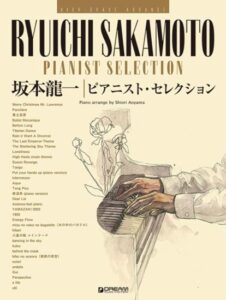
The best sheet music download from our Library.
Please, subscribe to our Sheet Music Library. Sheet music should be accessible and affordable for all musicians, from professionals to absolute beginners.
坂本 龍一 Ryuichi Sakamoto Greatest Hits Full Album 2021 - 坂本 龍一 Ryuichi Sakamoto The Best Of
00:00 The Last Emperor 04:04 Rain 07:36 Merry Christmas, Mr. Lawrence 12:26 The Last Emperor OST 18:38 Forbidden Colours 23:18 Undercooled 26:45 Solitude 31:31 Blu 32:46 ? 36:41 Wuthering Heights 42:55 Should be happy end 47:57 Anna 52:42 Aqua 58:02 ? 1:03:50 Regret
Search your favorite sheet music in the Sheet Music Library Catalog
Ryuichi Sakamoto: The Renaissance Man of Modern Music
Ryuichi Sakamoto was not merely a musician; he was a force of nature, a polymath whose creative reach extended far beyond the conventional boundaries of any single genre, discipline, or era. Born in Tokyo in 1952 and passing in 2023, Sakamoto crafted a legacy that defies simple categorization. He was a composer, a pianist, a producer, an actor, and an environmental activist—a true Renaissance man for the modern age. From his pioneering work with the synth-pop trio Yellow Magic Orchestra (YMO) to his Oscar-winning film scores and his hauntingly beautiful solo piano works, Sakamoto’s music traversed the worlds of electronic experimentation, classical Impressionism, global folk traditions, and avant-garde minimalism. His influence resonates through hip-hop, techno, ambient music, and contemporary classical composition, making him one of the most important and beloved musical figures of the late 20th and early 21st centuries. This article explores the life, artistry, and enduring legacy of a man who dedicated his existence to the proposition that sound is a bridge between cultures, technologies, and the human soul.
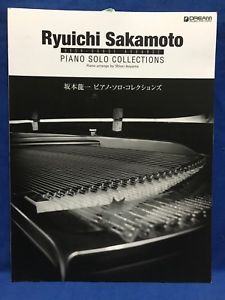
Search your favorite sheet music in the Sheet Music Library Catalog
Early Life and Musical Foundations
Ryuichi Sakamoto was born on January 17, 1952, in Nakano, Tokyo. His father, Kazuki Sakamoto, was a literary editor, and his mother was a hat designer, providing a household environment steeped in cultural and artistic sensibilities. Sakamoto began piano lessons at the age of three, an early immersion that would lay the technical and theoretical groundwork for his future career. His childhood was not confined to classical études; he was captivated by the rock and pop of the era, buying his first record—the Rolling Stones’ “Tell Me”—at a young age. Yet, it was the French Impressionists who truly ignited his compositional imagination. “Debussy was my hero,” Sakamoto once confessed, a sentiment that would echo throughout his life’s work.
In 1970, he graduated from Shinjuku High School and enrolled at the Tokyo National University of Fine Arts and Music (now Tokyo University of the Arts), where he studied composition. He earned a Bachelor of Arts degree in 1974 and later completed a Master’s degree with a focus on electronic and ethnic music. This academic training in both Western classical tradition and non-Western musical systems proved to be a crucible for his singular aesthetic. During his university years, he was exposed to the avant-garde currents of the 20th century—the serialism of Schoenberg, the indeterminate music of John Cage, and the electronic experiments of Karlheinz Stockhausen—while simultaneously developing a deep fascination with the traditional music of Japan, Indonesia, and other Asian cultures. This dual fluency in the music of the West and the East would become the defining characteristic of his compositional voice.
The Yellow Magic Orchestra Revolution
In 1978, Sakamoto’s life and the trajectory of global electronic music changed forever when he co-founded Yellow Magic Orchestra with Haruomi Hosono and Yukihiro Takahashi. YMO was a revolutionary proposition: a Japanese band that embraced synthesizers and drum machines not as novelties but as instruments of sophisticated musical expression. Their self-titled debut album, released in 1978, was a playful, ironic take on Orientalism, subverting Western exotic fantasies of the “East” through a fusion of exotica, disco, and cutting-edge electronics. The track “Tong Poo,” a China-inspired composition built around exotic Eastern melodies and bleeping computer sounds, became an instant classic and remains a perennial highlight of the YMO catalogue.
The band’s second album, Solid State Survivor (1979), solidified their status as pioneers of techno-pop. Its lead single, “Technopolis,” a triumphant synth-driven anthem that Sakamoto penned, imagined a futuristic cityscape and became one of the most influential electronic tracks ever recorded. YMO’s influence was seismic. Their use of the Roland TR-808 rhythm composer and other early digital instruments prefigured the soundscapes of hip-hop, techno, and electro. In particular, Sakamoto’s solo track “Riot in Lagos” from his 1980 album B-2 Unit is widely regarded as a blueprint for electro and early hip-hop, with its stark, syncopated rhythm and futuristic sonic palette. As David Toop, the British music critic and historian, noted, YMO were “far ahead of their time,” and their music was a product of a post-war Japan that had reinvented itself as a technologically advanced and inventive nation.
Solo Career and Discography
Even as YMO dominated the Japanese charts and influenced musicians worldwide, Sakamoto pursued a parallel solo career that was often more experimental and introspective. His debut solo album, Thousand Knives (1978), was an experimental electronic fusion work that showcased his fascination with synthesizers and his gift for melody. The title track, with its shifting textures and rhythmic complexity, remains a fan favorite. In 1980, he released B-2 Unit, which included the aforementioned “Riot in Lagos.” The album was a critical and commercial success, and its impact on electronic music cannot be overstated.
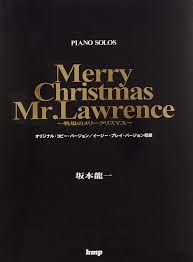
Throughout the 1980s and 1990s, Sakamoto released a prolific stream of solo albums, each exploring different sonic territories. Left-Handed Dream (1981) saw him collaborating with the British band Japan and moving towards a more art-rock sound. Neo Geo (1987) was a landmark world fusion album, featuring contributions from Iggy Pop, Bill Laswell, and the Senegalese singer Youssou N’Dour. The album’s blend of Japanese, African, and Western musical elements was a testament to Sakamoto’s vision of a “truly global musical language”. In the 1990s, he embraced a more minimal and ambient aesthetic with albums like Sweet Revenge (1994) and BTTB (1998), the latter a piano-centric work that returned him to his classical roots.
His 1999 composition “Energy Flow” was a historic achievement: it became the first instrumental number-one single in the history of Japan’s Orion charts. A gentle, meditative piano piece, “Energy Flow” embodied Sakamoto’s ability to connect with a massive audience through music that was both accessible and profoundly sincere. In the 2000s, he continued to push boundaries with albums like Chasm (2004) and Out of Noise (2009), the latter being his first solo album without any synthesizers, a quiet instrumental work featuring the British viol consort Fretwork. His final solo album, 12 (2023), released just days before his death, was a stark, minimalist collection of piano sketches that captured the essence of his late-period aesthetic: fragile, contemplative, and profoundly human.
Musical Style and Technique: A Symphony of Influences
Ryuichi Sakamoto’s musical style is notoriously difficult to pin down because it was in a state of constant evolution. He was, in the words of one critic, “noted in almost all musical movements that have excited minds in the last half-century,” including free jazz, synth-pop, electro-funk, ethno-fusion, neoclassical, ambient, and noise. At the heart of his artistry, however, lay a set of core principles and techniques that remained consistent throughout his career: a deep engagement with harmony, a fascination with timbre and texture, and a compositional process rooted in improvisation and curiosity.
Harmony and Melody
Sakamoto’s approach to harmony was fundamentally shaped by his love for Claude Debussy and the French Impressionists. In a 2010 interview, he explained this connection: “The kind of cluster timbre or harmony I use may actually stem from a translation of Asian music by Debussy—when he heard the Javanese gamelan at the Paris Exhibition… I was born in Japan, and became influenced by Debussy’s music—so, it’s kind of like we were influencing each other through the centuries”. This circularity—where Asian music influenced Debussy, who in turn influenced Sakamoto—became a philosophical foundation for his harmonic language.
One of the most distinctive features of Sakamoto’s music is his use of the pentatonic scale, a five-note scale common in traditional Japanese music (often referred to as the yonuki scale). This is particularly evident in his iconic theme for Merry Christmas Mr. Lawrence (1983). The piece is built around a repeating harmonic-rhythm figure and a melody that is strongly pentatonic, which distinguishes it from the “classical ‘reflective minor’ of simple ballads”. The harmonic progressions in that piece frequently feature movements of IV→V→VI→III, a sequence that creates a sense of cyclical motion and emotional ambiguity.
Sakamoto also employed quartal harmonies—chords built on intervals of a fourth rather than the traditional third—which gave his music a sense of “drive in an ambiguous direction”. This technique, common in the music of Debussy and later jazz composers like McCoy Tyner, allowed Sakamoto to move fluidly between key centers while maintaining a sense of harmonic coherence. His melodies, often described as “gorgeously curvaceous” and “ripe with improvisational flips,” were paired with jazz harmonics that revealed his deep knowledge of the jazz tradition, particularly the work of John Coltrane.
Compositional Process and Technique
Sakamoto’s compositional process was as fluid and intuitive as his music. He often began with improvisation, believing that “the how of composition is as important as what he makes”. He described his approach thus: “You have to open your ears all the time because anything could happen unexpectedly”. This openness to accident and spontaneity was central to his creativity. In his later years, he became increasingly interested in the concept of decay and imperfection. His 2017 album async was a landmark in this regard, incorporating sounds of out-of-tune instruments, field recordings, and natural resonances. The shock of an out-of-tune string, as one analysis noted, “bypasses our rational expectation for harmony, returning us to a fundamental state of listening”. This aesthetic, which embraced the beauty of impermanence and the physical reality of sound, was deeply influenced by his battle with cancer and his contemplation of mortality.
Sakamoto was also a master of what might be called “selective frequency sampling,” a technique he developed in his collaborations with the German electronic artist Alva Noto (Carsten Nicolai). On albums like Vrioon (2002) and Insen (2005), Sakamoto’s piano clusters were treated by Nicolai’s digital manipulation, creating “micro-loops” and minimal percussion. The two artists produced these works by passing pieces back and forth until both were satisfied, a process that exemplified Sakamoto’s collaborative spirit. This technique allowed them to explore the boundaries between acoustic and electronic sound, between the warmth of the piano and the cold precision of digital noise.
The Best Songs and Compositions: A Selected Overview
Sakamoto’s catalogue is vast, encompassing hundreds of compositions across solo albums, band projects, film scores, and collaborations. Any list of his “best” works is inevitably subjective, but certain pieces stand out as landmarks of his career.
“Merry Christmas Mr. Lawrence” (1983) : Perhaps his most famous composition, the main theme from Nagisa Oshima’s film is a study in elegant simplicity. Built on a pentatonic melody over a gently shifting harmonic bed, it is at once melancholic and hopeful. The piece was adapted into the single “Forbidden Colours” with lyrics and vocals by David Sylvian, which became an international hit.
“The Last Emperor” (1987) : His Oscar-winning score for Bernardo Bertolucci’s epic is a masterclass in orchestral color. The track “Rain” is a particular highlight, with its delicate piano and sweeping strings, while the “Endroll” theme is a majestic, sweeping conclusion. The score blends Western orchestral traditions with Chinese musical motifs, creating a sound world that is both specific to the film’s setting and universal in its emotional resonance.
“Energy Flow” (1999) : A solo piano piece that became a surprising number-one hit in Japan, “Energy Flow” is a meditative, almost ambient work. Its simple, repeating chord progression and gentle melody have made it a beloved piece for relaxation and reflection, and it remains one of Sakamoto’s most streamed compositions.
“Riot in Lagos” (1980) : A track from B-2 Unit, this instrumental is a foundational text for electro and hip-hop. Its stark, robotic rhythm and futuristic synth lines anticipated the sound of Detroit techno and New York electro by several years.
“Bibo no Aozora” (1995) : Originally a solo piano piece, this composition gained international prominence when it was used in Alejandro González Iñárritu’s Babel (2006). Its soaring melody, often accompanied by strings and voice, has been performed in numerous arrangements and is a testament to Sakamoto’s melodic gift.
“Solitude” (1998) : A piano piece from the album BTTB, “Solitude” is a quintessential example of Sakamoto’s late-1990s neoclassical style. Its sparse, contemplative harmonies and gentle melodic contours create a profound sense of introspection.
“a flower is not a flower” (2005) : A delicate, minimalist piano piece that showcases Sakamoto’s ability to find profound beauty in the simplest of musical gestures.
“The Sheltering Sky” (1990) : The main theme from Bertolucci’s film is a lush, evocative orchestral piece that won Sakamoto a Golden Globe. Its use of sweeping strings and exotic percussion perfectly captures the film’s North African setting.
Music for Films: A Cinematic Legacy
Ryuichi Sakamoto’s contributions to cinema are among his most celebrated achievements. His film scores are not merely background music; they are integral to the emotional and narrative fabric of the films they accompany. His debut as a film composer came in 1983 with Nagisa Oshima’s Merry Christmas Mr. Lawrence. Not only did he write the score, but he also starred in the film alongside David Bowie, playing the enigmatic Captain Yonoi. The score, with its haunting main theme and the ethereal “Forbidden Colours,” won a BAFTA for Best Original Music.
Four years later, he would achieve even greater acclaim with Bernardo Bertolucci’s The Last Emperor (1987). Sakamoto’s score, composed in collaboration with David Byrne and Cong Su, won the Academy Award for Best Original Score, the Golden Globe, and the Grammy, making Sakamoto the first Japanese composer to win an Oscar in that category. The score masterfully blended Western orchestral music with traditional Chinese instruments and melodies, creating a sweeping, epic soundscape that matched the film’s grandeur.
Sakamoto continued to work with Bertolucci on The Sheltering Sky (1990), for which he won his second Golden Globe. He also composed scores for Pedro Almodóvar’s High Heels (1991), Brian De Palma’s Snake Eyes (1998), and Alejandro González Iñárritu’s The Revenant (2015). For The Revenant, his score, created in collaboration with Alva Noto, was a stark, atmospheric work that used natural sounds and minimalist textures to evoke the brutal, unforgiving wilderness of the American frontier. The score received a Golden Globe nomination and further cemented Sakamoto’s reputation as a master of cinematic sound.
In addition to his work on feature films, Sakamoto composed music for the opening ceremony of the 1992 Barcelona Summer Olympic Games, an event watched by billions worldwide. He also wrote scores for anime and video games, demonstrating his versatility and his willingness to engage with new media.
Collaborations: A Global Network of Artists
Collaboration was central to Sakamoto’s creative practice. He was a musical nomad, constantly seeking out new voices and new perspectives. His list of collaborators reads like a who’s who of late 20th and early 21st-century music.
One of his most enduring collaborations was with the British singer-songwriter David Sylvian. The two first worked together in 1980 and went on to produce a series of beautiful, atmospheric albums, including Brilliant Trees (1984) and Secrets of the Beehive (1987). Their partnership produced some of Sakamoto’s most pop-oriented yet artistically ambitious work.
Sakamoto also collaborated extensively with the German electronic artist Alva Noto, producing a series of albums that explored the intersections of piano, digital processing, and minimalism. Their work together, including the score for The Revenant, was a defining feature of Sakamoto’s later career.
Other notable collaborations include work with Iggy Pop, Brian Wilson, Robert Wyatt, Youssou N’Dour, Caetano Veloso, David Byrne, and the Dalai Lama. He also produced albums for other artists, including Virginia Astley’s Hope in a Darkened Heart (1986), and worked with visual artists like Shiro Takatani on multimedia installations. His ability to move fluidly between genres and mediums made him a sought-after collaborator and a true citizen of the global music community.
Influences and Legacy
Ryuichi Sakamoto’s influences were as diverse as his output. He was deeply inspired by Claude Debussy, whose music he saw as a bridge between Eastern and Western sensibilities. He was also influenced by Erik Satie, the minimalism of Terry Riley, the jazz of John Coltrane, the pop of the Beatles, and the traditional music of Japan, Indonesia, and Africa. In his later years, he was drawn to the work of contemporary composers like Toru Takemitsu, with whom he shared a love of French fin de siècle music and a commitment to musical experimentation.
Sakamoto’s legacy is immense and multifaceted. As a member of Yellow Magic Orchestra, he helped to pioneer the genres of techno-pop and electro, influencing generations of electronic musicians. His solo work expanded the boundaries of ambient, neoclassical, and world music. As a film composer, he brought a new level of artistry and emotional depth to cinematic sound. And as an activist, he used his platform to advocate for environmental causes, founding the moreTrees reforestation project and speaking out about climate change.
His death in 2023 from colorectal cancer was met with an outpouring of grief from around the world. Musicians, filmmakers, and fans alike paid tribute to a man who had touched their lives with his music. But Sakamoto’s legacy is not confined to the past. His compositions continue to be performed, reinterpreted, and discovered by new audiences. His influence can be heard in the work of artists as diverse as Fennesz, Taylor Deupree, and countless contemporary classical and electronic composers.
Additional Information: Awards, Activism, and the Final Years
Throughout his career, Sakamoto received numerous awards and honors. In addition to his Oscar, BAFTA, Grammy, and two Golden Globes, he was awarded the Ordre des Arts et des Lettres from the French Ministry of Culture in 2009 for his contributions to music. He received the Silver Lion award at the Venice Film Festival and was named an Asian Filmmaker of the Year by the Busan International Film Festival in 2018.
In his final years, Sakamoto continued to work despite his illness. He composed the score for the film Haha to Kuraseba (Living with My Mother) in 2015 and released the album async in 2017, a work that many consider his masterpiece of late-period minimalism. In 2022, he performed a final solo piano concert that was released as the film Opus, a meditative and deeply moving document of a great artist confronting his own mortality. The film was nominated for a Grammy in 2025, a fitting tribute to a man who had dedicated his life to music.
Ryuichi Sakamoto once said, “I want to make music that is like water—that can take any shape, that can flow anywhere, that can nourish everything.” In a career that spanned more than five decades, he achieved exactly that. His music is a river that continues to flow, carving new paths through the landscape of contemporary sound. He was, and remains, one of the most important musical voices of our time—a true Renaissance man whose legacy will endure as long as people listen.
Browse in the Sheet Music Library:
Or browse in the categories menus & download the Library Catalog PDF:
Discography
Main article on Wikipedia: Ryuichi Sakamoto discography
See also: Yellow Magic Orchestra discography
Solo studio albums
Thousand Knives (1978)
B-2 Unit (1980)
Left-handed Dream (1981)
Ongaku Zukan (1984)
Esperanto (1985)
Futurista (1986)
Neo Geo (1987)
Beauty (1989)
Heartbeat (1991)
Sweet Revenge (1994)
Smoochy (1995)
1996 (1996)
Discord (1997)
BTTB (1999)
Comica (2002)
Elephantism (2002)
Chasm (2004)
Out of Noise (2009)
Playing the Piano (2009)
Async (2017)
12 (2023)