
Scores for all instruments: 16,000+ (active and growing), over 236,000 pages.
All genres and levels: Jazz & Blues, Rock & Pop, Classical & Contemporary, Film & Musicals;
books & biographies; methods, études, play-along tracks (MP3) for Jazz & Rock.
Access & benefits: US$15.99 one-time payment, valid for lifetime, full Library access.
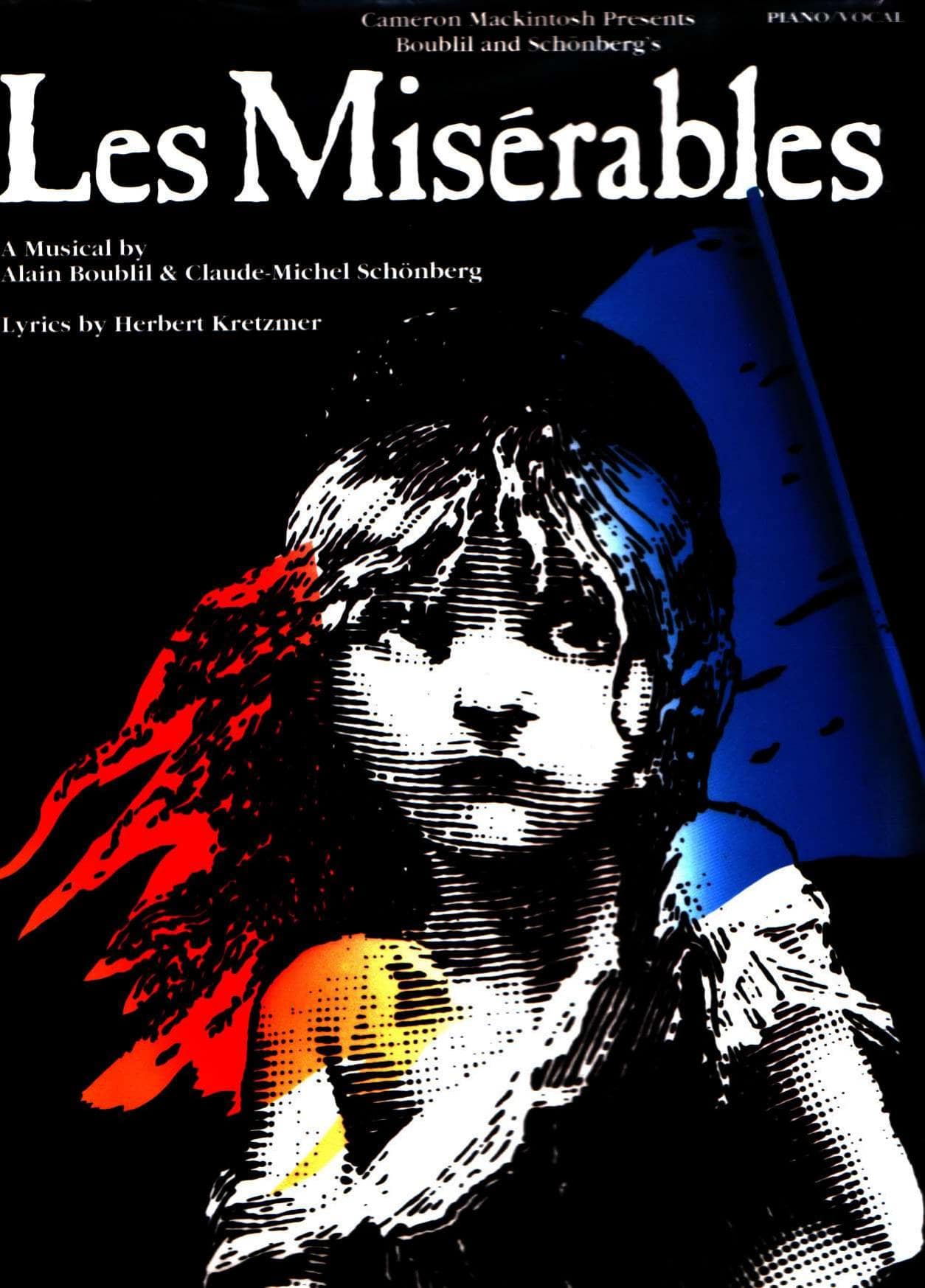
Les Misérables - On my own, Piano solo, by Alain Boubil & Claude-Michel Schönberg sheet music, partition.
Please, subscribe to our Sheet Music Library. Sheet music should be accessible and affordable for all musicians, from professionals to absolute beginners.
Les Miserables I Dreamed a Dream Claude-Michel Schönberg sheet music, Noten, spartiti, partition, 楽譜
"On My Own" is one of the most famous ballads from the legendary musical Les Misérables, featuring music composed by Claude-Michel Schönberg and original French lyrics by Alain Boublil. Sung by the character Éponine, the song portrays her unrequited love for Marius and sounds incredibly moving when adapted for solo piano.

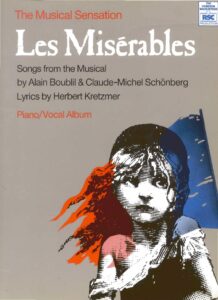
The best sheet music download from our Library.
Search your favorite sheet music in the Sheet Music Library Catalog
The Story and Meaning
The song takes place in 1832 Paris during the June Rebellion. Éponine, a street-smart and impoverished young woman, is deeply in love with Marius, a wealthy student fighting for the revolution. Unfortunately for Éponine, Marius is in love with Cosette.
In "On My Own," Éponine roams the empty, rain-slicked streets of Paris alone. To cope with her heartbreak, she indulges in a fantasy where Marius walks beside her, holding her hand and returning her feelings.
Throughout the song, her mind wavers between this comforting daydream and the painful reality:
- The Fantasy: She imagines the city as a romantic wonderland—pavements shining like silver and trees full of starlight because he is there with her.
- The Reality: The moment the night ends, her illusion shatters. She is forced to accept that Marius is gone, the river is just water, and the world goes on turning without her.
The original concept for Les Misérables was conceived in the late 1970s by French librettist Alain Boublil. He teamed up with composer Claude-Michel Schönberg to write the original French production. The sweeping English adaptation, which catapulted "On My Own" to global fame, featured English lyrics by Herbert Kretzmer.
Today, the song is celebrated as a showcase for vocal emotion and dramatic storytelling, exploring themes of longing, unrequited love, and the sacrifices made for the happiness of others.









Les Miserables
Les Misérables, colloquially known as Les Mis or Les Miz, is a sung-through musical based on the 1862 novel of the same name by Victor Hugo. It is one of the most popular and highest-grossing stage musicals of all time.
It was conceived in the late 1970s by French librettist Alain Boublil, and the original French work features music by Claude-Michel Schönberg, lyrics by Boublil and Jean-Marc Natel, and a book by Boublil and Schönberg. The show was recorded as a concept album, which was released in 1980, and then presented on stage for four months at the Palais des Sports.
In 1983 the original French production was adapted into an English-language version by producer Cameron Mackintosh and Royal Shakespeare Company directors Trevor Nunn and John Caird. This version, expanded and reorganized from the original, opened in London in 1985, and despite mixed reviews, met with great success with audiences. Les Miserables has been running in London continuously since then, making it the longest-running musical in the West End and the second longest-running musical in the world after the original off-Broadway run of The Fantasticks. Many other long-running productions followed on Broadway and around the world.
A film adaptation was released in 2012.
Set in early 19th-century France, Les Misérables tells the story of Jean Valjean, a French convict, and his journey of redemption. After stealing a loaf of bread for his sister's starving child, Valjean is imprisoned for 19 years and released in 1815. When a bishop inspires him with a tremendous act of mercy, Valjean breaks his parole, changes his name and starts his life anew. He becomes wealthy and adopts an orphan, Cosette. A police inspector named Javert pursues Valjean over the decades in a single-minded quest for "justice." The plot leads the characters to Paris, where they are swept up in the events of a revolutionary period in France, as a group of young idealists attempts to overthrow the government from a street barricade.
Awards and nominations
Browse in the Sheet Music Library:
Or browse in the categories menus & download the Library Catalog PDF: