Scores for all instruments: 16,000+ (active and growing), over 236,000 pages.
All genres and levels: Jazz & Blues, Rock & Pop, Classical & Contemporary, Film & Musicals;
books & biographies; methods, études, play-along tracks (MP3) for Jazz & Rock.
Access & benefits: US$15.99 one-time payment, valid for lifetime, full Library access.
Table of Contents
Who were Simon & Garfunkel (successful folk-rock duo of the 60s)?
The best sheet music download from our Library.
Who are Simon & Garfunkel?
Search your favorite sheet music in the Sheet Music Library Catalog

Simon & Garfunkel: The Definitive Chronicle of Folk-Rock’s Celestial Harmonists
Please, subscribe to our Sheet Music Library. Sheet music should be accessible and affordable for all musicians, from professionals to absolute beginners.
Few musical partnerships in the history of popular music have achieved the blend of commercial dominance, critical reverence, and emotional resonance that defined Simon & Garfunkel. Emerging from the same Queens, New York neighborhood that produced some of the twentieth century’s most enduring cultural figures, Paul Simon and Art Garfunkel crafted a body of work that transcended the folk revival from which they sprang. Their music—marked by Simon’s literary songwriting and Garfunkel’s ethereal tenor—captured the anxieties, aspirations, and disillusionments of a generation navigating the tumultuous 1960s. From their humble beginnings as Everly Brothers-obsessed teenagers performing under the name Tom & Jerry to their acrimonious dissolution at the height of their powers, their story is one of extraordinary artistic achievement shadowed by a famously fractious personal relationship. This article examines every facet of their career: their biography, musical style, harmonic innovations, relationships with contemporaries, influences, legacy, complete discography, film contributions, landmark performances, and the documentaries that have sought to capture their elusive magic.
Biography: From Queens Childhood to Global Stardom
Paul Simon was born on October 13, 1941, in Newark, New Jersey, while Art Garfunkel entered the world on November 5 of the same year in New York City. Both boys grew up in the predominantly Jewish middle-class neighborhood of Forest Hills, Queens, where they first met in the sixth grade in 1953 during a production of Alice in Wonderland. Their shared passion for harmony singing, inspired by the Everly Brothers, quickly blossomed into a creative partnership. By the time they were fifteen, performing as Tom & Jerry, they had scored a minor national hit with “Hey, Schoolgirl,” which reached the Top 50 in 1957 and even earned them a lip-synced appearance on American Bandstand. Though subsequent singles failed to replicate that early success, the seed of a remarkable collaboration had been planted.

After high school, the two pursued higher education—Simon studying English at Queens College and Garfunkel earning a degree in art history from Columbia University—while continuing to write and perform on the folk circuit. A crucial turning point came when Simon, working as a songplugger for the publisher E.B. Marks, caught the attention of Columbia Records staff producer Tom Wilson, a jazz specialist who had worked with Miles Davis. Wilson signed the duo, and in 1964 they released their debut album, Wednesday Morning, 3 A.M. The record was a commercial failure, and the duo disbanded, with Simon relocating to England, where he performed in folk clubs and recorded The Paul Simon Songbook (1965).
The duo’s fortunes reversed dramatically in 1965 when Wilson, responding to the folk-rock revolution ignited by the Byrds’ electric rendition of Bob Dylan’s “Mr. Tambourine Man,” took the acoustic track “The Sound of Silence” from Wednesday Morning, 3 A.M. and overdubbed electric guitar, bass, and drums. The remixed single rocketed to No. 1 on the American charts by late 1965, prompting Simon to return from England and the duo to reunite. The re-formed Simon & Garfunkel released Sounds of Silence in January 1966, followed by Parsley, Sage, Rosemary and Thyme later that year, Bookends in 1968, and their magnum opus, Bridge Over Troubled Water, in January 1970. Despite the album’s unprecedented success—it sold over twenty-five million copies worldwide and swept the Grammy Awards—the duo announced their breakup later that same year, their relationship having deteriorated under the strain of creative differences and personal tensions. They would reunite sporadically for special performances, most notably the legendary 1981 Concert in Central Park.

Musical Style: Folk-Pop Sophistication and Poetic Ambition
Simon & Garfunkel’s music defies easy categorization, existing at the confluence of folk, pop, rock, and classical traditions. Their sound was anchored by the interplay of two voices—Garfunkel’s pure, keening tenor and Simon’s more nasal, conversational baritone—which together produced some of the most recognizable harmonies in popular music. Critic Richie Unterberger described them as “the most successful folk-rock duo of the 1960s,” a characterization that, while accurate, understates the sophistication of their arrangements and the literary ambition of Simon’s lyrics.
The duo’s repertoire ranged from delicate acoustic ballads (“April Come She Will,” “Kathy’s Song”) to ambitious orchestral productions (“Bridge Over Troubled Water,” “The Boxer”) and topical commentaries (“Mrs. Robinson,” “7 O’Clock News/Silent Night”). Their stylistic evolution mirrored the broader trajectory of 1960s popular music: the early recordings were spare and folk-inflected, while the later albums incorporated lush string arrangements, gospel choirs, and Latin American rhythms. What remained constant was Simon’s meticulous craftsmanship as a lyricist—his ability to fuse personal introspection with social observation, to name-check Emily Dickinson and Robert Frost while writing about subway walls and tenement halls, earned the duo a reputation as “the intellectuals of pop”.
Harmonic Innovation: Modal Ambiguity and Chordal Sophistication
Beneath the accessible melodies and pristine harmonies, Simon & Garfunkel’s music conceals a remarkable degree of harmonic complexity. Paul Simon’s chord progressions consistently resisted the predictable formulas of contemporaneous pop, incorporating modal mixture, chromatic mediants, and unexpected resolutions that lent their songs an aura of intellectual depth.
“The Sound of Silence” exemplifies this harmonic adventurousness. The song opens with a Dsus2 chord, and its verses oscillate between major and minor modes—beginning in the minor, moving to the major in the middle, and returning to the minor at the close. This modal ambiguity confounds the simplistic equation of major with happiness and minor with sadness, creating instead a sense of unease and irresolution that perfectly mirrors the song’s lyrical themes of alienation and spiritual desolation. The harmonic architecture operates through paired chords: a D minor foundation gives way to an F–Bb–F progression (a plagal cadence in F, the relative major of D minor), before the music slips back into the minor mode, leaving the listener suspended in the darkness of the song’s final line.
“Bridge Over Troubled Water,” the duo’s most celebrated composition, is a study in harmonic grandeur built upon deceptively simple foundations. The introduction establishes a D major tonality but immediately complicates it with a D with an A bass, followed by a G chord, an A/G bass, and a G# diminished seventh chord before resolving back to D with an A bass. The verse proceeds through a series of suspended and altered chords—B7sus4, B7, G, G minor—creating a sense of emotional uplift that culminates in the song’s soaring chorus. The harmonic language is simultaneously accessible and sophisticated, drawing on gospel and classical traditions while remaining firmly rooted in the pop idiom.
“Scarborough Fair/Canticle” showcases yet another facet of Simon’s harmonic imagination. Built on the ancient Dorian mode of the traditional English ballad, the arrangement layers a delicate countermelody (Simon’s original “Canticle”) over the modal melody, creating a haunting interplay of consonance and dissonance. The use of modal scales rather than functional tonality gives the piece its timeless, otherworldly quality.
“Mrs. Robinson” employs a more conventional harmonic framework—a circle-of-fifths progression in E major—but Simon subverts expectations by introducing unexpected chromatic movement and rhythmic displacement, particularly in the famous “dee dee dee” vocalise that opens the song. The result is a piece that feels both immediately familiar and subtly disorienting, a fitting musical analogue to the film for which it was written.
Relationships with Other Artists: Admiration, Rivalry, and Influence
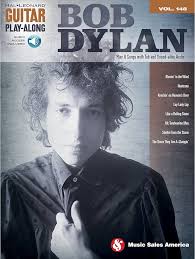
Simon & Garfunkel’s relationship with their contemporaries was characterized by a mixture of mutual admiration, creative rivalry, and, in Simon’s case, a persistent sense of operating in the shadow of Bob Dylan. Dylan was a towering influence on Simon, who once acknowledged that “Dylan’s mystique haunted” him and that he was “probably Dylan’s most skillful imitator” during his early years. Simon’s admiration was not entirely reciprocal; Dylan’s Nobel Prize in Literature (2016) reignited debates about the relative literary merits of the two songwriters, with Simon candidly admitting, “I usually come in second. I don’t like coming in second”.
The duo’s influence radiated outward across the musical landscape. Their intertwining vocal harmonies and folk-pop sensibility resonated directly with peers such as Crosby, Stills & Nash, whose own vocal arrangements owed a substantial debt to the Simon & Garfunkel template. The duo’s impact extended to Fleetwood Mac, whose Buckingham-Nicks configuration was explicitly modeled on the Simon & Garfunkel dynamic—a singer-songwriter duo with intricate harmonies and a volatile romantic undercurrent. Joni Mitchell, whose early work shared the duo’s literate folk sensibility, was also touched by their example.
Contemporary artists continue to cite Simon & Garfunkel as a foundational influence. The whisper-and-strum aesthetic of Iron & Wine, the murmured confessionals of Belle and Sebastian, the bittersweet anthems of Fun., and the robust folk revival of Mumford & Sons all bear traces of the duo’s DNA. Acoustic masters such as The Milk Carton Kids and Monsters of Folk have explicitly carried the torch, while artists as diverse as Elliott Smith and The Shins have drawn on the duo’s harmonic vocabulary.
Influences: From Doo-Wop to Dylan
The musical DNA of Simon & Garfunkel was forged from a diverse set of influences. The Everly Brothers were the most immediate and profound inspiration; their close-harmony, rhythmically interlocked vocal style provided the template that Simon and Garfunkel would refine and transcend. The duo’s early recordings as Tom & Jerry were essentially Everlys knockoffs, and throughout their career the Everly Brothers’ influence remained audible in their phrasing and vocal blend.
Doo-wop groups such as The Cadillacs and The Moonglows contributed to the duo’s rhythmic sensibility, while Nat King Cole’s velvety vocals and Chet Baker’s jazz-inflected phrasing instilled in them a sense of tonal beauty and restraint. The folk revival of the early 1960s, particularly the work of Bob Dylan and Joan Baez, showed Simon that songwriting could be personal, poetic, and socially engaged. Elvis Presley represented the primal energy of rock & roll, while the British Invasion—especially The Beatles—demonstrated the possibilities of studio experimentation and sonic expansion.
Simon’s songwriting also drew on literary sources: the poetry of Emily Dickinson and Robert Frost, the novels of J.D. Salinger, and the social criticism of the Beats all left their mark on his lyrics. This synthesis of musical traditions and literary influences produced a body of work that was both rooted in its moment and timeless in its appeal.
Legacy: Canonization and Continuing Resonance
The legacy of Simon & Garfunkel is secure on multiple fronts. They were inducted into the Rock and Roll Hall of Fame in 1990, the same year that their album Bridge Over Troubled Water was recognized as one of the most important recordings of the rock era. They have won ten Grammy Awards, including the prestigious Album of the Year and Record of the Year for Bridge Over Troubled Water in 1971. In 2004, “The Sound of Silence” was added to the Grammy Hall of Fame, followed by “Mrs. Robinson” in 1999 and Bridge Over Troubled Water in 1998. Rolling Stone ranked them No. 40 on its list of the 100 Greatest Artists of All Time.
Institutional recognition has further cemented their place in American cultural history. In 2013, “The Sound of Silence” was selected for preservation in the Library of Congress’s National Recording Registry, which annually honors recordings of cultural, historical, or aesthetic significance. The citation noted that the song, written in the wake of President Kennedy’s assassination, had “taken on special significance in American culture”.





Their commercial legacy is equally impressive. Greatest Hits (1972), their first compilation, achieved Diamond status with sales exceeding fourteen million copies. Bridge Over Troubled Water has sold over twenty-five million copies worldwide, making it one of the best-selling albums in history. The duo’s songs have been covered by an astonishing range of artists—from Elvis Presley and Aretha Franklin to Disturbed and Jacob Collier—and continue to appear in films, television shows, and commercials, ensuring their music reaches new generations.
Simon & Garfunkel Complete Discography
Main articles on Wikipedia: Simon & Garfunkel discography and List of songs recorded by Simon & Garfunkel Studio albums
- Wednesday Morning, 3 A.M. (1964)
- Sounds of Silence (1966)
- Parsley, Sage, Rosemary and Thyme (1966)
- Bookends (1968)
- Bridge over Troubled Water (1970)
Simon & Garfunkel’s official studio discography comprises five albums, each representing a distinct phase in their artistic development:
Wednesday Morning, 3 A.M. (October 19, 1964) — The debut album, initially a commercial failure, featured acoustic folk arrangements and five original Simon compositions, including the original version of “The Sound of Silence”.
Sounds of Silence (January 17, 1966) — Released in the wake of the title track’s chart success, this album included the electric overdub of “The Sound of Silence,” along with “I Am a Rock,” “Kathy’s Song,” and “April Come She Will”.
Parsley, Sage, Rosemary and Thyme (October 24, 1966) — An artistic leap forward, featuring “Scarborough Fair/Canticle,” “Homeward Bound,” “The Dangling Conversation,” and “7 O’Clock News/Silent Night”.
Bookends (April 3, 1968) — A concept album exploring the passage of time from youth to old age, including “Mrs. Robinson,” “America,” “Old Friends,” and “A Hazy Shade of Winter”.
Bridge Over Troubled Water (January 26, 1970) — Their final and most successful studio album, featuring the title track, “The Boxer,” “Cecilia,” “El Condor Pasa (If I Could),” and “The Only Living Boy in New York”.
In addition to the studio albums, the duo released The Graduate soundtrack (1968), which reached No. 1 on the Billboard 200 and spent sixteen consecutive weeks at the top, a record at the time. Live albums include The Concert in Central Park (1982) and Old Friends: Live on Stage (2004), while numerous compilation albums—most notably Simon and Garfunkel’s Greatest Hits (1972)—have kept their music in circulation.
Film Contributions: The Graduate and Beyond
Simon & Garfunkel’s most significant contribution to cinema came with Mike Nichols’ The Graduate (1967), a film whose cultural impact was inseparable from the duo’s music. Nichols had initially commissioned Simon to write new material for the film, but the director ultimately chose to use existing Simon & Garfunkel recordings—“The Sound of Silence,” “Scarborough Fair/Canticle,” “April Come She Will,” and a partially completed “Mrs. Robinson”—to accompany key moments in the narrative. The soundtrack album, released in January 1968, became a massive commercial success, reaching No. 1 on the U.S. album charts and spending sixteen consecutive weeks at the summit.
“Mrs. Robinson” became indelibly associated with the film, its opening vocalise (“dee dee dee dee dee dee dee dee”) instantly evoking the image of Dustin Hoffman’s Benjamin Braddock drifting in his parents’ swimming pool. The song’s evolution was itself a testament to the duo’s creative process: the version heard in the film is a fragment, recorded before Simon had completed the lyrics, while the full version appeared on Bookends later that year.
Beyond The Graduate, Simon & Garfunkel’s music has been featured in numerous films, including The Boxer (1997), Watchmen (2009), and The Wolf of Wall Street (2013), among many others. Their songs have become shorthand for a particular era of American life—the anxious, searching, post-innocence moment of the late 1960s—and filmmakers continue to draw on that association.
Landmark Performances: From Carnegie Hall to Central Park
Simon & Garfunkel’s live performances were relatively infrequent compared to their studio output, but several stand as defining moments in popular music history. Their 1968 concert at Carnegie Hall, captured on the live album Live from New York City, 1967, showcased the duo at the peak of their powers, performing “Mrs. Robinson,” “The Dangling Conversation,” and “The Sound of Silence” to an enraptured audience.
The most legendary performance, however, was the Concert in Central Park on September 19, 1981. Held on the Great Lawn of New York’s Central Park, the free concert drew an estimated 500,000 people, making it one of the largest concert audiences in history. Accompanied by an eleven-piece band, Simon & Garfunkel performed a career-spanning set that included “Mrs. Robinson,” “America,” “Bridge Over Troubled Water,” “The Boxer,” and “The Sound of Silence,” along with selections from their solo catalogs. The concert was released as a live album and a concert film, and it remains the definitive document of the duo’s enduring chemistry on stage.
A subsequent reunion tour in 1982 and the Old Friends tour of 2003–2004 demonstrated that the duo’s music retained its power to move audiences decades after their initial breakup. Their final major performance together took place in 2010 at the New Orleans Jazz & Heritage Festival, though talk of further reunions has persisted intermittently ever since.
Documentaries: Capturing the Elusive Partnership
The Simon & Garfunkel story has been the subject of several documentaries, each offering a different perspective on their music and their fraught relationship. Simon and Garfunkel: Songs of America (1969), directed by actor Charles Grodin, chronicled the duo’s 1969 tour against the backdrop of a nation in turmoil, incorporating footage of riots and political unrest alongside intimate backstage conversations. The film remains a valuable document of the duo at a pivotal moment in their career, just before the release of Bridge Over Troubled Water and their subsequent dissolution.
The Harmony Game (2011) revisited the making of Bridge Over Troubled Water forty years after its release, featuring interviews with Simon, Garfunkel, and the engineers, arrangers, and session musicians who contributed to the album. The documentary offered rare insight into the duo’s creative process—how harmonies were worked out, how lyrics evolved, how songs were developed in the studio—while also acknowledging the tensions that simmered beneath the surface. Critics noted that the film, produced by Simon and Garfunkel themselves, sometimes felt like a promotional tool rather than an honest examination of their conflicts, but the musical content remained invaluable.
More recently, In Restless Dreams: The Music of Paul Simon (2023) explored Simon’s entire career, with substantial attention devoted to his partnership with Garfunkel and the unique alchemy they created together. The documentary contextualized their work within the broader sweep of American popular music, tracing Simon’s journey from a Queens teenager obsessed with the Everly Brothers to a songwriter of global stature.
Simon & Garfunkel: The Enduring Bridge
Simon & Garfunkel occupy a singular position in the history of popular music. They were not the first folk-rock duo, nor the most prolific, nor the most politically radical. But in their brief, intense period of collaboration—from 1964 to 1970—they produced a body of work whose emotional depth, harmonic sophistication, and lyrical intelligence have never been surpassed within their idiom. Their songs gave voice to the loneliness, yearning, and spiritual searching of a generation, and they did so with a beauty that transcended the specific circumstances of their creation.
The irony of their legacy is that the tension that ultimately destroyed their partnership—the push and pull between Simon’s restless creative ambition and Garfunkel’s more intuitive musicality—was also the source of their greatest strength. Their harmonies worked precisely because they were not identical voices but complementary ones: Garfunkel’s angelic tenor floating above Simon’s earthier baritone, each voice making the other more complete. That harmony, both literal and figurative, is what continues to draw listeners to their music more than half a century after they last recorded together. As long as there are people who feel alienated by the modern world, who long for connection, who seek solace in melody and meaning, Simon & Garfunkel’s music will find an audience. The bridge they built over troubled water remains open, and its span is as wide and welcoming as ever.
Browse in the Sheet Music Library:
Or browse in the categories menus & download the Library Catalog PDF:
Simon & Garfunkel - The Sound of Silence (from The Concert in Central Park)
"The Sound of Silence" by Simon & Garfunkel from The Concert in Central Park.