Table of Contents
Scores for all instruments: 16,000+ (active and growing), over 236,000 pages.
All genres and levels: Jazz & Blues, Rock & Pop, Classical & Contemporary, Film & Musicals;
books & biographies; methods, études, play-along tracks (MP3) for Jazz & Rock.
Access & benefits: US$15.99 one-time payment, valid for lifetime, full Library access.
Why it's never too late to learn to play the piano?
More adults are realizing that age is no barrier to learning the piano. Looking at its benefits and the work of late blooming pianists, here’s why it could work for you.
It’s been on your mind, hasn’t it? A constant nagging that refuses to stop. It happens every time you see the piano in that shop window that you regularly pass by. Or perhaps it’s when you watch that clip of your favorite performance over and over? Maybe it’s that unique sound that connects with you? It could be just one of those things, or it could be combination of all of them, but it all adds up to the same thing: you’d love to play the piano.
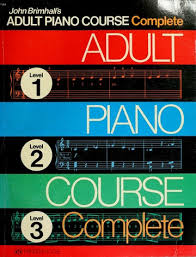
The best sheet music download from our Library.
So what's stopping you from taking up the piano?
The short answer is “nothing”. If life teaches us anything, it’s that there’s no such thing as “too late” or “too old” when it comes to learning the piano. And while music is surrounded by a mythology that’s entirely its own, one of the biggest misnomers surrounding this most unique of art forms is that it’s the preserve of the young – a symbol of rebellion and expression with a lifespan that is dictated by an in-built sell-by date.
However, an increasing number of adults have come to realize that age is no barrier to learning the piano (or any instrument for that matter). There are many reasons for this. For some, a surfeit of time is available following a lifetime of work and/or raising children. Others are drawn by both the mental and physical benefits of learning the piano. Some have come to re-evaluate their lives and so want less from work and more from what life has to offer. Or it could be something as simple as it being a pursuit that’s never been fulfilled when it should – and could – have done.
Please, subscribe to our Sheet Music Library.
But whatever the reason, the fundamental message remains the same: it’s never too late to start playing the piano.
Why take up the piano?
At the most basic level, the piano is one of the few musical instruments to offer the complete music experience. In other words, the piano doesn’t have to be played with other instruments in order for it to reach its full potential. This is why entire solo pieces have been composed around the piano and what it can do. It can be a lead instrument, which means that you can get as much pleasure from it playing it on your own as you would playing with other musicians.
Taking up the piano as an adult has a number of health benefits – both physical and mental – that will go some considerable way to make you feel better about yourself. At the most prosaic level, getting your fingers moving will keep your hands supple and flexible. It’s an exercise that not much give a lot of thought to, and it’ll certainly keep at bay the obvious signs of aging! And that’s before we stop to consider the contribution your feet will make in activating the foot pedals. Combined, you’re using muscles that might otherwise remain dormant.
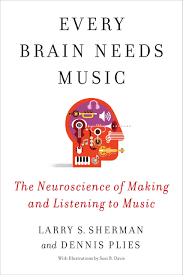
Playing the piano as an adult helps to relieve stress as well as reactivating the brain. Certainly, children who take up the instrument at an early age are at an advantage, but adult learners can still benefit from the experience. What other method can help you simultaneously combine physical movement with rhythm, pitch, hand-eye co-ordination and improved memory? All of this adds up to increased brain activity, which is never a bad thing!
But more than anything, playing the piano is fun! And, as we all know, with fun come social benefits. Even the most basic of tinkering on the piano will attract the attention of friends, family and complete strangers. The piano can be a social glue that brings people from different walks of life and backgrounds together in a way that few other instruments do.
What's the best way to start?
In the first instance, you’re going to need an instrument that you feel comfortable with and love playing. A great starting point is the entry-level ‘b Series’ from Yamaha. Although these instruments are designed with the beginner in mind, their high build quality and superb durability mean that they can accompany you on your musical journey, as you develop as a player.
Getting a good piano teacher is also important and will not only keep you motivated but will help you to navigate the keyboard and begin to learn new pieces. Learning to play the piano is much like learning a new language and your teacher will be able to help you master this new way of communication from the smallest of steps to the most complicated of phrases.
It’s also worth bearing in mind that learning to play the piano is an ongoing process. There’s no finish line for you to reach where you’ve grasped everything there is to know, so be sure to be flexible with your expectations. So while you might only want to play ‘Happy Birthday’, don’t be too surprised when your curiosity takes you elsewhere after you’ve delivered that piece.
Prominent musicians who began their careers later in life
Late bloomers have come to shine in a variety of musical disciplines and pianists are no exception.
Let’s take a look at the classical pianist Harold Bauer. Born in Kingston upon Thames in 1893 to German and English parents, Bauer’s musical journey began by studying the violin under the tutelage of his father as well as the celebrated Hungarian violinist Adolf Pollitzer.
Making his concert debut as a violinist aged just nine-years-old, Bauer would tour England for a further nine years before coming to the attention of composer, pianist and future Prime Minister of Poland, Ignacy Jan Paderewski, who persuaded Bauer to focus on the piano. Bauer made his piano concert debut just a year later. Soon afterward, Bauer’s prowess was such that he was touring Europe, Russia and the United States of America.
So proficient was Bauer that not only did he become one of the most famous virtuoso pianists of the 1920s, he also premiered influential composer Claude Debussy’s piano suite, ‘Children’s Corner’, in Paris in 1908.
Becoming an American citizen in 1917, Bauer would go on to found the Beethoven Society of New York, as well as taking the mantle of President of the Friends of Music of the Library of Congress. An influential teacher, Bauer led the piano department at the Manhattan School of Music while spending his winters teaching master classes at the University of Miami.
Or how about the Ukrainian-born pianist, Sviatoslav Richter? Widely recognized as one of the greatest musicians of the 20th century, his repertoire included Handel, Bach, Stravinsky, Bartók, Britten, and Gershwin. Richter’s high standard of playing was based on his belief that musicians should "carry... out the composer's intentions to the letter" and he was highly critical of those musicians who failed to make that cut – himself included.
Born in 1915, Richter was something of a late-starting autodidact in his teens. Having received only the most basic of piano lessons from his father, Richter taught himself to play the instrument. Amazingly, he gave his first public recital at the Engineers’ Club in Odessa in 1934 – a full three years before entering the Moscow Conservatory. Winning the All-Union Contest of Performers in 1945, he would go on to scoop the celebrated Stalin Prize four years later.
Having premiered Sergei Prokofiev’s ‘Piano Sonata No. 6’ in 1942 to great acclaim, Richter would go on to give the debut performances of the composer’s Seventh and Ninth Sonatas. Though his fame spread across the world, it wasn’t until 1958 that he was permitted to perform beyond the Soviet bloc and his reputation as a virtuoso pianist was forever sealed.
Of course, late blooming isn’t restricted to the world of classical music. For evidence, look no further than the career famed blues player Ann Rabson – aka the Music Makin’ Mama. While she’s rightly lauded for helping revive acoustic blues the last decade of the 20th century via her idiosyncratic boogie-woogie piano playing, what makes her achievements even more remarkable is the fact that she only took up her instrument at the age of 35.
Born in New York City in 1945, Rabson took up the guitar at the age of 17 and by the following year she was playing professionally around the American Midwest. But it wasn’t until the early 1980s that she satisfied her musical curiosity by exploring the possibilities afforded to her by the piano. And while some people may claim that learning an instrument as an adult is difficult, Rabson found that the opposite is true: "When you're 35 you have a better attitude. You take more risks."
It’s an attitude that was as healthy as it was successful. Forming the all-female trio, Saffire – The Uppity Blues Women, the band released eight studio albums. Rabson would also release a further four solo albums of traditional and acoustic blues with her barrel house piano playing style taking center stage.
Also, these remarkable musicians bypassed the typical childhood-start timeline to build celebrated musical legacies:
- Albert Frantz: Widely regarded as a top example of a late bloomer, Frantz began his piano studies at age 17. He was originally on track to be a computer and electrical engineer before pivoting to music full-time.
- Red Garland: The iconic jazz pianist did not touch a piano until he was 18 while in the U.S. Army. After the military, he rapidly developed his skills and became a professional, eventually anchoring the legendary Miles Davis Quintet.
- Jorge Bolet: While he played piano in his youth, the titanic virtuoso was relatively unknown on the global stage until his 60th year, when he finally achieved international recognition.
- Lucas Debargue: Though he toyed with music earlier, Debargue quit playing at 17, completely shifting focus to literature and art. He didn't take the piano seriously again until he was 20, yet he went on to win major international acclaim at the Tchaikovsky Competition.
So what are you waiting for?
As we’ve seen, there are no barriers to learning to play the piano as an adult. After all, life is journey from which we learn and the piano is another route for you to explore. And not knowing where it will take you is simply part of the excitement. So what are you waiting for?
Read this article here.