
Scores for all instruments: 16,000+ (active and growing), over 236,000 pages.
All genres and levels: Jazz & Blues, Rock & Pop, Classical & Contemporary, Film & Musicals;
books & biographies; methods, études, play-along tracks (MP3) for Jazz & Rock.
Access & benefits: US$15.99 one-time payment, valid for lifetime, full Library access.
Table of Contents
Remembering Tom Petty (1950-2017)
Thomas Earl Petty, widely known as Tom Petty, was an American singer-songwriter, multi-instrumentalist, record producer, and actor. He left an indelible mark on rock music as the frontman of Tom Petty and the Heartbreakers, a key member of the supergroup the Traveling Wilburys, and a celebrated solo artist. Over a career spanning nearly five decades, Petty became a standard-bearer for a no-frills, heartland rock sound, characterized by timeless melodies, insightful lyrics, and a staunch dedication to the artistic values of 1960s rock and roll.
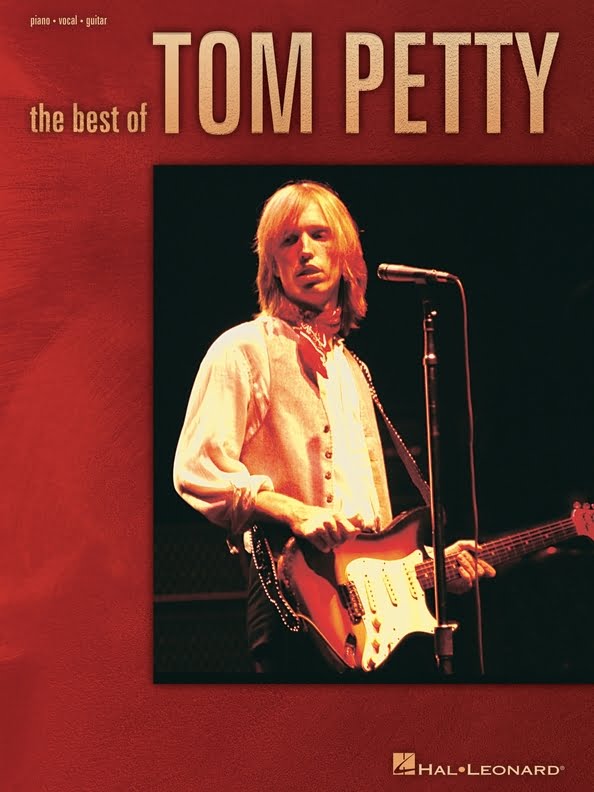
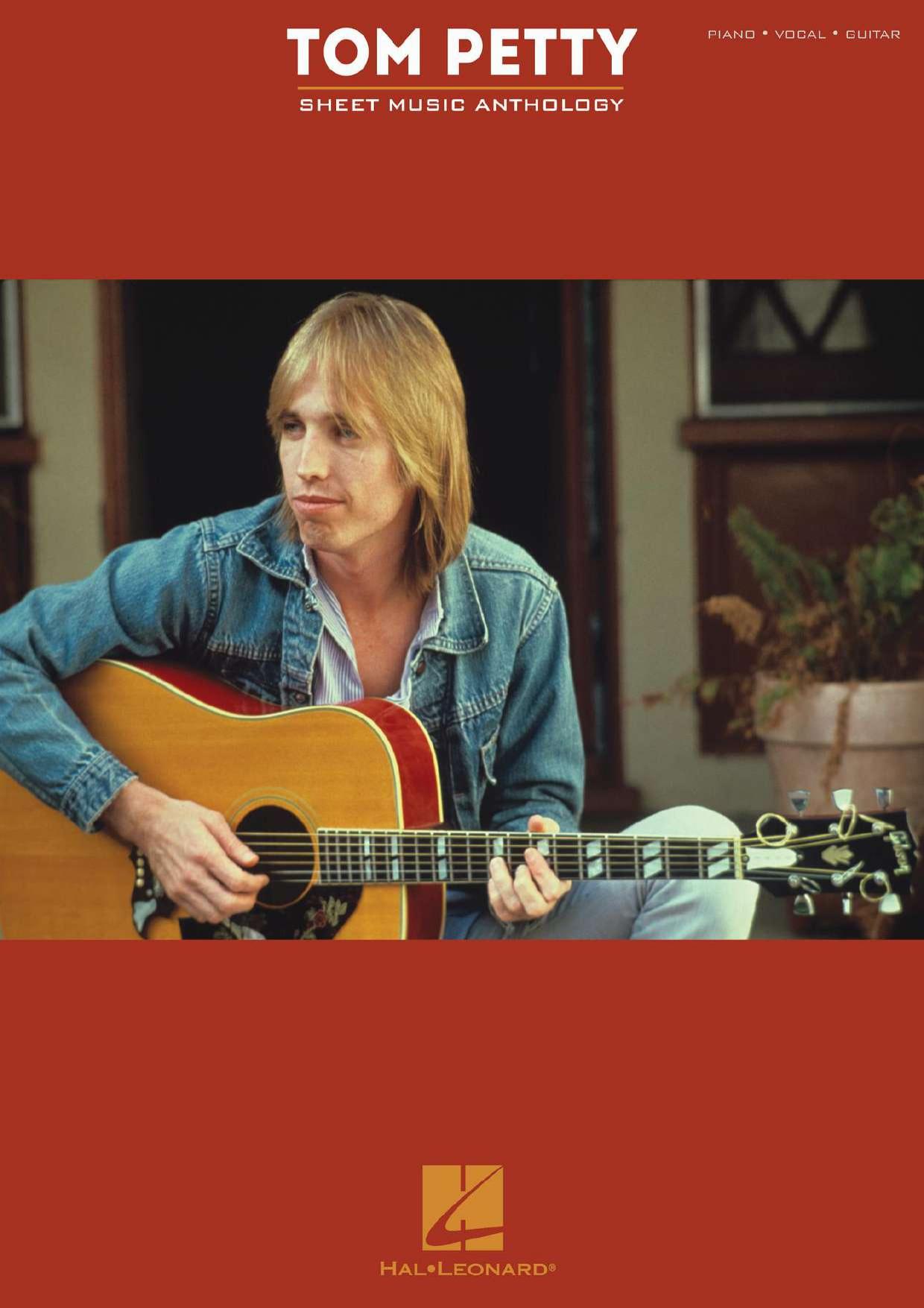
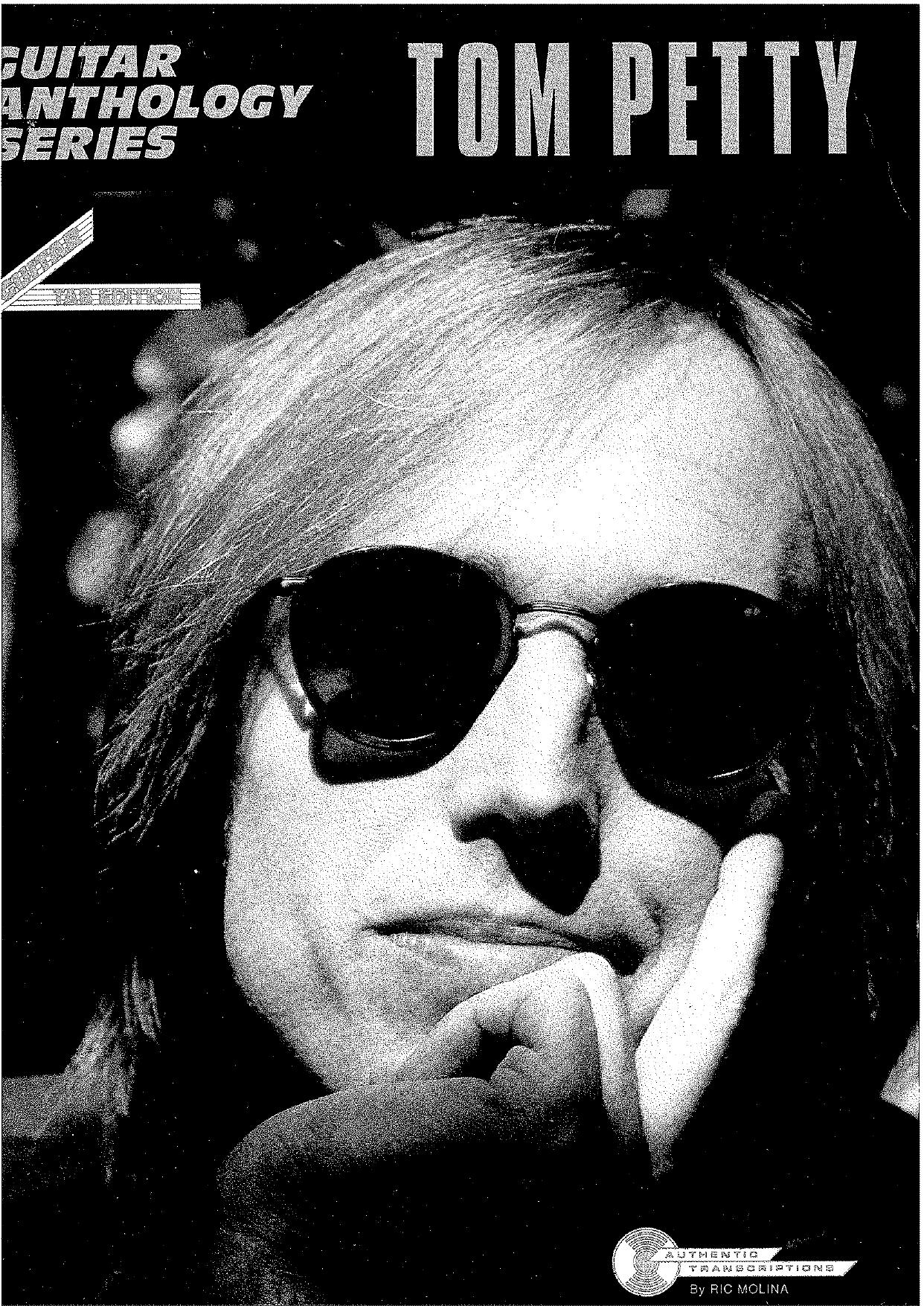
The best sheet music download from our Library.
Biography: From Gainesville to the Hall of Fame
Early Life
Tom Petty was born Thomas Earl Petty on October 20, 1950, in Gainesville, Florida. He was the first of two sons born to Earl Petty, a traveling salesman, and Kitty Petty, a tax-office worker. His father was described as an abusive alcoholic. Petty's life changed forever at the age of ten when his uncle, who was working on the set of Elvis Presley's film Follow That Dream in nearby Ocala, invited him to watch the shoot. The meeting, where he felt Presley "glowed," sparked his lifelong passion for rock and roll. He soon traded his Wham-O slingshot for a stack of Elvis Presley records. Just a few years later, seeing The Beatles perform on The Ed Sullivan Show solidified his ambition to be in a band. He studied guitar with future Eagles member Don Felder.
Please, subscribe to our Sheet Music Library.
The Formation of the Heartbreakers
In the late 1960s and early 1970s, Petty formed the country-rock band Mudcrutch, which included future Heartbreakers guitarist Mike Campbell and keyboardist Benmont Tench. After moving to Los Angeles, the band disbanded, but Petty, Campbell, and Tench soon formed the core of a new group. In 1976, they joined with bassist Ron Blair and drummer Stan Lynch to officially form Tom Petty and the Heartbreakers. Their self-titled debut album was released the same year.
Breakthrough and Career Highlights
The band's early U.S. success was modest until the single "Breakdown" became a hit in the UK and was subsequently re-released in America, reaching the Top 40 in 1978. The critical and commercial breakthrough came with their third album, Damn the Torpedoes (1979), which reached number two on the Billboard charts, fueled by the hits "Don't Do Me Like That" and "Refugee".
Throughout the 1980s and 1990s, Petty faced legal battles with record labels but continued to produce a string of iconic music. He survived a 1996 car accident where his vehicle plunged down a ravine, an event he later described as a profound, near-death experience that shaped his subsequent outlook on life and music.
In 1989, he released his first proper solo album, Full Moon Fever, a multi-platinum record including classics like "I Won't Back Down," "Free Fallin'," and "Runnin' Down a Dream". In 2002, he and the Heartbreakers were inducted into the Rock and Roll Hall of Fame.
Final Years and Death
Petty completed a 40th-anniversary tour with the Heartbreakers in the summer of 2017. Just one week after the tour's conclusion, he was found unconscious at his home in Santa Monica, California. On October 2, 2017, Tom Petty died at the age of 66 due to an accidental overdose of prescription drugs.
Music Style and Philosophy
Tom Petty's music style is a masterful fusion of classic rock traditions. Critic John Covach described him not as a new waver, but as a "new traditionalist" who remained dedicated to the mid-1960s pop and rock values of bands like The Byrds, The Beatles, The Rolling Stones, and Bob Dylan.
The Guardian noted that upon emerging in 1976, Petty and the Heartbreakers were "anomalous, even anachronistic figures," with an audibly obsessed sound that fused the Byrds' 12-string jangle with the Rolling Stones' tough swagger. He rejected the overblown hippie rock that followed Sgt. Pepper's in favor of a simpler ethos where "a strong song with accompaniment that enhanced the song but never took center stage" was paramount. His lyrics often carried a blue-collar, rebellious, yet hopeful urgency, singing of rebels and outcasts with ragged romanticism.
Chord Progressions and Music Harmony
Despite a deceptively simple, laid-back delivery, Petty’s songwriting was harmonically rich and creative. His signature blend of melodic hooks and textured sounds was achieved through specific, deliberate harmonic and melodic choices.
"Byrds-y" Jangle and Droning Notes
Guitarists note that many of his classic intros utilize suspended chords (like Asus4 and Dsus4) to create an "airy, not quite resolved feel" that makes his progressions "infinitely loopable". Songs like "Free Fallin’" famously retain a high D note throughout a simple chord progression, creating a chiming effect that sounds like a 12-string guitar.
I–IV–V Foundation and Innovations in Phrasing
Petty heavily relied on the classic I–IV–V functional harmony (using the first, fourth, and fifth chords of a key). This is starkly evident in the chorus of "Yer So Bad," which provides a classic, rootsy foundation. However, he often subverted this with odd phrase lengths; for instance, the chorus of "Yer So Bad" uses a three-bar phrase instead of the standard four-bar pattern.
The Backbeat
Many of Petty's songs are driven by an emphasis on the second and fourth beats of a measure—the backbeat—a rhythmic trait inherited from early R&B that gives his music an undeniable danceability and forward momentum.
Minor Drop Progression
Petty also employed sophisticated harmonic devices like the "minor drop" progression, in which the root of a minor chord descends chromatically in half-steps. Guitar World analyzed this technique in Petty's music, highlighting how such sophisticated choices added depth and darkness to his anthemic rock sound.
Relationship with Other Artists
Petty's career was interwoven with the biggest names in rock, both as a collaborator and a source of inspiration.
- Traveling Wilburys: One of the most famous supergroups in history, formed in 1988 with Bob Dylan, George Harrison, Roy Orbison, and Jeff Lynne. Petty (taking the alter egos Charlie T. Wilbury Jr. and Muddy Wilbury) co-wrote and sang on hits like "Handle with Care" and "End of the Line".
- Bob Dylan: In 1986, the Heartbreakers served as Dylan's backing band for his Australian and Japanese tours. Dylan later called Petty's death "shocking, crushing news," describing him as "a great performer, full of the light, a friend".
- Stevie Nicks (Fleetwood Mac): Petty co-wrote the duet "Stop Draggin' My Heart Around" with Mike Campbell. It became a massive hit in 1981 and cemented a close musical and personal friendship.
- Johnny Cash: Petty collaborated with the "Man in Black" on Cash's acclaimed American Recordings series, contributing to the albums Unchained (1996) and Solitary Man (2000).
- Modern Acts and Borrowing: Petty was famously generous about other artists borrowing from his work. The Strokes' "Last Nite" closely resembled "American Girl," and Sam Smith's "Stay With Me" was acknowledged to have been influenced by Petty's "I Won't Back Down".
Influences
In a 2006 interview, Petty said he knew he wanted to be in a band the moment he saw The Beatles on The Ed Sullivan Show. He also cited Roger McGuinn of The Byrds as a major guitar influence. Roger McGuinn famously remarked that when he first heard "American Girl" on the radio, he thought it was one of his own recordings. Other primary influences included Elvis Presley, Bob Dylan, The Rolling Stones, and American roots music, blending blues, country, folk, and garage rock.
Legacy and Cultural Impact
Tom Petty sold more than 80 million records worldwide, solidifying his status as one of the best-selling music artists of all time. His legacy transcends sales figures. He became a beacon of artistic integrity, famously fighting his record label over pricing and creative control. Musically, his influence dominates the Americana genre, which mirrors the rootsy, acoustic feel of his 1994 album Wildflowers. Modern rock bands like The War on Drugs and Jason Isbell channel his "hazy heartland epics" and "sharp, character-driven songwriting". In a surprising turn, his influence is most strongly felt in 21st-century mainstream country music, with stars like Brad Paisley, Keith Urban, and Kenny Chesney citing him as a key inspiration.
Complete Discography
Below is a comprehensive listing of Tom Petty's studio albums, including work with the Heartbreakers and as a solo artist.
Tom Petty and the Heartbreakers
- Tom Petty and the Heartbreakers (1976)
- You're Gonna Get It! (1978)
- Damn the Torpedoes (1979)
- Hard Promises (1981)
- Long After Dark (1982)
- Southern Accents (1985)
- Let Me Up (I've Had Enough) (1987)
- Into the Great Wide Open (1991)
- Songs and Music from "She's the One" (1996; soundtrack)
- Echo (1999)
- The Last DJ (2002)
- Mojo (2010)
- Hypnotic Eye (2014)
Solo Studio Albums
- Full Moon Fever (1989)
- Wildflowers (1994)
- Highway Companion (2006)
With the Traveling Wilburys
- Traveling Wilburys Vol. 1 (1988)
- Traveling Wilburys Vol. 3 (1990)
With Mudcrutch
- Mudcrutch (2008)
- Mudcrutch 2 (2016)
Film and Television Appearances
Film Scores and Soundtracks
In 1996, Petty and the Heartbreakers composed the entire soundtrack for the romantic comedy She's the One, which featured original songs and was released as a proper album. His songs have been featured in dozens of films, including:
- Fast Times at Ridgemont High (1982): Featured "American Girl".
- The Silence of the Lambs (1991): Featured "American Girl".
- Jerry Maguire (1996): Famously featured "Free Fallin'".
- Elizabethtown (2005) and It's Complicated (2009).
Acting Roles
Petty appeared as a guest actor on numerous TV shows, often playing himself or a similar character:
- The Simpsons: Voiced himself in the episode "How I Spent My Strummer Vacation".
- King of the Hill: Voiced the character Lucky Rousseau's friend in "The Lucky".
- The Larry Sanders Show: Appeared as himself in a fictional variety show meeting.
- The Postman (1997): Played a bridge mechanic in Kevin Costner's post-apocalyptic film.
Most Known Compositions and Live Performances
Iconic Songs
- American Girl: A timeless anthem of youthful ambition, frequently cited as his definitive track.
- Free Fallin': A solo acoustic masterpiece that became a global phenomenon.
- I Won't Back Down: An anthem of personal and professional defiance.
- Runnin' Down a Dream: A powerful, driving rock track from Full Moon Fever.
- Mary Jane's Last Dance: A moody, iconic hit from the Wildflowers sessions.
- Stop Draggin' My Heart Around: A timeless duet with Stevie Nicks.
- Refugee and Don't Do Me Like That: The high-energy singles from Damn the Torpedoes that cemented his stardom.
- The Waiting: The signature song from Hard Promises.
- Breakdown: The early 1976 hit that first brought him to national attention.
Famous Live Performances
Petty’s legendary live sets were defined by energy, tight musicianship, and extended jams. The most collected live recordings are Pack Up the Plantation: Live! (1985) and the sprawling 4-disc The Live Anthology (2009).
Key performances include "Listen to Her Heart" on the BBC in 1978, a 1980 performance of "Shadow of a Doubt" on Fridays, and a 1985 show at L.A.'s Wiltern Theatre that was featured on Pack Up the Plantation. His final concert took place at the Hollywood Bowl on September 25, 2017.
Documentaries
Runnin' Down a Dream (2007)
Directed by acclaimed filmmaker Peter Bogdanovich, this 4-hour epic is the definitive documentary on Petty’s career. It premiered at the New York Film Festival on October 14, 2007, and was released on DVD with a running time of 238 minutes (nearly four hours).
It chronicles the history from the band's inception as Mudcrutch up to its 30th-anniversary concert in Petty's hometown of Gainesville. The film features incredible archived footage and contemporary interviews with Petty and countless collaborators, including Bob Dylan, George Harrison, Stevie Nicks, Eddie Vedder, Jeff Lynne, and Rick Rubin. Runnin' Down a Dream is an exhaustive, loving tribute widely considered the gold standard for music documentaries.
Tom Petty was a singular figure in rock music: a fan who became an icon, a traditionalist who broke new ground, and a songwriter whose work felt instantly classic yet perpetually fresh. With his unmistakable voice, his jangling guitar, and his unyielding integrity, he created a body of work that serves as a cornerstone of American music. From the rebellious spirit of "Refugee" to the melancholy beauty of "Wildflowers," his songs remain a source of comfort, power, and joy. Tom Petty left the building, but his music ensures he will never, ever back down.