
Scores for all instruments: 16,000+ (active and growing), over 236,000 pages.
All genres and levels: Jazz & Blues, Rock & Pop, Classical & Contemporary, Film & Musicals;
books & biographies; methods, études, play-along tracks (MP3) for Jazz & Rock.
Access & benefits: US$15.99 one-time payment, valid for lifetime, full Library access.
Table of Contents
Happy heavenly birthday, Víctor Jara, born on this day in 1932
Víctor Jara: The Voice That Refused to Be Silenced
Born on 28 September 1932, Víctor Lidio Jara Martínez remains one of the most transcendent figures in Latin American music and a global symbol of resistance against tyranny. A teacher, theatre director, poet, singer-songwriter, and political activist, Jara’s life was a testament to the power of art as a tool for social justice. His murder at the hands of the Chilean military dictatorship in 1973 transformed him into a potent symbol of the struggle for human rights, and his music continues to inspire generations across the world.
Search your favorite sheet music in the Sheet Music Library Catalog
Please, subscribe to our Sheet Music Library. Sheet music should be accessible and affordable for all musicians, from professionals to absolute beginners.
The best sheet music download from our Library.
Early Life and Education
Víctor Jara was born into poverty in the Ñuble Region of Chile, near the town of Chillán Viejo. His parents, Manuel Jara and Amanda Martínez, were tenant farmers, and Víctor was the penultimate of six children. His mother, a mestiza with Mapuche ancestry, was a self-taught guitarist and singer who performed traditional folk songs at local events. She insisted that her children learn to read, despite his father’s illiteracy and opposition to schooling. This maternal influence planted the seeds of Jara’s lifelong connection to Chile’s rural musical traditions.
The family moved to Lonquén, near Santiago, when Jara was five years old. After his mother’s death when he was just fifteen, Jara entered a seminary in San Bernardo, where he was exposed to sacred music and choral singing. He left the seminary in 1952, was drafted into the Chilean army, and later returned to Santiago to work as a hospital porter. His life changed when he successfully auditioned for the choir at the University of Chile in 1953, formally beginning his musical journey.
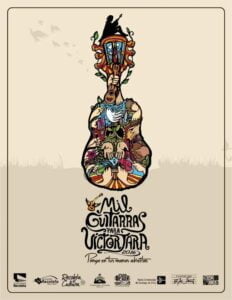
Descarga las mejores partituras de nuestra biblioteca.
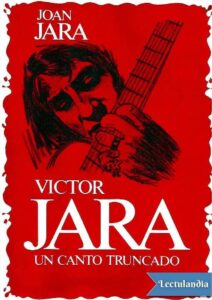
Theatrical Career and Musical Awakening
Before music became his primary vocation, Jara devoted himself to theatre. He studied acting and directing at the University of Chile’s Theatre School between 1959 and 1961 and became one of the most acclaimed theatre directors of his generation, earning numerous awards and critical recognition. His theatrical training profoundly shaped his musical approach, giving him a professional command of performance, narrative, and stagecraft that would later distinguish his songwriting.
In parallel, Jara joined the folk group Cuncumén in 1957, working with them until 1962. Under the influence of the legendary Violeta Parra, whom he met in 1957, Jara began exploring Chile’s folk songbook and developing his own compositional voice. He left Cuncumén and started writing his own songs, initially autobiographical but soon expanding to broader social themes as he performed in the peñas—community music centres that Parra had pioneered.
Musical Style and Harmony
Víctor Jara’s musical style represents a sophisticated synthesis of traditional Chilean folk music and modern compositional techniques. His work is characterized by what scholars have termed a “positive hybridization,” a creative absorption of diverse musical traditions that enriched Chilean popular music without succumbing to foreign imposition.
Jara was largely self-taught on the guitar, yet his harmonic language was remarkably complex. His compositions frequently employ added-note chords—sevenths and ninths—along with passing chords and intricate modulations. This harmonic sophistication distinguished him from many contemporaries and contributed to the emotional depth of his songs. His rhythmic approach often juxtaposed binary and ternary metres, creating a distinctive tension and vitality, while his guitar technique included various types of rasgueado (strumming) that functioned percussively.
His vocal writing was equally demanding, often spanning considerable ranges and requiring dramatic interpretation. The theatrical dimension of his performance style meant that his songs were never merely sung but enacted, each phrase carrying narrative weight.
Key Songs and Compositions
Jara’s catalogue includes some of the most enduring songs in Latin American music. “Te Recuerdo Amanda” (1969) is a tender elegy for a working-class woman, its simple melody and poignant lyrics exemplifying Jara’s ability to find profound humanity in everyday lives. “El Derecho de Vivir en Paz” (The Right to Live in Peace, 1971) became an anthem of the Popular Unity government, its title encapsulating the core of Jara’s political and artistic philosophy.
“Plegaria a un Labrador” (Prayer to a Labourer, 1969) won the First Festival of the New Chilean Song and remains one of his most powerful compositions, a soaring hymn to peasant dignity and resistance. “El Arado” (The Plough) and “El Aparecido” (The Apparition) from his early period demonstrate his engagement with rural themes and his admiration for Che Guevara.
Other essential works include “Manifiesto” (Manifesto), his artistic testament; “Luchín” , a song for children from the La Población album; “Ni Chicha Ni Limoná” , a satirical critique of political fence-sitting; and “Vientos del Pueblo” (Winds of the People), which became a rallying cry across Latin America. The posthumously released album Manifiesto (1974) collected songs intended for an unfinished project called Tiempos que cambian and included collaborations with Inti-Illimani and Patricio Castillo.
Music in Films
Jara’s music found a natural home in cinema, particularly in the politically engaged documentary tradition of the late 1960s and early 1970s. He composed and performed music for several Chilean films, including Esta tierra nuestra (1965), produced by Chile Films. His songs were incorporated into documentary and political cinema as a means of amplifying their revolutionary message.
In later decades, his music continued to appear in international films. The 2015 disaster drama The 33 featured “Ni Chicha Ni Limoná” , performed by Joe Vasconcellos, introducing Jara’s work to new global audiences. His compositions were also used in Chile in the Heart (1975), a documentary produced by Howard Dratch, with Jara’s music accompanying readings by Allen Ginsberg of poems by Pablo Neruda. His song “La Partida” appeared in Return of the Condor, a BBC documentary.
Collaborations with Musicians
Jara was a generous and collaborative artist. He served as artistic director of Quilapayún between 1966 and 1969, helping to shape one of the most important ensembles of the New Chilean Song movement. He collaborated extensively with Inti-Illimani, who participated in his posthumous album Manifiesto, and with Patricio Castillo, with whom he co-composed “Aquí me quedo” , setting a text by Pablo Neruda to music.
His album Pongo en tus manos abiertas (1969) was recorded with musicians from Quilapayún, and he also worked with rock groups such as Los Blops, demonstrating an openness to diverse musical styles that was unusual for folk artists of his era. He set verses by Pablo Neruda to music and performed at the ceremony honouring the poet after his Nobel Prize in 1972.
Influences and Legacy
Jara’s influences were rooted in Chilean rural music, the folkloric research of Violeta Parra, and the broader Latin American nueva canción movement. He, in turn, became one of the movement’s most influential figures, inspiring artists across generations and continents. American folk singers such as Simon & Garfunkel and Phil Ochs, along with Latin American artists like Cuba’s Silvio Rodríguez and Argentina’s León Gieco, owe an evident debt to his example.
His legacy extends far beyond music. In 1973, the Soviet scientist Nikolai Stepanovich Chernykh named a newly discovered asteroid “Víctor Jara” in his honour. In 2003, the stadium where he spent his final days was renamed the Estadio Víctor Jara. His life and work have been the subject of countless documentaries, books, and academic studies, and his songs remain in the active repertoire of musicians throughout Latin America and beyond.
Political Struggle
Jara’s political commitment was not an afterthought but the organizing principle of his artistic life. His song “Preguntas por Puerto Montt” (1969) directly challenged Interior Minister Edmundo Pérez Zujovic over the brutal police repression of squatters in that southern city, establishing Jara as a fearless voice of denunciation.
During Salvador Allende’s Popular Unity government (1970–1973), Jara assumed an explicitly militant role, participating in electoral campaigns, denouncing the conditions of marginalized communities, and encouraging volunteer work to resist seditious strikes. He was a member of the Communist Party of Chile and a cultural ambassador for the socialist project. His music became a tool for raising political consciousness, and his performances at factories, shantytowns, and universities embodied the ideal of an art integrated with popular struggle.
Death and Aftermath
On 11 September 1973, General Augusto Pinochet led a military coup that overthrew Allende’s government. Jara was arrested at the Technical University where he taught and taken to the Estadio Chile, a sports stadium converted into a detention centre. He was tortured for four days—his hands were broken by soldiers who mocked his guitar playing—and on 15 September 1973, he was shot dead. His body was thrown onto the street of a shantytown in Santiago.
The contrast between his songs of love, peace, and justice and the brutality of his death transformed Jara into an international symbol of resistance. In June 2016, a Florida jury found former Chilean Army officer Pedro Barrientos liable for Jara’s murder, and in July 2018, eight retired Chilean military officers were sentenced to prison for the crime. Barrientos was deported back to Chile in December 2023.
Additional Information
Jara’s discography includes Víctor Jara (Geografía) (1966), Pongo en tus manos abiertas (1969), Canto Libre (1970), El Derecho de Vivir en Paz (1971), La Población (1972), and Cantos por travesura (1972), among others. His album La Población is a landmark of documentary songwriting, based on research into the lives of residents in Santiago’s shantytowns.
His song “Venceremos” became the hymn of the Popular Unity coalition, and his composition “Manifiesto” stands as one of the most eloquent statements of artistic purpose ever written. In it, he declares: “My hands are mine, and they are yours” —a distillation of his belief that art belongs to the people.
Víctor Jara lived only forty years, but his influence has proven immeasurable. He remains a beacon for those who believe that music can be a force for justice, that beauty and struggle are not opposed but intertwined, and that the human spirit, even when broken, can continue to sing.
Browse in the Sheet Music Library:
Or browse in the categories menus & download the Library Catalog PDF:
Discography
Studio albums
- Víctor Jara (Geografía) (1966)
- Víctor Jara (1967)
- Canciones folklóricas de América (with Quilapayún) (1967)
- Pongo en tus manos abiertas (1969)
- Canto libre (1970)
- El derecho de vivir en paz (1971)
- La Población (1972)
- Canto por travesura (1973)
- Tiempos que cambian (unfinished) (Estimated release: 1974)
- Manifiesto (1974; reissued in 2001)
Live albums
- Víctor Jara en Vivo (1974)
- El Recital (1983)
- Víctor Jara en México (1996)
- Habla y canta (1996; reissued in 2001)
- En Vivo en el Aula Magna de la Universidad de Valparaíso (2003)
Compilations
- Te recuerdo, Amanda (1974)
- Presente (1975)
- Vientos Del Pueblo (1976)
- Canto Libre (1977)
- An unfinished song (1984)
- Todo Víctor Jara (1992)
- 20 Años Después (1992)
- The Rough Guide to the Music of the Andes (1996)
- Víctor Jara presente, colección "Haciendo Historia" (1997)
- Te Recuerdo, Víctor (2000)
- Antología Musical (2001)
- 1959–1969 – Víctor Jara (2001)
- Latin Essential: Victor Jara (2003)
- Colección Víctor Jara (2004)
- Víctor Jara. Serie de Oro. Grandes Exitos (2005)
Tribute albums
- A Víctor Jara by Raimon (1974)
- Het Recht om in Vrede te Leven by Cornelis Vreeswijk (1978)
- Cornelis sjunger Victor Jara: Rätten till ett eget liv by Cornelis Vreeswijk (1979)
- Konzert für Víctor Jara by various artists (1998)
- Inti-illimani interpreta a Víctor Jara by Inti-Illimani (1999)
- Quilapayún Canta a Violeta Parra, Víctor Jara y Grandes Maestros Populares by Quilapayún (2000)
- Conosci Victor Jara? by Daniele Sepe (2000)
- Tributo Rock a Víctor Jara by various artists (2001)
- Tributo a Víctor Jara by various artists (2004)
- Lonquen: Tributo a Víctor Jara by Francesca Ancarola (2005)
- Even in Exile by James Dean Bradfield (2020)
Search your favorite sheet music in the Sheet Music Library Catalog
Victor Jara - Victor Jara (Álbum Completo)
Tracklist Victor Jara - Victor Jara (Álbum Completo) 00:00 El Arado 03:33 El Cigarrito 06:15 La Flor Que Anda de Mano en Mano 08:15 Deja la Vida Volar 11:40 La Luna Siempre Es Muy Linda 15:08 Ojitos Verdes 19:00 La Cocinerita 21:27 Paloma Quiero Contarte 24:31 Qué Saco Rogar al Cielo 27:38 No Puedes Volver Atrás 30:35 El Carretero 34:27 Jai Jai 36:51 La Beata 39:48 Se Me Ha Escapado un Suspiro 43:16 Doña María Le Ruego 46:00 Décimas por el Nacimiento 50:42 Entonces Me Voy Volando
Monuments, namesakes, and other honors
Following the coup, Jara's story reached the astronomical world when, on 22 September 1973, Soviet astronomer Nikolai Stepanovich Chernykh named a newly discovered main-belt asteroid "2644 Victor Jara" in his honor. In Chile, the old Estadio Chile, where he was killed, was formally renamed Víctor Jara Stadium in September 2003, on the 30th anniversary of the coup. Sculptor Lautaro Díaz Silva created a four-meter bronze guitar sculpture, Víctor Jara regresa a la UTE ("Víctor Jara returns to the UTE"), which he donated to the University of Santiago in 2003. On 7 September 2021, the municipality of Estación Central renamed a section of Avenida Ecuador near the former Technical University campus as Avenida Víctor Jara, commemorating the site of his arrest.
The Víctor Jara Foundation (Fundación Víctor Jara), a nonprofit organization founded in 1994 and led for many years by Joan Jara, administers his musical estate and promotes his work. Joan Jara also publicized the poem, later known as "Estadio Chile," that Jara wrote in the stadium shortly before his death and smuggled out inside a friend's shoe. From 2002 until 2013, the foundation operated the Galpón Víctor Jara, a cultural center in Santiago's Barrio Brasil, which closed after a Chilean Supreme Court order.
Outside Chile, a Danish fishing schooner built in 1917 was renamed in Jara's honor in 2007; it continues to sail at cultural and social events and is otherwise berthed at a maritime museum in Lübeck, Germany. In Vecindario, on the Spanish island of Gran Canaria, the Víctor Jara Theatre was inaugurated around 1989 in his memory. A bronze plaque honoring Jara, created by sculptor Lautaro Díaz Silva in 1998 for Barcelona's Plaça Karl Marx, was reinaugurated on a stone monolith in 2002 and, following a 2025–2026 relocation initiative led by neighborhood associations, moved to the nearby Parc Josep Maria Serra Martí, where it was rededicated on 12 September 2026 in the presence of Jara's daughter Amanda.
In 2013, listing Jara among "15 Rock & Roll Rebels," Rolling Stone named him the only Latin American artist to make the list.
In 2013, a theater company in Concepción, La Otra Zapatilla, premiered Víctor, un canto para alcanzar las estrellas, a play about his life that went on to win a Ceres award for best play and was performed at the Santiago a Mil festival.
James Dean Bradfield produced a podcast and an album, Even in Exile, on the life of Jara
On 8 November 2021, the video game Dead by Daylight introduced a playable character, Carmina Mora, a Chilean painter whose backstory alludes to Jara.