
Scores for all instruments: 16,000+ (active and growing), over 236,000 pages.
All genres and levels: Jazz & Blues, Rock & Pop, Classical & Contemporary, Film & Musicals;
books & biographies; methods, études, play-along tracks (MP3) for Jazz & Rock.
Access & benefits: US$15.99 one-time payment, valid for lifetime, full Library access.
Table of Contents
Victor Young
Please, subscribe to our Sheet Music Library. Sheet music should be accessible and affordable for all musicians, from professionals to absolute beginners.



The best sheet music download from our Library.
For the price of a single songbook, get a full Sheet Music Library!
Victor Young: The Melodic Architect of Hollywood’s Golden Age
Albert Victor Young (1899–1956) stands as one of the most prolific and melodically gifted composers in the history of American popular music and film. Over a career that spanned more than three decades, he bridged the worlds of classical violin virtuosity, jazz-age dance bands, Broadway revues, and the golden age of Hollywood cinema. Though he received an astonishing twenty-two Academy Award nominations without a single competitive win during his lifetime, his posthumous Oscar for Around the World in Eighty Days cemented a legacy that had already been assured by an extraordinary catalog of songs and scores. Today, his compositions—most notably “Stella by Starlight,” “When I Fall in Love,” and “My Foolish Heart”—remain cornerstones of the Great American Songbook and essential repertoire for jazz musicians worldwide.
Search your favorite sheet music in the Sheet Music Library Catalog
Early Life and Biography
Victor Young was born into a musical Jewish family in Chicago. While many sources cite August 8, 1900, census records and his birth certificate indicate 1899, and his grave marker shows 1901—a discrepancy that reflects the modest record-keeping of the era. His father was a tenor with a touring opera company, but the family was impoverished. After his mother died, his father abandoned the family, and the young Victor was sent to Poland at the age of ten to live with his grandfather. This transatlantic displacement proved formative: he enrolled at the Warsaw Imperial Conservatory, where he studied violin under Roman Statkowski and later piano with Isidor Philipp of the Paris Conservatory. A prodigy who had begun violin at six, Young made his professional debut as a teenager with the Warsaw Philharmonic, even serving as assistant conductor in 1915–16.
World War I trapped him in Poland, where he survived by playing in the Philharmonic and in chamber ensembles, occasionally relying on his future wife, Rita Kinel, to smuggle him food. He returned to Chicago in 1920 and quickly immersed himself in the city’s vibrant popular music scene, joining the Central Park Casino Orchestra and later moving to Los Angeles to work as a concertmaster for Paramount-Publix theatres. During the 1920s he diversified as an arranger and conductor for radio and theatre, and his first connection with the film industry came through a position as assistant director with the Balaban and Katz cinema chain, for which he wrote and arranged as many as five silent film scores a week.
By the early 1930s, Young had become a central figure in the recording industry. He was signed to Brunswick in 1931, where his studio groups—featuring some of the finest jazz musicians of the day, including Bunny Berigan, Tommy and Jimmy Dorsey, Joe Venuti, and Eddie Lang—recorded dozens of popular dance numbers and semi-classics. He also served as musical director for many of Bing Crosby’s Decca recordings and fronted his own orchestra from 1935. In 1936 he signed with Paramount Pictures, beginning a two-decade association that would make him one of the most sought-after composers in Hollywood. He died suddenly of a cerebral haemorrhage on November 10, 1956, in Palm Springs, California, at the age of fifty-seven, just months before his greatest professional triumph.
Victor Young And His Singing Strings – Night Music
Musical Style, Harmony, and Technique
Victor Young’s musical language is best described as lush, late-Romantic orchestration adapted to the demands of narrative cinema and popular song. His primary style is characterized by “lush, romantic orchestration and timeless melodies, seamlessly blending classical sensibilities with popular appeal”. Because he was trained as a violinist, his melodic writing often reflects a violinist’s sense of phrasing—long-breathed, singing lines that sit naturally on the instrument and linger in the listener’s ear. One contemporary assessment noted that “lyric fluency and adaptability to a great variety of subjects comprise Victor Young’s strongest traits as a film composer,” while also observing that “innovative ideas in orchestration or harmony are notable by their absence” in his film work. That judgment, however, underestimates the harmonic sophistication of his best popular songs, which have become celebrated precisely for their adventurous yet idiomatic chord progressions.
The most striking example of Young’s harmonic imagination is “Stella by Starlight,” composed as an instrumental theme for the 1944 film The Uninvited. The piece has been described as a “harmonically rich, almost impressionistic” composition with a rhapsodic quality reminiscent of Sergei Rachmaninoff. Jazz musicians have long revered its “harmonically restless” structure, which visits multiple tonal centers without ever settling comfortably into one key. The tune is built on a series of minor ii–V progressions and features a prominent ♭VII7 dominant chord as a key harmonic color, lending it a sense of unresolved yearning that perfectly suits its ghost-story origins. The melody itself is highly complex: analyses show above-average scores in chord complexity, melodic complexity, chord–melody tension, and chord-progression novelty when compared with typical standards. For jazz improvisers, “Stella” is both a proving ground and a showcase, precisely because its harmonic road map is so unpredictable yet logically compelling.
Young’s technique in his popular ballads is equally distinctive. “When I Fall in Love” is a slow, tender ballad built around “lush harmonies and a gently flowing melodic line,” moving through rich chord progressions that draw from both jazz and easy-listening traditions. His scoring often favored a high string texture—heavy on violins and light on violas and cellos—which created an ethereal, floating quality around the melody. In “My Foolish Heart,” the harmony is enlivened by unexpected modulations and turnarounds, such as a III–VI–II–V progression that gives the ballad a gentle harmonic lift without sacrificing accessibility. And in “Summer Love,” he constructed a 32-bar ABAC form whose B section is underpinned by a long descending bass line, generating an unusual harmonic structure quite different from the standard ii–V couplings of most popular songs. These techniques reveal a composer who, while prioritizing melody, possessed a sophisticated ear for harmonic color and was not afraid to introduce chromaticism and modal mixture when it served the emotional arc of a song.
Best Songs and Compositions
Victor Young’s catalog of popular songs is remarkable both for its quantity and for the sheer number of titles that became standards. One of his earliest enduring contributions was “I Don’t Stand a Ghost of a Chance with You,” co-written in 1932 with lyricists Bing Crosby and Ned Washington. First popularized by Crosby in 1933, the ballad was praised by critic Alec Wilder as “very special, extremely tasteful” and has since been recorded in more than 290 versions by artists including Billie Holiday, Thelonious Monk, and Diana Krall. Another early hit, “Sweet Sue” (1928, with lyrics by Will J. Harris), became a favorite of swing-era bands and was notably recorded by Tommy Dorsey.
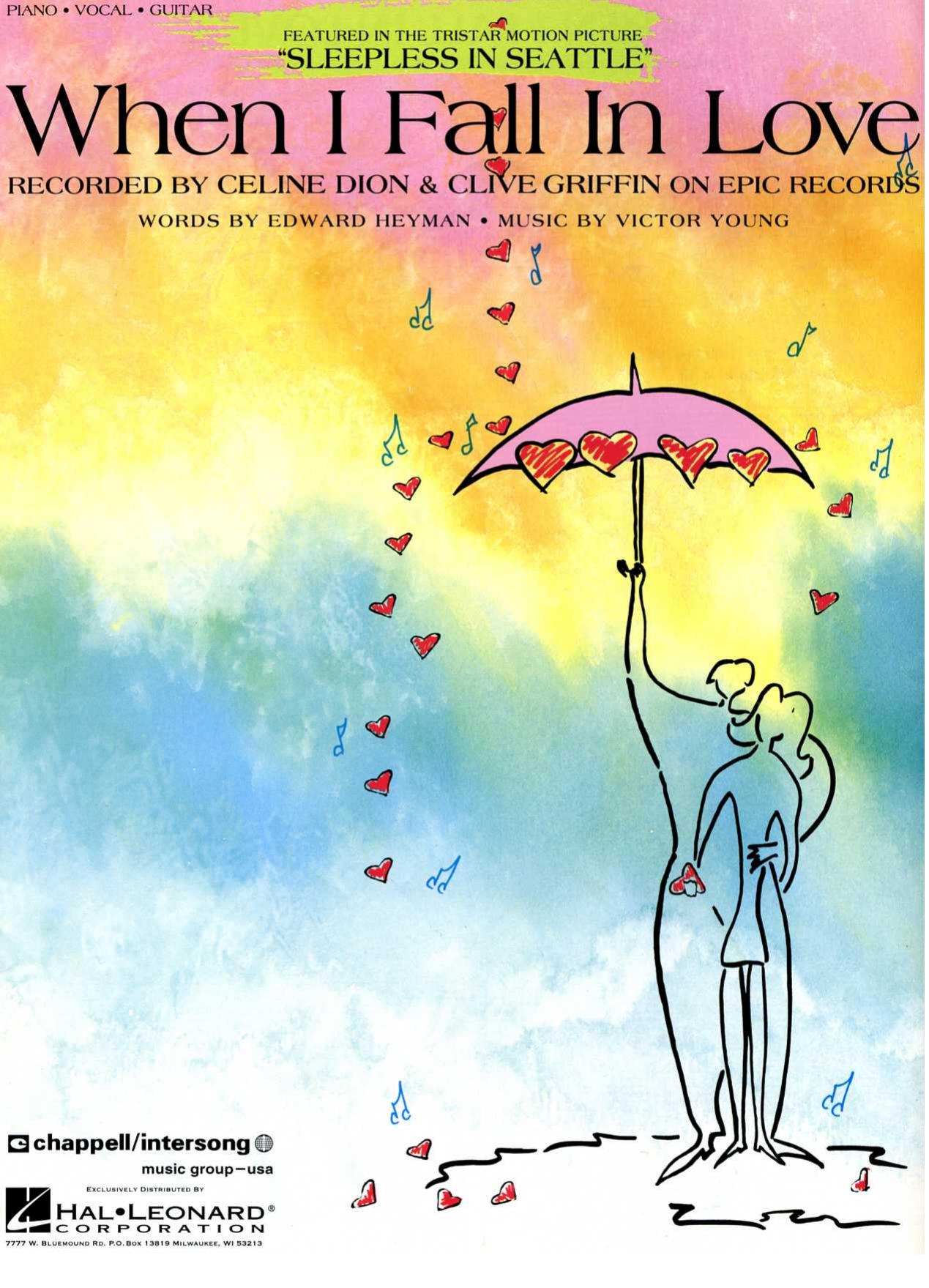
The 1940s and early 1950s produced Young’s most celebrated standards. “Stella by Starlight,” introduced instrumentally in The Uninvited, was later fitted with lyrics by Ned Washington and became a standalone vocal hit. Frank Sinatra’s 1947 version topped the disc-jockey charts, and the song has since accumulated more than 800 covers, including definitive readings by Miles Davis, John Coltrane, and Tony Bennett. “My Foolish Heart,” written in 1949 with Ned Washington for the film of the same name, became one of Young’s most recorded ballads, with over 700 covers by artists ranging from Billie Holiday and Ella Fitzgerald to Les Paul. “Love Letters,” composed in 1945 with Edward Heyman, began as an instrumental theme but quickly gained vocal popularity through Dick Haymes’s charting recording; it has since been covered nearly 400 times, including versions by Nat King Cole and Elvis Presley. And “When I Fall in Love,” written in 1952 with Edward Heyman for One Minute to Zero, became a wedding favorite and jazz benchmark after Doris Day’s 1952 recording charted at No. 7 and Nat King Cole’s 1957 version became definitive; later, its use in Sleepless in Seattle introduced it to a new generation.
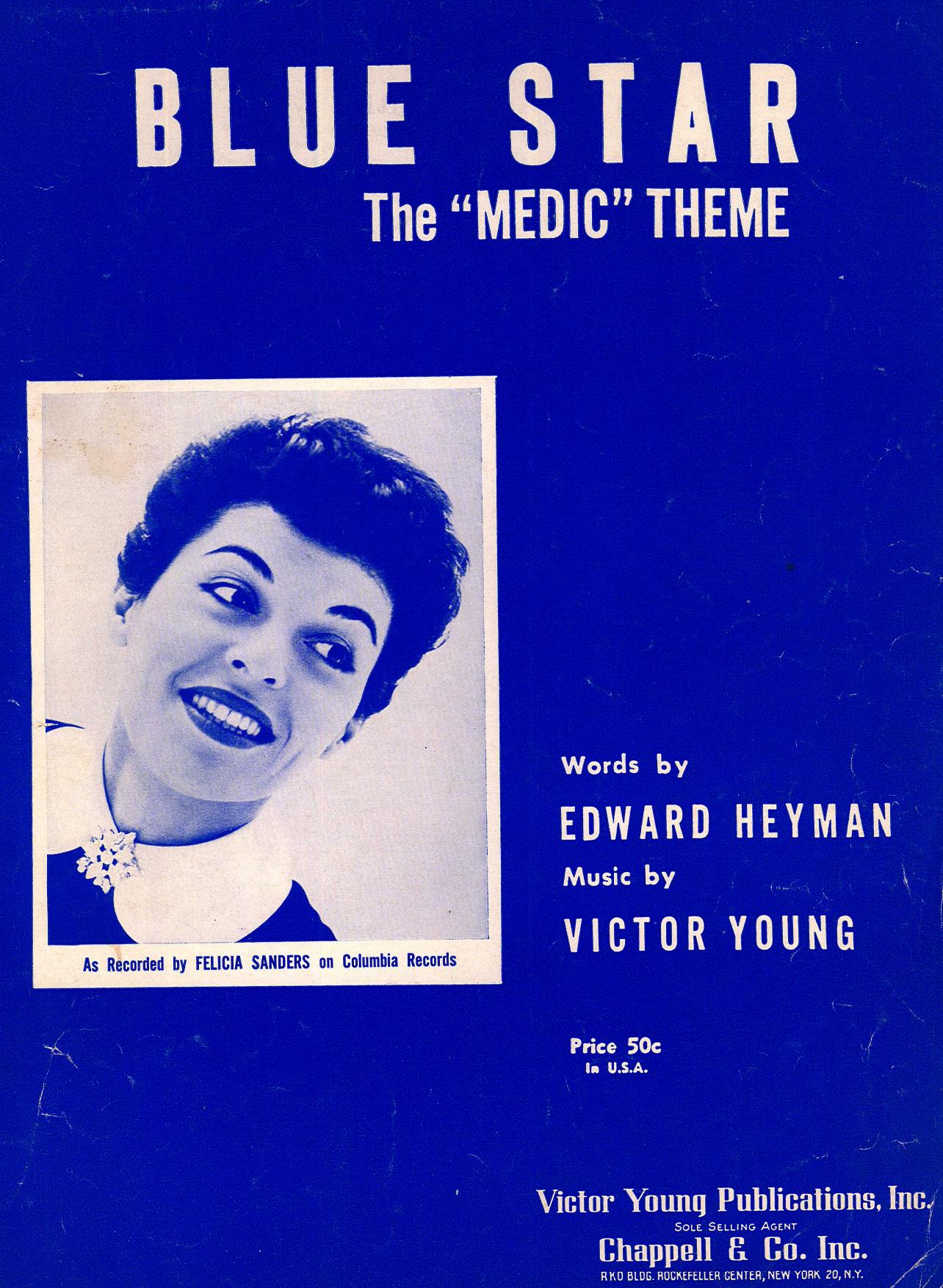
Young’s final major popular hit was “Around the World,” co-written with Harold Adamson for Around the World in Eighty Days (1956). Though it began as an instrumental theme, Bing Crosby’s 1957 recording helped propel it to popularity, and it has since been covered more than 200 times, including versions by Nat King Cole and Frank Sinatra. Among film-score themes that became independently famous, “Johnny Guitar” (1954), with lyrics by Peggy Lee, remains a haunting standout, while “The Call of the Faraway Hills” from Shane and the “Medic” theme (“Blue Star”) became familiar to television and radio audiences.
Film Scores and Musicals
Victor Young composed music for more than 300 films over a twenty-year period, making him one of the most prolific composers in Hollywood history. His filmography spans virtually every genre, but he was particularly celebrated for his westerns and romantic dramas. Among his most admired scores are For Whom the Bell Tolls (1943), The Quiet Man (1952), Shane (1953), Johnny Guitar (1954), Samson and Delilah (1949), Rio Grande (1950), and Around the World in Eighty Days (1956). In Shane, his score employs associative themes that signify not only the titular character but also an array of shifting relationships; Young distinguishes these competing roles through melodic segmentation and consistent alterations to orchestration and texture, demonstrating a sophisticated approach to leitmotif technique within the western genre. In The Quiet Man, his music draws on Irish folk idioms, while Samson and Delilah may have been influenced by Saint-Saëns’s opera of the same name. Johnny Guitar features a title song with lyrics by Peggy Lee that has become a cult classic, its melancholy melody perfectly capturing the film’s operatic tensions.
Young’s work on Broadway, while less extensive than his film output, includes several notable productions. He was a contributing composer for Murder at the Vanities (1933), a featured songwriter for Blackbirds of 1933, and he composed the music for the 1955 musical Seventh Heaven. He also contributed to Winged Victory (1944) and appeared as a performer in Arms and the Girl (1950). These stage works, though overshadowed by his Hollywood career, reveal his versatility and his grounding in the popular entertainment traditions of the 1920s and 1930s.
Collaborations
Victor Young was a consummate collaborator, both as a musical director and as a songwriter. His most enduring professional relationship was with Bing Crosby, for whom he served as musical director on numerous Decca recordings throughout the 1930s and 1940s. Young can even be glimpsed on screen in The Country Girl (1954), conducting Crosby in a recording-studio scene. He also worked with Judy Garland, Lee Wiley, and The Boswell Sisters early in his career, and his orchestra backed many of the leading vocalists of the swing era. Among lyricists, he enjoyed fruitful partnerships with Ned Washington (“Stella by Starlight,” “My Foolish Heart,” “I Don’t Stand a Ghost of a Chance with You”), Edward Heyman (“When I Fall in Love,” “Love Letters”), Harold Adamson (“Around the World”), and Peggy Lee (“Johnny Guitar”). His songs were recorded by virtually every major pop and jazz artist of the mid-twentieth century, from Nat King Cole and Frank Sinatra to Miles Davis and John Coltrane, ensuring that his melodies reached audiences far beyond the cinema.
Awards and Recognition
Victor Young’s award record is one of the most extraordinary—and bittersweet—in Oscar history. He received twenty-two Academy Award nominations for his film work, twice being nominated four times in a single year, yet he did not win a competitive Oscar during his lifetime. His sole Academy Award came posthumously: he won the Oscar for Best Music, Scoring of a Dramatic or Comedy Picture for Around the World in Eighty Days in 1957, months after his death. In addition to his Oscar nominations, he received three Primetime Emmy nominations and two Golden Globe nominations, and he won a Primetime Emmy Award for his scoring of the television special Light’s Diamond Jubilee in 1954. His posthumous Oscar and other memorabilia were donated by his family to Brandeis University, where they remain housed today.
Influences and Legacy
Victor Young’s legacy rests on two pillars: his songs and his film scores. As a songwriter, he contributed dozens of titles to the Great American Songbook, and his best compositions have proven remarkably durable. “Stella by Starlight” alone has been recorded more than 800 times, making it one of the most frequently interpreted jazz standards in history. His melodies have attracted improvisers because they combine lyrical beauty with harmonic depth, offering ample opportunity for expressive interpretation. As a film composer, he helped define the sound of Hollywood’s golden age, and while some critics have suggested that his scores lacked the distinctive “élan or authoritative stamp” of a Max Steiner or Bernard Herrmann, the sheer volume and enduring popularity of his music ensure his place among the great film composers of the twentieth century. His work has been honored in his ancestral homeland: the Polish town of Mława, where he lived as a boy, hosts an annual Victor Young Jazz Festival, and his niece has spoken proudly of the family’s “Mława roots”. In the end, Victor Young’s legacy is inseparable from the melodies themselves—tunes that continue to be sung, played, and improvised upon, long after the films that introduced them have faded from memory.
Listen to Victor Young music on Spotify
Browse in the Sheet Music Library:
Or browse in the categories menus & download the Library Catalog PDF: