
Come join us now, and enjoy playing your beloved music and browse through great scores of every level and styles!
Can’t find the songbook you’re looking for? Please, email us at: sheetmusiclibrarypdf@gmail.com We’d like to help you!
Table of Contents
We love Yiruma – 1 Hour – The Best of Yiruma (Piano Solo)
“Music is the most beautiful thing in the world that we can feel with our hearts.” – Yiruma
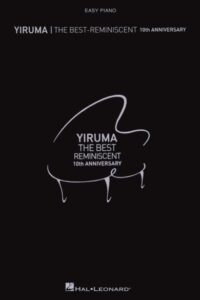
Browse in the Library:
Or browse in the categories menus & download the Library Catalog PDF:
Track List:
01. River Flow In You (00:00) 02. Autumn Scene (03:09) 03. Looking Back (07:44) 04. Wait There (13:04) 05. It’s Your Day (17:12) 06. May Be (20:53) 07. Stay In Memory (24:53) 08. Till I find you (27:55) 09. Do You (31:38) 10. May (35:45) 11. Poem (39:08) 12. Wonderboy (42:55) 13. Reminiscent (46:54) 14. The Days That’ll Never Come (50:04) 15. Far Away (53:16) 16. The Last Paradise (56:38) 17. Destiny Of Love (1:21:00) 18. Joy (1:05:13) 19. Yiruma – Kiss The Rain (Orchestra Version) (1:08:42) 20. River Flows in You (Orchestral Version) (1:13:36)
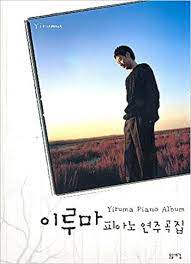
Best Sheet Music download from our Library.

Please, subscribe to our Sheet Music Library.
If you are already a subscriber, please, check our NEW SCORES’ page every month for new sheet music. THANK YOU!
Yiruma: The Poet of the Piano and the Soundtrack of a Generation
In the vast and often complex landscape of contemporary classical music, few names have achieved the universal, cross-cultural resonance of Lee Ru-ma, known professionally as Yiruma. He is a composer and pianist whose music transcends language, genre, and border, speaking directly to the heart with a quiet, profound elegance. For millions around the globe, a Yiruma piece is not just a composition; it is an emotional anchor, a memory trigger, and a sanctuary of tranquility. From the poignant strains of “River Flows in You” to the contemplative melody of “Kiss the Rain,” his work has become the unofficial soundtrack for a generation, defining a genre often labeled as “solo piano” or “neoclassical.” This article delves deep into the life, artistry, and enduring legacy of this singular musician.
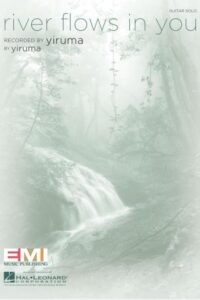
I. Biography: From Prodigy in London to Star in Seoul
Yiruma’s story is one of cultural fusion, rigorous training, and an innate gift for melodic communication. He was born on February 15, 1978, in Seoul, South Korea. His life took a pivotal turn at the age of 11 when his family moved to London, England, to support his musical education. This relocation placed him at the epicenter of Western classical training.
He enrolled in the Purcell School of Music, a specialist music school for students aged 11-18, known for producing world-class talent. It was here that Yiruma’s foundational skills were honed. Immersed in the traditions of European classical music, he developed a deep understanding of composition and piano technique. Following his time at Purcell, he pursued higher education at King’s College London, studying Composition and Orchestration, before earning a coveted spot at the Royal Academy of Music.

His graduation from the Royal Academy in 2000 was not just an academic milestone but the launchpad for his professional career. It was in this year, while still in London, that he released his debut album, Love Scene. The album was a critical success in Korea, immediately establishing his signature style: lyrical, accessible, and deeply emotional piano music. Tracks like “When the Love Falls” demonstrated his knack for crafting melodies that felt both fresh and timeless.
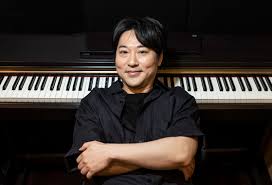
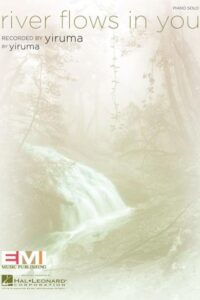
Following his graduation, Yiruma returned to South Korea, where his popularity soared. His subsequent albums, First Love (2001) and From the Yellow Room (2003), solidified his status as a national treasure and began to attract a significant international following, particularly across Asia. The latter album, recorded in his own yellow-painted studio, contained the song that would change his life forever: “River Flows in You.”
The 2000s were a period of prolific output and growing fame. He performed to sold-out concert halls across Asia and Europe, his music resonating with audiences who found in his compositions a space for reflection and emotional release. In 2007, he married the Korean soprano Son Hye-im, and their relationship became a source of great personal and artistic inspiration. However, in a move that surprised many fans, Yiruma temporarily set aside his stage name in 2012 to fulfill his mandatory military service in South Korea, serving as an active-duty soldier. This period, while a hiatus from his public career, was a time of personal growth.
After his discharge, he returned to music with renewed purpose, establishing his own independent label, Studio Blume. This move gave him complete creative control over his work, leading to albums like Piano (2015) and f r a m e (2021) that explored new sonic textures while staying true to his core aesthetic. Today, Yiruma continues to compose, perform, and connect with a global fanbase, his music as relevant as ever in an increasingly noisy world.
II. Musical Style and Harmonic Language: The Anatomy of Emotion
Yiruma’s music is often categorized under the broad umbrellas of contemporary classical, new age, or neo-classical. However, its true power lies in its deceptive simplicity and its masterful use of harmony to evoke specific emotions.
1. Chord Progressions and Harmony:
Yiruma is a master of emotive, often bittersweet harmony. His work is predominantly tonal, centered around clear key centers, but he employs several sophisticated techniques that give his music its characteristic sound:
- Extended Chords and Jazz Influences: While his melodies are often straightforward, the harmonic foundation is rich with color. He frequently uses seventh chords (major 7ths, minor 7ths), ninth chords, and added tone chords (like add9 and add2). This technique, borrowed from jazz harmony, adds warmth, complexity, and a sense of lingering emotion without sacrificing accessibility. In “River Flows in You,” the use of simple triads is elevated by the flowing arpeggio pattern, creating a tapestry of sound that feels both full and delicate.
- Modal Mixture: Yiruma often borrows chords from the parallel minor or major scale. For instance, in a major key piece, he might introduce a chord from the parallel minor, creating a sudden, poignant shift in mood. This interplay between major and minor is a cornerstone of his bittersweet aesthetic.
- Suspended Chords (Sus4): The use of suspended fourth chords is a hallmark of his style. The sus4 chord creates a feeling of tension and anticipation, which then beautifully resolves to a major or minor triad. This “question-and-answer” effect is profoundly satisfying to the listener and is used to great effect in pieces like “May Be” and “Kiss the Rain.”
- Stepwise Bass Motion and Inversions: Rather than relying on block chords, Yiruma’s left-hand parts often feature moving bass lines or chords in inversion. This creates a sense of forward motion and fluidity, preventing the music from feeling static. The bass line often moves stepwise (by scale degrees) against the melody, creating smooth, contrapuntal interest.
A Harmonic Analysis of “Kiss the Rain”:
The piece is in A-B-A form. The main theme uses a simple yet powerful progression centered around the key of B minor. The left hand plays a repeating arpeggiated pattern that outlines chords like Bm, D, G, and A. The genius lies in the voicing and the rhythmic placement of the melody notes against this harmony. The melody often lands on the 9th or 7th of the chord, creating a gentle dissonance that resolves, mimicking the feeling of a raindrop forming and falling. This is a prime example of how Yiruma uses basic harmonic building blocks in a uniquely expressive way.
2. Melody and Form:
Yiruma’s melodies are his most potent weapon. They are singable, memorable, and often constructed from small, repeating motifs that are developed throughout a piece. His formal structures are generally simple—ternary (ABA), through-composed, or theme and variations—which allows the listener to immediately grasp and connect with the musical narrative. There is a vocal quality to his piano writing; the piano truly sings.
3. Rhythm and Texture:
Rhythmically, his music is often free and rubato, evoking the fluidity of human speech or a breath. He makes extensive use of arpeggiated figures, where the chords are broken up and rolled, creating a lush, watery texture. This technique, heard in “River Flows in You” and “The Sunbeams… They Scatter,” gives the music a sense of effortless flow and intimacy.
III. Influences and Inspirations
Yiruma’s sound is a unique synthesis of his diverse influences. His core is undoubtedly the Western classical tradition. One can hear the lyrical Romanticism of Frédéric Chopin in his melodic sensibilities and the impressionistic colors of Claude Debussy and Erik Satie in his use of harmony and atmosphere. The minimalist approach of composers like Philip Glass is also evident in his use of repetitive, evolving motifs.
However, his influences extend beyond the classical canon. His time in London exposed him to a wide array of genres, including jazz, which explains his sophisticated chord vocabulary, and British pop and rock. Furthermore, one cannot overlook the inherent Korean sensibility in his music. There is a certain melancholy and restraint, a focus on subtle emotional nuance, that aligns with traditional Korean artistic expressions. His music is, therefore, a perfect cultural hybrid: the formal discipline of European classicism meets the heartfelt, introspective emotion of Korean lyricism.
IV. Cooperation with Other Artists
While Yiruma is predominantly a solo artist, his collaborations have been significant and revealing. His most profound artistic partnership has been with his wife, soprano Son Hye-im. He has composed songs specifically for her voice, blending his piano compositions with her lyrical soprano in a seamless fusion. This collaboration highlights the vocal nature of his melodies and adds a new dimension to his sound world.
Beyond this, his music itself is inherently collaborative in a modern context. It has been remixed by electronic artists, covered by countless instrumentalists (from violinists and cellists to guitarists and flute players), and used as a foundation for vocal improvisations by singers worldwide. In this sense, Yiruma has become a “composer’s composer” for the digital age, providing raw melodic and harmonic material for a global community of musicians.
V. Legacy and Impact
Yiruma’s legacy is multifaceted and profound.
- Global Ambassador for Piano Music: He is arguably one of the most successful figures in bringing contemporary instrumental piano music to a mass, global audience in the 21st century. Alongside contemporaries like Ludovico Einaudi and Ólafur Arnalds, he defined a new, accessible genre of classical music that thrives outside the traditional concert hall ecosystem.
- The Soundtrack of Digital Culture: His music found a perfect vehicle in the emerging digital platforms of the 2000s. “River Flows in You” became a viral phenomenon, used in countless YouTube videos, wedding videos, amateur films, and social media posts. It became the go-to music for expressing romance, melancholy, and introspection online, embedding itself in global pop culture.
- Gateway to Classical Music: For many young people, Yiruma’s music served as an accessible entry point into the wider world of classical and instrumental music. His pieces are among the most sought-after by piano students, inspiring a new generation to learn the instrument.
- Defining a Sonic Aesthetic: The “Yiruma sound”—characterized by arpeggiated patterns, emotive melodies, and bittersweet harmonies—has become a recognizable aesthetic in its own right, influencing film scores, advertising music, and a wave of aspiring pianists on platforms like YouTube and Spotify.
VI. Works, Filmography, and Most Known Compositions
While Yiruma is not primarily a film composer, his music’s cinematic quality has led to natural synergies with visual media.
Filmography and TV Placements:
- His music has been featured in various Korean television dramas, such as Summer Scent and The Innocent Man, which significantly boosted his domestic popularity.
- “River Flows in You” and other pieces have appeared in international films and TV shows, often used in key emotional scenes.
- The Twilight franchise famously (if unofficially) became associated with “River Flows in You,” with many fans believing it was part of the official soundtrack, a testament to the piece’s perfect fit for the film’s romantic and brooding atmosphere.
Most Known Compositions:
- “River Flows in You”: His magnum opus. A piece of pure, undiluted sentiment that has become one of the most recognizable piano melodies of the 21st century.
- “Kiss the Rain”: A contemplative and beautifully sad piece that captures the feeling of longing and nostalgia associated with a rainy day.
- “May Be”: A piece that showcases his talent for hope-tinged melancholy, with a memorable melody and effective use of dynamics.
- “Dream A Little Dream Of Me” (Cover): His arrangement of this jazz standard is a fan favorite, demonstrating his ability to reinterpret existing works through his unique harmonic lens.
- “Love Scene” and “When the Love Falls”: Early works that established his romantic, scene-setting style.
VII. Discography
Yiruma’s discography is a consistent and evolving journey through his artistic world.
- Love Scene (2000)
- First Love (2001)
- From the Yellow Room (2003)
- Doggy Poo (Original Motion Picture Soundtrack) (2004) – A children’s film soundtrack.
- Nocturnal Lights… They Scatter (2005)
- P.N.O.N.I (2008)
- Movement On & The Same Star (Split Album, 2008)
- Destiny of Love (2011)
- Stay in Memory (2013) – A compilation, but containing some new arrangements.
- Piano (2015) – His first album after military service, released on his own label.
- f r a m e (2021) – A mature work that experiments with slightly more ambient and minimalist textures while retaining his core identity.
YIRUMA: The Enduring Flow
Yiruma’s story is more than just a biography of a successful musician; it is a narrative about the universal power of a beautiful melody. In a world of increasing complexity and noise, his music offers a sanctuary of simplicity and genuine emotion. He is not a composer of technical fireworks or avant-garde experimentation; he is a poet of the piano, a craftsman of feeling. Through a masterful blend of Western harmonic sophistication and Eastern emotional subtlety, he has created a body of work that speaks a universal language of the heart. From a practice room at the Royal Academy to the headphones of millions worldwide, the river of Yiruma’s music continues to flow, as timeless and essential as emotion itself.
Browse in the Library:
Or browse in the categories menus & download the Library Catalog PDF: