Come join us now, and enjoy playing your beloved music and browse through great scores of every level and styles!
Can’t find the songbook you’re looking for? Please, email us at: sheetmusiclibrarypdf@gmail.com We’d like to help you!
Table of Contents
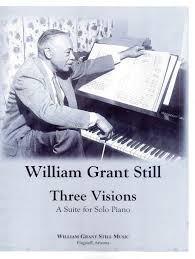
William Grant Still: Three Visions (Suite for piano solo)
Best Sheet Music download from our Library.
Please, subscribe to our Library.
If you are already a subscriber, please, check our NEW SCORES’ page every month for new sheet music. THANK YOU!
0:00 – Dark Horseman 1:30 – Summerland 6:00 – Radiant pinnacle
Browse in the Library:
Or browse in the categories menus & download the Library Catalog PDF:
William Grant Still
William Grant Still (1895 – 1978) was an American composer, arranger, conductor, and multi-instrumentalist, often called “the Dean of African American composers.” He was the first African American to have a symphony performed by a major orchestra in the United States, the first to conduct a major symphony orchestra, and the first to have an opera produced by a major opera company.

Early Life and Education
- Born on May 11, 1895, in Woodville, Mississippi, and raised in Little Rock, Arkansas.
- His father died when he was an infant, and his mother, a teacher, encouraged his musical interests.
- Studied at Wilberforce University, where he initially pursued medicine but shifted to music.
- Later trained at the Oberlin Conservatory of Music, then studied composition with George Whitefield Chadwick and later with avant-garde composer Edgard Varèse in New York.
Career and Achievements
- Worked as an arranger for popular and jazz bands in New York, including for W. C. Handy and Paul Whiteman.
- Became involved with the Harlem Renaissance, blending African American musical traditions with classical forms.
- His Symphony No. 1 “Afro-American” (1930) was the first symphony by an African American to be performed by a major U.S. orchestra (Rochester Philharmonic, 1931).
- Conducted the Los Angeles Philharmonic at the Hollywood Bowl in 1936, making him the first African American to lead a major orchestra in the U.S.
- His opera Troubled Island (1939, libretto by Langston Hughes and Verna Arvey) was the first by an African American staged by a major company (New York City Opera, 1949).
Musical Style
- Fused classical European traditions with African American idioms: blues, spirituals, jazz, and folk tunes.
- Emphasized lyricism, accessibility, and cultural expression rather than strict modernist abstraction.
- Advocated for a distinctly American classical music rooted in Black cultural traditions.
Notable Works
- Symphonies: Afro-American Symphony (No. 1), Song of a New Race (No. 2), The Sunday Symphony (No. 3), Autochthonous Symphony (No. 4), Western Hemisphere Symphony (No. 5).
- Operas: Troubled Island, A Bayou Legend, Highway 1, U.S.A.
- Chamber & Vocal Music: Lyric Quartette, Danzas de Panama, many art songs.
- Also wrote for radio, film, and popular ensembles.
Legacy
- Broke multiple racial barriers in American classical music.
- Opened doors for later generations of African American composers and performers.
- His works are increasingly studied and performed, recognized as cornerstones of 20th-century American music.
- Died in Los Angeles, California, on December 3, 1978.
William Grant Still’s music stands out for celebrating African American heritage within the classical tradition, offering a unique and dignified voice at a time when systemic racism excluded many Black composers from mainstream recognition.
Three Visions (1935) is one of William Grant Still’s most powerful works for solo piano. It is a short suite in three movements, deeply symbolic, written during the Harlem Renaissance period when Still was developing a distinctive African American voice within classical idioms. The suite is often regarded as a spiritual and philosophical statement on the human soul’s journey after death.
Three Visions (1935) Overview and Musical Analysis
- Title: Three Visions (for solo piano)
- Date: 1935
- Movements:
- Dark Horsemen
- Summerland
- Radiant Pinnacle
- Theme: The cycle represents the progression of the human soul: confrontation with death, passage to spiritual peace, and ultimate ascension.
1. Dark Horsemen
- Character: Turbulent, dissonant, and rhythmically urgent.
- Musical features:
- Rapid ostinati and syncopations drive the texture.
- Dense chords, sharp dynamics, and angular melodies suggest violence and inevitability — the soul’s confrontation with mortality.
- Harmonic language: rooted in tonal centers but heavily chromatic, with influences from early modernism (Still studied with Varèse).
- Strong percussive writing evokes imagery of galloping horses (possibly a reference to the biblical Four Horsemen of the Apocalypse).
Interpretation: This movement symbolizes the struggle and chaos of death, the breaking away of the soul from earthly ties.
2. Summerland
- Character: Gentle, lyrical, and serene — the most frequently performed movement.
- Musical features:
- Lush, hymn-like melody in the middle register, often played with a singing legato.
- Rich Romantic harmonies, influenced by Chopin and Debussy but colored with blues-inflected lines.
- Transparent texture, long sustained chords, and rubato create a meditative atmosphere.
- Tonal stability (often interpreted in D♭ major) provides calmness.
Interpretation: Summerland represents the spiritual paradise the soul reaches after death — peaceful rest and eternal beauty.
This movement is sometimes performed alone as an independent concert piece or even arranged for orchestra.
3. Radiant Pinnacle
- Character: Triumphant, luminous, and ascending.
- Musical features:
- Energetic rhythms, sweeping arpeggios, and brighter harmonies than in the previous movements.
- Builds momentum with a sense of striving upward, often through sequences and rising melodic gestures.
- Tonal clarity, major sonorities, and climactic chords express transcendence.
- Harmonically more consonant than Dark Horsemen, but with modern chromatic coloring.
Interpretation: This final movement depicts the soul’s union with the divine, ascending to its highest state — ultimate illumination.
Stylistic Significance
- Still fuses African American spiritual aesthetics (hymn-like phrasing, blues shadings, and rhythmic vitality) with Romantic piano traditions and 20th-century modernism.
- The three movements form a narrative arc: struggle → peace → transcendence.
- Philosophically, the suite echoes African American religious culture, yet framed in a universal human story of death and renewal.
In short, Three Visions is both a musical poem and a spiritual statement. It demonstrates Still’s ability to merge classical craft with African American cultural expression, creating a deeply humanistic and uplifting work.
Perfect — let’s dive into a harmonic walkthrough of “Summerland” from William Grant Still’s Three Visions. Since this movement is often performed alone and is the most tonal of the suite, it lends itself beautifully to harmonic analysis.
(Note: Exact bar numbers vary depending on the edition, but I’ll give the progression in sections. The piece is most often read in D♭ major.)
“Summerland” — Harmonic Analysis
Opening (mm. 1–4)
- Key: D♭ major
- Chords:
- I (D♭ major) — tonic established gently, hymn-like.
- IV (G♭ major) with added 6th/9th sonorities.
- I again, enriched by suspensions and inner voice motion.
The effect is calm, hymn-like stability. Still avoids strong cadences, instead sustaining a floating atmosphere.
First Phrase (mm. 5–12)
- Melody enters in the middle register, supported by soft chords.
- Progression:
- I → V/vi → vi (B♭ minor) → ii (E♭ minor) → V (A♭ major).
- Resolves back to I (D♭).
This is a classical diatonic motion but with added-color tones (6ths, 9ths), giving a Debussy-like lushness. The move to vi and ii emphasizes a spiritual, tender quality rather than dramatic tension.
Second Phrase (mm. 13–20)
- More chromaticism enters.
- Chords:
- I → ♭VII (C♭ major) → IV (G♭) → ii7 (E♭m7) → V7 (A♭7).
- Resolution: cadences softly back to I.
The use of ♭VII (C♭) is borrowed from folk/blues progressions. It enriches the harmony with a distinctly African American inflection inside an otherwise classical framework.
Climactic Middle Section (mm. 21–32)
- Harmonically more adventurous:
- Alternation between vi (B♭ minor) and IV (G♭ major).
- Sequence through chromatic mediants: I (D♭) → iii (F minor) → V/ii (F7) → ii (E♭ minor).
- Approaches V7 (A♭7) with stronger rhythm and dynamics.
The chromatic mediant shifts (D♭ → Fm → A♭) give the impression of warmth and expansion — the soul ascending in vision.
Return (mm. 33–40)
- Recapitulation of the opening theme.
- Progression largely tonic (I), with embellishments:
- I → IV → ii7 → V7 → I.
- Still decorates the chords with added 9ths and 11ths, keeping the sound lush and modern.
Coda (mm. 41–end)
- Gentle descent, cadencing finally on a pure I (D♭ major).
- Chords sustain with long fermatas, creating timeless stillness.
The coda is essentially a plagal cadence (IV → I), which resonates with the feeling of a hymn or spiritual.
Summary of Harmonic Style in “Summerland”
- Foundation: Firmly tonal, centered in D♭ major.
- Coloration: Use of added 6ths, 9ths, 11ths for lush textures.
- African American inflection:
- Borrowed ♭VII (C♭ major) → I.
- Blues-like coloring of melodic lines (flattened 3rd, 7th inflections).
- Narrative arc: Gentle tonic → chromatic expansion → luminous return.
- Effect: A meditative vision of paradise — serenity, lyricism, timeless rest.
So, harmonically, Summerland balances European Romanticism (Chopin, Debussy) with African American idioms (bluesy modal borrowing, plagal cadences). This is why it feels both “classical” and “soulful.”
| Artist or Composer / Score name | Cover | List of Contents |
|---|---|---|
| Linkin Park – Faint | ||
| Linkin Park – Given Up | ||
| Linkin Park – Hands Held High | ||
| Linkin Park – In Between | ||
| Linkin Park – In Pieces | ||
| Linkin Park – In The End | ||
| Linkin Park – Leave Out All The Rest | ||
| Linkin Park – Minutes to Midnight (Piano sheet music collection) |
 |
Linkin Park – Minutes to Midnight |
| Linkin Park – My December | ||
| Linkin Park – No More Sorrow | ||
| Linkin Park – Pushing Me Away (Live) | ||
| Linkin Park – Shadow Of The Day | ||
| Linkin Park – The Little Things Give You Away | ||
| Linkin Park – Valentines Day | ||
| Linkin Park – What Ive Done | ||
| Lion King 2 – Elton-John & Tim Rice |
 |
 |
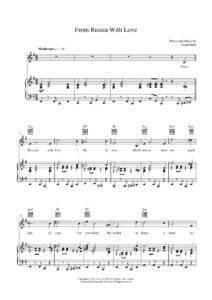
| Lionel Bart From Russia With Love |
 |
|
| Lionel Richie – Easy | ||
| Lionel Richie – Hello | ||
| Lionel Richie – Sail On | ||
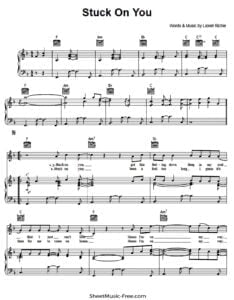
| Lionel Richie – Stuck On You | ||
| Lionel Richie – Stuck On You Sheet Music |
 |
|
| Lionel Richie – Three Times A Lady | ||
| Lionel Richie – Truly | ||
| Lionel Richie Anthology |
 |
Lionel Richie anthology |
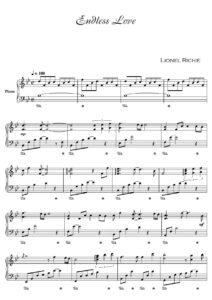
| Lionel Richie Endless Love | Lionel-Richie-Endless-Love 1st page | |
| Lionel Richie Endless Love piano solo arr. |
 |
|
| Lionel Richie The Very Best Of Lionel Richie |
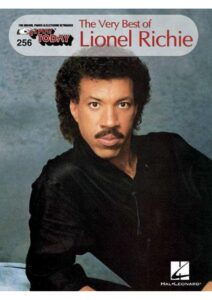 |
Lionel Richie The Very Best Of Lionel Richie contents |
| Lionel Ritchie and Michael Jackson – We Are The World | Lionel-Ritchie-We-Are-The-World 1st page | |
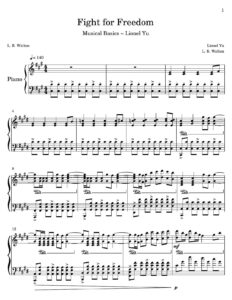
| Lionel Yu Fight for Freedom |
 |
|
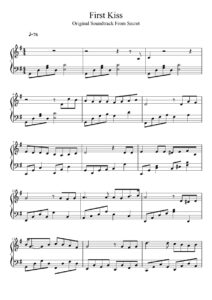
| Lionel Yu First Kiss |
 |
|
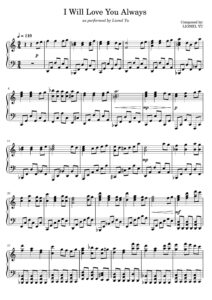
| Lionel Yu I Will Love You Always |
 |
|
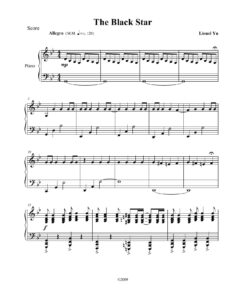
| Lionel Yu The Black Star Sheet Music |
 |
|
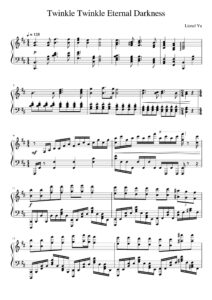
| Lionel Yu Twinkle Twinkle Eternal Darkness Piano Solo |
 |
|
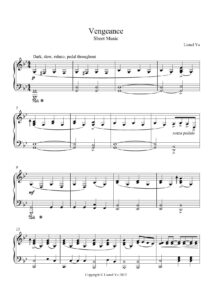
| Lionel Yu Vengeance |
 |
|
| Liquido – Narcotic | ||
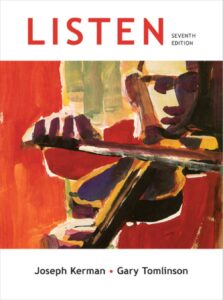
| Listen Seventh Edition Music Textbook by Joseph Kerman and Gary Tomlinson (Book) |
 |
|
| Listen to the wind (The New World soundtrack) James Horner | ||
| Listening for America Inside the Great American Songbook from Gershwin to Sondheim (Rob Kapilow)(Book) |
 |
|
| Listening To Classic American Popular Songs by Allen Forte (Piano and vocal selections) Book |
|
|
| Listening to Stanley Kubrick the music in his films (Gengaro, Christine Lee) Book |
 |
|
| Listening To Western Music by Craig Wright (book) |
 |
|
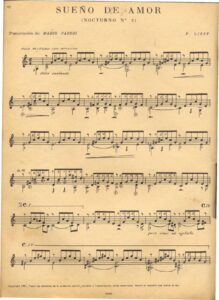
| Liszt Liebesträume No. 3 Guitar Arrangement |
 |
|
| Liszt – Akkordstudien – Chord-Studies Technical Studies Book 8 (fragment).mscz | ||
| Liszt – Étude In G♯ Minor “la Campanella” S. 141 3 (Musescore File).mscz | ||
| Liszt – Liebestraum No. 3 (Love Dream) Easy Piano Arr. Sheet Music (Musescore File).mscz | ||
| Liszt – Liebestraum No.3 (Rève D’amour) (A Love Dream) Nocturne no. 3 |
-232x300.jpg) |
|
| Liszt – Prelude & Fugue in B minor by Bach J.S. | Liszt – Prelude & Fugue in B minor by Bach | |
| Liszt – S172 Consolations pour le piano |
 |
|
| Liszt – S541 Liebesträume |
 |
|
| Liszt – Transcription – Schubert – Song 18 – Standchen – ‘Leise Flehen meine Lieder’ S.560 no. 7 | ||
| Liszt – Wagner – Ouverture de Tannhauser (arr. piano solo) | Liszt – Wagner – Ouverture de Tannhauser | |
| Liszt Apparitions No. 3 Fantasy On A Waltz By Franz Schubert (Musescore File).mscz | ||
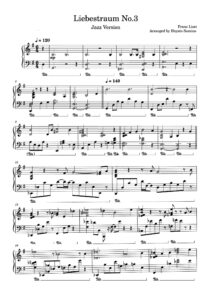
| Liszt Cateen Liebestraum No 3 (Jazz Version By Hayato Sumino Cateen) |
 |
|
| Liszt Consolation No 3 (Sheet Music) | Franz Liszt Consolation No 3 | |
| Liszt Consolations And Liebestraume |
 |
|
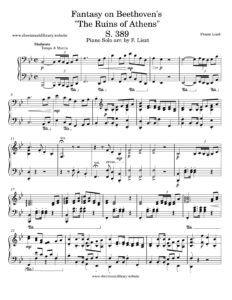
| Liszt Fantasy On Beethoven’s The Ruins Of Athens S. 389 Piano solo |
 |
|
| Liszt Fantasy On Beethovens The Ruins Of Athens S. 389 Piano.mscz | ||
| Liszt La Danza And Other Great Piano Transcriptions |
 |
|
| Liszt Paganini Etudes Schirmer Gallico |
 |
|
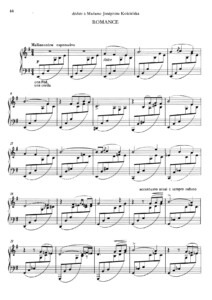
| Liszt Romance S. 169 |
 |
|
| Liszt Romance S. 169.mscz | ||
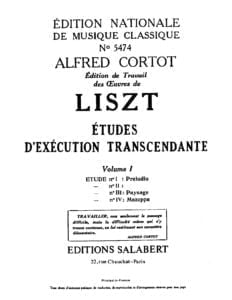
| Liszt S139 Transcendental Etudes Cortot |
 |
|
| Liszt Technical Exercises For The Piano (Complete) |
 |
|
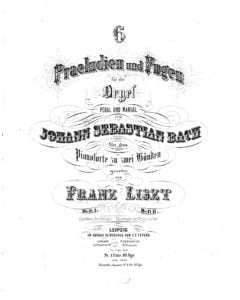
| Liszt-Bach (BWV 543) Preludes Organ 2 S.46 2 4-6 |
 |
|
| Liszt-Bach 6 Preludes for Organ arranged for piano solo S. 462 (Complete Ed. Peters) | Liszt Bach 6 Preludes for Organ arranged for piano solo S. 462 Peters 1st page | |
| Liszt-Bach 6 Preludes for Organ arranged for piano solo S. 462 (Complete Urtext Edition) | Liszt-Bach 6 Preludes for Organ arranged for piano solo S. 462 (Complete Urtext Edition) 1st page | |
| Liszt-L’idée fixe S.395 Andante Amoroso d’après une mélodie d’H. Berlioz |
 |
|
| Liszt-Schubert – Lied n.09 – Standchen von Shakespeare S.558 no. 9 | ||
| Lithium (Evanescence) | ||
| Little Gems For Piano Rote Pieces That Motivate And Captivate. Early Intermediate, Vol 2 (Paula Dreyer) |
 |
Little Gems For Piano Rote Pieces That Motivate And Captivate. Early Intermediate, Vol 2 (Paula Dreyer) |
| Little Richard Best Of Little Richard (Songbook) |
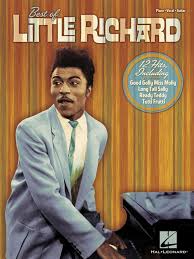 |
Little Richard Best Of Little Richard (Songbook) |
| Live – Overcome | ||
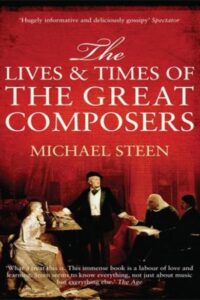
| Lives And Times Of The Great Composers (Book) by Michael Steen |
 |
|
| Liz on top of the world (Pride and Prejudice OST) Dario Marianelli | ||
| Liza Minnelli The Best of Liza Minnelli Original Keys for Singers Vocal Transcriptions and Piano |
 |
Liza Minnell The Best of Liza Minnelli Original Keys for Singers Vocal Transcriptions and Piano |
| Lluis Llach L’estaca (international song against repression and claiming for freedom) | Lluis Llach-l’estaca- | |
| Lluis Llach – Que tinguem sort (SATB and piano) | Lluís Llach Que tinguem sort SATB Piano | |
| Lluis Llach Acords | Lluis Llach Acords | |
| LLUIS LLACH LLETRES | Lluis Llach LLetres | |
| Locklair, Dan – Ayre for the Dance |
 |
|
| Locus Iste (Musescore File).mscz | ||
| Lolita (Ennio Morricone) | ||
| Lonely Heart (Ten Sharp) | ||
| Lontano – Ludovico Einaudi.mscz | ||
| Look At The World – John Rutter (Musescore File).mscz | ||
| Lord Of The Rings – Into The West | Lord-Of-The-Rings-Into-The-West | |
| Lord Of The Rings – The Fellowship Of The Ring – Concerning Hobbits – Howard Shore | ||
| Lord Of The Rings – The Fellowship Of The Ring – The Ring Goes South – Howard Shore | The Ring Goes South | |
| Lord Of The Rings – The Fellowship Of The Ring – The Treason Of Isengard – Howard Shore | Lord-Of-The-Rings-The-Fellowship-Of-The-Ring-The-Treason-Of-Isengard-Howard-Shore | |
| Lord Of The Rings – The Return Of The King – A Far Green Country – Howard Shore | ||
| Lord Of The Rings – The Return of the King – The Chalice Passed – Howard Shore | Lord Of The Rings – The Return of the King – The Chalice Passed – Howard Shore | |
| Lord Of The Rings – The Return of the King – The Grace of Undoiel – Howard Shore | ||
| Lord Of The Rings – The Return Of The King – The Journey To The Crossroads – Howard Shore | ||
| Lord Of The Rings – The Return Of The King – The Lighting Of The Beacons – Howard Shore | ||
| Lord Of The Rings – The Return of the King – The Roots and Beginnings – Shore Howard | Lord Of The Rings – The Return of the King – The Roots and Beginnings – Shore Howard | |
| Lord Of The Rings – The Return Of The King – The Sacrifice Off Aramir – Howard Shore | ||
| Lord Of The Rings – Very Old Friends | Lord-Of-The-Rings-Very-Old-Friends 1st page | |
| Lord Of The Rings The Fellowship Of The Ring Concerning Hobbits Howard Shore (Miscelaneous) |
 |
|
| Lord Of The RingsThe Two Towers Foundations Of Stone Howard Shore | Lord-Of-The-Rings-The-Two-Towers-Foundations-Of-Stone-Howard-Shore | |
| Loreena Mckennit Marco Polo piano vocal |
 |
|
| Loreena Mckennit Skeling piano vocal |
 |
|
| Loreena McKennit The King piano vocal |
 |
|
| Loreena McKennitt – Dante’s prayer (Piano Vocal) |
 |
|
| Loreena Mckennitt – The Dark Night Of The Soul Piano Vocal songbook (The Mask and Mirror) |
 |
Loreena Mckennitt The Dark Night Of The Soul Piano Vocal songbook (The Mask and Mirror) |
| Loreena Mckennitt Bonny Portmore piano vocal |
 |
|
| Loreena Mckennitt Tango To Evora |
 |
|
| Loreena Mckennitt The Highwayman piano vocal |
 |
|
| Loreena McKennitt The Lady of Shalott |
 |
|
| Loreena Mckennitt The Mummers’ Dance |
 |
|
| Loreena McKennitt The Old Ways |
 |
|
| Los Bravos – Black Is Black | ||
| Los Del Rio – Macarena | ||
| Loss of love (Sunflower OST) Henry Mancini | ||
| Lost in Tuscany (Only You OST) Rachel Portman | ||
| Lost Stars (Begin Again OST) Keira Knightley | ||
| Lothar Perl – Four American Paganini Variations |
 |
|
| Lou Donaldson Fried Buzzard Full Band Score | Lou Donaldson Fried Buzzard Full Band Score | |
| Lou Reed – Perfect Day (TRAINSPOTTING OST) | Lou Reed – Perfect Day (TRAINSPOTTING OST) | |
| Lou Reed Lyrics and Guitar Tabs |
 |
|
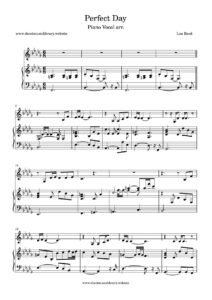
| Lou Reed Perfect Day Piano Vocal sheet music |
 |
|
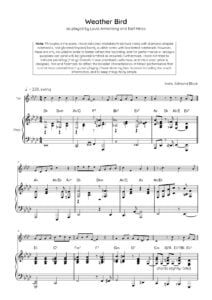
| Louis Armstrong Earl Hines Weather Bird (Full Score) |
 |
|
| Louis Armstrong Earl Hines Weather Bird (Trumpet) |
 |
|
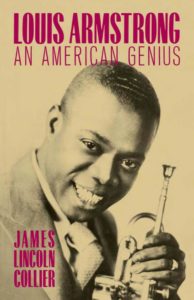
| Louis Armstrong – An American Genius By James Lincoln Collier (1983) Book Biography |
 |
|
| Louis Armstrong – Just One of Those Things Solo Transcription Jazz Standard |
 |
|
| Louis Armstrong – Oh When The Saints Go Marching In | Louis-Armstrong-Oh-When-The-Saints-Go-Marching-In | |
| Louis Armstrong – On the Sunny Side of the Street Solo Transcription Jazz Standard |
 |
|
| Louis Armstrong – Original Keys for Singers Vocal Transcriptions and Piano |
 |
Louis Armstrong – Original Keys for Singers Vocal Transcriptions and Piano |
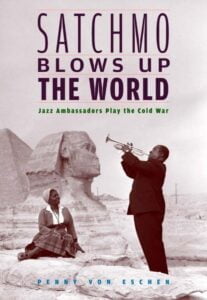
| Louis Armstrong – Satchmo Blows Up the World Jazz Ambassadors Play the Cold War (Penny M. Von Eschen)(Book) |
 |
|
| Louis Armstrong – Star Dust Solo Transcription Jazz Standard |
 |
|
| Louis Armstrong – Sweet Lorraine Jazz Standard Solo Transcription |
 |
|
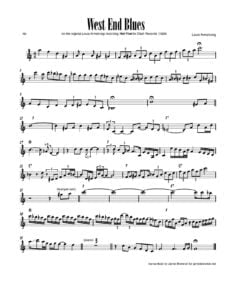
| Louis Armstrong – West End Blues Solo Transcription |
 |
|
| Louis Armstrong – What a Wonderful World | Louis Armstrong – What a Wonderful World | |
| Louis Armstrong – What A Wonderful World Jazz Standard (Guitar arr. sheet music with TABs) | Louis Armstrong – What A Wonderful World Jazz Standard (Guitar arr. sheet music with TABs) | |
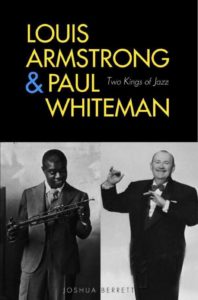
| Louis Armstrong And Paul Whiteman Two Kings Of Jaz (eBook) Biography |
 |
|
| Louis Armstrong Collection, The Artist Transcriptions Trumpet |
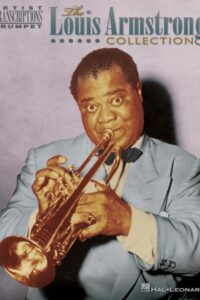 |
Louis Armstrong Collection, The Artist Transcriptions Trumpet |
| Louis Armstrong Dixieland Style Trumpet |
 |
Louis Armstrong Dixieland Style Trumpet |
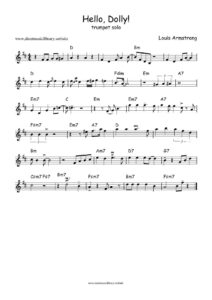
| Louis Armstrong Hello, Dolly Trumpet Solo Sheet Music |
 |
|
| Louis Armstrong Hello, Dolly Trumpet Solo Sheet Music Musescore File.mscz | ||
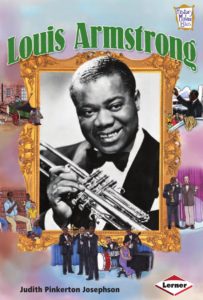
| Louis Armstrong History Maker Bios (eBook) Biography |
 |
|
| Louis Armstrong King Of Jazz |
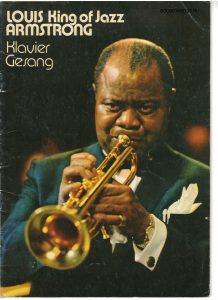 |
Louis Armstrong King Of Jazz |
| Louis Armstrong Plays Standards Artist Transcriptions Trumpet |
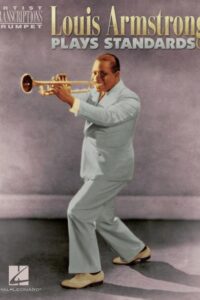 |
Louis Armstrong Plays Standards Artist Transcriptions Trumpet |
| Louis Armstrong Solos – Great Trumpet solos |
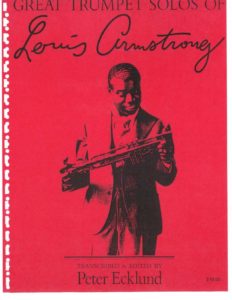 |
Louis Armstrong Solos |
| Louis Armstrong The Best Of – Book |
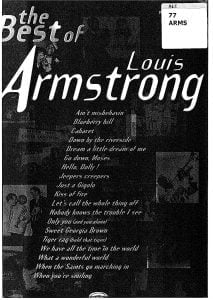 |
Louis Armstrong The Best Of Book |
| Louis Armstrong What A Wonderful World (Lead Sheet Lyrics ) Musescore File.mscz | ||
| Louis Jordan Billy Austin Is You is or is You Aint (Ma Baby) from the film Follow The Boys (Vintage sheet music) |
 |
|
| Louise Attaque J’t’emmène Au Vent |
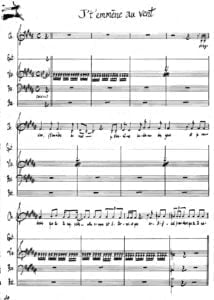 |
|
| Love Actually Glasgow Love Theme | Love Actually Glasgow Love Theme | |
| Love Actually Portuguese Love Theme | Love Actually Portuguese Love Theme | |
| Love Actually Song Book Collection Piano Vocal guitar Chords |
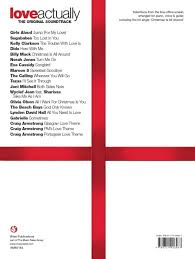 |
Love Actually Song Book Collection Piano Vocal guitar Chords |