Come join us now, and enjoy playing your beloved music and browse through great scores of every level and styles!
Can’t find the songbook you’re looking for? Please, email us at: sheetmusiclibrarypdf@gmail.com We’d like to help you!
Table of Contents
Taylor Swift: The Life Of A Showgirl (Sabrina Carpenter) Piano Solo, sheet music, Noten, partitura spartiti
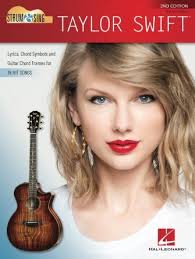
Best Sheet Music download from our Library.
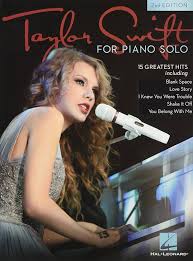
Please, subscribe to our Sheet Music Library.
If you are already a subscriber, please, check our NEW SCORES’ page every month for new sheet music. THANK YOU!
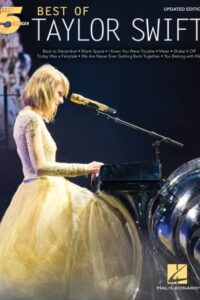
Taylor Swift — an exhaustive profile
Taylor Swift is one of the most commercially successful, influential, and studied popular musicians of the 21st century. A rare combination of prolific songwriting, savvy business instincts, continual stylistic reinvention, and a highly engaged fan base has made her a cultural phenomenon: a country prodigy turned global pop titan who also commands respect as an auteurist songwriter and tour-level performer. This article walks through her life and career, musical language and harmony, live shows, collaborations, influences, discography, film projects, iconic songs and performances, reasons for her fame, and the legacy she is building.
Summary snapshot (quick facts)
- Full name: Taylor Alison Swift.
- Born: December 13, 1989, in Reading, Pennsylvania; raised in Wyomissing and then Hendersonville, Tennessee. (Viquipèdia)
- Breakthrough: Self-titled debut album Taylor Swift (2006) and the crossover country-pop hit “Tim McGraw.” (Viquipèdia)
- Signature strengths: confessional songwriting, melody-first pop craft, melodic hooks, and highly theatrical live shows.
- Major commercial achievements: multiple diamond-selling albums, multiple Album of the Year Grammys (a historic four wins), and the Eras Tour — a record-shattering global concert phenomenon. (grammy.com)
Early life and first steps in music
Taylor Alison Swift was born in 1989 and grew up in a family that encouraged her early interest in performance and writing. She wrote poems and songs as a child and, after developing an affinity for country music, learned guitar and performed at local venues and festivals as a teenager. Her family relocated to Nashville when she was a young adolescent so she could pursue a professional songwriting and recording career — an early move that helped her get signed to a development deal and, soon after, to Big Machine Records. By the mid-2000s she had a publishing contract and a record deal; her 2006 self-titled debut positioned her as a teenage country singer-songwriter with a knack for direct, diaristic lyrics and catchy melodies. (Viquipèdia)
Career arc and artistic reinventions
Taylor Swift’s career is usually described in eras — both colloquially by fans and deliberately by Swift herself — each era defined by a particular album, sound, aesthetic, and touring cycle.
- Country breakout (2006–2010) — Taylor Swift (2006) and Fearless (2008): she blended youth-focused narratives and country instrumentation; tracks like “Teardrops on My Guitar” and “Love Story” made her a mainstream crossover. Fearless established her as a major star and earned broad industry awards and recognition. (Viquipèdia)
- Songwriter-driven pop and arena growth (2010–2014) — Speak Now (2010) and Red (2012): these albums broadened her sonic palette while keeping her personal lyricism at the center. Red in particular mixed country, rock, and pop elements and contained big singles and emotional, long-form storytelling. (Viquipèdia)
- Full pop pivot (2014–2018) — 1989 (2014) and Reputation (2017): 1989 moved her fully into synth-pop and blockbuster pop production; it produced multiple No. 1 singles and cemented her as a global pop star. Reputation explored darker, more electronic textures and an image renegotiation in response to intense media scrutiny. (Viquipèdia)
- Indie/folk detour and alternative songwriting (2020–2021) — Folklore and Evermore: created (largely) in pandemic-era isolation, these albums emphasized narrative storytelling, acoustic textures, and collaborations with indie/alternative producers and songwriters; critics hailed the albums for maturity and lyrical depth. Folklore won Album of the Year at the Grammys. (Viquipèdia)
- Return to pop with mood and retrospection (2022–2024) — Midnights (2022) and The Tortured Poets Department (2024): Midnights consolidated pop songwriting craft with nocturnal lyrical themes; The Tortured Poets Department continued introspective songwriting and performed strongly in sales and cultural conversation. During these later years Swift also embarked on the massively successful Eras Tour and released concert films and re-recordings of earlier albums. (Viquipèdia)
- Re-recordings and masters dispute — after a high-profile dispute over the ownership of her early master recordings, Swift began re-recording her earlier albums (labelled “Taylor’s Version”) to regain artistic and economic control; these re-recorded albums — including Fearless (Taylor’s Version), Red (Taylor’s Version), Speak Now (Taylor’s Version), and 1989 (Taylor’s Version) — have been commercially successful and made a public statement about artist rights. (Viquipèdia)
Musical style, songwriting craft, and lyrical voice
Taylor Swift is a songwriter first: her public image, catalog, and critical respect rest on painstakingly crafted songs that put narrative and melodic immediacy ahead of studio gloss (even when the production is glossy). A few key features:
- Narrative and perspective: Swift’s songs often read like short stories — first-person vignettes, sharply observed details, and clear emotional arcs. She uses concrete images (portraits, seasonal metaphors, brand names) to make personal moments feel universal.
- Melodic economy: even when production varies, her gift for memorable melodic hooks—particularly in choruses and pre-choruses—remains consistent.
- Genre fluency: she adopts and adapts production idioms from country, pop, synth-pop, indie folk, and alternative rock, often changing her vocal delivery and arrangement to suit each album’s mood. Critics and observers note her ability to “pivot” genres while keeping a coherent authorial voice. (Viquipèdia)
Song structure habits
Swift frequently uses concise pop structures (verse–prechorus–chorus) but also experiments with extended narrative forms (multi-part ballads, bridges that act as climaxes), and in her indie-era work she sometimes opts for looser, more atmospheric arrangements that prioritize mood and lyric detail.
Chord progressions and music harmony — a musician’s look
Taylor Swift’s songwriting is approachable for guitarists and pianists — that’s partly by design. She writes strong top-line melodies over functional harmonic backdrops, which makes her songs easy to cover and learn. A few technical notes:
- Harmonic language: much of Swift’s catalog uses diatonic pop harmonies (I–V–vi–IV and variants are common). For instance, the ubiquitous four-chord pop sequence (I–V–vi–IV) underpins numerous modern pop hits and appears in variations across her output. In her country songs, simple guitar-friendly progressions (I, IV, V, vi) and melodic bass movement are common.
- Modal coloration and borrowed chords: on albums like Red and 1989, producers and Swift introduce modal mixture (borrowed bVII or bVI chords) and chromatic bass lines to add color and tension. These borrowed chords give choruses lift or create a bittersweet tonal color.
- Piano-centric ballads: songs like “All Too Well” (long form versions) or “New Year’s Day” often use extended piano voicings with added 7ths and suspended chords, which create lush, cinematic textures without obscuring the vocal line.
- Rhythmic and harmonic minimalism: in Folklore and Evermore, harmony is often understated — sustained pads, pedal points, and slow harmonic rhythm giving space to lyrics and vocal inflection. Production choices emphasize texture and counter-melody more than harmonic complexity. (Viquipèdia)
Musically, Swift’s strength isn’t harmonic innovation so much as melodic and lyrical invention set atop familiar yet eloquent harmonic scaffolding — a formula that makes songs emotionally direct and memorably singable.
Live shows: spectacle, musicianship, and the Eras Tour
Taylor’s live shows combine theatrical staging, narrative setlists, costume changes, intricate choreography (when appropriate), and intimate moments in which she plays stripped-down acoustic or piano versions of songs. Her earlier tours (Fearless Tour, Speak Now World Tour, Red and 1989 world tours) tracked the growth from small-theater performer to stadium headliner; with Reputation she embraced arena-scale spectacle.
The Eras Tour (2023–2024)
The Eras Tour — a curated celebration of her catalog’s many stylistic “eras” — became a global cultural event. It recontextualized her entire discography into a single theatrical arc, giving each album its own staging, costume, set design, and musical arrangement. The tour’s scale, production value, and fan engagement led to extraordinary commercial success and cultural resonance: Pollstar, AP, and other outlets reported that the Eras Tour grossed over $2 billion globally and sold more than ten million tickets across its run — making it one of the highest-grossing tours in history. She also released a concert film version of the tour that became the highest-grossing concert film of all time in its theatrical run, and extended/alternate cuts and streaming releases followed. (AP News)
What distinguishes Swift’s live work is the combination of stadium-level spectacle and moments of intimacy: acoustic “surprise songs,” piano-led ballads, and audience interaction create a feeling of connection even in arenas.
Collaborations and notable co-creators
Swift has worked with a wide array of producers and artists throughout her career, often choosing collaborators who fit the aesthetic she’s pursuing:
- Early Nashville co-writers: Liz Rose and Nathan Chapman helped shape her country breakout sound and strong storytelling voice.
- Pop-era producers: Max Martin, Shellback, Ryan Tedder, and Jack Antonoff have been key collaborators on 1989, Reputation, Lover, and Midnights. Antonoff, in particular, has been a frequent co-writer/producer across several albums and is often cited as a major creative foil for Swift’s modern pop sound. (Viquipèdia)
- Indie collaborators: Aaron Dessner (The National) produced and co-wrote large portions of Folklore and Evermore, lending an indie-rock/folk sensibility and textural restraint.
- Feature artists: Swift has collaborated as a featured artist and co-creator with artists across genre lines — Ed Sheeran, Kendrick Lamar (on a remix), Bon Iver (on “Exile”), Jack Antonoff, Zayn, and many others. Her duet with Bon Iver and collaborations with The National members show a willingness to incorporate less glossy, more experimental sonic palettes when the song calls for it. (watchmojo.com)
Beyond studio collaborations, Swift’s live set frequently includes guest appearances from other artists and surprise collaborators depending on city and tour leg.
Discography (select albums and notes)
Swift’s full studio discography is extensive; below are key studio albums and notes on their musical direction and impact:
- Taylor Swift (2006) — country-pop debut; youth-focused storytelling. (Viquipèdia)
- Fearless (2008) — breakout crossover; big radio hits and mainstream awards. (Viquipèdia)
- Speak Now (2010) — self-penned album with theatrical songwriting. (Viquipèdia)
- Red (2012) — genre-blending, emotionally raw; contains early experiments in pop production. (Viquipèdia)
- 1989 (2014) — full pop pivot to synth-pop; massive commercial success. (Viquipèdia)
- Reputation (2017) — darker, electronic textures, commentary on fame. (Viquipèdia)
- Lover (2019) — pop romance album, colorful production. (Viquipèdia)
- Folklore (2020) and Evermore (2020) — indie-folk, narrative songwriting, low-key textures. (Viquipèdia)
- Midnights (2022) — nocturnal pop, synth textures, introspective lyrics. (Viquipèdia)
- The Tortured Poets Department (2024) — continued confessional songwriting and strong album sales. (Viquipèdia)
She has also released multiple “Taylor’s Version” re-recordings of earlier albums as part of her effort to own her work’s masters. The re-recordings themselves became major chart events and reaffirmations of her enduring audience. (Viquipèdia)
Most known compositions and performances
A non-exhaustive list of her most culturally resonant songs and performances includes:
- “Love Story” — a modernized Romeo-and-Juliet narrative and early crossover hit. (Viquipèdia)
- “You Belong With Me” — a defining early pop-country single with a cinematic music video. (Viquipèdia)
- “Blank Space” and “Shake It Off” — signature 1989 hits that showcased her pop reinvention. (Viquipèdia)
- “All Too Well” (10-minute version) — a fan-beloved epic noted for its storytelling, emotional arc, and longform structure; the short and long versions have become signature emotional climax songs in her live shows. (Viquipèdia)
- “Cardigan,” “Exile” (feat. Bon Iver) — critical favorites from Folklore, demonstrating her indie-leaning songwriting turn. (Viquipèdia)
- Live: The Eras Tour concerts and concert film — performances from this tour (and the concert film release) have become cultural milestones, underscored by huge box office returns and viral cultural moments. (Viquipèdia)
Filmography and visual projects
Swift’s audiovisual output includes music videos (many of which have cinematic concepts), concert films, and documentary projects:
- Concert film: Taylor Swift: The Eras Tour (theatrical release) became the highest-grossing concert film of all time in its limited theatrical run; an extended cut and streaming release appeared later. (Viquipèdia)
- Short films / videos: Swift often treats music videos as mini-films (notably for songs like “All Too Well (10 Minute Version)”), directing or co-directing some and employing high production values.
- Cameos and acting: Swift has appeared in feature films (small roles and cameos) and television projects over the years, but her primary audiovisual legacy is musical — music videos and concert documentation. (See film/TV credits on public filmography pages for specifics.)
Why is she so famous? (A layered explanation)
Taylor Swift’s fame is not the product of a single factor but the convergence of several mutually reinforcing elements:
- Songwriting intimacy and authenticity — her confessional, detail-rich lyrics create a sense that listeners are being spoken to directly. That intimacy builds long-term fandom and cultural conversation. (Viquipèdia)
- Melodic craftsmanship — she consistently delivers strong, singable melodies that translate well across radio, streaming, and live environments.
- Adaptability and reinvention — Swift has shifted genres without losing her authorial voice, which keeps her catalog fresh and allows her to reach new audiences while retaining longtime listeners. (Viquipèdia)
- Business savviness and narrative control — her public dispute over masters and subsequent re-recordings, savvy release strategies, and direct social-media engagement have created stories that bolster her cultural presence and exemplify artists’ agency. (Viquipèdia)
- Live-event scale and fandom mobilization — Swift’s ability to create communal experiences (concerts, listening events, social media moments) keeps her at the center of popular culture; the Eras Tour was a global phenomenon that amplified her fame to economic and cultural extremes. (AP News)
- Cultural timing and media literacy — she arrived just as social media became central to fandom, and she has used the medium to cultivate a narrative and intimate relationship with fans without appearing inauthentic.
Influences
Swift’s influences are diverse and have changed as she has grown:
- Country roots: Shania Twain and Faith Hill are often cited as early influences for Swift’s blending of pop melodies with country instrumentation.
- Pop and Americana: as she moved into pop, she adopted production and melodic sensibilities from mainstream pop producers; in her indie detour she cited collaborators like Aaron Dessner and storytellers who influenced Folklore’s mood.
- Songwriters across generations: she has acknowledged learning from and admiring songwriters who prioritize narrative, including Joni Mitchell and other folk acts, as well as modern pop craftsmen. These influences help explain why her catalog simultaneously demands radio play and deep critical respect. (Viquipèdia)
Legacy, records, and cultural impact
Taylor Swift’s legacy is still accumulating, but a few measurable landmarks show her imprint:
- Awards and industry recognition: Swift has won multiple Grammy Awards, including a record number of Album of the Year wins (four), confirming both commercial and critical esteem. (grammy.com)
- Touring and economic impact: the Eras Tour’s extraordinary revenue and ticket sales made headlines for how one artist’s touring cycle can drive local economies, media narratives, and even policy-level scrutiny of ticketing platforms. (AP News)
- Artist rights precedent: her public battle over master ownership and subsequent re-recording campaign has been a high-profile case study for musicians seeking control over their catalogs. (Viquipèdia)
- Popular culture: Swift’s lyrical lines, music videos, and public moments become widely quoted cultural touchstones; her songs are commonly used in social media contexts that perpetuate and recontextualize her work.
Music-theory deep dive — examples and approaches
Below are a few practical music-theory observations and entry points for musicians who want to understand or emulate Swift’s songwriting:
- Classic pop progression usage: learn I–V–vi–IV and practice shifts that substitute vi for iii, or add secondary dominants to create lift into choruses. Many Swift choruses use harmonic motion that resolves on a tonic with an added melodic hook.
- Melodic contouring: Swift often lands a memorable lyric on a strong metric beat with a small melodic range but a distinctive interval (a leap or descending step) that becomes the hook. Sing the chorus melody alone and notice how rhythms and word stresses line up to emphasize hook words.
- Bridge as emotional apex: Swift’s bridges often reframe a song’s emotional landscape; harmonically, this can be represented by moving to relative minors, modal mixtures, or a clear suspension of the established harmonic groove (e.g., dropping dynamics, switching to a different chord quality) before returning for a cathartic final chorus.
- Accompaniment choices: guitars with open-string voicings, piano triads with added color tones (sus2, add9, 7ths), and subtle pad textures can support the voice without stealing attention — a hallmark of her more intimate recent production. (Viquipèdia)
Notable collaborations, guest features, and cross-genre moves
Swift’s catalog includes prominent cross-genre pairings and guest features that highlight her versatility:
- Bon Iver (“Exile”) — a tonal and textural contrast that emphasized vocal interplay and indie moods. (watchmojo.com)
- Ed Sheeran — co-writes and guest spots that emphasize acoustic pop synergy. (watchmojo.com)
- Kendrick Lamar remix involvement / remixes and features — Swift’s team has explored hip-hop-adjacent collaborations and remixes when songs call for different audience textures. (watchmojo.com)
Critics, controversies, and public narratives
Swift has navigated intense media attention and controversies — from public feuds with other celebrities, to debates about authorship and appropriation, to the masters dispute — while continually reframing those narratives through her work. Those tensions have sometimes fed her songwriting, producing albums that are as much cultural statements as musical records. Her responses — whether lyrical, legal, or via public statements — have been part of her career narrative and contributed to her mythos.
Complete works, collectibles, and extra-musical outputs
Beyond studio albums, Swift’s output includes:
- Numerous deluxe editions and re-recordings (the “Taylor’s Versions”). (Viquipèdia)
- A long list of music videos (many of which have cinematic budgets and narrative thrust).
- The Eras Tour concert film and accompanying streaming releases. (Viquipèdia)
- Merchandise, tie-in books/photobooks, and curated cultural moments (Easter eggs in videos/lyrics that fans decode together).
Final thoughts on legacy and where she stands now
Taylor Swift’s career maps a trajectory from homespun country songwriter to global pop auteur and cultural lightning rod. That transition has been remarkable not only for its commercial success but because she has maintained authorship (writing or co-writing the vast majority of her songs), sustained an evolving public persona, and used business strategies (re-recordings, careful release timing, savvy engagement with streaming platforms) to shape industry conversations about artist rights and value.
She is unusual in combining both mainstream chart power and the kind of songwriterly respect that allows critics to take her seriously on the same albums that dominate streaming charts. Whether judged by sales, awards, influence on artists who followed, or the scale of modern touring, Swift’s imprint on 21st-century popular music is unmistakable — and still growing.
Sources (selected)
Key sources used for factual claims in this article include Taylor Swift’s Wikipedia page and discography pages, reporting on the Eras Tour and tour grosses by AP/Pitchfork/Financial Times, and coverage of her Grammy record from the Recording Academy and major news outlets. For album-by-album context and the re-recording campaign, see the albums discography and contemporary reporting. (Viquipèdia)