Community Musicians, building a worldwide Community Music.
All the music you want to play on one site. Sharing the world’s best Contemporary, Jazz, Popular, Film, and Classical Sheet Music.
Scores for all instruments: over 15,000
(active and growing), over 231,000 pages.
All genres, styles, and instruments — Jazz & Blues, Rock & Pop, Classical & Contemporary, Film & Musicals;
books, methods, études, play-along tracks (MP3) for Jazz & Rock.
Access & benefits: $15.99 one-time payment, valid for lifetime.
How to Join — 🔍 Search the Catalog — FAQs — Join Us
Table of Contents
Schindler’s List Main Theme (Piano) John Williams , sheet music, Noten, partitura, spartiti, 楽譜, 乐谱

Best Sheet Music download from our Library.

Please, subscribe to our Sheet Music Library.
If you are already a subscriber, please, check our NEW SCORES’ page every month for new sheet music. THANK YOU!
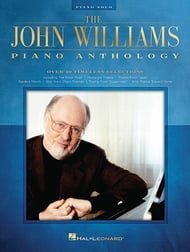
The Maestro of the Movies: An Exhaustive Look at John Williams
In the pantheon of great composers, from Bach and Beethoven to Stravinsky and Bernstein, one name has irrevocably etched its signature not on the concert hall alone, but onto the very fabric of global popular culture: John Williams.
For over six decades, John Williams has served as the primary musical architect of our collective cinematic dreams, fears, and adventures. His compositions are not merely accompaniments to film; they are the emotional and narrative lifeblood, the invisible character that gives scale to the cosmos, depth to the ocean, and a soul to a bicycle flying across the moon. This article delves exhaustively into the life, style, techniques, and unparalleled legacy of the man who taught the movies to sing.







I. Biography: From New York to a New Hope
John Towner Williams was born on February 8, 1932, in Floral Park, New York, into a musical family. His father was a jazz percussionist who played with the Raymond Scott Quintet, providing an early, crucial exposure to the rhythmic and improvisational world of jazz. The family moved to Los Angeles in 1948, where Williams attended North Hollywood High School and later studied piano at the University of California, Los Angeles (UCLA).
His formal composition training was put on hold when he was drafted into the U.S. Air Force in 1951, where he arranged and conducted music for military bands. Upon his return, he pursued studies at the Juilliard School in New York under the renowned piano pedagogue Rosina Lhévinne. Aspiring to be a concert pianist, he soon found himself drawn to the world of popular music and jazz, playing piano in nightclubs and for recording sessions.
Returning to Los Angeles in the mid-1950s, he broke into the film and television industry, working as a pianist for composers like Franz Waxman, Bernard Herrmann, and Alfred Newman. This apprenticeship in the Hollywood studio system was his conservatory. He learned orchestration by observing the masters and began composing himself for television shows like Peter Gunn and Lost in Space. His first major film credit was for Daddy-O (1958), and throughout the 1960s, he honed his craft on comedies like John Goldfarb, Please Come Home! and disaster films like The Poseidon Adventure, earning his first Academy Award nomination for Valley of the Dolls (1967).
The turning point arrived in 1974 when a young director, Steven Spielberg, asked Williams to score his suspense thriller, The Sugarland Express. Impressed, Spielberg then recommended him to his friend, George Lucas, who was working on a “space fantasy.” The film was Star Wars (1977). The score’s monumental success—winning Williams his third Oscar (after Fiddler on the Roof, 1971) and becoming the best-selling orchestral recording of all time—catapulted him to legendary status. This cemented the “Holy Trinity” of modern film music: Williams, Spielberg, and Lucas. His collaboration with Spielberg alone, which continues to this day, encompasses over 30 films, forming one of the most prolific director-composer partnerships in history.
Despite his film dominance, Williams never abandoned his classical roots. He served as the nineteenth Principal Conductor of the Boston Pops Orchestra from 1980 to 1993, a role that solidified his reputation as a serious American musical statesman. He continues to compose concertos, symphonies, and occasional pieces, ensuring his legacy is bifurcated between the silver screen and the concert stage.
Browse in the Library:
Or browse in the categories menus & download the Library Catalog PDF:
II. Music Style and Harmonic Language: The Neo-Romantic Voice
John Williams’s style is often described as neo-Romantic, a direct descendant of the late-Romantic era orchestral traditions of Richard Strauss, Gustav Holst, and Sergei Prokofiev, filtered through the golden age of Hollywood, particularly the leitmotif techniques of Erich Wolfgang Korngold and Max Steiner.
1. The Leitmotif as Narrative Tool: Williams is the undisputed master of the cinematic leitmotif—a recurring musical phrase associated with a specific character, place, idea, or emotion. Unlike simple themes, his leitmotifs are malleable; they evolve, transform, and interact to tell the story musically.
- “The Force Theme” (Star Wars): Begins as a mysterious, ascending melody associated with an ancient, mystical energy. It transforms into a triumphant fanfare, a gentle elegy, and a symbol of hope.
- “Hedwig’s Theme” (Harry Potter): Instantly evokes the wonder and magic of the wizarding world, but can be rearranged to sound mischievous, ominous, or melancholic.
- The “Raiders March” (Indiana Jones): Embodies the hero’s swashbuckling bravado and adventurous spirit.
2. Orchestral Mastery and Color: Williams writes almost exclusively for the large symphony orchestra, wielding it with a virtuosic understanding of its colors and capabilities. He doesn’t just write for strings, brass, woodwinds, and percussion; he writes for specific instruments within those families. The soaring French horns for heroism (Star Wars, Jurassic Park), the chattering woodwinds for whimsy (Harry Potter, E.T.), the searing violins for tension (Jaws), and the powerful, percussive brass for menace and power (Imperial March).
3. Chord Progressions and Harmony: Williams’s harmonic language is complex yet accessible. He frequently employs:
- Modal Mixture: Borrowing chords from the parallel minor or major scale (e.g., a minor iv chord in a major key), creating a rich, poignant sound. This is prevalent in the bittersweet themes from E.T. and Schindler’s List.
- Chromaticism and Linear Harmony: Moving voices in semi-tones to create tension and fluid motion, a technique straight out of Wagner.
- Planing: Moving a chord structure in parallel motion, a technique used by Debussy and Stravinsky, which he uses to create massive, block-like harmonic shifts, as in “The Asteroid Field” from The Empire Strikes Back.
- Unexpected Modulations: He shifts keys with confidence, often to elevate a moment of revelation or dramatic turn. The famous shift from Bb major to a radiant D major as the T-Rex is first revealed in Jurassic Park is a masterclass in using modulation for awe.
III. Improvisational Licks and Motivic Development
While “improvisational licks” is a term more common to jazz, Williams’s genius lies in his motivic development—the compositional process of taking a small, germinal idea (a motif) and manipulating it throughout a work. This is the classical equivalent of a jazz musician improvising on a standard.
His motifs are often short, rhythmically distinct, and highly adaptable.
- The “Jaws” Motif (E-F, E-F): Perhaps the most famous two-note motif in history. It’s not a melody but a relentless, primal rhythmic ostinato. Williams builds tension not by changing the notes, but by varying the tempo, dynamics, and orchestration, accelerating it as the shark approaches.
- The “Imperial March” Motif: The iconic opening (G-G-G, Eb…) is a descending minor third, a simple, ominous interval that he builds into a terrifyingly grand march through repetition, sequencing, and powerful brass orchestration.
- “The Scherzo for Motorcycles” (Indiana Jones and the Last Crusade): This piece demonstrates his ability to take the main “Raiders March” theme and fragment it, re-orchestrate it, and set it in a complex, fast-paced contrapuntal texture, creating a sense of chaotic chase while never losing the thematic core.
This technique allows his scores to have a remarkable unity and sophistication. A single viewing of a Star Wars film reveals dozens of subtle references and transformations of its core set of leitmotifs, creating a dense, woven musical tapestry that rewards repeated listening.
IV. Cooperation with Other Artists
Williams’s collaborations are the stuff of Hollywood legend.
- Steven Spielberg: This is the most significant partnership. Spielberg has often stated that he edits his films to temporary tracks of Williams’s previous works, so innate is their creative connection. Their process involves “spotting” the film together, after which Spielberg gives Williams near-total creative freedom. The director has famously been brought to tears by the first run-through of a score, as with the simple, profound five-note motif for Close Encounters of the Third Kind. Their collaboration spans genres from adventure (Jurassic Park) to historical drama (Schindler’s List, Lincoln) to science-fiction (A.I., Minority Report).
- George Lucas: Lucas’s vision for Star Wars was deeply influenced by the serials and films of his youth, and he wanted a score that echoed the romantic, symphonic style of Korngold. Williams delivered beyond anyone’s imagination. Their collaboration defined the sound of the Star Wars saga, with Williams’s music providing the emotional depth and epic grandeur that Lucas’s “lived-in” universe demanded.
- The London Symphony Orchestra (LSO): For the Star Wars films and other major projects, Williams has frequently recorded with the LSO. This partnership has resulted in some of the most iconic and brilliantly performed orchestral recordings of the late 20th and early 21st centuries.
V. Influences and Legacy
Influences: Williams’s style is a synthesis of clear, identifiable traditions:
- Late-Romantic Composers: Richard Strauss (Also sprach Zarathustra is echoed in 2001 and the fanfares of Star Wars), Gustav Holst (The Planets is the clear blueprint for much of Star Wars‘s battle music), and Sergei Prokofiev (the rhythmic drive and orchestral color in Alexander Nevsky).
- Golden Age Hollywood Composers: Erich Wolfgang Korngold (the swashbuckling adventure style), Max Steiner (the pervasive use of leitmotif), and Bernard Herrmann (his use of ostinato and psychological tension).
- Jazz: His early career as a session pianist left an indelible mark, evident in the scores for Catch Me If You Can and parts of Close Encounters.
Legacy: John Williams’s legacy is immeasurable.
- The Revival of the Symphonic Score: In the 1970s, as popular film scores were moving towards pop songs and synthesized soundscapes, Jaws and Star Wars single-handedly reaffirmed the power and commercial viability of the large-scale orchestral score.
- Mentorship: He has mentored a generation of composers, including William Ross and, most notably, his own son, Joseph Williams, and conductor/composer Dirk Brossé.
- Cultural Saturation: His themes are among the most recognizable melodies on the planet. They are performed by marching bands, orchestras worldwide, and are instantly evocative of their source material.
- Bridging the Gap: He has done more than any other individual to bring orchestral music to a mass audience. Children who have never set foot in a concert hall can hum the “Imperial March” or the “Raiders March,” giving them an unconscious appreciation for the power of a symphony orchestra.
VI. Major Works, Filmography, and Discography
Most Known Compositions and Performances:
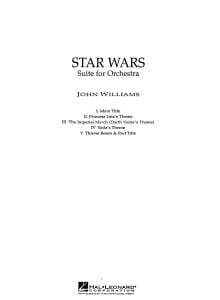
- Main Title / Star Wars Theme: The definitive heroic fanfare of modern cinema.
- The Imperial March (Darth Vader’s Theme): The ultimate musical representation of villainy.
- Hedwig’s Theme (Harry Potter): The sound of magical wonder for a generation.
- The Raiders March (Indiana Jones): Pure, unadulterated adventure.
- Theme from Jaws: The sound of primal fear.
- Flying Theme from E.T. (The Extra-Terrestrial): The sound of childhood wonder and friendship.
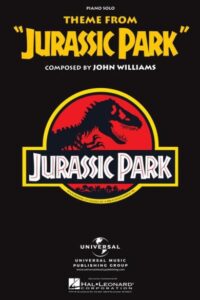
- Theme from Jurassic Park: A majestic, awe-filled anthem for the sublime power of nature.
- Theme from Schindler’s List: A hauntingly beautiful and tragic violin solo.
- Superman March: The sound of truth, justice, and the American way.
- The Throne Room & End Title (Star Wars): A perfect example of his celebratory, processional style.
Selective Filmography:
- The Poseidon Adventure (1972)
- The Towering Inferno (1974)
- Jaws (1975) – Academy Award
- Star Wars (1977) – Academy Award
- Close Encounters of the Third Kind (1977)
- Superman (1978)
- The Empire Strikes Back (1980)
- Raiders of the Lost Ark (1981)
- E.T. the Extra-Terrestrial (1982) – Academy Award
- Return of the Jedi (1983)
- Indiana Jones and the Temple of Doom (1984)
- The Witches of Eastwick (1987)
- Born on the Fourth of July (1989)
- Home Alone (1990)
- JFK (1991)
- Schindler’s List (1993) – Academy Award
- Jurassic Park (1993)
- Nixon (1995)
- Sleepers (1996)
- The Lost World: Jurassic Park (1997)
- Saving Private Ryan (1998)
- Angela’s Ashes (1999)
- The Patriot (2000)
- A.I. Artificial Intelligence (2001)
- Harry Potter and the Sorcerer’s Stone (2001)
- Harry Potter and the Chamber of Secrets (2002)
- Catch Me If You Can (2002)
- War of the Worlds (2005)
- Munich (2005)
- Indiana Jones and the Kingdom of the Crystal Skull (2008)
- The Adventures of Tintin (2011)
- War Horse (2011)
- Lincoln (2012)
- The Book Thief (2013)
- Star Wars: The Force Awakens (2015)
- The Post (2017)
- Star Wars: The Rise of Skywalker (2019)
- The Fabelmans (2022)
- Indiana Jones and the Dial of Destiny (2023)
Discography: Williams has an immense discography, primarily consisting of the original soundtracks for the films listed above. Key recordings include the original soundtrack albums for all the Star Wars films, Jurassic Park, and the Harry Potter films. Additionally, many albums feature his concert works or suites from his film scores performed by orchestras like the Boston Pops and the London Symphony Orchestra.
John Williams: The Last of the Giants
John Williams is more than a composer; he is a cultural force. He has provided the sonic landscape for the imaginations of billions. Through a masterful synthesis of Romantic grandeur, classical technique, and cinematic instinct, he has created a body of work that is both immediately thrilling and enduringly profound. He is the bridge between the concert traditions of the past and the popular entertainment of the present, a true American maestro whose music will continue to inspire awe, evoke tears, and fuel adventures for as long as there are stories to be told on screen. In the history of film, many have written music for movies, but John Williams has written the soundtrack to our lives.
Search your favorite sheet music in the Sheet Music Catalog
John Williams: Schindler´s List Theme – Itzhak Perlman
The music for Schindler’s List
The music for Schindler’s List represents a profound departure and a creative apex in the career of John Williams. While he is rightly celebrated for his grand, symphonic fantasies, this score stands as a testament to his profound depth, emotional intelligence, and ability to serve a film’s narrative with utter selflessness and devastating power. It is not a score of heroism, but of mourning; not of adventure, but of witness.
To understand the music of Schindler’s List is to understand the philosophy behind its creation. Steven Spielberg has recounted that after viewing the final cut, a shaken Williams told him, “You need a better composer than I am for this film.” Spielberg replied, “I know, but they’re all dead.” This apocryphal exchange underscores the score’s monumental task: to provide a musical voice for the unspeakable.
The Central Principle: Restraint as Eloquence
Unlike the complex leitmotif structures of Star Wars or the thrilling percussive drive of Jaws, the score for Schindler’s List is built on a foundation of profound restraint. Williams employs a largely chamber-sized orchestra, often focusing on solo instruments to create an atmosphere of intimacy and personal tragedy amidst the epic scale of the Holocaust. The music does not dictate emotion but rather invites it, acting as a solemn guide through the film’s harrowing landscape.
“Theme from Schindler’s List”: The Sound of a Lost World
The heart of the score, and one of the most recognizable pieces of film music ever written, is the main theme. Its composition and performance are masterclasses in musical storytelling.
- Melodic Structure and Klezmer Influence: The theme is not a joyous melody, but it is rooted in the traditional scales and expressive contours of Klezmer, the celebratory and soulful music of Eastern European Ashkenazi Jews. Williams doesn’t quote a specific Klezmer tune; he internalizes its emotional language—the aching slides (glissandi), the poignant melodic sighs, and the use of the harmonic minor scale. The theme becomes a ghost of a vanished culture, a musical memory of the world being systematically destroyed. It is a lament, a “klog,” a wail for the dead.
- The Solo Violin as Voice: Williams’s decision to feature a solo violin was a stroke of genius. He chose the legendary Itzhak Perlman to perform it, and this choice is deeply significant. Perlman, a Jew who overcame polio to become one of the world’s great musicians, embodies a spirit of survival and cultural resilience. His performance is not merely technical; it is visceral. The violin weeps, it pleads, it screams in pain, and it whispers in memory. It becomes the voice of the collective Jewish victims, and at times, the conscience of Oskar Schindler himself. The raw, vocal quality of Perlman’s playing, with its slight imperfections and overwhelming emotion, makes the music feel unbearably human and present.
- Harmonic Simplicity and Poignancy: The theme’s harmony is deceptively simple. It often rests on open intervals and spare chord progressions that create a sense of vast emptiness and sorrow. Williams uses silence and space as effectively as sound, allowing the listener to sit with the weight of each phrase. The progression often moves between major and relative minor chords, creating a bittersweet tension that perfectly captures the film’s central theme of beauty and humanity persisting within unimaginable brutality.
Musical Narration: Scene-by-Scue Analysis
The score is not a continuous backdrop but a series of carefully placed, powerful interventions.
- The Overture: “Theme from Schindler’s List”
The film begins in color with the lighting of a Sabbath candle, which transitions to black and white and the smoke of a extinguished train. As this happens, the main theme begins. This is not an opening fanfare but a eulogy. It sets the tone immediately: this is a story told in memory, a requiem for the dead. - “Jewish Town (Krakow Ghetto – Winter ’41)”
This cue accompanies the establishment of the ghetto. The music here is more atmospheric, incorporating subtle Klezmer-like melodies played by clarinets and accordion, creating a sense of a living, if confined, community. There is a fragile normalcy to the music that makes the eventual liquidation all the more horrific. - The Liquidation of the Ghetto: “I Could Have Done More”
This is one of the most devastating sequences in cinema, and Williams’s music is central to its power. As the Nazis brutally clear the ghetto, the score is a chaotic, nightmarish soundscape of relentless snare drums, dissonant brass clusters, and shrieking strings. It is music as terror. The most haunting moment comes when the little girl in the red coat is seen wandering alone. A fragile, music box-like version of the main theme emerges on celesta or high strings—a representation of pure, innocent childhood amidst the carnage. This single musical idea connects directly to the film’s climax, where Schindler sees her exhumed body on a cart, a moment that seals his transformation. - “Making the List” and the Power of Silence
During the climactic scene where Schindler and Stern type the list that will save over a thousand lives, there is almost no music. The only sounds are the clicking of the typewriter, the names being read aloud, and the ticking of a clock. Williams and Spielberg understand that this moment of intense, focused salvation needs no embellishment. The drama is in the silence, in the weight of each name. When music does return, it is a tender, understated string arrangement that underscores Schindler’s humanity and the monumental nature of the act. - The Finale: “I Could Have Done More” and the Liberation
As the war ends and the Schindlerjuden are liberated, the music swells into a more traditionally orchestral, hopeful variation of the main theme. But the film’s true emotional climax is Schindler’s breakdown, where he laments not saving more people. The music here is a heart-rending crescendo of grief and guilt. The transition to the present-day epilogue, where the actual survivors and the actors who portrayed them place stones on Schindler’s grave, is scored with a solemn, processional version of the theme. It is no longer a lament for the dead, but a quiet, dignified hymn of remembrance and gratitude.
Orchestration and Timbral Choices
The orchestration is deliberately lean and evocative:
- Solo Violin: The voice of the individual soul, memory, and lament.
- Solo Clarinet: Often used for more intimate, folk-like melodies, representing community.
- Piano and Celesta: Used for moments of fragile innocence and memory (the red coat girl).
- String Orchestra: Provides the emotional bed, swelling for moments of profound sadness or, rarely, hope.
- Brass and Percussion: Used sparingly and almost exclusively for moments of Nazi terror and violence, often in harsh, dissonant clusters.
Legacy and Conclusion
The score for Schindler’s List earned John Williams his fifth Academy Award, and it is arguably his most respected work. Its legacy is multifaceted:
- A New Benchmark for Dramatic Scoring: It demonstrated that a film score’s power lies not in its complexity or memorability alone, but in its perfect symbiosis with the narrative’s emotional and ethical core.
- A Memorial in Sound: The score has transcended the film to become a piece of musical commemoration for the Holocaust itself, performed at memorial services and concerts worldwide.
- The Pinnacle of the Spielberg-Williams Collaboration: It represents the moment their partnership moved beyond spectacle into the realm of profound historical and humanistic statement.
In conclusion, the music for Schindler’s List is a work of sublime artistry and profound moral seriousness. John Williams set aside the compositional tools that made him famous and instead crafted a score that is, in essence, a long, quiet, and devastatingly beautiful Kaddish—a Jewish prayer for the dead. It does not explain the horror, but through the voice of a single violin, it allows us to feel the weight of its memory, ensuring that while the bodies were lost, the souls are never forgotten. It is, quite simply, a masterpiece.
Listen to John Williams music on Spotify
Browse in the Library:
Or browse in the categories menus & download the Library Catalog PDF: