Come join us now, and enjoy playing your beloved music and browse through great scores of every level and styles!
Can’t find the songbook you’re looking for? Please, email us at: sheetmusiclibrarypdf@gmail.com We’d like to help you!
Table of Contents
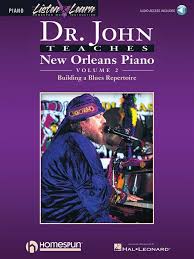
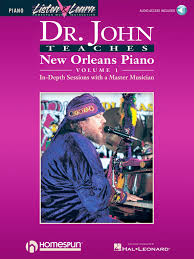
Dr John Piano transcriptions Vol. 1 & 2.
Best Sheet Music download from our Library.
The Night Tripper: An Exhaustive Exploration of Dr. John
To speak of Dr. John is to speak of New Orleans itself. He was not merely a musician from the city; he was a living, breathing embodiment of its spirit—its swampy mysticism, its ribald joy, its profound sorrow, and its unshakable rhythmic backbone. For over six decades, Malcolm John “Mac” Rebennack Jr., known to the world as Dr. John, The Night Tripper, served as the premier ambassador of the rich and funky musical traditions of his hometown. He was a pianist, singer, songwriter, and a master of ceremony for a uniquely American cultural experience that blended voodoo lore with barrelhouse rock and roll, cosmic jazz with street-parade second lines. This article delves deep into the biography, musical style, and enduring legacy of this true original.

Please, subscribe to our Sheet Music Library.
If you are already a subscriber, please, check our NEW SCORES’ page every month for new sheet music. THANK YOU!
Biography: From Session Man to The Night Tripper
Early Life and Apprenticeship (1940-1960s)
Malcolm John Rebennack Jr. was born in New Orleans on November 21, 1941. His childhood was steeped in music. His father ran an appliance store that also sold records, exposing the young Mac to a vast array of sounds, from the jazz of Louis Armstrong to the R&B of Professor Longhair and the country tunes of Hank Williams.
He was a prodigy, learning piano and guitar and immersing himself in the city’s vibrant session scene. He was a “cat,” a hired gun who could play whatever the song required. Under the wing of legendary producer and composer Harold Battiste, Rebennack became a first-call guitarist for artists like Frankie Ford (“Sea Cruise”) and Joe Tex. He absorbed the styles of the great New Orleans pianists—Professor Longhair’s rhumba-boogie, Huey “Piano” Smith’s playful R&B, and Fats Domino’s rolling triplets. A turning point came in the early 1960s when a gunshot injury to his left ring finger during a bar fight forced him to abandon the guitar and focus exclusively on the piano. This seemingly catastrophic event ultimately defined his signature sound.
The Birth of Dr. John (1968-1972)
Moving to Los Angeles in the mid-60s, Rebennack found himself amidst a community of exiled New Orleans musicians. It was here that the concept of “Dr. John, The Night Tripper” was born. The persona was inspired by Dr. John Montaine, a 19th-century Senegalese prince, herb doctor, and conjure man who was said to have arrived in New Orleans with a entourage and practiced voodoo.
Rebennack, along with Battiste, crafted a psychedelic, voodoo-infused stage show. Donning elaborate headdresses, bones, and feathers, and speaking in a cryptic, gris-gris laden patois, Dr. John was a shocking and mesmerizing figure. His 1968 debut album, Gris-Gris, was a commercial failure upon release but is now recognized as a masterpiece. It created a new genre: swampy, psychedelic rock-n-roll voodoo. Tracks like “I Walk on Gilded Splinters” became instant cult classics, covered by everyone from Humble Pie to Beck.
This period culminated in his commercial breakthrough, Gris-Gris‘s follow-up, Dr. John’s Gumbo (1972). A radical shift, it was a loving, straightforward tribute to the New Orleans R&B classics of his youth. Produced by Jerry Wexler and engineered by Tom Dowd at Criteria Studios in Miami, the album was a critical and commercial success. His rollicking version of “Iko Iko” and the jubilant “Big Chief” became his signature songs, introducing the authentic sound of New Orleans to a global rock audience.
The Hitmaker and Elder Statesman (1973-2019)
The success of Gumbo led to his most famous album, In the Right Place (1973). Teaming with the premier New Orleans funk band The Meters as his backing group and producer Allen Toussaint, the album was a funk-pop smash. The singles “Right Place, Wrong Time” and “Such a Night” became top-40 hits, cementing his status as a star, albeit in a more accessible, less mystical guise.
The rest of the 1970s and 80s saw him navigating the music industry, battling a well-documented heroin addiction, and continuing to release albums that explored his diverse influences, from blues and standards to Duke Ellington tributes. He became a sought-after session player once more, his distinctive piano and voice gracing records by artists like The Rolling Stones, Van Morrison, and Carly Simon.
In his later years, Dr. John shed the Night Tripper persona, becoming a revered elder statesman. He won six Grammy Awards, was inducted into the Rock & Roll Hall of Fame, and received an honorary doctorate from Tulane University. His final albums, like Locked Down (2012), produced by Dan Auerbach of The Black Keys, reinvigorated his sound for a new generation, earning him a Grammy for Best Blues Album. Dr. John passed away on June 6, 2019, but his spirit and music remain an indelible part of the American soundtrack.
Music Style and Piano Technique
Dr. John’s piano style is the very definition of the New Orleans piano tradition, yet it is unmistakably his own.
- The Rhumba-Boogie Foundation: At its core is the “New Orleans Clave,” a rhythmic feel inherited from Professor Longhair. It’s a syncopated, two-bar pattern where the left hand provides a percussive, rolling bass figure, often mimicking a rhumba or a second-line snare drum, while the right hand plays melodic and improvisational lines.
- The “Big Four” Beat: His playing is heavily syncopated, emphasizing the “and” of the second and fourth beats (the “Big Four”), a rhythmic concept borrowed from parade drumming that gives his music its irresistible, loping groove.
- Vocal-like Phrasing: His gravelly, drawling baritone voice was perfectly mirrored in his piano playing. His phrases are vocal, conversational, and often sound like a horn section. He used space and repetition masterfully, building tension before releasing it in a flurry of notes.
- Harmonic Language: While rooted in the blues, his harmony was sophisticated. He incorporated jazz chords (minor 7ths, dominant 9ths, altered dominants) and chromatic passing tones, giving his music a rich, complex texture even over simple progressions.
Improvisational Licks and Vocabulary
Dr. John’s improvisations were less about technical virtuosity and more about rhythmic feel and melodic storytelling. His licks are foundational to the New Orleans piano lexicon.
- The Turnaround Lick: A classic New Orleans lick used to navigate a I-IV-V (or I-vi-ii-V) turnaround. In the key of C, it might sound like: (Audio Example in Mind) A descending line from the 5th (G) to the b7 (Bb) over the C chord, resolving chromatically or via a blues scale into the IV (F) chord.
- The Second-Line Rhythmic Figure: His right hand would often play short, staccato, syncopated bursts that directly imitated the rhythms of a marching band’s snare drum, creating immense percussive energy.
- The Trill and Glissando: He frequently used trills (rapid alternation between two adjacent notes) and glissandos (sliding across the keys) as dramatic devices, often to build excitement before a chorus or to conclude a solo. This is a direct link to Professor Longhair.
- Blues Scale Embellishment: While he knew the blues scale inside out, he rarely ran it straight up and down. He would isolate small, potent fragments—like a minor third to a major third—and repeat them with rhythmic variation, creating a hypnotic, trance-like effect, especially in his “Gris-Gris” period.
Cooperation with Other Artists
Dr. John’s career is a testament to collaboration.
- The Meters & Allen Toussaint: This was his most potent creative partnership. The Meters (Art Neville, George Porter Jr., Leo Nocentelli, Joseph “Zigaboo” Modeliste) provided the funkiest possible foundation, while Toussaint’s crisp, inventive production and arrangements on In the Right Place and Desitively Bonnaroo framed Dr. John’s voice and piano perfectly.
- Mike Bloomfield and John Hammond Jr.: He collaborated with these blues giants on the legendary album Triumvirate (1973), a raw and powerful session of Chicago and New Orleans blues.
- Session Work: His distinctive piano and vocals can be heard on The Rolling Stones’ “Let It Loose” (from Exile on Main St.), on Maria Muldaur’s “Midnight at the Oasis,” and on albums by Aretha Franklin, B.B. King, and James Taylor.
- Dan Auerbach: The collaboration on Locked Down was a late-career renaissance. Auerbach acted as a modern-day Allen Toussaint, hand-picking a young band and crafting a raw, gritty sound that harkened back to the voodoo mystique of Gris-Gris while sounding completely contemporary.
- Duets: He recorded acclaimed duet albums with Rickie Lee Jones (N’awlinz: Dis, Dat or D’udda) and singer-pianist Jon Cleary.
Browse in the Library:
Or browse in the categories menus & download the Library Catalog PDF:
Chord Progressions and Music Harmony
Dr. John’s music is a masterclass in making simple progressions feel profound.
- The I-IV-V Foundation: Like most blues, R&B, and rock, his work is built on the primary chords. However, he used rhythmic displacement and syncopation to make these basic changes feel fresh and unpredictable.
- The “Iko Iko” Progression: A quintessential New Orleans progression is a simple I – IV – I – V (or I – IV – I – v, using a minor five chord for a spookier feel, as in “Gilded Splinters”). This static, vamp-like structure allows for immense rhythmic and textural exploration.
- Jazz Harmony in a Blues Context: In his more sophisticated compositions and ballads, he would weave in advanced harmony. A standard blues progression might be embellished with passing chords, ii-V sequences, and chord substitutions. For example, instead of a simple | C7 | F7 | C7 | C7 |, he might play | C9 | F9 F#dim7 | C7 / G | A7 A7#5 |, creating more melodic and harmonic movement.
- Modal Vamps: His early “voodoo” work often relied on modal vamps, particularly the Dorian mode. “I Walk on Gilded Splinters” is a prime example, centering on a single, droning minor chord with melodic movement, creating a hypnotic, trance-like atmosphere.
Influences and Legacy
Influences:
- Professor Longhair: His single greatest influence. From Fess, he took the rhumba-boogie rhythm, the trills, and the concept of the piano as a percussive orchestra.
- Huey “Piano” Smith: Smith’s playful, vocal-based R&B and novelty songs influenced Dr. John’s sense of humor and storytelling.
- Ray Charles: He absorbed Charles’ fusion of gospel, blues, and jazz, as well as his raw, emotionally direct vocal style.
- James Booker: The “Bayou Maharajah” was a contemporary and friend; his virtuosic, chaotic genius was both an inspiration and a cautionary tale for Dr. John.
Legacy:
Dr. John’s legacy is immense. He preserved and popularized the entire century-long tradition of New Orleans music. He proved that regional, roots-based music could be both authentic and wildly innovative. Artists as diverse as The Black Keys, Beck, Spiritualized, and Harry Connick Jr. cite him as a major influence. He is the essential link between the early R&B of the 1950s and the modern “Americana” and roots-revival movements. More than anything, he is a cultural touchstone, the gris-gris man who kept the flame of New Orleans burning bright for the world to see.
Major Works and Most Known Compositions & Performances
- “I Walk on Gilded Splinters” (1968): His voodoo anthem. A slow, hypnotic, six-minute trek through the bayou that defined his Night Tripper persona.
- “Right Place, Wrong Time” (1973): His biggest pop hit. A perfect slice of New Orleans funk with an unforgettable guitar riff from Leo Nocentelli and cryptic, witty lyrics.
- “Such a Night” (1973): A smooth, seductive R&B number that showcases his charming, crooning vocal delivery.
- “Iko Iko” (1972): His definitive version of this New Orleans standard, taken from Dr. John’s Gumbo, is the one most people know.
- “Big Chief” (1972): Featuring Earl King on guitar, this is a Mardi Gras Indian anthem delivered with explosive energy.
- “Zu Zu Mamou” (1968): Another classic from Gris-Gris, encapsulating the album’s dark, mysterious atmosphere.
- “What Comes Around (Goes Around)” (1998): A later-career gem from the album Anutha Zone, featuring a guest appearance from the British band Spiritualized.
Filmography and Discography (Selective)
Filmography:
Dr. John made numerous film and TV appearances, often playing himself or a musician.
- The Last Waltz (1978) – Martin Scorsese’s concert film of The Band’s final show; he performs “Such a Night.”
- Blues Brothers 2000 (1998) – As a member of the Louisiana Gator Boys.
- The Princess and the Frog (2009) – Provided the voice for the firefly, Raymond.
Discography (Key Albums):
- Gris-Gris (1968)
- Babylon (1969)
- Remedies (1970)
- The Sun, Moon & Herbs (1971)
- Dr. John’s Gumbo (1972) – Grammy Hall of Fame
- In the Right Place (1973)
- Desitively Bonnaroo (1974)
- City Lights (2008) – Tribute to Duke Ellington
- Locked Down (2012) – Won Grammy for Best Blues Album
- Ske-Dat-De-Dat: The Spirit of Satch (2014) – Tribute to Louis Armstrong
Dr. John was more than a musician; he was a shaman, a historian, a storyteller, and the funkiest piano professor to ever emerge from the Crescent City. His journey from teenage session guitarist to the beaded and feathered Night Tripper, and finally to the beloved, gravelly-voiced elder statesman, is a uniquely American saga. He channeled the entire history of New Orleans music—the spirituals, the jazz, the R&B, the funk, the voodoo incantations—into a body of work that is as deep and mysterious as the bayous that inspired it. To listen to Dr. John is to take a trip to the heart of New Orleans, a city where joy and sorrow, the sacred and the profane, are forever intertwined in a glorious, syncopated dance. His music remains a potent gris-gris, a magical charm ensuring that the spirit of New Orleans will never fade.