
Come join us now, and enjoy playing your beloved music and browse through great scores of every level and styles!
Can’t find the songbook you’re looking for? Please, email us at: sheetmusiclibrarypdf@gmail.com We’d like to help you!
Table of Contents

Search your favorite sheet music in the Sheet Music Catalog

Please, subscribe to our Sheet Music Library.
If you are already a subscriber, please, check our NEW SCORES’ page every month for new sheet music. THANK YOU!
Scott Joplin: The King of Ragtime and His American Legacy
In the pantheon of American music, few figures stand as singularly influential and yet as tragically misunderstood as Scott Joplin. Known universally as the “King of Ragtime,” Joplin was not merely a composer of jaunty, feel-good piano tunes; he was a visionary artist who sought to elevate a popular, often disreputable, musical form into a respected American classical tradition. His life was a tapestry of extraordinary achievement, fierce ambition, and profound disappointment, set against the backdrop of a rapidly changing and often hostile nation. This article delves deep into the biography, musical style, harmonic innovations, collaborations, and enduring legacy of this American master.
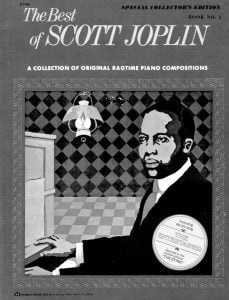
Browse in the Library:
Or browse in the categories menus & download the Library Catalog PDF:
Maple Leaf Rag – Scott Joplin (piano sheet music)
Biography: From Texarkana to the World Stage
Scott Joplin was born between late 1867 and mid-1868 in Northeast Texas, likely in Linden or nearby Texarkana, on the border of Texas and Arkansas. His father, Giles Joplin, was a former slave, and his mother, Florence Givens, was a freeborn African American woman. Music was present in the Joplin household; Florence was a singer and banjo player, and Giles played the violin. Recognizing their son’s prodigious talent, his parents bartered with local teachers to provide him with piano lessons, a significant sacrifice for a working-class Black family in the post-Reconstruction South.
A pivotal figure in his early development was Julius Weiss, a German-born music teacher who recognized Joplin’s gift and gave him free lessons. Weiss introduced Joplin to the European classical tradition—opera, folk music, and the works of composers like Bach, Beethoven, and Chopin. This foundation would become the bedrock of Joplin’s entire artistic philosophy: the fusion of African-American rhythmic and melodic sensibilities with the formal structures and harmonic sophistication of European music.
In his late teens, Joplin, like many musicians of the era, became an itinerant pianist, traveling through the burgeoning “sporting” districts of the Midwest and South. He played in churches, saloons, brothels, and social clubs, absorbing the diverse musical currents of the time: spirituals, work songs, minstrel show tunes, popular marches, and the nascent, rhythmically complex style that would become known as “ragtime.” This was a hard and often dangerous life, but it was the crucible in which his musical voice was forged.
By the 1890s, Joplin had settled in Sedalia, Missouri, a major railroad hub with a vibrant Black community and a thriving musical scene centered on the “Maple Leaf Club.” It was here that his career would ignite. He formed the “Texas Medley Quartette” (later the “Scott Joplin Drama Company”), began publishing songs, and enrolled in the George R. Smith College for Negroes to further his studies in music theory and composition. His breakthrough came in 1899 with the publication of the “Maple Leaf Rag.”

Best Sheet Music download from our Library.
The story of its publication is legendary. Joplin, struggling to find a publisher, secured a meeting with John Stark, a local music store owner. Stark was initially hesitant but, after hearing Joplin play the piece, recognized its genius. He offered Joplin a contract with an unprecedented one-cent royalty on every copy sold—a rare and fair deal for a Black artist at the time. “Maple Leaf Rag” did not become an overnight sensation, but its sales grew steadily, eventually selling hundreds of thousands of copies and making Joplin the first composer to have a massively popular instrumental sheet music hit. It provided him with a modest but steady income for the rest of his life.
Emboldened by this success, Joplin moved to St. Louis in 1901 and entered his most prolific period, composing many of his most famous rags, including “The Entertainer,” “Elite Syncopations,” and “The Ragtime Dance.” However, his ambitions were already stretching beyond the three-minute piano rag. He was consumed by a desire to create large-scale works, particularly opera, which he saw as the ultimate validation of his artistry and the potential of Black American music.
This ambition culminated in “A Guest of Honor” (1903), his first opera. Tragically, the score for this work was lost, likely confiscated by creditors after a disastrous tour. The financial and emotional blow was severe. Joplin continued to compose piano rags but grew increasingly obsessed with his second opera, “Treemonisha.”
In 1907, he moved to New York City, hoping to find a more receptive audience and financial backing for his operatic masterpiece. He completed “Treemonisha” in 1911—a grand, three-act folk opera with a libretto of his own writing. It was a work far ahead of its time, not a ragtime opera but a sophisticated work blending ragtime, spirituals, folk ballet, and European operatic forms. Its story, set in the Reconstruction South, promoted education as the path to liberation for Black Americans, a powerful and poignant message.
Joplin’s desperate attempts to get “Treemonisha” staged failed. Publishers and producers were baffled by it; they wanted the simple piano rags they could easily sell. In 1915, he bankrupted himself to finance a single, scaled-back performance in Harlem without orchestra, sets, or costumes. It was a catastrophic failure. The audience, expecting a vaudeville show, did not understand the through-composed, serious work.
Devastated and in declining health from syphilis, which had begun to affect his mental and physical coordination, Joplin’s final years were marked by poverty and despair. He continued to compose but was largely forgotten by the public. He was admitted to Manhattan State Hospital in 1916 and died there on April 1, 1917, at the age of 49. His death, like much of his life, went largely unnoticed by the world.
Music Style and Harmonic Language: The Architecture of Ragtime
Scott Joplin did not invent ragtime, but he was its greatest architect and proselytizer. His style is characterized by a unique synthesis of raw, syncopated energy and classical discipline.
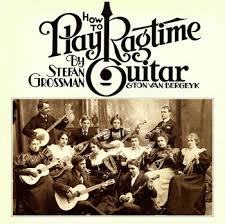
The “Rag” Rhythm: At its core, ragtime is a pianistic adaptation of the march. The left hand (bass clef) maintains a strict, steady “oom-pah” march rhythm (alternating bass notes and chords), providing a solid foundation. The right hand (treble clef) plays highly syncopated melodies—accents falling on off-beats, creating a playful, “ragged” rhythm against the left hand’s stability. This polyrhythmic tension is the essence of ragtime.

Form and Structure: Joplin’s rags are meticulously structured, almost always following a multi-strain form derived from the march:
- Introduction: A brief, four-measure setup.
- Strain A: The main theme, usually 16 measures, repeated.
- Strain B: A second theme, or “trio,” often in a subdominant key, 16 measures, repeated.
- Strain C: A third theme, sometimes returning to the tonic key.
- Strain D (Optional): A final theme.
The strains are often arranged in a D.C. (Da Capo) pattern, returning to the A strain after the final one.
Harmony and Chord Progressions: Joplin’s harmony is far more sophisticated than that of many of his ragtime contemporaries. While rooted in the common practice tonality of European music (I, IV, V7 chords), he frequently employed:
- Chromaticism: Moving between chords using half-steps for a richer, more expressive sound.
- Secondary Dominants: Using the dominant chord of a chord other than the tonic (e.g., V7/V, the “five of five”) to create tension and direction.
- Unexpected Modulations: Briefly shifting to remote keys to add color and surprise.
- Circle of Fifths Progressions: A classic harmonic sequence that provides a strong sense of logic and motion.
A prime example is the B section of “The Entertainer.” The harmony moves through a series of chromatically descending chords (A7 – Ab7 – G7) before resolving, a touch of genius that elevates the piece beyond simple novelty.
Improvisational Licks and Embellishment: A critical point of clarification is that Joplin was a composer, not primarily an improviser. He was adamant that his music be played exactly as written. On the cover of many of his scores, he included the admonition: “NOTICE! Do not play this piece fast. It is never right to play ‘Ragtime’ fast. . .”
The “licks” in his music are not suggestions for improvisation but are fully composed elements. These include:
- The “Scotch Snap”: A short, accented note followed by a longer one (a rhythmic figure common in West African music and Scottish strathspeys).
- Arpeggiated Melodies: Melodies that outline chords in a broken pattern.
- Call and Response: Phrases in the right hand that are “answered” by subsequent phrases, mimicking a vocal tradition.
- Ornamental Turns and Trills: Embellishments written into the score to add flair.
While Joplin forbade improvisation on his written notes, the style of performance—the subtle “swing” within the strict tempo, the dynamic shading—was where a pianist could express their individuality. Modern jazz musicians, however, have extensively used Joplin’s themes as a basis for improvisation, treating his chord progressions as a jumping-off point for their own explorations, much as they would with Gershwin or Broadway standards.

Cooperation with Other Artists
Joplin was part of a vibrant community of Black ragtime composers in Sedalia and St. Louis. He collaborated, competed with, and learned from figures like:
- Scott Hayden: A younger composer with whom Joplin co-wrote several rags, including “Sun Flower Slow Drag” and “Something Doing.”
- Arthur Marshall: Another Sedalia protegé, with whom Joplin collaborated on “Swipesy Cake Walk.”
- Louis Chauvin: A legendary pianist reputed to be one of the greatest improvisers of the era. While no published collaborations exist, Joplin was deeply influenced by his virtuosity. After Chauvin’s early death, Joplin, with others, published “Heliotrope Bouquet” as a tribute, based on fragments Chauvin had played.
His most important professional relationship was with his publisher, John Stark. Stark’s belief in Joplin and his marketing of him as a “classic” ragtime composer was crucial in establishing Joplin’s reputation.

Influences and Legacy
Influences on Joplin:
- African-American Folk Music: Joplin’s work is steeped in the rhythms of jigs, “cakewalks” (a dance parodying white mannerisms), and field hollers.
- European Classical Music: The influence of his teacher, Julius Weiss, is undeniable. The forms, harmonic language, and artistic aspirations of Chopin, Bach, and Mozart are woven into the fabric of his rags.
- The Marching Band Tradition: The foundational structure of his music comes directly from the marches of John Philip Sousa.
Joplin’s Legacy:
Joplin’s legacy is immense and multifaceted:
- The Ragtime Craze: He was the central figure of the ragtime era (c. 1897-1917), which was the first truly American popular music craze and a direct precursor to jazz.
- Bridge to Jazz: Ragtime’s syncopation provided a critical rhythmic vocabulary for early jazz pianists like Jelly Roll Morton and James P. Johnson. Joplin’s sophisticated harmonies also paved the way for the Tin Pan Alley composers.
- The “Joplin Revival” (1970s): After decades of obscurity, Joplin was resurrected. This was sparked by musicologist Vera Brodsky Lawrence’s 1971 collection of his work, but it exploded into popular culture with the use of his music, particularly “The Entertainer,” in the 1973 Oscar-winning film The Sting. The resulting album, The Sting, sold millions, and Joplin’s music was heard by a new global audience. Pianist Joshua Rifkin’s recordings for Nonesuch Records demonstrated the classical integrity of the music, while others, like Marvin Hamlisch, created popular, if sometimes overly fast, arrangements.
- Posthumous Vindication: In 1976, largely due to the revival, Joplin was posthumously awarded the Pulitzer Prize for his contributions to American music, a final, bittersweet validation of his lifelong ambition. His opera, Treemonisha, was finally staged in a full professional production by the Houston Grand Opera that same year, to critical acclaim.
Most Known Compositions and Discography
Most Famous Compositions:
- Maple Leaf Rag (1899): His signature piece and the ragtime anthem.
- The Entertainer (1902): Its use in The Sting made it a global standard.
- Pine Apple Rag (1908): Known for its catchy, ascending melodic line.
- Solace (1909): A “Mexican Serenade,” a hauntingly beautiful and harmonically advanced piece that transcends the ragtime label.
- The Easy Winners (1901): A cheerful and accessible rag.
- Bethena (1905): A “concert waltz,” a poignant and complex work written shortly after the death of his second wife.
- Magnetic Rag (1914): His last published rag, often considered his most harmonically complex and reflective work, almost a farewell.
Essential Discography:
For the authentic Joplin experience, several recordings are considered definitive:
- Joshua Rifkin – Scott Joplin: Piano Rags (Nonesuch Records, 1970): The recording that sparked the scholarly revival; respectful, measured, and precise.
- Dick Hyman – Scott Joplin: The Complete Piano Works (RCA, 1975): A comprehensive and masterfully played survey.
- The New England Conservatory Ragtime Ensemble – The Red Back Book (Angel Records, 1973): Conducted by Gunther Schuller, this album features orchestral arrangements of Joplin’s rags from a historical folio, showcasing their symphonic potential.
- John Arpin (various albums): A renowned ragtime pianist with a deep feel for the genre.
Scott Joplin:
Scott Joplin was a man caught between two worlds and two eras. He was a Black artist in a Jim Crow America, trying to win respect for a music born from the very culture that was being systematically oppressed. He was a populist whose greatest desire was to be recognized as a classicist. His story is one of both triumphant success and heartbreaking failure. He gave the world a new, irresistible musical language, yet he died believing his most important work had been rejected.
Today, the name Scott Joplin is synonymous with ragtime. His music, with its infectious rhythms and surprising emotional depth, continues to delight and move listeners. More than just a composer of popular piano tunes, he was a pioneering American artist whose struggle to bridge the musical and cultural divides of his nation left an indelible mark on the soundtrack of the 20th century and forever changed the course of American music.
Search your favorite sheet music in the Sheet Music Catalog
Scott Joplin – Best Of Scott Joplin
Considered to be the King of Ragtime, Scott Joplin spent most of his life in the American south, between Missouri and New Orleans. Joplin’s natural skills and a combination of gospel hymns, spirituals, dance music, classical music and work songs contributed significantly to the invention of a new style called “Ragtime”, giving America a genuine native music. Here are 27 marvellous rags from his songbook, played by Ania Safa, all dating back to the early 1900s. More than a century later, Scott Joplin’s music is still just as modern, dazzling and fresh.
Tracklist :
00:00 – Maple Leaf Rag 03:03 – Elite Syncopations 06:31 – The Easy Winners 10:05 – Felicity Rag 12:51 – The Entertainer 16:20 – The Strenuous Life 19:43 – Combination March 23:09 – Ragtime Dance 26:54 – Cascades 30:13 – Peacherine Rag 33:31 – Something Doing 36:37 – Country Club 40:13 – Scott Joplin New Rag 43:53 – Sunflower Slow Drag 47:10 – Paragon Rag 50:57 – Heliotrope Bouquet 54:25 – Swipesy 57:56 – Search Light 01:02:26 – Rose Leaf Rag 01:06:04 – Fig Leaf Rag 01:09:33 – Original Rags 01:13:24 – Pine Apple Rag 01:16:50 – Gladiolous Rag 01:21:16 – The Ragtime Dance 01:25:01 – Sugar Cane 01:28:20 – Palm Leaf Rag 01:31:31 – A Breeze from Alabama