Come join us now, and enjoy playing your beloved music and browse through great scores of every level and styles!
Can’t find the songbook you’re looking for? Please, email us at: sheetmusiclibrarypdf@gmail.com We’d like to help you!
Table of Contents
Astor Piazzolla: Adios Nonino For Violin And Guitar sheet music, Noten, partitura, spartiti, 楽譜, 乐谱
Best Sheet Music download from our Library.

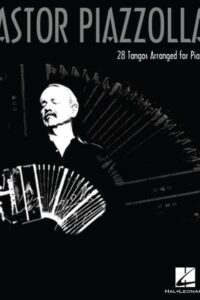


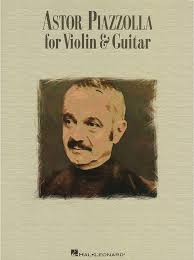
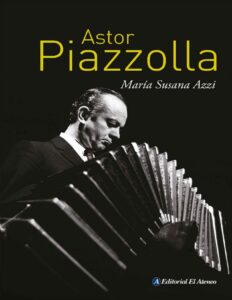



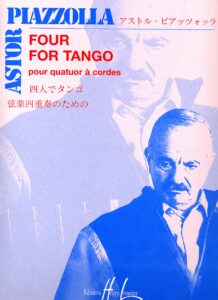

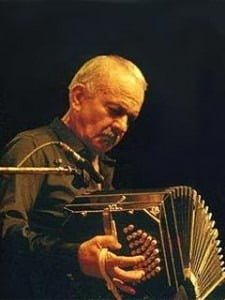



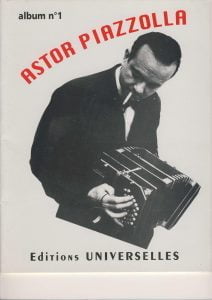

Please, subscribe to our Sheet Music Library.
If you are already a subscriber, please, check our NEW SCORES’ page every month for new sheet music. THANK YOU!
Browse in the Library:
Or browse in the categories menus & download the Library Catalog PDF:
The Rebel of Tango: Astor Piazzolla and the Eternal Farewell of “Adiós Nonino”
In the pantheon of 20th-century music, few figures are as revolutionary and uniquely captivating as Astor Piazzolla. He was a composer who took a beloved, traditional genre—the Argentine tango—and infused it with the complex harmonies of jazz, the daring structures of classical music, and the raw energy of rock. He was hailed as a genius and decried as a destroyer, but ultimately, Astor Piazzolla single-handedly dragged tango from the dance halls into the concert halls, creating a new genre: Tango Nuevo (New Tango). And at the heart of this musical revolution lies one piece, a composition of profound personal grief and artistic triumph: “Adiós Nonino.”
The Piazzolla Revolution: Breaking the Mold
To understand Piazzolla’s impact, one must first understand the tango of his youth. It was primarily dance music, rhythmic, sentimental, and bound by convention. Piazzolla, a virtuoso of the bandoneón (the quintessential tango accordion), studied with the renowned Argentine composer Alberto Ginastera and, crucially, in Paris with the legendary pedagogue Nadia Boulanger. It was Boulanger who, after hearing Piazzolla try to hide his tango past, told him, “Astor, your classical pieces are well written, but the true Piazzolla is in the tango. You must never abandon it.”
This was the catalyst. Piazzolla returned to Argentina not to play traditional tango, but to reinvent it. He formed his various ensembles, most famously his Quinteto Tango Nuevo, which featured bandoneón, violin, piano, electric guitar, and double bass. This instrumentation alone was a statement. The electric guitar brought a modern, sometimes aggressive texture that was unheard of in tango.
His music introduced:
- Jazz Harmony: Complex chords, extended harmonies, and daring modulations.
- Classical Counterpoint: Intricate, independent lines for each instrument, moving beyond simple accompaniment.
- Improvisation: A element borrowed directly from jazz, giving his musicians a new level of expressive freedom.
- Asymmetrical Rhythms: While the foundational habanera rhythm of tango remained, he often fractured and reassembled it.
This “Nuevo Tango” was not for dancing. It was for listening. It was music that was introspective, violent, melancholic, and joyous—often within the same piece. It polarized Argentina, but its power was undeniable, and its influence would soon ripple across the globe.
The Story of “Adiós Nonino”: Grief Transmuted into Genius
“Adiós Nonino” is more than Piazzolla’s most famous composition; it is his musical soul. The story of its creation is a poignant tale of art born from personal tragedy.
In 1959, Piazzolla was in New York, struggling professionally. During this time, he received the devastating news that his beloved father, Vicente “Nonino” Piazzolla, had died suddenly in Argentina. Overwhelmed with grief and unable to return home immediately, Piazzolla channeled his sorrow into music.
He didn’t start from scratch. He took the melody from a cheerful, earlier tango he had written in honor of his father, called “Nonino” (1954). Sitting at his piano, he transformed this joyful tune into a profound elegy. He added a haunting, free-time introduction and, most importantly, a new central section—the now-immortal melody that serves as a heartbreaking farewell.
The piece is structured as a lament:
- Introduction (Lento): A dissonant, searching passage on the piano, like the initial shock of loss. The bandoneón enters with a mournful, improvisatory cry.
- The Main Theme (A): The first statement of the old “Nonino” tune, now rendered with a deep, melancholic nostalgia.
- The Heart of the Farewell (B): This is the new melody. It is one of the most beautiful and sorrowful themes ever written. Lyrical and soaring, it is Piazzolla’s final, loving embrace of his father. The bandoneón sings with an almost human voice, full of vibrato and aching passion.
- Return and Coda: The piece returns to the A theme before fading away on a quiet, unresolved chord, a musical symbol of eternal absence.
The Musical Architecture of a Masterpiece
The genius of “Adiós Nonino” lies not just in its emotional weight but in its sophisticated construction.
- Harmonies: Piazzolla moves beyond simple tango cadences. He uses lush, jazz-influenced chords that add layers of complexity and yearning. The harmonies are often bittersweet, perfectly capturing the duality of remembering a loved one with both love and pain.
- Rhythm: While the piece is largely rubato (free from a strict tempo), the classic tango rhythm underpins the main sections, grounding this deeply personal expression in its Argentine roots.
- Style and Orchestration: In the quintet version, each instrument has a distinct voice. The violin provides a soaring counter-melody, the piano adds harmonic depth and rhythmic punch, the guitar offers texture and drive, and the double bass provides a solid foundation. The bandoneón, however, is always the protagonist—the narrator of this intimate story.
Influence on Contemporary Music
Astor Piazzolla’s influence is vast and transcends genre. He proved that “folk” or “popular” music could be a vehicle for the highest level of artistic expression without losing its soul.
- Classical Music: Renowned classical musicians like Yo-Yo Ma (“Soul of the Tango” album), Gidon Kremer, and Daniel Barenboim have extensively recorded and performed his works, bringing Piazzolla into the standard repertoire of concert stages worldwide.
- Jazz: His sophisticated harmonic language and embrace of improvisation made his music a natural fit for jazz musicians. Artists like Gary Burton and Al Di Meola have recorded tributes and interpretations of his work.
- Film and World Music: His dramatic and evocative style has made his music a favorite for film soundtracks. His influence can be heard in the works of composers like Tan Dun and in the broader “world music” scene, where he remains a towering figure for his successful fusion of national tradition with a global, contemporary sound.
The Eternal Farewell
“Adiós Nonino” is the key that unlocks the world of Astor Piazzolla. It is the perfect synthesis of his revolution: deeply rooted in the emotional language of tango, yet structurally and harmonically sophisticated enough to stand alongside any great classical adagio. It is a piece that speaks a universal language of love and loss.
More than six decades after its creation, “Adiós Nonino” remains the ultimate encore at tango concerts, a piece that never fails to silence an audience and stir the soul. In transforming his deepest personal grief into a work of timeless beauty, Astor Piazzolla did not just say goodbye to his father; he gave the world an immortal hello to a new musical universe. The revolution, as his music proves, is forever alive.