
Come join us now, and enjoy playing your beloved music and browse through great scores of every level and styles!
Can’t find the songbook you’re looking for? Please, email us at: sheetmusiclibrarypdf@gmail.com We’d like to help you!
Table of Contents
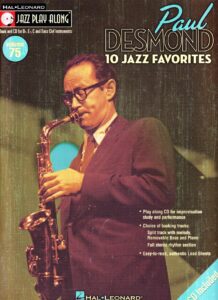
Happy heavenly birthday, Paul Desmond, born on this day in 1924
Best Sheet Music download from our Library.
The Unhurried Poet of the Alto: An Exhaustive Look at Paul Desmond
In the pantheon of jazz saxophonists, where the fiery passion of Charlie Parker and the robust blues of Cannonball Adderley reign, the sound of Paul Desmond emerges like a cool, refreshing breeze. His tone—a gossamer, airy, almost vocal quality—was instantly recognizable, a sound he famously described as being “like a dry martini.” Desmond was not a musician of explosive technique or overwhelming power; he was a poet of the alto saxophone, a master of melodic invention, wit, and harmonic sophistication. As the primary soloist with the Dave Brubeck Quartet, he penned one of the most recognizable jazz tunes of all time, “Take Five,” and carved out a unique space in jazz history as a consummate melodist whose influence continues to resonate with listeners and musicians who value lyricism and intelligence over sheer virtuosity.
Biography: The Man Behind the Sound
Early Life and Influences
Paul Desmond was born Paul Emil Breitenfeld on November 25, 1924, in San Francisco, California. His father was a pianist and organist for silent films, and his mother was a devout Presbyterian, creating an environment where both music and a certain intellectual seriousness were present. He began his musical journey on the violin but switched to the clarinet and eventually settled on the alto saxophone in his high school years.
Desmond’s early influences were the swing-era altoists, most notably Johnny Hodges of the Duke Ellington orchestra. Hodges’ lush, sensual tone and fluid melodic sense left an indelible mark on the young Desmond. However, the seismic shift of bebop in the mid-1940s introduced him to his other primary influence: Charlie Parker. Desmond’s genius lay in his ability to synthesize these two seemingly opposed approaches. From Hodges, he took the beautiful sound and vocal quality; from Parker, he absorbed the harmonic language and rhythmic freedom, but he filtered Parker’s blistering intensity through his own laid-back, cerebral sensibility.
He attended San Francisco State College and served in the U.S. Army during World War II, where he first met pianist Dave Brubeck. Legend has it that Brubeck was so unimpressed with Desmond’s playing at their first meeting that he told him he sounded “like a woman.” Despite this inauspicious start, their musical connection would soon become one of the most fruitful partnerships in jazz.
Please, subscribe to our Sheet Music Library.
If you are already a subscriber, please, check our NEW SCORES’ page every month for new sheet music. THANK YOU!
The Dave Brubeck Quartet: Rise to Fame
After the war, Desmond and Brubeck reconnected in the San Francisco Bay Area. Desmond was playing in various local groups, developing his signature style. In 1951, the classic Dave Brubeck Quartet was formed with Brubeck on piano, Desmond on alto, and the impeccably swinging rhythm section of bassist Gene Wright and drummer Joe Morello.
The quartet quickly gained a reputation, first on college campuses and then internationally. Brubeck’s intellectual approach to jazz and the group’s exploration of unusual time signatures (a rarity in jazz at the time) made them a sensation. Desmond’s role was crucial. His light, floating alto lines provided the perfect counterbalance to Brubeck’s dense, chordal, and sometimes percussive piano style. They had a near-telepathic musical connection, with Desmond often weaving intricate counter-melodies around Brubeck’s themes.
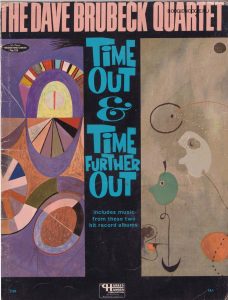
The pinnacle of their success came with the 1959 album Time Out, which featured original compositions in unusual meters. The album’s lead track, “Take Five,” written by Desmond in 5/4 time, became a surprise smash hit. Its catchy, vamp-based melody and Joe Morello’s legendary drum solo captured the public’s imagination, making it the best-selling jazz single of all time for many years. The royalties from “Take Five” provided Desmond with a comfortable income for the rest of his life, which he wryly noted allowed him to “buy a new sports car every year.”
Later Years and Solo Work
The Brubeck Quartet disbanded in 1967, largely due to Brubeck’s desire to focus on composing larger sacred works. Desmond, financially secure and constitutionally unhurried, entered a period of semi-retirement. He was famously witty and self-deprecating, claiming his hobbies were “reading and committing acts of inadvertent charity.” He was an avid reader and a sharp writer, penning humorous articles for DownBeat magazine.
He did not disappear from music, however. He made a series of superb albums for the A&M/CTI label, including the classic Bridge Over Troubled Water (1970), a masterclass in pop interpretation, and Skylark (1974), a sublime duo session with guitarist Jim Hall that many critics consider his finest post-Brubeck work. His partnership with Hall was as sympathetically intimate as his earlier one with Brubeck.
In the early 1970s, he reunited with Brubeck, Wright, and Morello for several well-received tours. Paul Desmond continued to perform until shortly before his death from lung cancer on May 30, 1977, at the age of 52. In a final act of characteristic generosity, he bequeathed the future royalties from his compositions, including “Take Five,” to the American Red Cross.
Music Style and Improvisational Approach
The “Dry Martini” Tone
Desmond’s sound was his most defining characteristic. It was pure, clean, and devoid of the vibrato or gritty edge common to many of his contemporaries. He achieved this through a unique setup, most famously using a Dave Guardala mouthpiece on a Selmer Mark VI saxophone. The result was a sound that was cerebral, gentle, and effortlessly cool. It was a sound that invited the listener in rather than overpowering them.
Melodic and Harmonic Sophistication
Desmond was the quintessential melodic improviser. Unlike many soloists who built their solos from scales and arpeggios, Desmond thought in terms of complete, singable melodies. His lines were logical, elegant, and often surprising. He had an unparalleled ability to weave through complex chord changes with a graceful, linear logic.
His improvisational style was built on several key techniques:
- Motivic Development: Desmond would often take a small, simple melodic idea or “motive” and develop it throughout his solo, varying it rhythmically, inverting it, or sequencing it through different parts of the harmony. This gave his improvisations a cohesive, compositional quality.
- Use of Space: He was a master of rhythmic displacement and the use of silence. He would often place a phrase in an unexpected part of the bar or leave a rest just where a note was expected, creating a sense of tension and release that was both intellectual and swinging.
- Quotation and Wit: Desmond was famous for his witty and often esoteric musical quotations. He would seamlessly weave fragments of folk songs, classical pieces (like “Sur le Pont d’Avignon”), or other jazz standards into his solos, always with a sly, humorous touch. This was the musical equivalent of his dry, literary wit.
- The “Desmond Lick”: While his style was highly variable, one characteristic lick involved a swift, graceful run using upper and lower neighbor tones around a chord tone, often executed with a flawless, legato articulation. It was less a specific pattern and more a general approach of fluid, step-wise motion that avoided clichéd bebop patterns.
Chord Progressions and Harmonic Language
Desmond was a deeply harmonic player. He had an intuitive understanding of chord progressions and was particularly adept at navigating the complex, sometimes “classical”-inspired changes that Dave Brubeck favored.
- In “Take Five”: The harmony of the tune itself is deceptively simple, revolving around a two-chord vamp between E minor and Bb minor (a tritone apart). Desmond’s genius here was in creating a timeless, modal-flavored melody over this static harmony. His solos on various versions of “Take Five” demonstrate his ability to build long, narrative arcs over a repetitive progression, using melodic variation and rhythmic ingenuity to maintain interest.
- Standards and Ballads: On standards like “Stardust” or “Emily,” Desmond’s harmonic knowledge shone. He would use chord substitutions and superimpositions, but always in service of the melody. He had a particular fondness for using the #11 (lydian) sound, which gave his lines a bright, sophisticated color. He would often approach a chord change from a half-step above or below, creating smooth, chromatic voice-leading.
- Counterpoint with Brubeck: A significant part of his harmonic role in the Brubeck quartet was engaging in contrapuntal interplay with the pianist. While Brubeck laid down a thick harmonic foundation, Desmond would dance around it, implying harmonies rather than stating them outright, creating a complex and engaging musical dialogue.
Cooperation with Other Artists
Dave Brubeck: The Defining Partnership
The Brubeck-Desmond collaboration is one of the great partnerships in jazz, akin to Armstrong and Hines or Davis and Evans. Their styles were a study in contrasts: Brubeck’s earthy, polytonal, and rhythmically assertive piano against Desmond’s aerial, linear, and rhythmically subtle saxophone. This contrast created a magical tension and balance. They shared a deep musical empathy, with Desmond’s alto often acting as the “voice” to Brubeck’s “orchestra.” Their interplay on albums like Jazz at Oberlin (1953), Time Out (1959), and The Duets (1975) is a masterclass in conversational music-making.
Browse in the Library:
Or browse in the categories menus & download the Library Catalog PDF:
Jim Hall: A Kindred Spirit
If Brubeck was Desmond’s primary foil, guitarist Jim Hall was his kindred spirit. Their collaboration, particularly on the album Take Ten (1963) and the later Skylark (1974), is some of the most intimate and beautifully understated chamber jazz ever recorded. Both musicians valued melody, space, and texture over flash. Hall’s comping was a web of delicate harmonies and counter-lines that perfectly complemented Desmond’s airy saxophone. Their music together is the sound of two old friends having a quiet, profound conversation.

Other Notable Collaborations
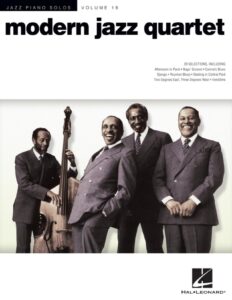
Beyond these two pillars, Desmond recorded with a wide array of artists. He made a memorable album with the Modern Jazz Quartet (Blues Roots, 1968), collaborated with baritone saxophonist Gerry Mulligan, and was a featured soloist on sessions with Chet Baker and Art Farmer. In his final years, he was a key member of the “We Three” group with drummer Connie Kay and bassist Percy Heath, though no commercial recordings of this group were released.
Legacy and Influence
Paul Desmond’s legacy is immense, though his influence is more subtle than that of a John Coltrane or a Charlie Parker. He proved that in a world increasingly focused on technical prowess and harmonic complexity, there was still a paramount place for pure, unadulterated melody and beauty of sound.
He is a direct forebear to a generation of “cool school” and West Coast saxophonists, and his influence can be heard in the playing of:
- Art Pepper: Who shared Desmond’s lyrical approach but with a more urgent, emotional edge.
- Lee Konitz: Another cerebral melodist, though from the Lennie Tristano school of linear improvisation.
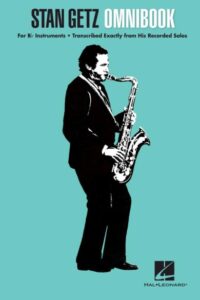
- Stan Getz: While a tenor player, Getz’s focus on tone and lyrical beauty is deeply aligned with Desmond’s ethos.
- Modern players like Kenny Garrett and Mark Turner have also cited his melodic conception as an influence.
His composition “Take Five” remains a jazz standard, a rite of passage for students learning odd time signatures, and a perennial favorite on jazz radio. More than anything, Desmond’s music endures because of its intelligence, wit, and profound beauty. In a frantic world, the unhurried, poetic sound of Paul Desmond remains a sanctuary of calm and elegance.
Works, Filmography, and Discography
Most Known Compositions
While “Take Five” overshadows all others, Desmond was a gifted composer.
- “Take Five”: The iconic jazz waltz in 5/4.
- “Audrey”: A beautiful, lyrical waltz dedicated to Audrey Hepburn.
- “Wendy”: Another graceful, memorable melody.
- “Line for Lyons”: A clever, contrapuntal line dedicated to jazz critic Leonard Lyons.
- “Desmond Blue”: The title track from his 1962 album with a string quartet.
Filmography
Desmond’s most notable film appearance is in the documentary Jazz on a Summer’s Day (1960), which features the Dave Brubeck Quartet performing “Take Five” at the 1958 Newport Jazz Festival. This performance is a classic visual document of the group at its peak.
Selective Discography
With the Dave Brubeck Quartet:
- Jazz at Oberlin (1953) – A landmark live album showcasing the early fire of the quartet.
- Jazz Goes to College (1954) – Cemented their popularity on the campus circuit.
- Time Out (1959) – The classic album featuring “Take Five,” “Blue Rondo à la Turk.”
- Time Further Out (1961) – A sequel exploring more unusual meters.
- At Carnegie Hall (1963) – A celebrated live recording demonstrating their immense popularity and tight interplay.
- The Last Time We Saw Paris (1968) – A final, excellent live recording before their initial breakup.
As a Leader:
- Paul Desmond and the Modern Jazz Quartet (1956) – A rare session with the MJQ’s rhythm section.
- First Place Again (1959) – With his own quartet featuring guitarist Jim Hall.
- Desmond Blue (1962) – A beautiful and tasteful album with a string quartet arranged by Bob Prince.
- Take Ten (1963) – The sequel to “Take Five,” featuring more work with Jim Hall.
- Easy Living (1965) – A quartet session with Hall.
- Bridge Over Troubled Water (1970) – A popular and brilliantly played set of contemporary pop tunes.
- Skylark (1974) – Arguably his masterpiece as a leader, a duet album with Jim Hall.
- The Paul Desmond Quartet Live (1975) – A superb recording from his final working band.
- The Duets (1975) – Intimate duet recordings with Dave Brubeck.
Most Known Performances
- “Take Five” (from Time Out and Jazz on a Summer’s Day): The definitive version, featuring Desmond’s iconic melody and solo, and Joe Morello’s drum showcase.
- “Stardust” (from Dave Brubeck Quartet’s “Jazz Impressions of Eurasia”, 1958): A masterclass in ballad playing, full of wistful beauty and melodic invention.
- “Audrey” (from Desmond Blue, 1962): A perfect example of his compositional grace and lyrical playing.
- “Here’s That Rainy Day” (from Bridge Over Troubled Water, 1970): A stunningly beautiful ballad interpretation.
- “Skylark” (from Skylark, 1974): The title track with Jim Hall, a model of duo interplay and understated elegance.
In conclusion, Paul Desmond was a unique and irreplaceable voice in jazz. He was a musician who valued taste, melody, and intelligence above all else, creating a body of work that remains as refreshing, witty, and profoundly beautiful today as when it was first recorded. He was, and remains, the poet of the alto saxophone.
Search your favorite sheet music in the Sheet Music Catalog
Paul Desmond Discography (on Wikipedia)
The Best of Paul Desmond
Track List:
1 Song To A Seagull 00:00 2 Take Ten 05:48 3 Romance De Amor 11:52 4 Was A Sunny Day 21:32 5 Summer Song/Summertime 26:26 6 Squeeze Me 31:07 7 I’m Old Fashioned 35:42 8 Nuages 40:39 9 You’d Be So Nice To Come Home To 45:56 10 Autumn Leaves 53:03 11 Skylark 01:00:06 12 Vocalise 01:05:24