
Come join us now, and enjoy playing your beloved music and browse through great scores of every level and styles!
Can’t find the songbook you’re looking for? Please, email us at: sheetmusiclibrarypdf@gmail.com We’d like to help you!
Happy heavenly birthday, Tina Turner, born on this day in 1939.
Table of Contents
Best Sheet Music download from our Library.
Please, subscribe to our Sheet Music Library.
If you are already a subscriber, please, check our NEW SCORES’ page every month for new sheet music. THANK YOU!
Tina Turner: The Unquenchable Fire Queen of Rock ‘n’ Roll
Born Anna Mae Bullock on November 26, 1939, in the rural, segregated town of Nutbush, Tennessee, Tina Turner did not just become a singer; she forged herself into a global symbol of survival, resilience, and raw, unadulterated power. Her voice—a raspy, soul-shaking instrument of immense force and subtlety—became the soundtrack to triumph over adversity. Her stage presence—a whirlwind of kinetic energy, pulsating legs, and untamable hair—redefined what it meant to be a female rock star. To understand Tina Turner is to understand a journey that spans the chitlin’ circuit of the 1950s to the sold-out stadiums of the 21st century, a journey of artistic evolution and personal rebirth.
Part I: The Biography – From Nutbush to the World Stage
Early Life and The Ike & Tina Turner Revue
Anna Mae’s early life was marked by poverty and abandonment. Her parents, Floyd and Zelma Bullock, were sharecroppers, and their relationship was tumultuous. They left her and her sister in the care of their strict, religious grandparents. After her grandmother’s death, she lived with various relatives, experiencing a rootless childhood that she would later immortalize in the song “Nutbush City Limits.” Music was her escape; she sang in the church choir at Spring Hill Baptist Church, where she first tapped into the emotional fervor of gospel.
In 1956, at the age of 16, she moved to St. Louis to be with her mother. The vibrant rhythm and blues scene on the city’s East End captivated her. It was at a club in 1956 that she first saw Ike Turner and his Kings of Rhythm perform. Spontaneous and brimming with confidence, the young Anna Mae grabbed the microphone during a intermission and sang a B.B. King song. Ike, a talented musician and noted bandleader, was stunned by the raw power in her voice. He soon invited her to join his band, initially under the name “Little Ann.”
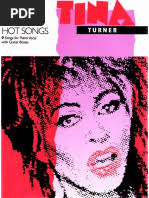
The turning point came in 1960 during the recording of “A Fool In Love.” The intended male vocalist failed to show, so Ike had Anna Mae record the guide vocal. A disc jockey heard the tape and convinced Ike to release it with her voice front and center. The song became a massive R&B hit, crossing over to the pop charts. Seeing star potential, Ike crafted a new identity for her: “Tina,” inspired by the comic book heroine Sheena, Queen of the Jungle. He trademarked the name, a move that would have lasting consequences. Thus, the Ike & Tina Turner Revue was born.

Throughout the 1960s, the Revue became one of the most electrifying live acts in the world. Tina was the undeniable star—a dynamo who danced with an explosive, untamed energy while delivering vocals that could switch from a soulful croon to a guttural roar. They scored hits with “It’s Gonna Work Out Fine,” “I Idolize You,” and their landmark 1966 cover of Creedence Clearwater Revival’s “Proud Mary,” which became their signature tune and earned them a Grammy. Their sound was “Rock Soul,” a blistering fusion of R&B, rock, and gospel punctuated by the iconic, synchronized dancing of The Ikettes.

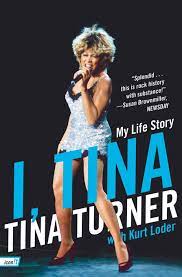
However, behind the glamour was a nightmare. Ike Turner was a controlling and violently abusive husband. Tina endured brutal physical, emotional, and psychological torture for years, a horror she would later detail in her autobiography, I, Tina. The professional and personal breaking point came on July 1, 1976, during a tour. After a particularly severe beating, Tina fled from Ike in Dallas, Texas, with only 36 cents and a gas station credit card to her name.
The Phoenix: Solo Resurrection and Global Domination
The 1970s were a wilderness period for Tina. Determined to be free, she divorced Ike, taking only her name (after a fierce legal battle) and the burden of massive debt from canceled tours. To pay the bills, she performed wherever she could—on television variety shows, in cabarets, and in hotel lounges, rebuilding her reputation one show at a time.
Her solo albums in the late ’70s failed to chart significantly, and many in the industry saw her as a relic. But Tina Turner was a survivor. She honed her act, transforming from an R&B soul shouter into a bona fide rock artist, appealing to a new, younger, predominantly white audience. Her relentless touring across Europe, where she remained a revered figure, kept her career alive.
The resurrection began in 1983. After a series of savvy managerial moves, she recorded a cover of Al Green’s “Let’s Stay Together” for a European label. It was a surprise hit, setting the stage for one of the most remarkable comebacks in music history. Capitol Records signed her, and in 1984, she released Private Dancer.
The album was a masterpiece of pop-rock synthesis. The lead single, “What’s Love Got to Do with It,” with its cynical lyric and cool, new wave groove, was unlike anything she had recorded before. It became a global phenomenon, propelling Private Dancer to multi-platinum status and earning her three Grammy Awards, including Record of the Year. At 44 years old, Tina Turner was not just back; she was bigger than ever. She was now an icon of female empowerment and resilience.
The following years cemented her status as a global superstar. She starred alongside Mel Gibson in Mad Max Beyond Thunderdome (1985), delivering the hit “We Don’t Need Another Hero.” Her Break Every Rule world tour in 1987 set a record for the highest-attendance concert by a female artist, a title she would hold for decades. She continued to release successful albums like Foreign Affair (1989), which spawned the timeless anthem “The Best,” and Wildest Dreams (1996). In 1995, she performed the theme song for the James Bond film GoldenEye, written for her by Bono and The Edge of U2.
In 2000, at the age of 60, she announced her retirement with the Twenty Four Seven tour, once again breaking attendance records. Though she stepped away from the spotlight, her legacy was secure. A final, triumphant return came in 2008 with the Tina!: 50th Anniversary Tour, proving her enduring appeal. After a long and happy marriage to German music executive Erwin Bach, she officially retired from public life and became a Swiss citizen. Tina Turner, the girl from Nutbush, passed away on May 24, 2023, at her home in Küsnacht, Switzerland, leaving behind a legacy that continues to inspire.
Part II: The Music – Style, Harmony, and Improvisational Genius
Vocal Style and Stage Presence
Tina Turner’s music style is a powerful alchemy of its core components:
- Gospel Roots: The foundation of everything she sang was the black church. Her ability to inject raw emotion, testifying shouts, and melismatic runs (though she used them sparingly for effect) came directly from gospel. This is palpable in the climax of “River Deep – Mountain High” and her live performances of “The Best.”
- Rhythm & Blues Soul: With Ike, she was firmly rooted in the R&B tradition. Songs like “A Fool In Love” and “I Idolize You” showcase a grittier, more desperate vocal quality, full of soulful inflection and raw passion.
- Rock ‘n’ Roll Energy: Tina didn’t just sing rock; she embodied it. She took the machismo of rock and made it her own. Her voice developed a distinctive, gravelly rasp that could cut through any band, no matter how loud. This was not a sweet, polished voice; it was a weapon of emotional expression, perfect for conveying pain, lust, and triumph.
Her stage presence was revolutionary. Rejecting the poised, stationary style of many female singers of her era, Tina was a vortex of motion. Her famously powerful, dancing legs, her wild, untamed wigs, her short, sequined dresses, and her sheer athletic stamina created a visual spectacle that was as integral to her performance as her voice. She didn’t just perform a song; she physically enacted it.
Chord Progressions and Music Harmony
The harmonic language of Tina Turner’s music evolved with her career.
- Ike & Tina Era: The music was often built on classic, blues-based progressions. A staple was the 12-bar blues (I-I-I-I, IV-IV-I-I, V-V-I-I), used as a foundation for extended jams and call-and-response with the Ikettes. Songs like “Nutbush City Limits” are built on a simple, funky, one or two-chord vamp (often a minor chord, like E minor), creating a hypnotic, driving groove that allows the rhythm section and vocals to take center stage. Phil Spector’s “Wall of Sound” production on “River Deep – Mountain High” was a harmonic exception—a complex, layered arrangement with sophisticated string and vocal harmonies that created a monumental, almost operatic soundscape.
- Solo Era: With
Private Dancer, her music embraced the harmonic palette of 1980s pop and rock. This included:- Synthetic Harmony: The use of synthesizers and sequencers led to progressions that were more atmospheric and less rooted in the blues. “What’s Love Got to Do with It” is built on a simple, repeating four-chord progression (Am-G-C-F in the verse) that is quintessential 80s pop.
- Power Ballads: Songs like “I Can’t Stand the Rain” and “The Best” often use common pop chord progressions but are elevated by the sheer conviction and power of her delivery. “The Best” follows a classic I-V-vi-IV progression (in B major: B-F#-G#m-E), a timeless sequence that supports its anthemic, uplifting quality.
The true genius was not in complex jazz harmony, but in how her voice interacted with these progressions. She could take a simple chord change and imbue it with a world of meaning through her phrasing and timbre.
Improvisational Licks and Phrasing
Tina Turner was a master of vocal improvisation. While she didn’t scat like a jazz singer, her improvisation lived in her ad-libs, rhythmic variations, and tonal shifts, especially in live performances.
- The Guttural Growl: A signature lick was a short, guttural growl or shout, often used as an exclamation point. It was a raw release of energy, heard in the breaks of “Proud Mary” (“nice… and rough!”) and throughout “Sexy Ida.”
- The Rhythmic Stutter and Repeat: She would often take a single word or short phrase and repeat it with increasing intensity, breaking down the rhythm. In live versions of “The Best,” she might sing “You’re simply the best, best, best, best…” building anticipation and excitement.
- The Melismatic Run (Tina’s Style): Unlike the long, flowing runs of Aretha Franklin, Tina’s were shorter, sharper, and more rhythmic. They were bursts of emotion rather than technical displays. In “River Deep – Mountain High,” the way she bends the word “feel” is a masterclass in using a simple melisma for dramatic effect.
- Call and Response: A hallmark of the Revue, this was a form of structured improvisation. She would call out a line, and the Ikettes would respond, but Tina’s calls were often improvised in their delivery—varying the pitch, rhythm, and intensity each night.
- Dynamic Contrast: Her greatest improvisational tool was her command of dynamics. She could deliver a line in a soft, almost conversational whisper and then, in the next breath, unleash a full-power roar. This kept her performances unpredictable and emotionally riveting.
Part III: Collaborations, Influences, and Legacy
Cooperation with Other Artists
Tina’s career was marked by fruitful collaborations that often introduced her to new audiences.

- Phil Spector: The 1966 session for “River Deep – Mountain High” was legendary. Spector’s obsessive production and Turner’s volcanic vocal created what both considered their masterpiece. Though it underperformed in the US, it was a massive hit in Europe and is now regarded as one of the greatest pop records ever made.
- The Rolling Stones: The Stones were huge admirers and invited Ike & Tina to open for them on several tours in the late 60s and early 70s. This exposure was critical, introducing their raw energy to a huge rock audience. Mick Jagger has openly admitted to borrowing elements of her stage presence.
- David Bowie: He wrote the song “1984” for her
Private Danceralbum, though it was not released until later. Their mutual respect was evident throughout their careers. - Bryan Adams: Their 1985 duet “It’s Only Love” was a rock radio staple and earned them a Grammy nomination, showcasing Tina’s ability to hold her own with any rock vocalist.
- Eric Clapton, Elton John, and Rod Stewart: She collaborated and performed with the biggest names in rock, always as an equal, reinforcing her status as the “Queen.”
- Bono and The Edge: Writing “GoldenEye” for her was a perfect match, blending U2’s anthemic rock with Tina’s cinematic drama.
Influences and Legacy
Influences on Tina: Her primary influences were the gospel music of her youth and the early rock ‘n’ roll and R&B of artists like Little Richard, Sister Rosetta Tharpe, and Ray Charles. She took Richard’s androgynous energy and Tharpe’s groundbreaking guitar-powered gospel rock and fused them into her own unique persona.
Tina’s Legacy: Tina Turner’s impact is immeasurable.
- The Blueprint for the Female Rock Star: She paved the way for every powerful woman in rock who followed, from Janis Joplin (a contemporary) to Madonna, Beyoncé, Lady Gaga, and Pink. She proved a woman could be sexy, strong, and in complete command of the stage without conforming to a male fantasy.
- A Symbol of Survival: Her story of escaping abuse and rebuilding her life and career on her own terms made her a global icon of resilience and empowerment. She gave hope to countless people in abusive situations.
- The Art of the Comeback: Her success in her 40s redefined ageism in the music industry, proving that talent and charisma are ageless.
- A Enduring Cultural Force: Her music continues to be featured in films, commercials, and sampled by hip-hop artists, testifying to its timeless power.
Part IV: Works and Filmography
Filmography
Gimme Shelter(1970): The Maysles Brothers’ documentary about The Rolling Stones’ 1969 US tour features a blistering performance by Ike & Tina.Tommy(1975): Ken Russell’s film adaptation of The Who’s rock opera. Turner delivers a memorable, terrifying performance as the “Acid Queen.”Mad Max Beyond Thunderdome(1985): Her first major acting role as the formidable Aunty Entity. She received positive reviews and contributed two hit songs to the soundtrack.What's Love Got to Do with It(1993): The biopic based on her autobiography, starring Angela Bassett (who was nominated for an Oscar) and Laurence Fishburne. Though Turner served as a producer, she has stated it was difficult to watch and not a completely accurate reflection of her experience.
Select Discography
With Ike & Tina Turner:
The Soul of Ike & Tina Turner(1961)River Deep – Mountain High(1966)Workin' Together(1970)Live at Carnegie Hall(1971)
Solo Albums:
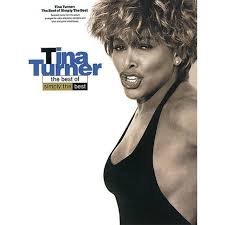
Tina Turns the Country On!(1974)Rough(1978)Private Dancer(1984) – Landmark Comeback AlbumBreak Every Rule(1986)Foreign Affair(1989)Simply the Best(1991) – Definitive CompilationWildest Dreams(1996)Twenty Four Seven(1999)
Most Known Compositions and Performances
- “Proud Mary” (1971): The definitive version. The slow, sultry intro exploding into a frenetic rock-soul finale is one of pop music’s most iconic moments.
- “River Deep – Mountain High” (1966): Phil Spector’s and Tina’s masterpiece. A vocal performance of staggering power and conviction.
- “What’s Love Got to Do with It” (1984): The song that crowned her comeback queen. A perfect blend of pop songwriting and her unique, weathered vocal.
- “The Best” (1989): Her ultimate anthem. It has transcended its origins to become a global standard for celebration and achievement.
- “Nutbush City Limits” (1973): A funky, self-penned ode to her hometown that became a dancefloor staple.
- “A Fool In Love” (1960): The raw, desperate performance that started it all.
- “We Don’t Need Another Hero (Thunderdome)” (1985): A powerful 80s rock ballad that perfectly captured the film’s post-apocalyptic grandeur.
- “Private Dancer” (1984): The haunting, atmospheric title track that showcased her depth and narrative skill.
- “I Can’t Stand the Rain” (1984): A brilliant cover that transformed the Ann Peebles soul original into a cool, synth-driven lament.
- “Let’s Stay Together” (1983): The surprise European hit that signaled her return was imminent.
Tina Turner’s story is more than a biography; it is a testament to the power of the human spirit. She channeled the pain of her life into her art, creating a body of work that is visceral, joyous, and eternally powerful. She was not simply given the title “Queen of Rock ‘n’ Roll”; she seized it, refined it, and wore its crown with a strength and grace that inspired the world. The fire that was lit in Nutbush, Tennessee, in 1939 continues to burn brightly in every note she sang and every life she touched.
Browse in the Library:
Or browse in the categories menus & download the Library Catalog PDF:
Tina Turner – The Best (Official Music Video)
Tina Turner – What’s Love Got To Do With It (Official Music Video)
Lyrics:
You must understand, though the touch of your hand
Makes my pulse react
That it’s only the thrill of boy meeting girl
Opposites attract
It’s physical
Only logical
You must try to ignore that it means more than that
Oh-oh, what’s love got to do, got to do with it?
What’s love but a second-hand emotion?
What’s love got to do, got to do with it?
Who needs a heart when a heart can be broken?
Oh-oh, what’s love got to do, got to do with it?
What’s love but a second-hand emo-
Oh-oh, what’s love got to do, got to do with it?
Who needs a heart when a heart can be broken?
Oh-oh, what’s love got to do, got to do with it?
What’s love but a second-hand emo-
Oh-oh, what’s love got to do, got to do with it?
Who needs a heart when a heart can be broken?
It may seem to you that I’m acting confused
When you’re close to me
If I tend to look dazed, I’ve read it someplace
I’ve got cause to be
There’s a name for it
There’s a phrase that fits
But whatever the reason, you do it for me
Oh-oh, what’s love got to do, got to do with it?
What’s love but a second-hand emotion?
What’s love got to do, got to do with it?
Who needs a heart, when a heart can be broken?
Oh-oh, what’s love got to do, got to do with it?
What’s love but a second-hand emotion?
What’s love got to do, got to do with it?
Who needs a heart (when a heart can be broken?)
What’s love got to do, got to do with it?
What’s love but a second-hand emotion?
Oh-oh, what’s love got to do, got to do with it?
Who needs a heart when a heart can be broken?
Oh-oh
Oh-oh, what’s love?
What’s love?
Oh-oh