
Come join us now, and enjoy playing your beloved music and browse through great scores of every level and styles!
Can’t find the songbook you’re looking for? Please, email us at: sheetmusiclibrarypdf@gmail.com We’d like to help you!
Table of Contents
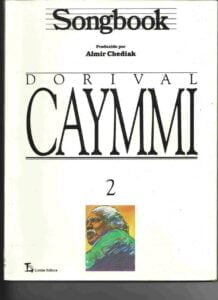
Rediscover Dorival Caymmi, with songbooks Vol. 1 & 2.

Maria – Dorival Caymmi (1958)
Maria (Ary Barroso & Luiz Peixoto) – Dorival Caymmi (1958).
Dorival Caymmi: The Patriarch of Brazilian Song
To speak of Dorival Caymmi is to speak of the very bedrock of modern Brazilian popular music. While names like Antônio Carlos Jobim and João Gilberto are often the first to be associated with the country’s sonic identity abroad, it was Caymmi who, a generation earlier, laid the foundational myths, melodies, and rhythms that would nourish the Tropicália and Bossa Nova movements. He was not a prolific artist in terms of quantity, but the quality and cultural density of his work are immeasurable. He was a poet of the sea, a chronicler of the people of Bahia, and a composer whose apparent simplicity concealed a profound and sophisticated musical architecture. This article delves into the life, style, and enduring legacy of this monumental figure.
Please, subscribe to our Sheet Music Library.
If you are already a subscriber, please, check our NEW SCORES’ page every month for new sheet music. THANK YOU!
Biography: From Salvador to the National Stage
Dorival Caymmi was born on April 30, 1914, in Salvador, Bahia, a city whose cultural and African heritage would become the central pillar of his art. He was the son of a tailor and a baiana (a traditional Bahian woman who sells food on the street), a figure who would later be immortalized in his song “O Que É Que a Baiana Tem?”. His connection to the sea was forged in his youth, spending his days on the beaches of Itapuã and Rio Vermelho, listening to the stories of fishermen and the rhythms of samba de roda and capoeira.
Initially aspiring to be a lawyer or journalist, Caymmi moved to Rio de Janeiro in 1938 to study law. However, the pull of music was irresistible. To support himself, he began singing in radio stations and nightclubs. His big break came that same year when he auditioned for the legendary radio host and producer Almirante, performing his own compositions “O Que É Que a Baiana Tem?” and “Promessa de Pescador.” Almirante was immediately captivated by the freshness and authenticity of this “Bahian boy.”
The performance of “O Que É Que a Baiana Tem?” by Carmen Miranda in the 1939 film Banana da Terra was a cultural earthquake. It catapulted Miranda to stardom and introduced Caymmi’s unique Bahian sound to a national audience. This moment marked a pivotal shift in Brazilian popular music, which had been dominated by the samba-carioca (from Rio); Caymmi brought the samba-da-Bahia to the forefront, rich with a different cadence and thematic content.
Browse in the Library:
Or browse in the categories menus & download the Library Catalog PDF:
His career flourished throughout the 1940s and 1950s. He married the singer Stella Maris in 1940, who became his lifelong partner and muse. Unlike many of his contemporaries, Caymmi was never a flashy, prolific star. He worked at his own pace, composing slowly and deliberately, often going years between recordings. He was a quiet, observant man, more comfortable with a small circle of friends and family than in the glare of the spotlight. This contemplative nature is reflected in his music, which feels timeless and unhurried.
He continued to compose and perform until his later years, surrounded by immense respect from his peers and the adoration of new generations of musicians. Dorival Caymmi passed away on August 16, 2008, in Rio de Janeiro, at the age of 94, leaving behind a legacy as one of Brazil’s most essential and beloved composers.
Musical Style and Thematic Content: The Sea, the Sertão, and the Baiana
Caymmi’s musical style is a unique synthesis of Brazilian folk traditions and sophisticated popular songwriting. It can be broadly categorized into three main thematic cycles:
- The Sea Cycle (Canções do Mar): This is his most defining theme. Having grown up by the ocean, Caymmi composed a series of songs that are nothing short of maritime symphonies in miniature. They are not merely about the sea; they embody its essence—its calm, its fury, its mystery, and the lives of those who depend on it. Songs like “Marina,” “O Mar,” and “É Doce Morrer no Mar” are profound meditations. The sea in Caymmi’s work is both a provider and a tomb, a beautiful and terrifying force of nature. His melodies often mimic the gentle lapping of waves or the rolling motion of a boat, creating a powerful synesthesia.
- The Sertão Cycle: While less prominent than the sea, the arid backlands of Northeastern Brazil (sertão) also feature in his work. Inspired by the literature of writers like Graciliano Ramos and Jorge Amado (a close friend), Caymmi captured the hardship, resilience, and mysticism of the sertanejo people. “Saudade da Bahia,” written during his early days in Rio, expresses the profound longing for his homeland, a sentiment central to the sertão experience.
- The Baiano Cycle: These are songs celebrating the culture, sensuality, and daily life of the people of Bahia. They are often more rhythmic and celebratory. “O Que É Que a Baiana Tem?” is a prime example, a song that is both a description and a celebration of the baiana‘s charm and attire. “A Lenda do Abaeté” intertwines the sea with local legend, while “Samba da Minha Terra” is a manifesto for a more relaxed, Bahian style of samba.
Stylistically, his music is rooted in:
- Samba-da-Bahia: A slower, more cadenced, and melodically fluid form of samba compared to the percussive samba from Rio.
- Modinha: A traditional Brazilian genre of sentimental love songs, which influenced his melodic phrasing.
- African-Brazilian Rhythms: The influence of candomblé and capoeira is felt in the syncopation and percussion of his arrangements.
Chord Progressions and Musical Harmony: The Illusion of Simplicity
Analyzing Caymmi’s harmony reveals a composer of great subtlety. On the surface, his songs often sound simple and folk-like, but this is a carefully crafted illusion. He used harmony with the precision of a poet choosing words.
- Modal Flavor and Diatonic Purity: Unlike the complex jazz-influenced harmonies of Bossa Nova that would follow, Caymmi’s progressions are often firmly diatonic, staying within a key. However, he had a masterful use of modal mixtures, borrowing chords from the parallel minor to create a unique, slightly melancholic or nostalgic color. A song like “Marina” is a masterclass in this. Its progression (in C Major) moves with a timeless logic: C – G/B – Am – G – F – C/E – Dm7 – G. The use of the G/B and C/E creates a smooth, wave-like bass movement, while the diatonic sequence feels both inevitable and deeply moving.
- Static Harmony and Melodic Emphasis: Many of his songs, particularly the sea-themed ones, use relatively static harmony, with long stretches on the tonic or subdominant chords. This allows the melody and the lyrics to take center stage. In “O Mar,” the harmonic movement is slow and deliberate, mimicking the vast, unchanging horizon of the ocean. This static quality is not a lack of sophistication but a deliberate artistic choice to evoke a specific atmosphere.
- Sophisticated Bass Lines: Caymmi was a skilled guitarist, and his chord voicings often feature sophisticated, moving bass lines. This creates a rich, contrapuntal texture within a seemingly simple harmonic framework. He didn’t just play chords; he orchestrated them on the guitar.
His harmonic language provided a crucial bridge between the simpler samba-canção of the 1930s and the rich tonal palette that Jobim and Gilberto would later explore. Jobim himself often cited Caymmi as a primary influence, noting that he learned about the “architecture of song” from him.
Improvisational Licks and Guitar Style
While not an improviser in the jazz sense, Caymmi’s guitar playing was foundational and highly influential. His style was rhythmic, melodic, and served the song above all else.
- The “Caymmi Beat”: He developed a distinctive guitar pattern that became known as the “batuque de Caymmi” or “Caymmi beat.” It was a syncopated, fingerstyle pattern that combined a steady bass pulse (often the root and fifth of the chord) with off-beat chords or melodic fills in the higher registers. This pattern can be heard clearly in songs like “Samba da Minha Terra” and “Rosa Morena.” It is a relaxed, swinging rhythm that feels both grounded and effortless.
- Bass-Line Melodism: His improvisational flair came through in the way he would embellish the transitions between chords. He would often walk the bass line or add small, melodic licks that connected one chord to the next. These were not flashy solos but subtle, conversational phrases that enriched the harmonic texture.
- Voice and Guitar Symbiosis: His singing and guitar playing were completely intertwined. His vocal phrasing, often languid and behind the beat, was perfectly mirrored by his guitar, creating a cohesive and intimate performance style that would deeply influence João Gilberto’s revolutionary approach.

Cooperation with Other Artists
Caymmi was a revered figure who collaborated with and influenced a who’s-who of Brazilian music.
- Carmen Miranda: The most historically significant early collaboration. Her performance of “O Que É Que a Baiana Tem?” made them both national stars.
- Tom Jobim and João Gilberto: A relationship of deep mutual admiration. Jobim considered Caymmi a master, and the influence is clear in Jobim’s own sea-inspired compositions like “Wave” and “Samba do Avião.” João Gilberto’s entire aesthetic—the quiet singing, the intricate guitar—is a direct evolution of Caymmi’s intimate style. They recorded his songs frequently, with Gilberto’s version of “Rosa Morena” being definitive.
- Family: He created a musical dynasty. His children—Nana, Danilo, and Flávia—all became celebrated musicians. His recordings with his wife, Stella Maris, and his children are some of the most beautiful and heartfelt in his discography, such as the album “Caymmi Visita Tom”.
- Jorge Amado: While not a musician, the great Bahian writer was a lifelong friend and a profound artistic influence. Caymmi set many of Amado’s characters and the spirit of his novels to music. Their work together represents a pinnacle of Bahian cultural expression.
- Other Interpreters: His songs have been covered by countless artists, including Elis Regina (“O Mar”), Caetano Veloso (who constantly cites him as a primary influence), Gal Costa, Maria Bethânia, and even international stars like Harry Belafonte.

Influences and Legacy
Influences: Caymmi’s influences were the folk and popular traditions of his native Bahia: the samba de roda, the capoeira songs, the liturgical music of candomblé, the serenades of the viola players, and the early Carnival marches.
Legacy: Dorival Caymmi’s legacy is colossal and can be felt in nearly every corner of Brazilian music.
- Architect of Bahian Identity: He was the first to successfully translate the complex cultural universe of Bahia into a national artistic language.
- Precursor to Bossa Nova: He provided the harmonic, rhythmic, and aesthetic blueprint for the Bossa Nova movement. His relaxed, intimate style and sophisticated guitar work were the direct precursors to João Gilberto’s revolution.
- Influence on Tropicália: Caetano Veloso and Gilberto Gil saw in Caymmi a model of an artist who was deeply rooted in Brazilian tradition yet utterly modern. His work validated their own exploration of Brazilian roots.
- The Standard Bearer: His compositions became standards, essential repertoire for any Brazilian musician. They are taught in schools, sung in bars, and remain eternally fresh.
Major Works, Compositions, and Performances
Most Known Compositions:
- “O Que É Que a Baiana Tem?” (1939) – His breakout hit, an anthem of Bahian culture.
- “Samba da Minha Terra” (1940) – A classic samba that declares, “whoever doesn’t like it, better not listen.”
- “Marina” (1939) – Perhaps his most perfect “sea song,” a hauntingly beautiful melody.
- “Rosa Morena” (1952) – A samba-canção of exquisite beauty and romantic longing.
- “Saudade da Bahia” (1957) – The ultimate expression of homesickness for his homeland.
- “É Doce Morrer no Mar” (1965) – A dramatic and poetic take on the fisherman’s fate.
- “O Mar” (1956) – A minimalist and powerful evocation of the ocean’s immensity.
- “A Lenda do Abaeté” (1957) – A musical legend about the black sand dunes of Abaeté.
- “Doralice” (1945) – A joyful and infectious samba.
Key Performances: His performances were not about vocal pyrotechnics but about interpretation. His recordings for the Odeon and RCA Victor labels in the 1950s and 60s are considered canonical. His live performances, though rare in his later years, were events of great warmth and intimacy.
Discography (Selective)
- Canções Praieiras (1954) – A foundational album focusing on his sea-themed compositions.
- Eu Vou pra Maracangalha (1957)
- Caymmi e Seu Violão (1959) – Highlights his intimate guitar-and-voice style.
- Caymmi Visita Tom (1964) – A beautiful collaboration with his family, paying tribute to Tom Jobim.
- Caymmi (1972) – A superb self-titled album for the Odeon label.
- Ao Vivo (1999) – A rare and precious live recording from his later years.
Filmography
Caymmi also had a presence in cinema, both as a subject and as a composer.
- Banana da Terra (1939) – Features Carmen Miranda singing “O Que É Que a Baiana Tem?”.
- Jubiabá (1986) – A film adaptation of Jorge Amado’s novel, for which Caymmi contributed music.
- Dorival Caymmi (2001) – A documentary short by his granddaughter, Dori Caymmi.
- Caymmi, o Mar e o Tempo (2005) – An extensive and acclaimed documentary about his life and work.
Dorival Caymmi was more than a musician; he was a cartographer of the Brazilian soul. He mapped the sounds of the Bahian coast and the sentiments of its people with an unparalleled blend of poetic grace and musical wisdom. In his songs, the sea becomes a character, saudade becomes a tangible feeling, and the rhythm of life in Bahia finds its perfect musical expression. He stood at the confluence of tradition and modernity, drawing from the deepest wells of Brazilian folk culture to create a body of work that is both timeless and universally resonant. To understand Caymmi is to understand a fundamental piece of Brazil’s heart, and his gentle, profound voice continues to echo as an essential part of the nation’s soundtrack.
Search your favorite sheet music in the Sheet Music Catalog
100 años de Dorival Caymmi.
16/09/14 Conferencia ‘100 años de Dorival Caymmi. ¿Qué tiene la Bahía de Caymmi?’, a cargo de la escritora Stella Caymmi. La autora abordó la vida y obra de Dorival Caymmi y la realidad de Bahía, retratada en sus canciones, así como la relación del cantante con coetáneos como el artista Carybé o el escritor Jorge Amado. Stella es autora del libro Dorival Caymmi: o mar e o tempo y en 2013 publicó la tesis de doctorado O que é que a Baiana tem?, en la que analiza una entrevista concedida por su abuelo. Participaron: Stella Caymmi (Brasil), acompañada por la guitarra de Flávia Bittencourt interpretando canciones de Dorival Caymmi.