
Come join us now, and enjoy playing your beloved music and browse through great scores of every level and styles!
Can’t find the songbook you’re looking for? Please, email us at: sheetmusiclibrarypdf@gmail.com We’d like to help you!
Table of Contents
Happy heavenly birthday, Wynton Kelly, born on this in 1931
Search your favorite sheet music in the Sheet Music Catalog
Please, subscribe to our Sheet Music Library.
If you are already a subscriber, please, check our NEW SCORES’ page every month for new sheet music. THANK YOU!
Wynton Kelly: The Pianist with the Blue Note Groove
On a December day in 1931, in the sun-drenched parish of Trelawny, Jamaica, a future architect of jazz piano groove was born. Wynton Kelly, a name that may not always headline the pantheon of jazz giants, nevertheless represents one of the most infectiously swinging, harmonically rich, and deeply foundational forces in the music’s history. To the casual listener, he is the pianist on Miles Davis’s “Freddie Freeloader” from Kind of Blue. To the aficionado, he is the heartbeat of the legendary rhythm section with Paul Chambers and Jimmy Cobb, a master of comping whose every chord seemed to lift soloists to greater heights, and a purveyor of a uniquely joyous, blues-drenched piano style that bridged bebop and soul jazz. His life and work embody the very essence of swing, making him one of the most beloved and influential pianists in the hard bop era.

Browse in the Library:
Or browse in the categories menus & download the Library Catalog PDF:
From Jamaica to 52nd Street: The Early Years
Wynton Kelly’s musical journey began in the Caribbean, but his family moved to Brooklyn, New York, when he was just four. Immersed in the bustling New York jazz scene from a young age, he was a professional by his early teens, his prodigious talent quickly evident. His early influences were the piano titans of the day: the harmonic daring of Art Tatum, the bebop fluency of Bud Powell, and the gospel-infused blues of players like Avery Parrish. Kelly never underwent formal training; he was a natural, learning by ear and through the demanding school of bandstand experience.
By the late 1940s, still a teenager, he was working with established leaders. A significant early gig was with saxophonist Hal “Cornbread” Singer, where he reportedly earned the nickname “The Kid.” His first major recording credit came in 1951 with the formidable Dizzy Gillespie big band, a testament to his already formidable skills. Throughout the early and mid-1950s, Kelly became a sought-after side man, a pianist’s pianist, laying down solid, inventive backing for a who’s who of jazz greats including Lester Young, Charlie Parker, Dinah Washington, and Hank Mobley. This period of apprenticeship was crucial; it honed his unparalleled ability to support a soloist, to listen and react in real-time, and to internalize the language of blues and bop.
Musical Style: The Architecture of Joy
Wynton Kelly’s style is instantly recognizable: a potent, life-affirming concoction of bebop vocabulary, deep-rooted blues, and a rhythmic feel that is both relaxed and irresistibly propulsive.
Harmony and Voicings: Kelly’s harmonic language was sophisticated yet never esoteric. He built upon the foundations of bebop but infused them with a warmer, more vocal quality. He was a master of block chords, often using them in a way that felt like a horn section punching behind a soloist. His left hand was deceptively simple, often laying down a rock-solid, sparse bass line or a punctuating chord that anchored the time. His right-hand lines were fluid and bluesy, peppered with grace notes and trills that gave them a singing quality. He had a particular fondness for dominant chords, exploring their altered tensions (flat nines, sharp nines, flat thirteens) not with academic coldness, but with a funky, conversational flair. In his comping, chords were never just harmonic filler; they were rhythmic and melodic statements, often placed with a drummer’s sense of syncopation to push the groove forward.
Rhythmic Feel and Groove: This is the core of the Kelly magic. His time feel was perhaps his greatest gift. Unlike the driving, “four-to-the-bar” feel of some pianists, Kelly had a loping, relaxed swing that seemed to float over the beat while simultaneously defining it with unerring precision. He played with a certain “back-pocket” feel—slightly behind the beat—that created immense tension and release, making the swing feel wider and more satisfying. His collaboration with bassist Paul Chambers was telepathic; together, they created a rhythmic pocket so deep and inviting it was virtually impossible not to move to it. This groove was the perfect bridge between the complex intricacies of bebop and the coming soul-jazz and funk movements.

Comping as an Art Form: Wynton Kelly may be the greatest comping pianist in jazz history. Comping (accompanying) is an art of empathy, anticipation, and rhythm. Kelly elevated it to a high-level dialogue. He didn’t just play chords; he commented on, answered, and spurred on the soloist. His comping behind Wes Montgomery is a masterclass: spare, perfectly placed chords that leave space for Wes’s octave melodies, then suddenly erupting in a flurry of rhythmic jabs to build excitement. He knew when to lay out, when to vamp, and when to inject a harmonically rich cluster that would open a new door for the soloist. For any musician who shared a stand with him, playing with Wynton Kelly felt like being plugged into a source of pure, swinging energy.

The Miles Davis Years and the Classic Trio
In 1959, Wynton Kelly joined Miles Davis’s band, replacing Bill Evans. The contrast was stark and intentional. Evans brought a crystalline, impressionistic, introverted palette to Davis’s Kind of Blue sessions. Kelly, who played on only one track of that album—”Freddie Freeloader”—brought the blues, the grease, and the swing. His solo on that track is a mini-manifesto of his style: bluesy, joyful, harmonically clever, and rhythmically rock-solid.
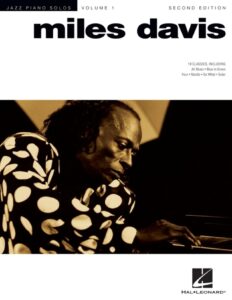
He became Miles’s full-time pianist from 1959 to 1963, a period documented on seminal live albums like Miles Davis at Carnegie Hall (1961) and Friday and Saturday Nights at the Blackhawk (1961). This era also solidified his partnership with the Miles Davis rhythm section: Paul Chambers on bass and Jimmy Cobb on drums. This unit, often dubbed “The Wynton Kelly Trio Plus One” when with Miles, became so potent that they began recording under their own name even while with the trumpeter. The chemistry was magical: Chambers’ big, woody sound and impeccable walk, Cobb’s crisp, no-fuss swing, and Kelly’s bubbling piano created what many consider the definitive hard bop rhythm section.
The Kelly Trio and Side man Excellence
After leaving Miles in 1963, Kelly led his own trio with Chambers and Cobb, a group in such high demand that their live album Smokin’ at the Half Note (1965) is often cited as one of the greatest piano trio records ever made. The interplay is telepathic, the swing is monumental, and Kelly’s inventiveness as a soloist is on full display, especially on the marathon exploration of “If You Could See Me Now.”
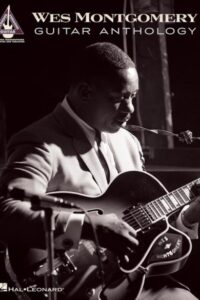
His value as a side man remained unparalleled. His most famous collaboration outside of Miles was with guitarist Wes Montgomery. Kelly appeared on some of Montgomery’s most beloved albums for Verve, including Smokin’ at the Half Note (where the trio backs Wes), Willow Weep for Me, and Bumpin’. Their musical rapport was sublime; Kelly’s earthy swing was the perfect foil for Montgomery’s smooth, melodic lines.

He also made significant contributions to records by Cannonball Adderley (The Cannonball Adderley Quintet in Chicago), John Coltrane (notably on the album Coltrane Jazz), Sonny Rollins, Stan Getz, and Dexter Gordon, always elevating the music with his unmistakable touch.
Compositions and Legacy
While primarily celebrated as an interpreter and accompanist, Wynton Kelly was also a fine composer. His tunes are like his playing: memorable, bluesy, and built on strong grooves. His most famous composition is undoubtedly “Kelly Blue,” a medium-tempo blues with a catchy, sinuous melody that has become a jazz standard. Other notable originals include the upbeat “Action,” the soulful “Wrinkles,” and the charming “Portrait of Wynton.” These tunes are not complex contra facts but sturdy, singing vehicles for improvisation, reflecting his practical, bandstand-oriented artistry.
Tragically, Wynton Kelly’s life and career were cut short. After years of struggling with epilepsy, he died suddenly in Toronto in April 1971, at just 39 years old. The jazz world lost a giant in his prime, a musician whose influence was already profound and continues to be so.
His legacy is pervasive yet subtle. You can hear his harmonic warmth and rhythmic bounce in the playing of Chick Corea (especially early on), Herbie Hancock (who cited him as a major influence), Keith Jarrett, Monty Alexander, and countless others. He is the connective tissue between the gospel-blues piano tradition and modern jazz harmony. Beyond technique, he bequeathed an attitude: that jazz could be intellectually satisfying, harmonically rich, and viscerally swinging all at once. He embodied a kind of musical joy that was neither naive nor simplistic, but earned through deep mastery of the language.

To listen to Wynton Kelly is to take a masterclass in swing, in blues feeling, and in the art of musical conversation. He wasn’t just playing notes; he was crafting a feeling, a pocket of time when everything felt right, buoyant, and alive. From a Jamaican birth to the heart of the New York jazz scene, Wynton Kelly’s story is one of unassuming genius. A musician who didn’t just play the music, but who was, in his very essence, the embodiment of its most joyful and fundamental pulse.


