| Community Musicians, building a worldwide Community Music. | |
| All the music you want to play on one site. Sharing the world’s best Contemporary, jazz, Popular, and classical Sheet Music for all instruments. | |
| Scores: >15,000 (active and growing every day), over 231,000 pages All genres and Categories: Jazz & Blues, Rock & Pop, classical & contemporary, film & musicals’ scores; books & biographies; methods, études, and exercises; play along background tracks (MP3), audios & PDFs for Jazz & Rock Access and benefits: Subscription fee: $15.99 one-time payment, valid for lifetime (secure Payment via Paypal, or Stripe) How to join the Sheet Music Library 🔍 Search in the Library Catalog — FAQs — Join us |
Table of Contents

Best Sheet Music download from our Library.
Please, subscribe to our Sheet Music Library.
If you are already a subscriber, please, check our NEW SCORES’ page every month for new sheet music. THANK YOU!
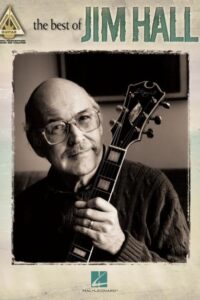
Happy heavenly birthday, Jim Hall, born on this day in 1930.
Jim Hall: The Quiet Innovator of Jazz Guitar
On this day, December 4, 1930, in Buffalo, New York, one of jazz’s most profound yet understated voices was born: James Stanley Hall. Over a career spanning six decades, Jim Hall would redefine the role of the guitar in jazz, not through pyrotechnics or volume, but through a profound musical intelligence, a revolutionary harmonic language, and a gift for conversational ensemble playing. He was the guitarist’s guitarist—a musician revered by peers and critics alike for his melodic ingenuity, sophisticated harmonies, and a sound that was as intimate as a whisper yet as deep as the ocean. This article explores the life, style, and enduring legacy of a true master who believed that space and melody were more powerful than speed and noise.
Biography: The Cleveland Foundation
Jim Hall’s musical journey began early. His mother played the piano, his grandfather the violin, and his uncle the guitar. After his family moved to Cleveland, Ohio, he began playing guitar at age ten, initially inspired by the cowboy songs of Gene Autry. His true conversion to jazz came via Charlie Christian’s seminal recordings with Benny Goodman. “It was like a stampede in my head,” Hall later recalled. “I knew that was what I wanted to do.”
He studied theory and composition at the Cleveland Institute of Music, a formal education rare among jazz musicians of his generation, which would deeply inform his compositional approach. In 1955, he moved to Los Angeles to attend the West Coast’s premier jazz school, the Los Angeles Conservatory (now California Institute of the Arts). The West Coast jazz scene was thriving, and Hall quickly integrated, playing with drummer Chico Hamilton’s innovative quintet, which featured a cello and reeds. This chamber-jazz setting was a perfect incubator for Hall’s developing aesthetic, emphasizing texture, counterpoint, and group interplay over solo bravado.
His reputation grew rapidly, leading to a pivotal stint with the Jimmy Giuffre Three from 1956-1957. This group, with Giuffre on reeds and Ralph Peña (later Jim Atlas) on bass, was perhaps the ultimate “cool” ensemble. Their music was contrapuntal, folksy, and radically quiet, operating at a dynamic level that forced listeners to lean in. Here, Hall’s identity as a thoughtful ensemble player and soloist solidified.
In 1957, Hall made his first major move east, joining the band of the brilliant, tragic saxophonist Sonny Rollins. This period was crucial. Rollins, at a creative peak, was a relentless improviser who valued interactive, thematic partners. Hall’s ability to comp with harmonic richness and feed Rollins melodic ideas during the saxophonist’s famous “thematic improvisations” is brilliantly documented on the landmark album The Bridge (1962), recorded after Rollins’s famous sabbatical. Hall was, as Rollins put it, “the perfect guitarist for me.”
The 1960s saw Hall become an in-demand collaborator in New York. He played with virtually every major figure, but his partnership with pianist Bill Evans from 1959-1965 yielded some of the most sublime duo and trio recordings in jazz history, notably Undercurrent (1962) and Intermodulation (1966). Their collaboration was a meeting of like-minded souls: both prioritized lyrical melody, harmonic depth, and a translucent sound. They communicated with an almost psychic empathy, setting a new standard for the jazz duo.
As a leader, Hall began recording more consistently in the 1960s and 1970s for labels like CTI, Horizon, and A&M, producing classics like Where Would I Be? (1971) and Concierto (1975). The latter featured his masterpiece arrangement of Joaquín Rodrigo’s “Concierto de Aranjuez” alongside a dream band of Paul Desmond, Chet Baker, Ron Carter, and Roland Hanna. He continued to perform, record, and teach tirelessly until his death in 2013 at age 83, leaving behind a body of work that remains a foundational text for jazz guitarists.
Browse in the Library:
Or browse in the categories menus & download the Library Catalog PDF:
Musical Style and Harmonic Language: The Sound of Thought
Jim Hall’s style is a paradox: instantly recognizable yet difficult to quantify. It was built on a foundation of impeccable swing, a warm, rounded tone (often achieved with a Gibson ES-175 through a Polytone amplifier in later years), and a phrasing that mirrored the logical, breath-like flow of a horn player. He cited tenor saxophonists like Lester Young and Ben Webster as primary influences, not other guitarists. This is key to understanding his approach: he thought like a composer and phrased like a saxophonist.
His harmonic concept was revolutionary. Hall treated harmony as a fluid, mutable landscape. He was a master of chord substitution and reharmonization, often in real-time. He didn’t just play changes; he interpreted them. A standard progression might be subtly altered with a passing chord, a clever bass-line movement, or a surprising shift to a distant key area, all executed with seamless grace. He had an architect’s understanding of harmony, using upper-structure triads, quartal voicings (chords built in fourths), and contrapuntal inner voices to create rich, moving tapestries behind soloists or within his own solos.
His improvisations were models of thematic development. He rarely played licks. Instead, he would seize upon a small melodic fragment from the tune or something he had just played and subject it to variation, inversion, rhythmic displacement, and harmonic recontextualization. His solos felt like spontaneous compositions, narratives with a clear beginning, development, and resolution. This intellectual approach was never cold; it was infused with a deep blues feeling and a wry, playful sense of humor. He could say more with two well-chosen notes than many players could with two hundred.
His use of space was perhaps his most defining characteristic. In an era where jazz guitar was growing louder and more aggressive, Hall had the supreme confidence to let notes ring and phrases breathe. His rests were as musical as his notes, creating suspense and dramatic shape. This spaciousness made every note count and gave his music a profound intimacy and clarity.
Compositions: The Hidden Songbook
While not as prolific a composer as some of his peers, Jim Hall penned a number of tunes that have become modern standards, admired for their clever structures and melodic beauty. They are guitarist’s tunes, often built on interesting harmonic cycles and singable themes.
- “Careful”: Perhaps his most famous composition, a contrapuntal gem with a winding melody that perfectly illustrates his love for intertwining lines. It has been recorded by countless artists, from Art Farmer to Bill Frisell.
- “Waltz New”: A harmonically sophisticated waltz that avoids cliché, featuring characteristic Hall hallmarks like descending bass motion and unexpected key shifts.
- “All Across the City”: A lyrical, poignant ballad with a cinematic quality, showcasing his gift for melody.
- “Big Blues”: A playful, twisting blues line that deconstructs the form with clever turnbacks and substitutions, proving his deep roots in the tradition.
- “Romaine”: A samba-inflected tune dedicated to his wife, showcasing his love for Brazilian rhythms and warm, inviting harmony.
His compositions are like his playing: they don’t shout for attention. They reveal their depths gradually, rewarding repeated listening with their intricate craftsmanship and emotional resonance.
Collaborations: The Ultimate Sideman and Duo Partner
Jim Hall’s career is a testament to the power of collaboration. His adaptability and profound listening skills made him the ideal partner for a staggering array of jazz legends.
- Sonny Rollins (1961-1962, 1964): As mentioned, Hall was the foil Rollins needed. On The Bridge and What’s New?, Hall’s comping is a masterclass in supportive creativity, providing harmonic color and rhythmic push without ever getting in the way.
- Bill Evans (1959-1965): This partnership is the stuff of legend. Their duo recordings removed the safety net of bass and drums, creating a floating, conversational music of exquisite refinement. Hall’s guitar and Evans’s piano melded into a single voice, exploring harmony with fearless intimacy.
- Paul Desmond (1959-1975): The alto saxophonist with the “dry martini” tone was another ideal match. Their sensibilities aligned perfectly—lyrical, witty, and cool. The albums Two of a Mind (with drummer Connie Kay) and Hall’s Concierto capture their magical rapport.
- Art Farmer (1962-1964): In the Farmer-Gryce Quartet and later groups, Hall found another melodically gifted horn player. Their work together is a pinnacle of the early 1960s post-bop chamber jazz style.
- Ron Carter: The virtuoso bassist was a frequent and brilliant partner. Their duo recordings, like Alone Together (1972), are breathtaking dialogues that explore the full textural and harmonic possibilities of their two instruments, swinging ferociously while maintaining a chamber-like clarity.
- Later Collaborations: Hall never stopped seeking new dialogues. He made remarkable albums with avant-garde guitarist Bill Frisell (Hemispheres), trumpeter Tom Harrell, pianist Enrico Pieranunzi, and even classical violinist Robert McDuffie. Each collaboration was a conversation, not a contest.
Legacy and Influence
Jim Hall’s influence is pervasive yet subtle. He liberated the guitar from the comping-and-soloing paradigm, presenting it as a full-range orchestral and compositional tool. He proved that intellectual rigor and deep emotion were not just compatible but inseparable.
Every guitarist who values melody, space, and harmonic intelligence walks in his footsteps. Pat Metheny, a close friend and protege, has consistently cited Hall as his single greatest influence, absorbing his harmonic language and narrative approach. Bill Frisell’s entire textural and melodic aesthetic is inconceivable without Hall’s example. John Scofield, John Abercrombie, and Kurt Rosenwinkel have all drawn deeply from his well. Beyond guitar, his compositional approach and ensemble concept influenced musicians across the jazz spectrum.
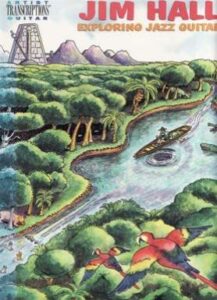
He was also a generous and revered educator, teaching at institutions like The New School and imparting his philosophy to generations of students. His instructional book, Exploring Jazz Guitar, is a classic, emphasizing conceptual thinking over rote patterns.
Jim Hall:
Jim Hall was the quiet revolutionary. In a music often associated with passion and power, he championed introspection, dialogue, and wit. He treated the guitar not as a weapon for attack, but as a brush for painting detailed, intimate pictures. His music was a lifelong exploration of sound, silence, and the infinite possibilities contained within a song’s harmony.
On his birthday, we remember not just a great guitarist, but a complete musician—a thinker, a painter, a poet of strings. His recordings remain essential listening, not for displays of technical prowess, but for lessons in how to listen, how to build, and how to speak with a voice that is uniquely and profoundly one’s own. As he once said, “I’m interested in growth, in discovering things.” Jim Hall’s discoveries forever expanded the vocabulary of jazz guitar, leaving a legacy that continues to resonate with quiet, unshakable power.