
Come join us now, and enjoy playing your beloved music and browse through great scores of every level and styles!
Can’t find the songbook you’re looking for? Please, email us at: sheetmusiclibrarypdf@gmail.com We’d like to help you!
Table of Contents
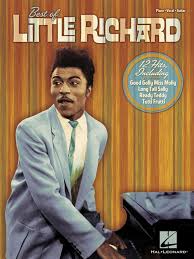
Best Sheet Music download from our Library.
Happy heavenly birthday, Little Richard, born on this day in 1935
Little Richard: The Architect of Rock and Roll
Introduction: The Originator
In the pantheon of popular music, few figures burn as brightly or as influentially as Little Richard. Born Richard Wayne Penniman, he was the self-proclaimed “Architect of Rock and Roll,” a title few would dispute. With his apocalyptic shriek, furious piano-pounding, androgynous flair, and lyrics that transformed innocent nonsense into revolutionary anthems, Little Richard didn’t just play music—he unleashed a seismic cultural force. He was the bridge between the ecstatic fervor of gospel, the rhythmic drive of rhythm and blues, and the rebellious, sexual energy that would define rock and roll. To study Little Richard is to study the very DNA of modern popular music.
Biography: A Quasar from Macon
Early Life (1932-1951)
Richard Wayne Penniman was born on December 5, 1932, in Macon, Georgia, into a family of twelve children. His upbringing was shaped by two powerful, conflicting forces: the strict, conservative Church of God in Christ and the vibrant, sinful underbelly of Macon’s music clubs. He began singing in the church choir, where he first absorbed the pentecostal fervor, call-and-response patterns, and emotional abandon that would define his performance style. His family considered him effeminate, and his father, Bud, a brick mason and church deacon, kicked him out as a teenager, leading Richard to be taken in by a white family, the Pennimans, who ran a club called The Tick Tock. He began performing in medicine shows and traveling circuits, honing a flamboyant stage persona inspired by gospel shouter Sister Rosetta Tharpe and flamboyant entertainers like Esquerita.
Breakthrough and Meteoric Rise (1951-1957)
His early recordings for RCA Victor and Peacock in the early 1950s were derivative blues and R&B numbers that failed to capture his explosive essence. The turning point came in September 1955, when he sent a demo to Specialty Records in Los Angeles. Producer Bumps Blackwell, initially unimpressed, took Richard to a lunch break at the Dew Drop Inn in New Orleans. There, Richard launched into a raunchy, piano-driven number called “Tutti Frutti,” with its original, unprintable lyrics about gay sex. Blackwell knew he had something raw and electric. He hired songwriter Dorothy LaBostrie to clean up the lyrics, and in just three takes at J&M Studios in New Orleans with a crack session band (including Earl Palmer on drums and Lee Allen on sax), “Tutti Frutti” was born. Released in November 1955, it exploded, selling a million copies and reaching No. 17 on the Billboard pop chart, unprecedented for a raucous black artist. It was the big bang.
What followed was an unparalleled streak of epoch-defining hits recorded in a whirlwind few years: “Long Tall Sally,” “Rip It Up,” “Lucille,” “Jenny, Jenny,” “Keep A-Knockin’,” “Good Golly, Miss Molly,” and “The Girl Can’t Help It.” Richard’s live shows became legendary for their barely-controlled chaos. He would play the piano with his feet, leap onto the grand, throw his cape into the audience, and whip crowds into a frenzy. He embodied a dangerous, liberating energy that crossed racial lines, terrifying parents and electrifying a generation.
Renunciation and Return (1957-1962)
At the absolute zenith of his fame in 1957, during a tour in Australia, Little Richard had a religious epiphany. Seeing the Sputnik satellite streak across the sky, he interpreted it as a sign from God. He abruptly renounced rock and roll as “the devil’s music,” threw his $8,000 diamond ring into Sydney Harbour, and enrolled at Oakwood College in Alabama to study theology, becoming an evangelist and recording only gospel music. This back-and-forth between sacred and profane would define his life. He was lured back to secular music in 1962 for a UK tour, where his backing band, The Upsetters, featured a young, unknown group called The Beatles as his opening act. He also profoundly influenced a young Jimi Hendrix, whom he hired for his band in 1964-65 (calling him “the most fantastic guitarist I’d ever seen”), and a young James Brown, whose stage act borrowed heavily from Richard’s.
Please, subscribe to our Sheet Music Library.
If you are already a subscriber, please, check our NEW SCORES’ page every month for new sheet music. THANK YOU!
Later Career and Legacy (1963-2020)
The 1960s saw his commercial star wane as the British Invasion, which he helped inspire, took over. He remained a dynamic, revered live performer. He battled cocaine and alcohol addiction in the 1970s before returning to evangelism in the late 70s and early 80s. The 1980s brought a cultural rediscovery: he appeared in films (Down and Out in Beverly Hills), recorded with new artists, and was inducted into the inaugural class of the Rock and Roll Hall of Fame in 1986. His later years were marked by health issues, but also by recognition as a foundational icon. He died from bone cancer on May 9, 2020, in Tullahoma, Tennessee.

Music Style and Improvisational Licks: The Atomic Piano
Little Richard’s style was a controlled explosion. It was built on a few core, revolutionary elements:
1. The Voice: It was an instrument of extreme contrasts—from a rich, gospel-trained baritone to an otherworldly, hair-raising “Woooooo!” (a melodic, hollered glissando). His vocal style was not about subtlety but about catharsis. He used rasp, scream, and melisma to convey unbridled joy and abandon.
2. The Piano: His piano work was the engine of his sound. He played boogie-woogie and gospel-influenced piano with a percussive, relentless attack. His right hand played blistering, repetitive triplets or driving eighth-note figures, while his left hand hammered out a steady, shuffling bass pattern. He often played on the “black keys,” giving his sound a bright, sharp, pentatonic flavor.
Improvisational Licks and Signature Riffs:
- The “Tutti Frutti” Intro: The iconic “A-wop-bop-a-loo-bop-a-lop-bam-boom!” is less a lyric and more a percussive, scatted instrumental lick in itself.
- The Shout Break: In songs like “Keep A-Knockin’,” he would stop the band and engage in a call-and-response with his saxophonist (usually Lee Allen), creating a space of pure, improvised excitement: “Knock!” (sax blast) “Who’s there?” (sax blast).
- Piano Glisses: His rapid, ascending and descending glissandos (slides across the keys) were a trademark, used as transitions and exclamation points.
- The Double-Time Feel: He would often suddenly push the tempo, creating a sense of exhilarating acceleration, as heard in the bridge of “Long Tall Sally.”
3. The Band Sound: His classic Specialty recordings featured a small, powerhouse combo: piano, two saxophones (tenor and baritone), bass, and drums. The saxes didn’t just play solos; they functioned as a rhythmic “shout section,” playing stabbing, syncopated riffs that drove the music forward with brutal efficiency. The drumming (by Earl Palmer) was heavy on the backbeat, helping to codify the rock and roll rhythm.
Chord Progressions and Music Harmony: Deceptively Simple Genius
Harmonically, Little Richard’s classic hits are masterclasses in primal power through simplicity. They are almost exclusively based on the 12-bar blues progression and its close relatives.
- Standard 12-Bar Blues (I-I-I-I / IV-IV-I-I / V-V(or IV)-I-I): This is the chassis for “Tutti Frutti,” “Long Tall Sally,” “Lucille,” and “Good Golly, Miss Molly.” In the key of C, this would be: C-C-C-C / F-F-C-C / G-G (or F)-C-C.
- The “Bo Diddley” / “Rhumba” Beat: “Keep A-Knockin’” uses a variation of this famous three-chord (I-IV-V) shave-and-a-haircut rhythm, creating a hypnotic, driving vamp.
- Simplicity as Innovation: The genius wasn’t in complex changes but in the energy, rhythmic placement, and vocal/piano melody layered on top. The harmony provided a familiar, solid foundation over which Richard could unleash his chaotic, innovative performance. The tension between the simple structure and the wildly complex, ornate vocal and piano improvisation is the heart of his music’s excitement.
Influences and Legacy: The Quasar That Lit a Thousand Suns
Influences On Little Richard:
- Gospel: Sister Rosetta Tharpe (who gave him his first big break), Mahalia Jackson, the harmonic and emotional structures of Pentecostal worship.
- Blues & R&B: Roy Brown (whose “Good Rockin’ Tonight” was a blueprint), Billy Wright (whose style and look he adopted), Fats Domino.
- Jump Blues: Louis Jordan, whose tight, swinging combos prefigured rock and roll.
- Piano Styles: The flamboyant technique of Esquerita and the boogie-woogie of Meade Lux Lewis.
Little Richard’s Influence On Others (An Incomplete List):
- The Beatles: Paul McCartney modeled his early screaming vocal style on Richard. The Beatles covered “Long Tall Sally,” “Kansas City,” and “Hey-Hey-Hey-Hey!” extensively.
- The Rolling Stones: Mick Jagger’s stage moves and Keith Richards’ rhythmic drive owe a direct debt.
- Jimi Hendrix: Learned showmanship and raw power directly in Richard’s band.
- James Brown: Borrowed the cape routine, the screams, and the concept of the band as a tight, riffing machine.
- Bob Dylan: Cited Richard as his first idol, wanting to join his band.
- Elvis Presley: Covered “Tutti Frutti” and “Rip It Up”; his more aggressive side was inspired by Richard.
- Otis Redding, Buddy Holly, Jerry Lee Lewis, Prince, David Bowie, Elton John, George Thorogood: The list is virtually endless. He influenced style, sound, and sexuality in popular music.
Cultural Legacy:
Little Richard was a proto-punk, a queer icon, and a black innovator in a white-dominated industry. His flamboyance, makeup, and pompadour challenged 1950s norms of gender and race. He embodied the liberating, rebellious, and sexually charged core of rock and roll. He was, in essence, rock’s first great wild man and its most important catalyst.
Works, Filmography, and Most Known Compositions
Most Known Compositions & Performances:
- “Tutti Frutti” (1955): The ground zero of rock and roll.
- “Long Tall Sally” (1956): Perhaps his most covered song, a masterpiece of deceptive simplicity and relentless energy.
- “Lucille” (1957): Features a iconic, storytelling vocal and a pounding piano riff.
- “Good Golly, Miss Molly” (1958): The apotheosis of his frenetic style.
- “Rip It Up” / “Ready Teddy” (1956): Twin anthems of teenage abandon.
- “The Girl Can’t Help It” (1956): Title track for the seminal rock film, showcasing his charismatic swagger.
- “Keep A-Knockin’” (1957): A lesson in building tension and explosive release.
- “Jenny, Jenny” (1957): A pure, unadulterated rock and roll rush.
Filmography (Selective):
- Don’t Knock the Rock (1956)
- The Girl Can’t Help It (1956) – His performance of the title track is iconic.
- Mister Rock and Roll (1957)
- Catalina Caper (1967)
- Little Richard: Live at the Toronto Peace Festival (1969) – A stunning document of his power.
- Down and Out in Beverly Hills (1986) – His memorable role as “Orvis Goodnight.”
- Why Do Fools Fall in Love (1998) – Portrayed by actor Leon.
Discography (Essential Albums)
While he was primarily a singles artist in his heyday, these collections capture the essence:
- Here’s Little Richard (Specialty, 1957) – The debut LP and perhaps the greatest rock and roll album ever made.
- Little Richard (Specialty, 1958) – More relentless classics.
- The Fabulous Little Richard (Specialty, 1959)
- The Georgia Peach (Specialty, 1991) – Excellent comprehensive box set.
- Little Richard: The Specialty Sessions (1990) – The definitive multi-CD collection of his groundbreaking 1955-59 work.
Search your favorite sheet music in the category of Rock, Pop, Folk and Popular Music.
The secret life of Little Richard
Little Richard (born Richard Wayne Penniman, 1932–2020) lived one of the most colorful, contradictory, and often hidden double lives in rock & roll has ever seen. Behind the pompadour, pancake makeup, and the explosive “A-wop-bop-a-loo-mop-alop-bam-boom” persona was a man torn between ecstatic fame, profound religious conviction, and his sexuality. Here are some of the lesser-known or long-suppressed aspects of his “secret life”:
- Bisexuality and queer life in the 1940s–50s
Long before he became a star, Richard performed as a drag queen named “Princess LaVonne” in traveling minstrel and vaudeville shows in the chitlin’ circuit. He was openly gay or bisexual in Black underground clubs and sugar-hill drag balls in Macon, Atlanta, and New Orleans. He had relationships with both men and women, including a long romantic and sexual relationship with a teenage dancer named Lee Angel (Audrey Robinson), but also with male lovers, most famously Billy Wright (the flamboyant R&B singer who taught him the pompadour) and reportedly a brief affair with Jimi Hendrix when Hendrix was his valet and guitarist in the mid-1960s. - Orgies and the “Good Booty” parties
In the 1950s, Richard hosted and attended notorious all-male orgies that he later called “the Good Booty parties.” He bragged in private (and much later in interviews) about group sex in hotel rooms after shows, sometimes watching from closets or peepholes because he got a voyeuristic thrill. He claimed to have introduced several famous male entertainers to gay sex, though he almost always refused to name them on the record. - Sudden conversion and renouncing rock & roll (1957)
At the peak of his fame—right after “Tutti Frutti,” “Long Tall Sally,” and “Lucille” were global hits—Richard dramatically quit rock & roll mid-tour in Australia. He claimed a vision (or a Sputnik satellite falling from the sky) told him to repent. He threw a $8,000 diamond ring into the ocean, enrolled in Oakwood College (a Seventh-day Adventist school), got ordained as a minister, and married Sister Ernestine Harvin in 1959. For years he denounced his own music as “demonic” and recorded only gospel. - Swinging both ways during the “married minister” years
Even while married (1959–1964) and preaching, Richard continued secret homosexual encounters. His wife Ernestine later said she caught him in bed with other men and that he was never able to be monogamous with anyone. They adopted a son, Danny Jones Penniman, but the marriage collapsed largely over Richard’s sexuality. - The 1970s–80s cocaine-fueled comeback and chaos
When he returned to rock in the late 1960s and 1970s, the private behavior got wilder: heavy cocaine and heroin use, more orgies (now including both men and women), and paying huge sums for voyeuristic sex shows. He once told his biographer Charles White that he would rent entire floors of hotels, fill them with naked men and women, and just watch while high. - Lifelong religious terror and guilt
Even in his most outrageous periods, Richard was haunted by hellfire-and-brimstone theology from his Adventist upbringing. He would suddenly stop tours, check into hotels under fake names, and read the Bible for days. In the 1980s and 1990s he swung wildly between preaching on Christian television and performing in full makeup screaming “Shut up!” at interviewers who asked about his sexuality. - Final years: “I am omnisexual”
In the last two decades of his life, Richard gave a series of contradictory interviews. To David Letterman and Joan Rivers he denied being gay. To Penthouse and to Charles White (in the 1984 biography The Life and Times of Little Richard) he admitted everything—men, women, group sex, voyeurism—and famously declared, “I love ’em all—male, female, hermaphrodite, whatever. I am omnisexual!” In one of his very last interviews (2017, three years before his death), he again renounced it all and said homosexuality was “unnatural” and he had been delivered.
In short, Little Richard spent 70 years living at the absolute extremes: the wildest rock & roll excess, the strictest religious asceticism, and a sexual life that was flamboyantly queer long before it was remotely safe to be so—yet he could never fully reconcile or publicly own any of it while he was alive. He was, in his own words, “the architect of rock & roll” and simultaneously a terrified, Bible-carrying preacher who believed his own music might send him to hell. That conflict was the real secret engine of his genius and his torment.
Little Richard: The Omnipresent Architect
Little Richard’s story is one of glorious contradiction: sacred and profane, masculine and feminine, chaotic and precisely controlled. He took elements from the margins of American culture—black gospel music, rhythm and blues, queer performance—and forged them into the central soundtrack of a youth revolution. His music was not subtle, but it was profoundly sophisticated in its understanding of rhythm, release, and rebellion.
Every time a rock singer lets out a scream, every time a pianist attacks the keys with physical abandon, every time a performer challenges the boundaries of identity on stage, a bit of Little Richard’s spirit is invoked. He was, as he rightly claimed, the Architect. The blueprint for the wild, joyous, and liberating house of rock and roll was drawn in his image, with a “Woooo!” and a glissando down the ivory keys. His legacy is not just in the notes he played, but in the space he created—a space where outsiders could become kings, where energy could triumph over polish, and where “A-wop-bop-a-loo-bop-a-lop-bam-boom!” could be understood, universally, as a cry of freedom.
Little Richard – Lucille (Official Audio)
Listen to Jerry Lee Lewis music on Spotify
Little Richard – Tutti Frutti ’55
”Tutti Frutti” is a song by Little Richard with Dorothy LaBostrie, the first recording of which was made in 1955. ‘awopbopaloobop alopbamboom!’ is still instantly recognizable as the refrain of Tutti Frutti, Little Richard’s first big hit. Strong, intense, bold and full of rhythm, the song became a model for rock ‘n’ roll music and defined the pioneering style of one of rock’s greatest and most flamboyant showmen. The song introduced several of most of the musical traits characteristic of rock music, including its loudness and energy, emphasizing the vocal style and its distinctive beat and rhythm.
Little Richard – “Tutti Frutti” | Concert for the Rock & Roll Hall of Fame
Little Richard performs “Tutti Frutti” at the 1995 Concert for the Rock & Roll Hall of Fame.
Browse in the Library:
Or browse in the categories menus & download the Library Catalog PDF:
Billy Wright’s influence
Billy Wright (May 21, 1918 – October 28, 1991) was far more than just a footnote in Little Richard’s story. In the late 1940s and early 1950s, he was one of the most important direct influences on Little Richard’s entire persona—musically, visually, and even sexually. Little Richard himself repeatedly called Billy Wright “my idol” and “the one I copied everything from.”Here are the key ways Billy Wright shaped Little Richard:1. The Pompadour Hair Style
- Billy Wright was the first major R&B star to popularize the sky-high, confection-like pompadour (conked, processed, and piled up with Murray’s Pomade).
- Photos of Wright from 1949–1951 show the exact towering hairstyle that Little Richard later made world-famous. Richard openly admitted: “I got my pompadour from Billy Wright. He had that hair way up high, and I said, ‘That’s for me!’”
2. The Makeup and Flamboyant Look
- Wright was one of the very first male R&B singers to wear visible pancake makeup, eyeliner, and lipstick on stage in the late 1940s—something almost unheard of for men outside drag shows at the time.
- He performed in lavish, colorful suits with huge bow ties and capes. Little Richard saw him in Macon and Atlanta and essentially amplified that look to eleven: higher hair, thicker makeup, louder outfits.
3. The High-Whooping Vocal Style
- Listen to Billy Wright’s 1949 hits on Savoy Records (especially “Blues for My Baby,” “Stacked Deck,” and “Every Evening” 1949–1951). You’ll hear the same piercing falsetto whoops, wild screams, and rhythmic grunts that Little Richard turned into “A-wop-bop-a-loo-mop-alop-bam-boom.”
- Richard himself said: “I loved the way Billy Wright screamed. That’s where I got my ‘Woooo!’ from.”
4. Openly Queer Presentation in the Chitlin’ Circuit
- Billy Wright was flamboyantly gay (or at least openly effeminate) at a time when that could get you beaten or arrested. He performed in full makeup in Black theaters across the South and was adored for it.
- This gave the teenage Richard Penniman permission to be outrageous. Richard later said Wright was the first person who showed him you could be “pretty” and masculine, and successful all at once.
5. Direct Mentorship and Early Romance
- In Macon and Atlanta in the late 1940s, the slightly older Billy Wright took the teenage Richard under his wing.
- Multiple sources (including Charles White’s biography and Richard’s own late-life interviews) confirm they had a brief romantic/sexual relationship. Richard described Wright as one of his first serious male lovers.
6. Record-Label Connection
- Billy Wright recorded for Savoy Records in New York. When Richard was trying to get discovered, he deliberately sent his demo tape to Savoy because “that’s where Billy Wright records.” Savoy eventually passed, but the tape reached Specialty Records instead—where Art Rupe signed him in 1955.
In short, if you removed Billy Wright from history, Little Richard’s look, sound, and fearless flamboyance would have been radically different—if they had existed at all. Wright was the blueprint, idol, and lover rolled into one. As Little Richard put it in 1984:“Billy Wright taught me how to be Little Richard before there was a Little Richard.”(You can still hear Wright’s influence crystal-clear if you compare his 1950 single “Live Wire Baby” to Richard’s “Ready Teddy” six years later—the DNA is unmistakable.)
Billy Wright’s most important songs
Here are Billy Wright’s most important and commercially successful recordings—all released on Savoy Records between 1949 and 1955. These are the songs that made him a star on the chitlin’ circuit, topped the R&B charts, and directly influenced Little Richard, James Brown, and others.
| Year | Title | Peak R&B Chart Position | Notes / Why It Matters |
|---|---|---|---|
| 1949 | “Blues for My Baby” | #3 | His first big hit; showcases the screaming falsetto that Little Richard copied |
| 1950 | “You Satisfy” | #2 | Smooth mid-tempo jumper with Wright’s signature “Woooo!” |
| 1950 | “Stacked Deck” | #9 | Uptempo rocker; the pompadour-and-makeup photo on the promo is iconic |
| 1950 | “Billy’s Boogie Blues” | — | Pure jump-blues energy; Little Richard saw him perform this live in Macon |
| 1951 | “Back Biting Woman” | — | Minor hit, but the wild vocal ad-libs are pure Little Richard DNA |
| 1951 | “Mean Old Wine” | — | Another screamer; you can hear the direct line to “Long Tall Sally” |
| 1951 | “Every Evening” | — | Gorgeous ballad that shows he could sing straight too |
| 1951 | “Keep Your Hands on Your Heart” | — | Duet-style with Elmon Mickle (Dr. Feelgood); very risqué lyrics for the era |
| 1952 | “Married Woman’s Boogie” | #6 | One of his last national hits |
| 1953 | “Turn Your Lamp Down Low” | — | Recorded with Tiny Bradshaw’s band; great horn-driven jumper |
| 1955 | “Live Wire Baby” | — | His final Savoy session; sounds almost exactly like early Little Richard |
Biggest Commercial Hits (Billboard R&B Top 10)
- “You Satisfy” (1950) – #2
- “Blues for My Baby” (1949) – #3
- “Married Woman’s Boogie” (1952) – #6
- “Stacked Deck” (1950) – #9
Where to Hear Them Today
- Bear Family’s 1994 CD The Prince of the Blues: The Best of Billy Wright (out of print but findable)
- Streaming: Most tracks are on Spotify/Apple Music under compilations like “Savoy Chart Busters 1950–1954” or “Jumpin’ Like Mad”
- YouTube has clean uploads of the original 78 rpm sides
If you listen to “You Satisfy” and then immediately play Little Richard’s “Ready Teddy” or “Keep A-Knockin’,” the connection is jaw-dropping. Billy Wright never crossed over to white audiences the way Little Richard did, but in the Black R&B world of 1949–1952 he was a massive star—known as “The Prince of the Blues” and the original screaming, pompadoured peacock of rock & roll.
Billy Wright’s songs compared to Little Richard’s
Here is a direct side-by-side comparison of Billy Wright’s key songs (1949–1955) with the Little Richard songs that clearly descend from them. The similarities are often startling—sometimes it feels like listening to the same singer six years apart.
| Billy Wright Song (Year) | Little Richard Song (Year) | Specific Similarities |
|---|---|---|
| “Blues for My Baby” (1949) | “Tutti Frutti” (1955) | – Opening falsetto “Woooo!” is almost identical – Same piercing, cracking scream on the turnaround – Piano triplets pounding in the left hand |
| “You Satisfy” (1950) | “Ready Teddy” (1956) | – Exact same walking boogie-woogie piano riff – Same “Ooooh!” ad-libs in the same places – Identical tempo and swing feel |
| “Stacked Deck” (1950) | “Rip It Up” (1956) | – Uptempo 12-bar blues structure – Horn riffs and stop-time breaks copied note-for-note – Wright’s “Hey hey hey” becomes Richard’s “Hey hey hey” |
| “Billy’s Boogie Blues” (1950) | “Keep A-Knockin’” (1957) | – Relentless eighth-note piano pounding – Drum fill right before the vocal scream is the same pattern – “Whooo!” right on the IV chord |
| “Mean Old Wine” / “Back Biting Woman” (1951) | “Long Tall Sally” (1956) | – Fast shuffle tempo – Falsetto whoops on the 2 and 4 – Nonsense syllables (“ba-da-da-da”) that Richard turns into “ba-da-da-da-da” |
| “Live Wire Baby” (1955) | “The Girl Can’t Help It” (1956) | – Almost the same intro riff – Same exaggerated, cartoonish pronunciation (“bay-bay-bee”) – Horn section answers the vocal in the same way |
| “Every Evening” (1951) | “True, Fine Mama” (1957) | – Rare slower, crooning side of both artists – Same breathy, pleading delivery and vibrato on the ends of beats |
Quick Listening Test (try this)
- Play Billy Wright – “You Satisfy” (1950)
- Immediately follow with Little Richard – “Ready Teddy” (1956)
You will swear it’s the same band, same singer, same studio—only the recording quality and Richard’s is cleaner and the energy is turned up to 11.Key Differences (why Little Richard exploded while Billy Wright stayed regional)
| Aspect | Billy Wright | Little Richard |
|---|---|---|
| Energy / Insanity level | High, but still “polite” 1950” | Nuclear, unhinged, screaming like a jet engine |
| Recording quality | Muddy 1949–51 Savoy sound | Pristine 1955–57 Specialty with Bumps Blackwell |
| Sexual ambiguity on wax | Suggestive, but coded | Blatantly wild and queer-coded (“Lucille,” “Miss Ann”) |
| Drums | Light swing shuffle | Earl Palmer / thunderous rock & roll backbeat |
| Commercial reach | Top 10 R&B only, no pop crossover | #1 R&B and Top 20 pop worldwide |
| Visual presentation | Flamboyant for 1950, but still suits | Cape, 6-inch pompadour, makeup like a drag queen |
Verdict:
Billy Wright invented the recipe.
Little Richard took the same ingredients, doubled the heat, added cayenne pepper and nitroglycerin, and served it to white teenagers, and changed the world.Without Billy Wright there is no Little Richard as we know him.
With Little Richard, Billy Wright is mostly remembered as “the guy he copied.”
That’s show business.