Come join us now, and enjoy playing your beloved music and browse through great scores of every level and styles!
Can’t find the songbook you’re looking for? Please, email us at: sheetmusiclibrarypdf@gmail.com We’d like to help you!
Table of Contents
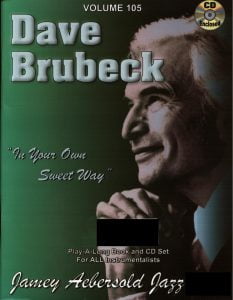
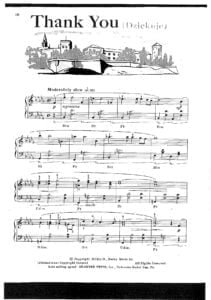
Dave Brubeck – Thank You Dziękuję
Happy heavenly birthday, Dave Brubeck, born on this day in 1920.
Dave Brubeck: Architect of Cool, Pioneer of Time
Introduction: The Unlikely Revolutionary
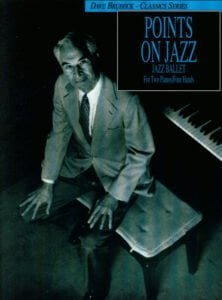
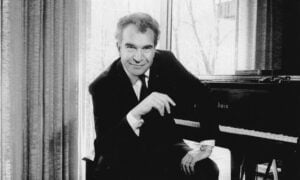
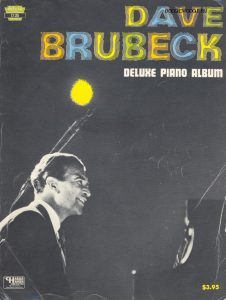
In the pantheon of jazz giants, Dave Brubeck stands as a unique and revolutionary figure—a classically trained pianist who became a jazz icon, a pop star who experimented with complex time signatures, and a gentle man whose music carried the weight of social change. With his bespectacled, scholarly appearance, Brubeck seemed an unlikely candidate to become one of the best-selling jazz artists of all time. Yet, through his innovative approach to harmony, rhythm, and composition, he expanded the boundaries of jazz and brought it to unprecedented mainstream audiences. His masterpiece, “Take Five,” remains one of the most recognizable instrumental pieces in history, a testament to his ability to marry accessibility with sophistication.

Browse in the Library:
Or browse in the categories menus & download the Library Catalog PDF:
Biography: From Ranch to Stage
Early Life and Musical Beginnings (1920-1946)
David Warren Brubeck was born on December 6, 1920, in Concord, California. His mother, a pianist who had studied in England, intended for a musical career before family obligations intervened. She gave piano lessons, but Dave, showing early resistance to formal training, largely taught himself by ear, hiding this fact from his teachers. The Brubeck household was musical—his two older brothers would become musicians as well.
Brubeck initially intended to study veterinary medicine at the College of the Pacific in Stockton, California, but switched to music after a professor heard him playing. His classical training there was rigorous, but he continued to play jazz gigs at night, developing his distinctive approach. Upon graduation in 1942, he was drafted into the U.S. Army. He narrowly avoided being sent to the infantry and instead led a service band, the Wolfpack, which provided his first experience integrating African-American musicians into a white military unit—a bold move in the segregated Army.
Formative Years and the Octet (1946-1951)
After WWII, Brubeck used the G.I. Bill to study composition at Mills College under the renowned French composer Darius Milhaud. Milhaud encouraged Brubeck to incorporate jazz elements into his classical compositions and vice versa, profoundly shaping his polyphonic, contrapuntal approach. Along with other Milhaud students, Brubeck formed the experimental Dave Brubeck Octet in 1946. The group explored unusual time signatures and formal structures, blending jazz with classical motifs. Though commercially unsuccessful (their recordings weren’t released until years later), the Octet was a laboratory for ideas that would define Brubeck’s career.
In 1949, needing more commercially viable work, Brubeck formed a trio with Cal Tjader on drums and Ron Crotty on bass. The trio gained popularity on San Francisco’s club scene and recorded for the fledgling Fantasy label.
The Classic Quartet and Breakthrough (1951-1967)
The pivotal moment came in 1951 when alto saxophonist Paul Desmond approached Brubeck about forming a quartet. Desmond’s lyrical, wispy tone and melodic genius perfectly counterbalanced Brubeck’s dense, rhythmic piano. With various bassists and drummers (most permanently Joe Morello on drums in 1956 and Eugene Wright on bass in 1958), the Dave Brubeck Quartet was born.
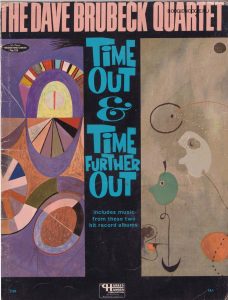
The quartet built a huge following through college tours, capitalizing on Brubeck’s youthful appeal and intellectual approach. Their 1954 album Jazz Goes to College was a surprise hit. But it was 1959’s “Time Out” that changed everything. Defying label skepticism, the album consisted entirely of original compositions in unusual meters: “Blue Rondo à la Turk” in 9/8, “Take Five” in 5/4, and “Pick Up Sticks” in 6/4. “Take Five,” composed by Desmond, became a surprise pop hit. Time Out was the first jazz album to sell over a million copies and remains one of the top-selling jazz albums of all time.
The quartet became global ambassadors of jazz, touring tirelessly behind the Iron Curtain, in the Middle East, and across Asia under the auspices of the U.S. State Department. They broke racial barriers, with Brubeck often refusing to play venues that wouldn’t accept his African-American bassist, Eugene Wright.
Later Career and Expansions (1967-2012)
The classic quartet disbanded in 1967 as members sought new projects. Brubeck focused on larger-scale compositions: oratorios (The Light in the Wilderness), cantatas, and ballet scores. He formed new groups, often featuring his sons—Darius (keyboards), Chris (bass/trombone), Dan (drums), and Matthew (cello)—as Two Generations of Brubeck or the Brubeck Brothers Quartet.
He never stopped touring or recording, maintaining a prolific output into his 80s. His later work often fused jazz with sacred music, reflecting his deep Catholic faith (he converted in the 1980s). Dave Brubeck continued performing until just days before his death from heart failure on December 5, 2012, one day shy of his 92nd birthday.



Music Style and Harmonic Language
Polytonality and Counterpoint
Brubeck’s most distinctive hallmark was his use of polytonality—the simultaneous use of two or more keys. Influenced by Milhaud and early 20th-century classical composers, Brubeck would often play a melody in one key while the left hand comped chords in another. This created a dense, rich, sometimes dissonant texture that was revolutionary in jazz. In “The Duke,” for instance, he juxtaposes major and minor tonalities to poignant effect.
His classical training also infused his music with contrapuntal lines—independent melodic voices interacting, much like a Bach fugue. This was evident in his interplay with Desmond; their lines would weave around each other in dialogue rather than simply alternating solos.
Rhythmic Innovation
Brubeck was obsessed with rhythm. While most jazz swung in 4/4, he explored odd meters (5/4, 7/4, 9/8) and polyrhythms (layering different meters simultaneously). He didn’t invent odd-meter jazz, but he popularized it. His approach was often to superimpose simpler rhythmic patterns within complex meters: “Take Five” is felt as a repeating pattern of three beats plus two beats. “Blue Rondo à la Turk” alternates between a Turkish 9/8 pattern (2+2+2+3) and a swinging 4/4.
Block Chords and Orchestral Piano
Brubeck had a powerful, percussive touch, often playing block chords—thick, chordal formations in both hands, moving in parallel. This “orchestral” style filled the sonic space, compensating for the lack of a guitar or second horn. It was physical and rhythmic, grounding the quartet’s sound. His left hand was notoriously active, often playing pounding ostinatos or counter-melodies rather than simple walking bass lines.
Improvisational Style and Signature Licks
Brubeck’s improvisations were architectural—built on motifs, developed through variation, and deeply tied to composition. He was not a bebop-style linear improviser; his solos were thematic and harmonic explorations.
- The “Brubeck Block”: A trademark was sudden, crashing block chords interrupting a single-note line, creating dramatic dynamic shifts.
- Ostinato-based Soloing: He would often establish a short, repetitive left-hand pattern (ostinato) and then improvise polytonal lines against it, creating a hypnotic, driving effect (“Unsquare Dance”).
- Polyrhythmic Phrasing: Even in standard time, he would phrase melodic lines in cross-rhythms, perhaps playing a phrase in triplets over the quartet’s swing feel, creating tension and surprise.
- Quartal Harmony: Brubeck frequently built chords in fourth intervals (rather than traditional thirds), giving his harmony an open, modern sound. This is evident in the opening of “In Your Own Sweet Way.”
- Motivic Development: He would take a short motif from the melody and subject it to rhythmic displacement, inversion, or harmonic recombination throughout his solo, giving it a classical sense of unity.
Collaborations and the Quartet Dynamic
Paul Desmond: This was one of jazz’s most magical partnerships. Desmond’s alto sax sound was light, airy, and melodic—the “sound of a dry martini,” as he famously said. He provided the lyrical counterpoint to Brubeck’s density. Their interplay was conversational and deeply empathetic. Desmond contributed many of the quartet’s greatest hits, including “Take Five” and “Audrey.”
Joe Morello: More than just a timekeeper, Morello was a virtuoso who could navigate Brubeck’s complex meters with fluidity and invention. His solo on “Take Five” is a masterclass in building tension and musicality within a 5/4 framework.
Eugene Wright: “The Senator” provided the quartet’s rock-solid foundation. His impeccable time and warm tone anchored the rhythmic experiments. His presence was also a quiet statement of integration during the Civil Rights era.
Beyond the Quartet: Brubeck collaborated with a diverse array of artists: he recorded with Louis Armstrong (The Real Ambassadors, a musical satire), Leonard Bernstein, Jimmy Rushing, and Carmen McRae. In later years, he worked with contemporary classical ensembles and his sons, exploring fusion and world music influences.
Chord Progressions and Harmonic Analysis
Brubeck’s compositions often moved beyond standard blues and jazz song forms.
- “Take Five“: Built on a hypnotic two-chord vamp: Ebm – Bbm7. The harmony is static, but the interest comes from the relentless 5/4 rhythm and Desmond’s modal, pentatonic-based melody. The bridge shifts to a contrasting, more active progression.
- “Blue Rondo à la Turk“: The A-section is not driven by chord changes but by the rhythmic melody in A minor. The contrasting B-section is a standard 12-bar blues in A, providing familiar grounding after the angular 9/8 theme.
- “In Your Own Sweet Way“: A beautiful example of Brubeck’s harmonic sophistication. It’s a 36-bar form with unconventional turnarounds and key centers. The opening uses quartal harmony (chords built in fourths: F-Bb-Eb) and moves through a series of rich, chromatic chord changes that challenge the improviser.
- “The Duke**: A medium-tempo ballad featuring polytonality—the melody hints at one key while the chords suggest another, creating a bittersweet, ambiguous mood. The progression is cyclical and elegant.

Influences and Legacy
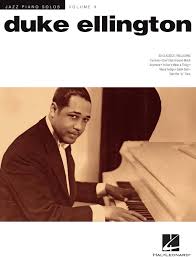
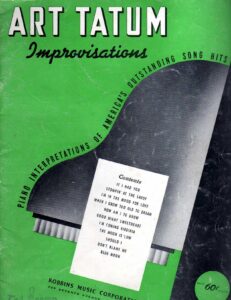
Influences: His primary mentors were Darius Milhaud (classical polytonality and structure) and jazz pianists like Fats Waller (stride piano) and Art Tatum (harmonic daring). He also admired the compositional approach of Duke Ellington.
Legacy: Brubeck’s legacy is multifaceted:
- Popularizer of Jazz: He made jazz intellectually respectable and massively popular in the 1950s-60s.
- Rhythmic Liberator: He legitimized odd meters in jazz, paving the way for later artists like Don Ellis, Mahavishnu Orchestra, and even prog-rock.
- Composer’s Approach: He elevated the role of composition in small-group jazz, moving beyond head-solo-head formats.
- Cultural Ambassador: His State Department tours projected a positive, integrated image of America during the Cold War.
- Bridge Builder: His work consistently erased boundaries between jazz and classical, between high art and popular appeal.
Major Compositions and Performances
- “Take Five” (Paul Desmond): The quintessential Brubeck hit.
- “Blue Rondo à la Turk”: A thrilling opener that showcased rhythmic complexity.
- “In Your Own Sweet Way”: A jazz standard covered by Miles Davis, Chet Baker, and many others.
- “The Duke”: A poignant tribute to Ellington.
- “Unsquare Dance”: A witty, clapping 7/4 piece showcasing rhythmic play.
- “Strange Meadow Lark”: A beautiful, through-composed ballad.
- “It’s a Raggy Waltz”: A 3/4 piece blending ragtime and waltz.
- “Koto Song”: Inspired by Japanese music, demonstrating his global influences.
Definitive Performances: The 1963 album At Carnegie Hall captures the classic quartet at its peak live. The 1964 recording Jazz Impressions of Japan is a brilliant concept album. Time Further Out (1961) continued his explorations in meter.
Filmography and Larger Works
Brubeck wrote several large-scale works:
- The Light in the Wilderness (1968): Oratorio for bass soloist, choir, and orchestra.
- The Gates of Justice (1969): Cantata blending Hebrew texts and MLK Jr. speeches.
- Truth Is Fallen (1971): A protest piece for victims of the Kent State shootings.
- To Hope! A Celebration (1996): A Mass setting.
His film work includes the soundtrack for the documentary The Unfinished Dance and appearances in films like All Night Long (1962). Television appearances were numerous, including multiple episodes of The Tonight Show and educational programs.
Selective Discography
- Jazz at Oberlin (1953) – Early live document showing fiery interplay.
- Jazz Goes to College (1954) – The breakthrough album.
- Time Out (1959) – The landmark album.
- Time Further Out (1961) – Sequel exploring 5/4, 7/4, 9/8, etc.
- The Real Ambassadors (1962) – With Louis Armstrong and Carmen McRae.
- At Carnegie Hall (1963) – Peak live performance.
- Jazz Impressions of Japan (1964)
- Time In (1966)
- Brubeck & Desmond: 1975: The Duets (1975) – Intimate reunion.
- Late Night Brubeck (1994) – Excellent later trio work.
- London Flat, London Sharp (2005) – Proof of his enduring creativity in his 80s.
Dave Brubeck: The Timekeeper
Dave Brubeck was more than a jazz musician; he was a sonic explorer who believed in melody, harmony, and rhythm as forces for joy and unity. In a century defined by fragmentation, his music—complex yet accessible, intellectual yet swinging—represented a hopeful synthesis. He taught millions to listen in new meters, to hear the dialogue between piano and saxophone as a form of friendship, and to understand jazz as a living, evolving conversation. The enduring appeal of “Take Five,” still echoing in coffee shops and commercials worldwide, is a testament to his genius: he made the unusual feel natural, the complex feel inviting. In bending time, Dave Brubeck created music that transcends it.
Search your favorite sheet music in the category of Jazz, Blues, Soul, & Gospel.
Dave Brubeck – Full Concert [HD] | Live at North Sea Jazz Festival 2004
Dave Brubeck Quartet live at North Sea Jazz Festival 2004
Setlist: 1 ‘On The Sunny Side Of The Street’ 2 ‘Yesterdays’ 3 -‘Elegy’ 4 ‘London Flat, London Sharp’ 5 ‘Travelin’ Blues’ 6 ‘Sleep’ 7 ‘Take 5’ LINEUP Dave Brubeck (piano); Bobby Militello (alto sax, flute); Michael Moore (bass); Randy Jones, drums.
This was the press-release for the concert:
For many people in the fifties the music of Dave Brubeck was some sort of introduction to jazz. His music was accessible, fresh and very popular. He was admired for his own inimitable style: the block chords, the asymmetrical metres (5/4, 9/8) and the angular syncopated timing. The critics highly praised his first avant-garde ensemble, the Dave Brubeck Octet in San Francisco. The hit Take Five, composed by band member Paul Desmond, proved to be a turnaround. While millions of copies of Brubeck’s LP Time Out were sold, the critics scorned this ‘music for cocktail parties’. Miles Davis, Gerry Mulligan, Louis Armstrong and Charles Mingus, who were always loud in praise of Brubeck, put some heart into him. Brubeck is a living legend in his late eighties, who still proves to be an extremely lyrical musician.
Dave Brubeck – Take Five
Live in Belgium 1964 Paul Desmond (alto sax), Joe Morello (drums), Eugene Wright (bass) and Dave Brubeck (piano).