
Table of Contents
Community Musicians, building a worldwide Community Music.
All the music you want to play on one site. Sharing the world’s best Contemporary, Jazz, Popular, Film, and Classical Sheet Music.
Scores for all instruments: over 15,000
(active and growing), over 231,000 pages.
All genres, styles, and instruments — Jazz & Blues, Rock & Pop, Classical & Contemporary, Film & Musicals;
books, methods, études, play-along tracks (MP3) for Jazz & Rock.
Access & benefits: $15.99 one-time payment, valid for lifetime.
How to Join — 🔍 Search the Catalog — FAQs — Join Us
Hallelujah Leonard Cohen piano Solo sheet music, Noten, partitura, partition, spartiti 乐谱 楽譜
Best Sheet Music download from our Library.

Please, subscribe to our Sheet Music Library.
If you are already a subscriber, please, check our NEW SCORES’ page every month for new sheet music. THANK YOU!
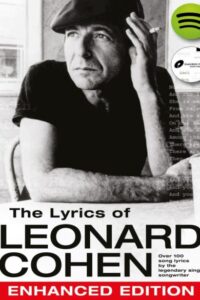
Best Sheet Music download from our Library.
What is the story behind this beautiful song?
The story of Leonard Cohen’s “Hallelujah” is an epic tale of artistic struggle, slow-burning fame, and transformation into a modern secular hymn. It’s a story in three acts.
Act I: The Birth of a “Glorious” Song (The 1980s)
Leonard Cohen, already a respected poet and songwriter, spent years writing this song. By some accounts, he wrote around 80 draft verses. He was wrestling with profound themes: the intertwining of the sacred and the profane, love as both divine and broken, doubt and faith.
He famously sat on the floor of the Royalton Hotel in New York, banging his head on the floor, seeking the right words. The song is packed with biblical references:
- King David: The “secret chord that David played” to please the Lord (from 1 Samuel).
- Bathsheba: David’s sinful obsession (“you saw her bathing on the roof”).
- Samson and Delilah: “She broke your throne and she cut your hair.”
- The word itself: “Hallelujah,” Hebrew for “Praise the Lord.”
But Cohen’s genius was in making the holy worldly. The “hallelujah” isn’t just one of praise; it’s a “broken hallelujah,” a sigh of resignation, an acknowledgement of flawed love and human failure.
As he sang: “It’s not a cry that you hear at night / It’s not somebody who’s seen the light / It’s a cold and it’s a broken Hallelujah.”
When he finally included it on his 1984 album “Various Positions,” his label, Columbia Records, rejected the album (deeming it uncommercial). It found a release on an independent label and was largely ignored by critics and the public. Cohen’s own version was a low, spoken-sung rumble with synthesizers—austere and intellectual.
Act II: The Transformation & Rise (The 1990s)
The song’s journey to immortality began with a series of covers.
- John Cale (1991): The Velvet Underground founder asked Cohen for the lyrics. Cohen faxed him 15 pages of verses. Cale meticulously selected and rearranged several (including the now-famous “I used to live alone before I knew you…” verse) and recorded a stark, beautiful piano-and-vocal version for a Cohen tribute album.
- Jeff Buckley (1994): This was the turning point. Buckley used Cale’s arrangement as his template for his album “Grace.” His rendition was achingly vulnerable, a soaring, fragile prayer of a voice accompanied by a single shimmering electric guitar. It transformed the song from a meditative rumination into an anthem of transcendent melancholy. Tragically, Buckley’s death in 1997 added a layer of mythos to his version, cementing its iconic status.
Throughout the late ’90s and 2000s, the song began seeping into the culture, used in movies (“Shrek” famously used a rejected cover) and TV shows, often to signal moments of poignant sadness or resolution.
Act III: The “Hallelujah” Industry (2000s – Present)
The song exploded into a global phenomenon. Its public domain-like status (due to many verses and clear structure) made it irresistible for:
- Talent Shows: It became the ultimate audition song, most notably leading to Rufus Wainwright’s version for the Shrek soundtrack and Kate McKinnon’s haunting performance on Saturday Night Live after the 2016 election.
- Covers: Hundreds of artists, from Bono to Bon Jovi, k.d. lang to Pentatonix, have recorded it, each bringing their own interpretation.
- Public Mourning & Celebration: It is now a staple at funerals, weddings, memorials, and vigils. It has been performed at the Olympics, during disaster relief benefits, and in countless places of worship. It has become a secular hymn—a song of solace, resilience, and emotional truth for people of all (or no) faiths.
The Core Paradox & Why It Endures
The power of “Hallelujah” lies in its beautiful contradiction. It is:
- Sacred and Profane: It references the Bible to tell stories of earthly, complicated love.
- Joyful and Mournful: The word “hallelujah” is a shout of praise, but the song is delivered as a lament.
- Specific and Universal: Cohen’s verses are densely personal and literary, yet the emotional core—the mix of awe, love, loss, and weary acceptance—feels universal.
In short, the story of “Hallelujah” is the story of a song that was too dense and unusual for its time, saved from obscurity by other artists who sensed its latent power. Ultimately, it transformed into a flexible vessel for human emotion that belongs to the world.
Leonard Cohen, who watched this slow ascent with wry amusement, reportedly said of its overwhelming use: “I think it’s a good song, but too many people sing it.”
It remains the ultimate “broken Hallelujah”—a perfect, imperfect masterpiece.
