Come join us now, and enjoy playing your beloved music and browse through great scores of every level and styles!
Can’t find the songbook you’re looking for? Please, email us at: sheetmusiclibrarypdf@gmail.com We’d like to help you!
Table of Contents
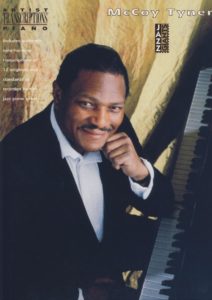
Happy heavenly birthday, McCoy Tyner, born on this day in 1938
Best Sheet Music download from our Library.
Please, subscribe to our Sheet Music Library.
If you are already a subscriber, please, check our NEW SCORES’ page every month for new sheet music. THANK YOU!
The Colossus of Sound: McCoy Tyner and the Architecture of Modern Jazz
On December 11, 1938, in the musical crucible of Philadelphia, a pianist was born who would become one of the most influential architects of modern jazz. Alfred McCoy Tyner’s name is forever linked with the seismic shifts of the 1960s, his monumental sound serving as the harmonic and rhythmic engine for the John Coltrane Quartet, arguably the most important small group in the music’s history. Yet, to relegate Tyner to the role of sideman, however illustrious, is to miss the scope of a monumental solo career that spanned over five decades. He was a composer of profound beauty, a bandleader of visionary power, and a pianist whose physicality and spiritual reach literally expanded the sonic possibilities of the instrument.
Biography: From Philadelphia to the Cosmic
Tyner’s musical journey began early. The rich cultural soil of Philadelphia, which also nurtured John Coltrane, Lee Morgan, and Benny Golson, provided his foundation. He began piano lessons at 13, showing an immediate affinity. His mother’s encouragement was pivotal, and the family’s deep involvement in the African Methodist Episcopal Church imbued his playing with a gospel fervor that never left him. As a teenager, he formed his first group, a seven-piece band that allowed him to explore arranging. The crucial encounter came at 17, when he met the already-legendary John Coltrane. Tyner, still in high school, began sitting in with Coltrane, a mentorship that would blossom into a world-altering partnership.
After moving to New York in 1959 and a brief stint with the Benny Golson-Art Farmer Jazztet, Tyner joined Coltrane’s newly formed quartet in 1960, alongside bassist Jimmy Garrison and drummer Elvin Jones. This unit, driven by a collective search for spiritual and musical transcendence, would redefine jazz. The relentless intensity and demands of this period—exemplified by marathon performances and recordings like A Love Supreme—forged Tyner’s style in the fire. However, as Coltrane’s music moved further into the avant-garde with the addition of players like Pharoah Sanders, Tyner felt the harmonic underpinning he provided was becoming less central. He left the group in 1965, a difficult but necessary step for his artistic survival.
What followed was a period of struggle, but also of fertile growth. He recorded a series of excellent but under-recognized albums for Blue Note (like The Real McCoy and Tender Moments) and Milestone. It was in the 1970s that Tyner’s career exploded as a leader. Signing with Milestone, he began crafting a series of large-ensemble and small-group albums that were both commercially successful and critically acclaimed. Works like Sahara (1972, which won a Grammy), Enlightenment (1973), and Fly with the Wind (1976) presented his music in its full panoramic glory, blending African and Eastern influences with orchestral grandeur and ferocious small-group interplay. For the remainder of his career, Tyner remained a titan—leading his potent big band, touring in prestigious small groups, and receiving countless honors, including a National Endowment for the Arts Jazz Masters fellowship. He passed away on March 6, 2020, leaving behind a legacy as one of the most instantly recognizable and deeply respected voices in jazz history.
Browse in the Library:
Or browse in the categories menus & download the Library Catalog PDF:
Musical Style and Harmonic Architecture: The Tyner Sound
The McCoy Tyner sound is a physical and spiritual phenomenon. It is characterized by a majestic, percussive power, a rolling, orchestral approach to the keyboard that treats the piano as both a melodic and a rhythmic instrument.
- The Quartal Foundation: The cornerstone of Tyner’s harmonic language is his extensive use of quartal harmony—building chords in intervals of fourths, rather than the traditional thirds of Western tertian harmony. While not the first to use quartal voicings in jazz (Miles Davis and Bill Evans explored them), Tyner made them his primary vocabulary. A left-hand chord like F-Bb-Eb (all perfect fourths) has an open, ambiguous, and powerful quality. It lacks the directional pull of a major or minor chord, creating a vast, expansive landscape. This was the perfect harmonic ground for Coltrane and later for Tyner’s own soloists to explore modally. He would stack these fourths high into his left hand, creating dense, ringing clusters that resonated with the piano’s overtones.
- The Pentatonic Embrace: Closely allied with his quartal approach is Tyner’s masterful use of pentatonic (five-note) scales. These scales, found in musical traditions worldwide from West Africa to East Asia, fit perfectly over his quartal chords. His right-hand lines are often torrents of pentatonic runs, cascading across the keyboard with a shimmering, modal brilliance. This combination—quartal left hand, pentatonic right hand—created a sound that felt ancient and modern, folkloric and avant-garde, all at once.
- The Orchestral Left Hand and Damper Pedal: Tyner’s left hand was not merely an accompanist; it was a force of nature. He often played bass lines in octaves or fifths, but more famously, he deployed a powerful, ostinato left-hand figure—a repeating pattern of low, resonant chords, often in a vamp-like cycle. This “left-hand vamp” became his signature, a roiling undercurrent that generated immense rhythmic drive and harmonic suspense. To this, he added a revolutionary use of the damper (sustain) pedal. Where many pianists use the pedal for legato phrasing, Tyner used it to hold his massive left-hand chords, allowing them to ring, accumulate, and create a swirling, oceanic resonance over which his right-hand lightning could flash. This created the impression of multiple instruments: a bassist, a rhythm guitarist, and a horn section, all emanating from his ten fingers.
- Rhythmic Complexity: Growing up alongside the polyrhythmic volcano of Elvin Jones was transformative. Tyner internalized Jones’s multilayered approach to rhythm. His comping is not simple chord-on-the-beat; it is a dynamic, conversational barrage of accents that interacts with the drums and bass. His solo lines are rhythmically dense, often implying multiple meters at once, creating a feeling of immense, tumbling momentum.
Compositions: From Gospel Hymns to Epic Tone Poems
Tyner was a composer of immense breadth and melodic generosity. His works are not mere vehicles for improvisation but enduring melodies that capture his spiritual yearning and cultural consciousness.
- The Coltrane Era Standards: Songs like “Inception” and the hauntingly beautiful ballad “Effendi” (written during his Jazztet days) became instant standards. But his most famous composition from this period is undoubtedly “Passion Dance.” Built on a relentless, cycling modal groove, it is the ultimate showcase for his left-hand vamp and pentatonic fury, a piece of unadulterated joy and energy that became a staple of his live sets for life.
- The Epic Explorations: His 1970s work yielded complex, extended compositions. “Sahara,” the title track from his Grammy-winning album, is a six-part suite that moves from a brooding, rubato introduction through African-tinged percussion sections and into fiery, Coltrane-esque modal excursions. “Fly with the Wind” is a sweeping, lyrical ballad popularized in a version with strings, showcasing his gift for melody. “Walk Spirit, Talk Spirit” encapsulates his entire aesthetic—a hypnotic vamp, a folk-like melody, and a structure that builds to ecstatic collective improvisation.
- The Ballads: Often overlooked is Tyner’s profound touch with a ballad. Pieces like “Search for Peace” and “You Taught My Heart to Sing” (with lyrics later added by Sammy Cahn) are models of harmonic richness and deep, resonant emotion. They reveal the gospel-inflected tenderness that balanced his titanic power.
Cooperations: Beyond the Classic Quartet
While the Coltrane Quartet remains the most significant collaboration, Tyner’s musical relationships were vast and varied.
- John Coltrane Quartet (1960-1965): This is the defining partnership. Tyner was the perfect harmonic foil for Coltrane’s “sheets of sound” and later modal explorations. Listen to his anchoring, monumental chords on “Acknowledgement” from A Love Supreme, or his tumultuous, propulsive solo on *“Chasin’ the Trane.” He provided the structured, cyclic foundation over which Coltrane and Jones could unleash their whirlwinds.
- The 1970s All-Stars: As a leader, Tyner consistently attracted and nurtured extraordinary talent. His early 70s groups featured saxophonists like Azar Lawrence and Joe Ford, who could channel the spiritual energy of the late-Coltrane era. His celebrated trio with bassist Avery Sharpe and drummer Louis Hayes (and later Aaron Scott) was a powerhouse of rhythmic sophistication.
- The Big Band: Beginning with Tender Moments (1967) and flourishing in the 70s, Tyner’s big band was no mere nostalgic exercise. He wrote dense, inventive arrangements that translated his piano language to an ensemble, featuring brilliant soloists like saxophonist George Adams and trumpeter Marvin Stamm. Albums like Fly with the Wind and The Turning Point are monuments of large-ensemble jazz.
- Collaborations with Legends: Throughout his career, he engaged in celebrated duo and trio projects. His duo album with Bobby Hutcherson (Manhattan Moods) is a masterclass in mallet-and-keyboard empathy. His work with Stanley Clarke and Al Foster in the 1990s demonstrated his undiminished fire. He also recorded memorable sessions with everyone from Freddie Hubbard and Wayne Shorter to Sonny Rollins and Jack DeJohnette.
Legacy: The Enduring Resonance
McCoy Tyner’s influence is omnipresent in jazz piano since the mid-1960s. It is impossible to imagine the playing of Chick Corea (especially in his acoustic work), Joey Calderazzo, John Beasley, or Kris Davis without Tyner’s blueprint. His harmonic concepts seeped into the language of the music, moving beyond piano to influence composers and arrangers. More than just a technique, he passed on an ethos: that of the pianist as a holistic, orchestral force; that of music as a spiritual offering; that of rhythm as a sacred, communal pulse.
He was a musician who could summon the force of a thunderstorm and the delicacy of a dew drop, often within the same phrase. On his birthday, we celebrate not just a pivotal figure in jazz history, but a timeless artist whose sound—a mighty river of rolling fourths, percussive vamps, and singing pentatonics—continues to nourish the landscape of creative music. McCoy Tyner built cathedrals of sound, and we are all fortunate to dwell within their resonant, enduring walls.