
Come join us now, and enjoy playing your beloved music and browse through great scores of every level and styles!
Can’t find the songbook you’re looking for? Please, email us at: sheetmusiclibrarypdf@gmail.com We’d like to help you!
Table of Contents
Best Sheet Music download from our Library.
Please, subscribe to our Sheet Music Library.
If you are already a subscriber, please, check our NEW SCORES’ page every month for new sheet music. THANK YOU!
Remembering Barry Harris, born on this day in 1929.
Barry Harris: The Keeper of the Bebop Flame.
Biography
Barry Doyle Harris was born on December 15, 1929, in Detroit, Michigan, a city that would become a crucial incubator for jazz talent in the mid-20th century. He was the fourth of five children to Melvin and Bessie Harris, both of whom were deeply religious and initially skeptical of jazz’s secular influences. Despite this, they encouraged musical education—his mother was a church pianist—and Barry began studying piano at age four.
Harris’s early musical awakenings came through radio broadcasts of Earl Hines and Art Tatum, but his true conversion to jazz occurred at age 14 when he heard “Thelonious” by the bebop pioneer himself, Thelonious Monk. This experience ignited a lifelong devotion to the bebop language that would define his career. Unlike many of his contemporaries who left for New York early, Harris remained in Detroit until 1960, developing his craft alongside other Motor City greats like Tommy Flanagan, Pepper Adams, Donald Byrd, and the Jones brothers (Hank, Thad, and Elvin).
In 1960, at the urging of Cannonball Adderley, Harris moved to New York City, quickly becoming an integral part of the jazz scene. He joined the touring band of Adderley and began what would become a significant musical relationship with saxophonist Coleman Hawkins. Throughout the 1960s, he worked extensively with Hawkins and also played with Illinois Jacquet, Yusef Lateef, and most notably, served as the pianist and musical director for Dexter Gordon from 1975 to 1980, including on Gordon’s celebrated homecoming album “Homecoming.”
Beyond performing, Harris became a revered educator, establishing the Barry Harris Workshop in the 1970s, which continues to this day. He taught at universities and created an entire pedagogical system for understanding bebop harmony and improvisation. Harris remained active and influential until his passing on December 8, 2021, just shy of his 92nd birthday, having dedicated over seven decades to preserving and advancing the bebop tradition.

Music Style and Harmonic Approach
Barry Harris stands as one of the most authentic and dedicated practitioners of the bebop language. His style represents a perfect synthesis of Bud Powell’s driving linearity, Thelonious Monk’s angular harmonic imagination, and the elegant touch of Hank Jones. Unlike some of his contemporaries who ventured into modal jazz or free improvisation, Harris remained steadfastly committed to the chord-change-based improvisation of the bebop era.
Harmonic Philosophy: Central to Harris’s approach is what he called “the rules of movement.” He developed a comprehensive theory of bebop harmony that revolved around the concept of “movable” chords and scales. One of his foundational ideas was the “sixth diminished scale,” where he superimposed a diminished chord onto a major sixth chord, creating a rich palette for improvisation and chord movement.
He taught that every dominant seventh chord could be viewed as having two resolutions: one to a major chord (its primary resolution) and one to a minor chord (its secondary resolution). This concept alone opened up pathways for sophisticated reharmonization and voice leading.
Voice Leading: Harris was a master of contrapuntal movement in his comping and solo piano work. He emphasized the importance of inner voices moving stepwise, creating smooth, Bach-like connections between chords. His left-hand voicings typically featured rootless chords that allowed the harmonic progression to flow without interruption.
Rhythmic Language: True to bebop tradition, Harris’s playing featured rhythmic displacement, unexpected accents, and the seamless integration of eighth-note lines with rhythmic variety. His phrases often began on off-beats and extended across bar lines, creating a sense of perpetual forward motion.

Browse in the Library:
Or browse in the categories menus & download the Library Catalog PDF:
Improvisational Vocabulary and Signature Licks
Harris’s improvisational language is a textbook of bebop syntax. Here are some characteristic elements:
- Enclosure Techniques: Like Charlie Parker and Bud Powell, Harris mastered the art of “enclosing” target notes—approaching a chord tone from above and below with chromatic neighbor tones. For example, approaching the root of a chord from the minor seventh below and the major second above.
- The “Cry”: A signature Harris ornament involved a quick, bluesy bend or grace note figure, often on the third or seventh of a chord, giving his lines a vocal quality.
- Diminished Scale Integration: Harris would weave diminished scales through dominant chords, particularly in turnarounds. Over a G7 chord, he might play a line incorporating Ab, Bb, and D (from the diminished scale related to G7), resolving to chord tones of the C major tonic.
- Bebop Scales: He employed the classic bebop scales (major bebop, dominant bebop) to ensure chord tones fell on strong beats. For instance, adding a passing tone between the 5th and 6th of a major scale to create an eight-note scale.
- Quartal Harmonization in Lines: While improvising, Harris would sometimes harmonize a melodic line in fourths, creating a modern sound within the bebop framework.
A characteristic Harris lick over a ii-V-I in C major (Dm7-G7-Cmaj7) might look like this:
Dm7: F E F A | G7: B A G F# E D F E | Cmaj7: E D CNotice the chromatic approach (F#) to the G on the G7 chord, and the resolution from E (third of C) down to the root.
Collaborations and Musical Relationships
Harris’s career was marked by deep, lasting collaborations with jazz masters:
Dexter Gordon (1975-1980): This partnership represented one of Harris’s most significant musical relationships. As Gordon’s pianist and musical director, Harris provided the perfect harmonic foundation for the tenor saxophonist’s expansive, Lester Young-inspired lines. Their shared love for the bebop tradition made them a perfect match. Recordings like “Homecoming” and “Night at the Village Vanguard” capture their simpatico musical connection.
Coleman Hawkins (1960s): Harris became Hawk’s regular pianist during the veteran saxophonist’s final years. Hawkins, who had pioneered the tenor saxophone in jazz and adapted beautifully to bebop, appreciated Harris’s deep harmonic knowledge and historical awareness. Their recording “The Hawk Relaxes” (1961) is a masterclass in relaxed, sophisticated swing.
Cannonball Adderley: It was Adderley who persuaded Harris to move to New York, and they collaborated on several recordings, including “The Cannonball Adderley Quintet in San Francisco” (1959), though Harris’s contributions were sometimes uncredited early on.
Sonny Stitt: Harris recorded several albums with the bebop saxophone virtuoso, including “Just in Case You Forgot How Bad He Really Was” (1981), where their mutual technical command and bebop fluency created explosive musical conversations.
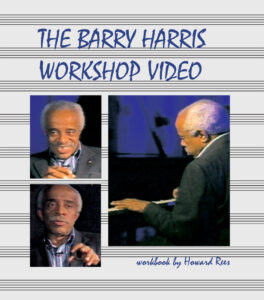
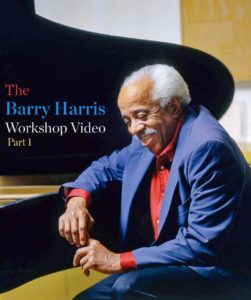
Educational Collaborations: Harris worked closely with students and disciples, most notably pianist and educator Howard Rees, with whom he developed his workshop materials into comprehensive educational resources.
Chord Progressions and Harmonic Innovations
Barry Harris didn’t just play standards; he reimagined them through his unique harmonic lens:
- Turnaround Mastery: Harris developed sophisticated substitutions for standard turnarounds. Where a typical turnaround might be Dm7-G7-Cmaj7, Harris might substitute:
   Dm7 - Db7 - Cmaj7 (tritone substitution)
   or
Dm7 - Ab7 - G7 - Cmaj7 (backcycling)- Major-Minor System: Harris taught that every major scale has a relative minor, and chords could be borrowed between these parallel systems. In C major, he might borrow the dominant chord (G7) from C minor, creating a G7b9 that resolves dramatically to C major.
- “Shoes” Concept: One of his most famous concepts involved what he called “putting shoes on chords”—adding specific upper extensions and alterations to make chords “walk” properly through a progression. For a dominant chord, this might mean adding the 9th, #11th, and 13th in specific combinations to create smooth voice leading.
- Diminished Chord Applications: Harris saw diminished chords not just as passing chords but as fundamental building blocks. He would use diminished chords built on the third, fifth, or seventh of a dominant chord to create tension and direction.
- Reharmonization of Standards: In his solo piano performances, Harris would radically reharmonize standards while maintaining their essential structure. His version of “There Will Never Be Another You” might feature unexpected minor plagal cadences or inserted ii-V progressions where none existed in the original.
Influences and Inspirations
Harris’s primary influences were the architects of bebop:
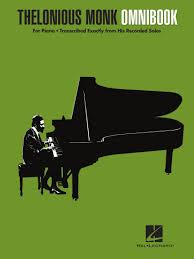
- Thelonious Monk: Harris absorbed Monk’s unconventional harmonic sense and use of dissonance, though he filtered it through a more traditionally lyrical approach.
- Bud Powell: From Powell came the driving right-hand lines and relentless swing that characterized Harris’s uptempo playing.
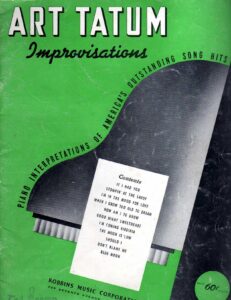
- Art Tatum: Harris internalized Tatum’s virtuosity and harmonic richness, though he expressed it with more economy.
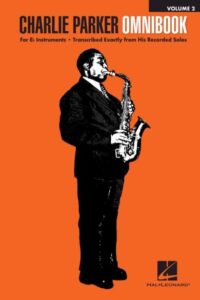
- Charlie Parker: Though not a pianist, Parker’s melodic and rhythmic language deeply informed Harris’s improvisational conception.
- Hank Jones: The Detroit connection and Jones’s elegant touch influenced Harris’s ballad playing.
He also studied classical composers, particularly Bach, whose counterpoint influenced Harris’s approach to voice leading.
Legacy and Educational Impact
Perhaps Barry Harris’s most enduring legacy lies in his role as educator and keeper of the bebop tradition. While other bebop pioneers passed away relatively young or moved on to other styles, Harris lived into his 90s, dedicating decades to systematically passing on the language.
The Barry Harris Workshop: Since the 1970s, Harris held weekly workshops in New York (first at the Jazz Cultural Theater, later at various locations). These were not typical masterclasses but ongoing communal learning experiences where musicians of all levels worked through Harris’s concepts together. He taught not just techniques but a complete musical philosophy.
Pedagogical System: Harris developed a comprehensive approach to jazz education that includes:
- The “movable” chord system
- The sixth diminished scale theory
- Rules for proper voice leading
- Methods for developing bebop melodic language
- Approaches to rhythm changes and blues progression
Influence on Musicians: Countless jazz musicians passed through Harris’s workshops, including pianists like Tommy Flanagan, Kirk Lightsey, and Benny Green, saxophonist Charles McPherson, and even non-pianists like guitarist Howard Alden. His concepts have been disseminated worldwide through his students and through instructional videos and books developed with Howard Rees.
Major Compositions and Works
While Harris is best known as an interpreter of standards and bebop classics, he composed several noteworthy pieces:
- “Nascimento”: A beautiful bossa-nova inspired composition dedicated to Brazilian musician Milton Nascimento, featuring characteristic Harris harmonic movement.
- “Bullshit”: A humorous, bluesy line that became a favorite among his students.
- “Even Steven”: An original blues that demonstrates Harris’s ability to work within traditional forms while injecting fresh harmonic ideas.
- “Luminescence”: A medium-tempo piece with sophisticated chord changes that challenge improvisers.
- “Around the Corner”: An uptempo bebop line that showcases his fluent bebop vocabulary.
His compositions, while not numerous, are gems that reflect his harmonic personality and have entered the repertoire of many jazz musicians.
Filmography
Barry Harris appeared in several documentary films that capture his playing and teaching:
- “Barry Harris: The Spirit of Bebop” (1992): A documentary by filmmaker Marlene Ball that explores Harris’s life and teaching methods.
- “Thelonious Monk: Straight, No Chaser” (1988): Harris appears as a commentator on Monk’s music and legacy.
- “Imagine the Sound” (1981): A documentary about jazz that includes interviews and performances with Harris.
- “Talking in Tongues: The Life of Barry Harris” (2006): A comprehensive documentary covering his career and educational work.
Discography (Selected Essential Albums)
As Leader:
- “Breakin’ It Up” (1958): Harris’s first album as leader, recorded in Detroit.
- “Barry Harris at the Jazz Workshop” (1960): His first Riverside album, featuring Sam Jones and Louis Hayes.
- “Listen to Barry Harris” (1961): Solo piano masterpiece showcasing his harmonic ingenuity.
- “Chasin’ the Bird” (1962): A tribute to Charlie Parker with a quartet.
- “Luminescence!” (1967): With an all-star sextet including Slide Hampton and Junior Cook.
- “Magnificent!” (1969): With Ron Carter and Leroy Williams.
- “Live in Tokyo” (1976): A superb trio recording capturing Harris at his peak.
- “The Bird of Red and Gold” (1989): Beautiful solo piano interpretations of standards.
- “First Time Ever” (1997): Duo album with saxophonist Charles McPherson.
As Sideman (Essential):
- Coleman Hawkins: “The Hawk Relaxes” (1961)
- Dexter Gordon: “Homecoming” (1976)
- Dexter Gordon: “Night at the Village Vanguard” (1977)
- Sonny Stitt: “Just in Case You Forgot How Bad He Really Was” (1981)
- Illinois Jacquet: “The Message” (1963)
- Lee Morgan: “Take Twelve” (1962)
Most Celebrated Performances
- “All the Things You Are” (from “Live in Tokyo”): A breathtaking exploration of this standard, demonstrating Harris’s ability to reharmonize in real time while maintaining the song’s essence.
- “Dance of the Infidels” (from various recordings): His interpretations of this Bud Powell composition show both his reverence for the source material and his individual approach.
- “There Will Never Be Another You” (solo piano versions): Harris’s solo renditions of this standard are masterclasses in reharmonization and voice leading.
- “My Heart Stood Still” (from “Listen to Barry Harris”): A ballad performance that showcases his touch, harmonic sophistication, and melodic inventiveness.
- “Like Someone in Love” (from “The Bird of Red and Gold”): Demonstrates his lyrical ballad playing at its finest.
Barry Harris: The Eternal Student and Teacher
Barry Harris represents a unique figure in jazz history: a direct link to the bebop revolution who dedicated his long life to preserving, systematizing, and transmitting that language. Unlike some of his contemporaries who achieved greater fame or commercial success, Harris remained focused on the music’s inner workings, becoming what pianist Ethan Iverson called “the greatest living example of the bebop tradition.”
His legacy is twofold: as a pianist of impeccable taste, swing, and harmonic sophistication, and as a teacher who gave the jazz community a comprehensive framework for understanding bebop. In an era when jazz education often focuses on scales and modes, Harris reminded musicians of the importance of chord changes, voice leading, and what he called “the rules of movement.”
Harris lived by his own credo: “You have to learn to be a professional student.” Until his final days, he approached music with the curiosity of a beginner and the wisdom of a master. His December 15th birthday marks not just the birth of a remarkable musician, but the beginning of a life dedicated to what he called “the happy science” of bebop—a science he both mastered and generously shared with generations of musicians.
As the jazz world continues to evolve, Barry Harris stands as a beacon of artistic integrity, a reminder that depth of knowledge in a tradition can be as revolutionary as breaking from it. His life’s work ensures that the bebop flame he first encountered as a 14-year-old in Detroit will continue to illuminate the path for jazz musicians for generations to come.
Search your favorite sheet music in the Sheet Music Catalog
Barry Harris Trio – It Could Happen To You
Barry Harris Trio. Live at Clasijazz (Almeria, 25/10/2014). Bass: Bori Albero Drums: Jimmy Castro Piano: Barry Harris.
Legendary Pianist Barry Harris Plays “My Heart Stood Still”

The Barry Harris Trio – Complete Live in Tokyo + Bonus Tracks (1976)
Barry Harris – Piano Sam Jones – Bass Leroy Williams – Drums Bonus Tracks Line-Up: Jimmy Rainey – Guitar Charles McPherson – Alto Saxophone
Tracklist:
1. Like Someone in Love 2. Ornithology 3. Salt Peanuts 4. A Soft Spot 5. ‘Round Midnight 6. A Night in Tunisia 7. Ornithology (Version 2) 8. Tea for Two 9. Dance of the Infidels 10. I’ll Remember April 11. Fukai Aijo 12. Un Poco Loco 13. Like Someone in Love (Version 2) 14. Groovin’ High 15. Blue ‘n’ Boogie