Community Musicians, building a worldwide Community Music.
All the music you want to play on one site. Sharing the world’s best Contemporary, Jazz, Popular, Film, and Classical Sheet Music.
Scores for all instruments: over 15,000
(active and growing), over 231,000 pages.
All genres, styles, and instruments — Jazz & Blues, Rock & Pop, Classical & Contemporary, Film & Musicals;
books, methods, études, play-along tracks (MP3) for Jazz & Rock.
Access & benefits: $15.99 one-time payment, valid for lifetime.
How to Join — 🔍 Search the Catalog — FAQs — Join Us
Table of Contents
Happy heavenly birthday, Ludwig van Beethoven, born on this day in 1770
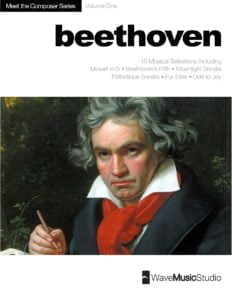
Best Sheet Music download from our Library.
Ludwig van Beethoven: The Titan of Sound
Prologue: The Archetypal Artist
Ludwig van Beethoven stands not merely as a composer, but as a cultural colossus, a foundational pillar of Western art music, and the enduring symbol of the artist as heroic, revolutionary, and transcendent. His life, a relentless struggle against personal adversity and societal constraints, became mythologized into the very narrative of Romantic genius.
His work forged a bridge from the structured elegance of the Classical era to the expressive, individualistic fervor of Romanticism, fundamentally expanding the emotional, structural, and philosophical scope of instrumental music. Born on December 17, 1770 (baptized; his exact birthdate is unconfirmed but traditionally celebrated on the 16th), his journey from a provincial court musician to Vienna’s most revered, if troubled, maestro charts the transformation of music itself.
Please, subscribe to our Sheet Music Library.
If you are already a subscriber, please, check our NEW SCORES’ page every month for new sheet music. THANK YOU!
Ludwig van Beethoven – Liszt Symphony no. 9, 4th Movement Piano Solo arr. (sheet music, Musiknoten)
I. Exhaustive Biography: From Bonn to Immortality
Early Life in Bonn (1770-1792)
Beethoven was born into a musical family in Bonn, then the capital of the Electorate of Cologne. His grandfather, Lodewijk van Beethoven, was a respected Kapellmeister. His father, Johann, a tenor and music teacher, recognized his son’s prodigious talent early but was a harsh, often drunk, tutor, famously attempting to present the young Ludwig as a Wunderkind like Mozart. Beethoven’s formal education was irregular, but he studied violin, clavier, and organ with various local musicians, most importantly the enlightened composer and conductor Christian Gottlob Neefe. Under Neefe’s guidance, Beethoven was exposed to the music of Bach and Handel and published his first compositions (the Dressler Variations) at age 12. Neefe famously wrote of him in 1783: “He would surely become a second Wolfgang Amadeus Mozart if he were to continue as he has begun.”
By his late teens, Beethoven was serving as a court organist and violist, providing crucial financial support for his family following his mother’s death and his father’s decline. The intellectual environment of Bonn was progressive, influenced by the Enlightenment and the stirrings of revolutionary thought. At the university, Beethoven immersed himself in the works of Kant, Schiller, and Goethe, ideas that would permanently shape his worldview. A pivotal 1790 encounter saw the young composer write a cantata on the death of Emperor Joseph II, revealing flashes of his future dramatic power. In 1792, with the support of the forward-looking Elector Maximilian Franz, Beethoven left for Vienna to study with Joseph Haydn. He would never return to Bonn.
Ode To Joy – Ludwig van Beethoven – Piano Solo Jazzy arr. Sheet music partitura noten spartiti 乐谱 楽譜
Vienna: The Formative Years (1792-1802)
Arriving in Vienna, Beethoven quickly established himself as a virtuoso pianist of explosive power and improvisatory genius, astonishing aristocrats who became his patrons: Prince Lichnowsky, Prince Lobkowitz, Baron van Swieten. His studies with Haydn were fraught (Beethoven found Haydn neglectful and secretly took lessons from Johann Schenk and later Johann Georg Albrechtsberger for counterpoint and Antonio Salieri for vocal composition). This period, often termed his “First Period,” saw him mastering and then bursting the seams of the High Classical style of Mozart and Haydn. Works like the Pathétique Sonata (Op. 13) and the First and Second Symphonies show a formidable composer expanding Classical forms with unprecedented dynamism, rhythmic drive, and emotional contrast.
A personal crisis loomed. By 1798, Beethoven began to notice the first symptoms of his most crushing adversity: progressive, incurable deafness. His despair is captured in the heartbreaking Heiligenstadt Testament of October 1802, a letter to his brothers never sent, where he confesses his isolation, misery, and thoughts of suicide, concluding with the resolution to persevere for his art: “It seemed impossible to me to leave the world until I had brought forth all that I felt was within me.” This document marks the turning point. His art would become his vehicle for conquering suffering.
The Heroic Decade (1803-1812)
Emerging from his crisis, Beethoven entered his “Middle” or “Heroic” period. His music became grander, more publicly rhetorical, and explicitly concerned with struggle and triumph. This is the era of the “Eroica” Symphony (No. 3), originally dedicated to Napoleon Bonaparte as a symbol of revolutionary heroism, a dedication he violently rescinded when Napoleon declared himself Emperor. The Eroica doubled the length of the symphonic form, introducing a new scale of architectural thinking and emotional narrative. Masterpieces poured forth: the opera Fidelio (a hymn to liberty and conjugal love), the Waldstein and Appassionata piano sonatas, the Razumovsky String Quartets, the Violin Concerto, and the iconic Fifth Symphony (with its famous “fate knocking at the door” motif) and Pastoral (Sixth) Symphony. He became the undisputed musical titan of Vienna, even as his deafness and personal eccentricities (forgetfulness, suspicion, tumultuous landlord relationships) grew.
Encounters with Other Artists
Beethoven’s relationships were intense and often fraught. He revered Goethe, and their 1812 meeting in Teplitz was legendary but disappointing for the composer, who found the poet too servile to aristocracy. Of Napoleon, he felt profound ambivalence—admiration for the revolutionary, contempt for the tyrant. He had important professional relationships with virtuosos like violinist Ignaz Schuppanzigh (for whom he wrote his late quartets) and pianist Carl Czerny (his student, who would teach Liszt). He was a sought-after teacher for the aristocracy, though his lessons with Archduke Rudolph, a dedicated pupil and patron, were uniquely enduring, resulting in dedications like the Missa Solemnis and the Hammerklavier Sonata.
Crisis and Introspection (1813-1817)
The final defeat of Napoleon and the Congress of Vienna ushered in a conservative, repressive political climate. Beethoven’s productivity waned due to personal, legal, and health struggles: a bitter custody battle for his nephew Karl after his brother’s death consumed his energies, and his deafness became total. His public works from this time, like the bombastic Wellington’s Victory, were crowd-pleasers but artistically less significant. He entered the deepest isolation of his life.
The Late Period (1818-1827)
From this abyss emerged Beethoven’s final, most radical transformation. His “Late Period” music became profoundly introspective, transcendent, and formally innovative. Freed from the need to communicate easily or please audiences, he composed for the ideal listener, for art itself, and for the divine. These works are characterized by extreme emotional range, from sublime spirituality to grotesque humor, incorporating fugal complexities, variation forms, and a disintegration of Classical phrasing in favor of meditative, timeless structures.
Key works include the monumental Hammerklavier Sonata (Op. 106), the Missa Solemnis (“from the heart, may it return to the heart”), the Diabelli Variations (a universe of transformation from a trivial waltz), and the final five String Quartets (Opp. 127, 130, 131, 132, 135) and the Ninth Symphony with its choral finale on Schiller’s “Ode to Joy.” The Ninth, premiered on May 7, 1824, was a sensation; Beethoven, unable to hear, had to be turned around to see the thunderous applause he could not hear.
His final years were marked by deteriorating health (cirrhosis likely from alcoholism). He died on March 26, 1827, during a thunderstorm. His funeral procession was attended by tens of thousands, a testament to his status as a public icon. An autopsy revealed a severely damaged liver and auditory nerves.
II. Music Style, Composition, Harmony, and Form
Evolution of Style
Beethoven’s style evolved relentlessly, but certain constants define it: an unparalleled dramatic and architectural sense, a moral and philosophical weight, and an explosive rhythmic energy. He inherited the clear forms (sonata-allegro, theme and variations, rondo) and tonal language of Haydn and Mozart but infused them with a new urgency and scale.
Harmony and Tonality
Beethoven was a master of tonal drama. He stretched the functional harmonic system to its limits:
- Unexpected Modulations: He would pivot to distant keys for dramatic effect (e.g., the shocking E-minor chord in the first movement of the Eroica).
- Expanded Dissonance: He used dissonance more freely and sustained it longer for expressive tension (the famous Grosse Fuge is a textbook).
- Tonal Ambiguity: He often began works in a state of harmonic uncertainty (the opening of the First Symphony is a “joke” on the wrong chord; the Hammerklavier begins with a stark, ambiguous B-flat major chord).
- Neapolitan and Mediant Relationships: He favored the flat-II (Neapolitan) and third-related keys (like C major to A major) for their color and surprise.
- Tonal Narratives: The journey from home key to distant keys and back became a metaphor for struggle, exploration, and resolution.
Melodic and Formal Style
- Thematic Economy & Motivic Development: Beethoven’s genius lay in building vast structures from tiny, malleable motifs. The four-note “fate” motive of the Fifth Symphony is the ultimate example, permeating the entire work. This “developing variation” technique became central to the German tradition.
- Expansion of Form: He dramatically expanded the coda of sonata-form movements, transforming it from a mere closing section into a “second development” and a site of ultimate resolution (Symphony No. 8, first movement).
- Cyclic Integration: He pioneered the use of thematic recall across movements to unify multi-movement works (the Pathétique Sonata, the Fifth Symphony).
- Lyricism and Rupture: His slow movements contain some of his most sublime, hymn-like melodies (e.g., the Largo of the Pathétique), often juxtaposed with sudden, violent interruptions that heighten the emotional impact.
Late Period Innovations
The late works constitute a universe unto themselves:
- Fugal Renaissance: A profound engagement with Baroque counterpoint, especially the fugue, used not as an academic exercise but as a vehicle for cosmic struggle and unity (finales of the Hammerklavier and Op. 110 sonata, the Grosse Fuge).
- Fragmentation and Meditation: Melodies break into aphoristic fragments; time seems suspended (slow movements of Op. 131 quartet, the Arietta of Op. 111).
- Formal Synthesis and Novelty: He created new hybrid forms, like the seamless seven-movement arc of the String Quartet Op. 131, or the integration of vocal forces into the symphony in the Ninth.
III. Influences and Legacy
Influences
Primary influences included: Haydn (form, wit), Mozart (melody, operatic drama), C.P.E. Bach (expressive intensity), and J.S. Bach (counterpoint, intellectual depth). The ideals of the Enlightenment and the Sturm und Drang literary movement shaped his belief in human freedom and heroic expression.
Legacy
Beethoven’s legacy is immeasurable. He:
- Redefined the Artist’s Role: He established the composer as an independent, visionary creator, not a servant of court or church.
- Mythologized Instrumental Music: He elevated pure instrumental music to the highest plane of philosophical and spiritual discourse.
- Cast a Long Shadow: Every 19th-century composer—Schubert, Berlioz, Brahms, Wagner, Bruckner, Mahler—struggled with and built upon his legacy. Brahms spent decades laboring under the “shadow of the giant” before producing his First Symphony, hailed as “Beethoven’s Tenth.” Wagner saw Beethoven’s symphonies as dramas and the Ninth as the justification for his own “Gesamtkunstwerk.”
- Shaped Modern Performance: He initiated the concept of the modern conductor and the authoritative, “definitive” musical work.
- Cultural Symbol: His music and biography became symbols of human resilience, democratic aspiration (the EU’s anthem is the “Ode to Joy”), and artistic triumph over adversity.
IV. List of Works (Selected, by Genre)
- Symphonies (9): No. 1 in C, Op. 21; No. 2 in D, Op. 36; No. 3 in E-flat “Eroica,” Op. 55; No. 4 in B-flat, Op. 60; No. 5 in C minor, Op. 67; No. 6 in F “Pastoral,” Op. 68; No. 7 in A, Op. 92; No. 8 in F, Op. 93; No. 9 in D minor “Choral,” Op. 125.
- Concertos: 5 for piano (No. 5 “Emperor”), 1 for violin, Triple Concerto.
- Orchestral: The Creatures of Prometheus (ballet), Wellington’s Victory.
- Chamber Music: 16 String Quartets (Op. 18, Op. 59 “Razumovsky,” Op. 74 “Harp,” Op. 95 “Serioso,” and the late quartets Op. 127, 130, 131, 132, 135, plus Grosse Fuge Op. 133); Violin Sonatas (e.g., “Spring,” “Kreutzer”); Cello Sonatas; Piano Trios (e.g., “Archduke”); Septet, Wind Octet.
- Piano Sonatas (32): Key works include Op. 13 “Pathétique,” Op. 27/2 “Moonlight,” Op. 53 “Waldstein,” Op. 57 “Appassionata,” Op. 81a “Les Adieux,” Op. 106 “Hammerklavier,” Op. 109, 110, 111.
- Other Piano Works: Bagatelles (including Für Elise), Diabelli Variations, Eroica Variations.
- Vocal & Choral: Opera: Fidelio. Oratorio: Christ on the Mount of Olives. Masses: Missa Solemnis in D, Op. 123; Mass in C, Op. 86. Song Cycle: An die ferne Geliebte. Numerous individual songs and folk song arrangements.
- Canons, occasional works.
V. Discography & Famous Recordings
The Beethoven discography is vast. Historic and benchmark interpretations include:
- Symphonies: Wilhelm Furtwängler (Berlin Philharmonic, 1940s-50s – profound, metaphysical); Herbert von Karajan (1963 cycle with Berlin – sleek, powerful); John Eliot Gardiner (Orchestre Révolutionnaire et Romantique – period-instrument, revolutionary energy); Claudio Abbado (Berlin Philharmonic, 2000 – luminous, mature); Nikolaus Harnoncourt (Chamber Orchestra of Europe – radical, dramatic).
- Piano Sonatas: Wilhelm Kempff (1950s, stereo – poetic, lyrical); Artur Schnabel (1930s – historic, intellectual); Vladimir Ashkenazy (complete – brilliant, clear); Alfred Brendel (multiple cycles – cerebral, authoritative); Richard Goode (warm, humanistic); András Schiff (live, insightful).
- String Quartets: Quartetto Italiano (warm, singing); Alban Berg Quartet (intense, precise); Takács Quartet (passionate, modern); Budapest Quartet (classic).
- Piano Concertos: Emil Gilels with George Szell (powerful); Murray Perahia with Bernard Haitink (elegant); Arthur Rubinstein (aristocratic).
- Missa Solemnis: John Eliot Gardiner; Otto Klemperer.
VI. Most Known Compositions
- Symphony No. 5 in C minor (“Fate”)
- Symphony No. 9 in D minor (“Choral”)
- Piano Sonata No. 14 in C-sharp minor, Op. 27/2 (“Moonlight”)
- Piano Sonata No. 8 in C minor, Op. 13 (“Pathétique”)
- Bagatelle in A minor, WoO 59 (“Für Elise”)
- Symphony No. 6 in F major (“Pastoral”)
- Symphony No. 3 in E-flat major (“Eroica”)
- Piano Concerto No. 5 in E-flat major (“Emperor”)
- Violin Concerto in D major, Op. 61
- String Quartet No. 14 in C-sharp minor, Op. 131
VII. Covers in Modern Music & Use in Film
Modern Music:
- Rock/Prog: Emerson, Lake & Palmer’s adaptations of Pictures at an Exhibition included Copland-esque homages, but their live shows often quoted Beethoven. The Beatles referenced the Moonlight Sonata in “Because.” Billy Joel’s “This Night” uses the Pathétique Sonata’s second movement.
- Electronic/Disco: Walter Murphy’s “A Fifth of Beethoven” (1976) is a iconic disco adaptation of the Fifth Symphony.
- Hip-Hop: NAS’s “I Can” samples Beethoven’s Für Elise.
Film Scores:
Beethoven’s music provides immediate emotional and intellectual shorthand:
- Classical Heroism/Struggle: Dead Poets Society (Ode to Joy); Immortal Beloved (biopic, uses multiple works); The King’s Speech (7th Symphony, 2nd movement).
- Dystopia & Violence: A Clockwork Orange (Kubrick uses the Ninth Symphony, especially the choral finale, for disturbing ironic contrast).
- Sci-Fi & Grandeur: Die Hard (Ode to Joy); Mission: Impossible (the Eroica variations theme is the series’ main motif).
- Drama: The Silence of the Lambs (uses the Goldberg Variations but Beethovenian intensity permeates the score’s aesthetic).
VIII. Famous Performers of His Music (Historical & Contemporary)
Conductors: Hans von Bülow, Arthur Nikisch, Felix Weingartner, Wilhelm Furtwängler, Arturo Toscanini, Herbert von Karajan, Leonard Bernstein, Carlo Maria Giulini, Georg Solti, Claudio Abbado, John Eliot Gardiner, Simon Rattle, Frans Brüggen, Nikolaus Harnoncourt.
Pianists: Franz Liszt (was a legendary interpreter), Hans von Bülow, Artur Schnabel, Wilhelm Kempff, Walter Gieseking, Claudio Arrau, Rudolf Serkin, Emil Gilels, Sviatoslav Richter, Glenn Gould (idiosyncratic), Alfred Brendel, Daniel Barenboim, Maurizio Pollini, András Schiff, Igor Levit.
Violinists: Joseph Joachim, Fritz Kreisler, Jascha Heifetz, David Oistrakh, Yehudi Menuhin, Itzhak Perlman, Anne-Sophie Mutter.
String Quartets: Joachim Quartet, Busch Quartet, Budapest Quartet, Quartetto Italiano, Amadeus Quartet, Juilliard String Quartet, Alban Berg Quartet, Emerson String Quartet, Takács Quartet.
IX. His Last Works: The Final Testament
Beethoven’s final works are his ultimate, uncompromising statement. They exist in a realm beyond conventional beauty, grappling with the fundamental questions of existence.
- Piano Sonatas Nos. 28-32 (Opp. 101, 106, 109, 110, 111): A journey from the intimate (Op. 101) to the cosmic. Op. 106 (Hammerklavier) is a Everest of technical and intellectual demands. Opp. 109, 110, and 111 move towards transcendent resolution, with Op. 111’s final Arietta variations dissolving into ethereal trills, seeming to leave the earthly realm behind.
- Diabelli Variations, Op. 120: A monumental demonstration of transformational genius, turning a banal waltz into a sublime exploration of character, humor, and transcendence.
- Missa Solemnis, Op. 123: Not a liturgical work but a deeply personal confrontation with faith, fraught with struggle and sublime pleas for peace (“Agnus Dei”).
- Symphony No. 9, Op. 125: The summit, breaking the instrumental barrier with Schiller’s universalist call for brotherhood. Its finale is a microcosm: rejection of past themes, a search for a new tune, and the ecstatic choral affirmation.
- The Late String Quartets (Opp. 127, 130, 131, 132, 135, plus Grosse Fuge): The innermost sanctum of his thought. Op. 131’s seven uninterrupted movements are a spiritual pilgrimage. Op. 132’s Heiliger Dankgesang is a literal “holy song of thanksgiving” for recovery from illness, alternating between archaic Lydian-mode hymns and revitalized dances. Op. 130, originally ending with the brutal, chaotic Grosse Fuge, was given a new, serene finale—his last completed movement. His final opus, Quartet Op. 135, asks the metaphysical question “Muss es sein?” (“Must it be?”) and answers, with resigned humor, “Es muss sein!”
Epilogue: The Eternal Contemporary
More than 250 years after his birth, Beethoven’s music has lost none of its power to shock, console, and inspire. It speaks not of a bygone era but of the perpetual human condition—of struggle and joy, despair and triumph, confinement and the boundless yearning for freedom. He transformed music from decorative craft into a vital, necessary language of the soul, ensuring that as long as humans seek to understand their own capacity for feeling and resilience, they will return to the sound world of Ludwig van Beethoven, the titan who forever changed the landscape of the human spirit.
Browse in the Library:
Or browse in the categories menus & download the Library Catalog PDF: