
Come join us now, and enjoy playing your beloved music and browse through great scores of every level and styles!
Can’t find the songbook you’re looking for? Please, email us at: sheetmusiclibrarypdf@gmail.com We’d like to help you!
Table of Contents
Dream Theater (Guitar and Keyboard anthologies) sheet music.


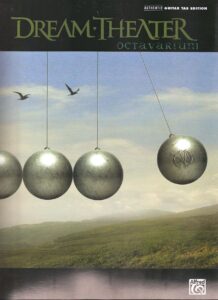


Best Sheet Music download from our Library.
Dream Theater: The Architects of Progressive Metal
Few bands in the history of rock music have pushed the boundaries of technical skill, compositional complexity, and conceptual ambition as relentlessly as Dream Theater. For over three decades, this New York-based quintet has stood as the undisputed standard-bearer of progressive metal. They have crafted a legacy built upon virtuosic musicianship, intricate song structures, and a deep reverence for both the melodic hooks of classic rock and the ferocious intensity of metal.
Please, subscribe to our Sheet Music Library.
If you are already a subscriber, please, check our NEW SCORES’ page every month for new sheet music. THANK YOU!
Origins and Evolution
Formed in 1985 under the name “Majesty” by Berklee College of Music students John Petrucci (guitar), John Myung (bass), and Mike Portnoy (drums), the band’s foundation was a shared obsession with the progressive giants of the 1970s—Yes, Rush, and Pink Floyd—and the emerging heaviness of bands like Metallica. After adding keyboardist Kevin Moore and vocalist Chris Collins (later replaced by Charlie Dominici), they renamed themselves Dream Theater and began forging their unique sound.
Their breakthrough came with 1992’s Images and Words, featuring new vocalist James LaBrie. The album was a declaration of their ambitious vision, blending Portnoy’s thunderous, polyrhythmic drumming, Petrucci’s jaw-dropping guitar heroics, Myung’s intricate bass lines, Moore’s atmospheric and classical-tinged keyboards, and LaBrie’s powerful, melodic vocals. Tracks like “Pull Me Under” became an unlikely MTV hit, introducing a generation to songs that could shift from crushing metal riffs to serene jazz fusion passages within minutes.
Browse in the Library:
Or browse in the categories menus & download the Library Catalog PDF:
The Pillars of Their Sound
Dream Theater’s identity rests on several core pillars:
- Technical Virtuosity: Each member is considered a master of their instrument. John Petrucci is frequently listed among the greatest guitarists of all time, renowned for his flawless technique and compositional depth. The late Mike Portnoy (who departed in 2010, replaced by the equally phenomenal Mike Mangini) redefined rock drumming with his complex, conceptual approach. John Myung provides a rock-steady yet melodically adventurous bass foundation, while keyboardists have evolved from Kevin Moore to Derek Sherinian to the current wizard, Jordan Rudess, whose integration of classical, jazz, and cutting-edge synth tones is unparalleled.
- Epic Storytelling & Concept Albums: From the psychological exploration of Metropolis Pt. 2: Scenes from a Memory (1999)—often hailed as their masterpiece—to the dystopian future of Six Degrees of Inner Turbulence (2002) and the autobiographical A Dramatic Turn of Events (2011), the band has never shied away from grand narratives. Their 2019 release, Distance over Time, was followed by the immense The Astonishing, a full-length rock opera set in a futuristic feudal society.
- Dynamic Range: A Dream Theater song is a journey. They masterfully navigate between delicate piano and vocal passages, symphonic orchestration, jazz-fusion improvisation (“The Dance of Eternity” is a famed instrumental labyrinth), and full-throttle, double-bass-driven metal. This contrast is not mere showmanship but central to their emotional and dramatic impact.
Legacy and Influence
Dream Theater’s influence is immeasurable. They legitimized and popularized progressive metal in the mainstream rock consciousness, inspiring countless bands (often labeled the “prog metal” genre) like Haken, Symphony X, and Periphery. Their annual “Progressive Nation” tours curated lineups of the genre’s most promising acts.
Beyond music, they fostered a deeply engaged global fan community, the “Dream Theater Nation,” known for its scholarly dissection of the band’s work. Furthermore, they have been at the forefront of musical education, with Petrucci, Portnoy, and Rudess releasing acclaimed instructional materials and participating in clinics worldwide.
The Modern Era
With Mike Mangini firmly integrated into the drum throne, the band continues to evolve. Their 2021 album, A View from the Top of the World, proved they could distill their expansive vision into focused, potent compositions without sacrificing complexity. The 2024 announcement of Mike Portnoy’s return to the band marked a historic moment, reuniting the core Images and Words lineup and sending waves of excitement through the progressive rock world.
Dream Theater is more than a band; they are an institution. In an era often defined by musical minimalism and fleeting trends, they have remained steadfast in their commitment to artistry, technical excellence, and uncompromising creative vision. They are musicians’ musicians, songwriters’ songwriters, and to their devoted fans, they are the undisputed masters of a genre they helped define. Through constant innovation and unwavering dedication to their craft, Dream Theater has not just written songs—they have built soundscapes, told epic stories, and forever expanded the possibilities of what rock music can be.
DREAM THEATER – Octavarium (Full Album)
Octavarium is the eighth studio album by American progressive metal band Dream Theater. Released on June 7, 2005, it was the band’s final release with Atlantic Records. Recorded between September 2004 and February 2005, it was the last album recorded at The Hit Factory in New York City. With it, the band decided to create “a classic Dream Theater album”, drawing upon their various stylistic influences while trying to make the music less complex. The album takes its creative concept from the musical octave.
Critical reception of the album was generally positive; the diversity of the music was praised, although critics found some of the songwriting to be inconsistent. Dream Theater promoted the album on a year-long world tour, with the majority of concerts lasting almost three hours and featuring a different set list each night. The tour finished at Radio City Music Hall, accompanied by an orchestra; this performance was recorded and released as a live album and concert video entitled Score. They co-headlined the 2005 North American Gigantour with Megadeth.