
Come join us now, and enjoy playing your beloved music and browse through great scores of every level and styles!
Can’t find the songbook you’re looking for? Please, email us at: sheetmusiclibrarypdf@gmail.com We’d like to help you!
Table of Contents
Happy heavenly birthday, Édith Piaf, born on this day in 1915.
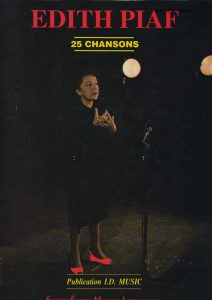
Best Sheet Music download from our Library.

Please, subscribe to our Sheet Music Library.
If you are already a subscriber, please, check our NEW SCORES’ page every month for new sheet music. THANK YOU!
Edith Piaf: The Sparrow’s Song – An Exhaustive Portrait
Introduction: The Voice of a Nation
Édith Piaf, born Édith Giovanna Gassion on December 19, 1915, in the Belleville district of Paris, is not merely a singer; she is a cultural monument, the embodiment of the French chanson réaliste, and a global symbol of artistic passion born from profound suffering. Her voice—a powerful, penetrating instrument of raw emotion, capable of conveying devastating sorrow and transcendent joy—transcended language and class. From the grimy streets of Paris to the world’s most prestigious stages, Piaf lived a life of operatic extremes, and she poured every ounce of its drama into her music. This article endeavors to explore the exhaustive biography, artistic methodology, and enduring legacy of “La Môme Piaf” (The Kid Sparrow), who became simply “The Sparrow,” a diminutive figure with the voice of a giant.
I. Full Biography: A Life in Black and Red
Early Years (1915-1935): The Gutters of Paris
Piaf’s origins are shrouded in the myth she herself cultivated, but the hardship was undeniable. Her mother, Annetta Maillard, was a café singer of Italian descent; her father, Louis-Alphonse Gassion, a nomadic street acrobat. Abandoned by her mother, she was initially cared for by her paternal grandmother, who ran a brothel in Normandy. It was here, legend has it, that the infant Édith was allegedly cured of blindness by the prostitutes—a story of dubious medical verity but powerful symbolic resonance, suggesting her vision was restored by society’s outcasts.
By age seven, she joined her father on the road as a performer. At 14-15, she separated from him and began singing in the streets of Paris with her friend Simone “Mômone” Berteaut (often presented as a half-sister). She gave birth to a daughter, Marcelle, at 17, who died of meningitis at age two—a tragedy that marked her forever. These formative years in the bastringues (dive bars) and rues of Pigalle and Ménilmontant were her conservatoire. She absorbed the argot, the stories of love, loss, and survival, and the direct, unfiltered communication style of street performance.

Discovery and Ascent (1935-1945): From the Street to the Spotlight
In 1935, the pivotal encounter occurred. Louis Leplée, owner of the elegant nightclub Le Gerny’s off the Champs-Élysées, heard her sing on a street corner. Struck by her intense delivery and frail appearance, he gave her a stage, coined her stage name “La Môme Piaf” (The Waif Sparrow), and launched her career. Her 1936 debut was a sensation, leading to her first recordings (“Les Mômes de la Cloche”). However, tragedy struck again when Leplée was murdered months later. Piaf, briefly under suspicion, was cleared but scandalized.
This dark period led her to the songwriter Raymond Asso, who became her Pygmalion. He crafted her early persona, taught her stagecraft, and provided her with her first major hits, including “Mon Légionnaire” (music by Marguerite Monnot, who would become her primary composer). Through Asso, she met the composer Michel Emer, who gave her “L’Accordéoniste.” During the German Occupation, Piaf performed in brothels and for German officers—a period of moral ambiguity she defended by claiming she helped French prisoners escape. Her popularity soared, cementing her as a national figure.
International Stardom and Personal Turmoil (1946-1960)
The post-war years defined Piaf’s legend. In 1947, she penned her timeless philosophical anthem, “La Vie en rose,” initially a personal favorite she performed casually. It became a global phenomenon. Her 1949 discovery and mentorship of a young singer in New York, Yves Montand, whom she transformed into a star, demonstrated her keen eye. But her most transformative encounter was with the married boxer Marcel Cerdan, the love of her life. Their passionate, doomed affair provided the emotional core for songs like “Hymne à l’amour” (1949). Cerdan’s death in a plane crash in October 1949 while traveling to see her plunged Piaf into an abyss of grief from which she never fully emerged.
This loss triggered a cycle of chronic pain, morphine and alcohol addiction, and a series of near-fatal car accidents and illnesses. Yet, her art reached new heights. She conquered America, performing at the Versailles and Carnegie Hall, astounding audiences with her visceral force. She embraced a new generation of songwriters, notably Charles Dumont and Michel Vaucaire, who provided her with her late-career masterpiece, “Non, je ne regrette rien” (1960). Her marriages to Jacques Pills (1952-1956) and the much younger Théo Sarapo (1962) were attempts at stability amidst the chaos.
Téléchargement des meilleures partitions dans notre bibliothèque.
The Final Act (1960-1963): The Triumph of Will
By the early 1960s, Piaf was a physical wreck, suffering from cirrhosis, arthritis, and undergoing numerous surgeries. She was often unable to walk, needing injections to perform. Yet, on stage, the transformation was miraculous. Her voice, though sometimes frayed, gained a new, almost unbearable depth of pathos. Her performances became acts of sheer will, a direct dialogue with mortality. She recorded “Non, je ne regrette rien” as a personal manifesto, a defiant roar in the face of ruin. Her final recordings in 1963, including “L’Homme de Berlin,” are haunting documents of a spirit clinging to song. She died of internal hemorrhaging on October 10, 1963, at her Plascassier villa, the same day as her friend Jean Cocteau. Her funeral in Paris drew over 100,000 mourners, a national mourning rarely seen.
Browse in the Library:
Or browse in the categories menus & download the Library Catalog PDF:
II. Music Style: Chanson Réaliste and Beyond
Piaf is the ultimate exponent of chanson réaliste, a genre born in late-19th-century Parisian working-class culture. Its characteristics, which she perfected, include:
- Narrative Lyrics: Songs are short stories, often tragic, about the lives of the poor: prostitutes, street kids, laborers, lovers torn apart by fate.
- Emotional Directness: No artifice, no detachment. The singer is the character, reliving the emotion.
- Theatrical Delivery: Use of spoken word, dramatic pauses, sobs, clenched fists, and sweeping gestures—the entire body was involved in the storytelling.
However, Piaf transcended the genre. Her repertoire expanded to include joyous love songs (“La Foule”), patriotic anthems (“Les Trois Cloches”), philosophical meditations, and even flirtations with jazz and orchestral pop in her American recordings. Her style was ultimately Piafism: an uncompromising, personal fusion of street authenticity and high theatrical drama.
III. Encounters with Other Artists
Édith Piaf was a gravitational center in the French artistic world.
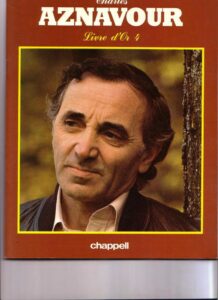
- Mentor and Creator: She launched or significantly boosted the careers of Yves Montand, Les Compagnons de la Chanson (with whom she first recorded “Les Trois Cloches”), and later, Charles Aznavour, who served as her secretary, chauffeur, and songwriter before becoming a star himself.
- Literary and Artistic Circle: She moved among intellectuals like Jean Cocteau (who wrote a play for her, Le Bel Indifférent), and was painted by Bernard Buffet.
- American Crossovers: In the U.S., she befriended Marlene Dietrich and was admired by singers like Judy Garland. She had a brief, tumultuous affair with Marlon Brando.
- Musical Collaborators: Her most important creative partnership was with composer Marguerite Monnot, a classically trained pianist who understood Piaf’s soul and provided the music for many of her greatest hits, from “Mon Légionnaire” to “Milord.” Later, the duo Charles Dumont (music) and Michel Vaucaire (lyrics) became essential.
IV. Composition Characteristics, Harmony, Tonality, Melody, and Form
While Piaf was not a trained musician, her instinct was supreme, and she worked intensely with her composers.
- Lyrical Themes: Love (obsessive, lost, or joyous), death, memory, regret, resilience, poverty, Parisian life, and destiny. Her lyrics are rich in concrete imagery and street slang, elevated to poetry.
- Harmony and Tonality: The harmonic language, primarily crafted by Monnot and later Dumont, is rooted in late-Romantic and popular traditions. It is tonally straightforward, often using simple progressions (I-IV-V-I) that support rather than distract from the vocal line. Minor keys dominate her tragic songs (“Hymne à l’amour” is in E-flat minor), creating a profound sense of pathos. Modulations are used sparingly but effectively for dramatic emphasis, often lifting the song to a new emotional plane for the final refrain (e.g., the famous shift in “La Vie en rose”).
- Melodic Style: This is the heart of Piaf’s art. Her melodies are:
- Vocal-Centric: They feel “sung,” not “played,” following the natural rhythms of speech and emotion.
- Arch-Shaped: Often building to a powerful, sustained high note (the cri de cœur or “cry from the heart”) in the bridge or final verse, releasing the built-up tension.
- Ornamented with Portamento and Appoggiaturas: Her signature slides between notes (portamento) and crushed grace notes add a sobbing, pleading quality.
- Rhythmically Free: While the underlying accompaniment is often in a slow-to-moderate waltz (3/4) or march-like 4/4 time, Piaf treats the melodic line with rubato, pushing and pulling against the tempo for expressive effect.
- Formal Style: Songs typically follow a classic verse-chorus (couplet-refrain) structure, sometimes with a prelude or spoken introduction. The arrangement builds inexorably, starting sparsely (often just accordion or piano) and culminating in a sweeping, string-laden climax, mirroring the emotional journey.
V. Influences
- Street Culture: The biggest influence was the music of the Parisian faubourgs (suburbs): the cries of street vendors, popular tunes, and the songs of Aristide Bruant (immortalized by Toulouse-Lautrec).
- Chanteurs Réalistes: Direct predecessors like Frehel and Damia, though Piaf surpassed them in emotional intensity and global appeal.
- Classical and Operatic: Through Monnot and her own listening, elements of operatic verismo and Romantic melody seeped into her work, giving it a timeless, grandeur.
- American Jazz and Torch Songs: During her U.S. tours, she admired the phrasing and intimacy of American singers, subtly incorporating a more conversational tone at times.
VI. Legacy
Piaf’s legacy is immeasurable.
- Archetype of the Artist: She established the model of the singer whose life and art are inseparable, a template followed by everyone from Janis Joplin to Amy Winehouse.
- Cultural Ambassador: She defined Frenchness for the world—its passion, its melancholy, its joie de vivre.
- Influence on Singers: Virtually every female vocalist in the French tradition owes her a debt, from Juliette Gréco and Mireille Mathieu to Patricia Kaas. Internationally, she has been cited as an influence by Marc Almond, Liza Minnelli, Cyndi Lauper, and Midge Ure, among countless others.
- Enduring Relevance: Her songs of resilience (“Non, je ne regrette rien”) and love (“La Vie en rose”) remain universal anthems, constantly rediscovered by new generations.
VII. List of Works & Discography (Selected)
Piaf recorded extensively from 1936 to 1963. Key recordings are compiled on numerous anthologies.
- Seminal Studio Albums (Post-war LP Era):
- Chants d’Espoir et de Tristesse (1953)
- La Vie en rose (1954)
- Les Amants de Paris (1954)
- Récital 1957 (live at the Olympia)
- Récital 1961 (live at the Olympia)
- Récital 1962 (live at the Olympia)
- Definitive Compilations:
- Édith Piaf – 30ème Anniversaire (4-CD Box Set)
- The Voice of the Sparrow: The Very Best of Édith Piaf
- The Complete Édith Piaf (20-CD Box Set)
VIII. Most Known Compositions and Recordings
- “La Vie en rose” (1946) – Her global signature, a love song that became a standard.
- “Non, je ne regrette rien” (1960) – The ultimate anthem of defiance and self-acceptance.
- “Hymne à l’amour” (1949) – A monumental pledge of love, written for Marcel Cerdan.
- “Milord” (1959) – A catchy, theatrical story-song about a streetwalker and an English gentleman.
- “La Foule” (1957) – A frenetic, Spanish-tinged song about a love found and lost in a crowd.
- “L’Accordéoniste” (1940) – A tragic réaliste masterpiece about a prostitute in love with a musician.
- “Mon Dieu” (1960) – A poignant plea to God for more time with a lover.
- “Mon légionnaire” (1937) – Her first major hit, a song of obsessive love for a Foreign Legion soldier.
- “Les Trois Cloches” (with Les Compagnons de la Chanson, 1945) – A folk-inspired tale of a man’s life from birth to death.
- “Padam… Padam…” (1951) – A haunting song about the persistent memory of a lost love.
IX. Covers in Modern Music
Piaf’s songs are endlessly reinterpreted:
- “La Vie en rose”: Covered by Louis Armstrong (a definitive jazz version), Grace Jones, Lady Gaga, Michele, Donna Summer, Celine Dion.
- “Non, je ne regrette rien”: Used in films like Inception (dramatically slowed by Hans Zimmer), covered by Midge Ure, Bad Religion (punk version), Émilie Simon.
- “Hymne à l’amour”: Covered by Cyndi Lauper, Celine Dion, Juliette Gréco, Marlene Dietrich.
- “Milord”: Covered by Bobby Darin, Mick Hucknall.
X. Her Music in Films
Piaf’s life and music are cinematic by nature.
- Biographical Films: La Vie en rose (2007), directed by Olivier Dahan, with Marion Cotillard’s Oscar-winning performance.
- Soundtrack Use: Her songs provide instant emotional and geographic shorthand. Notable uses include:
- Saving Private Ryan (1998): “Tu es partout” in a tense Paris scene.
- Inception (2010): “Non, je ne regrette rien” as an “audio kick.”
- Mad Men (TV): “La Vie en rose” used poignantly.
- Wall-E (2008): “La Vie en rose” symbolizes romance.
- The Intouchables (2011): “L’Air de Paris” and others.
- On the Town (1949): A rare cameo by Piaf herself.
XI. Famous Performers of Her Music
Beyond covers, many artists have dedicated entire albums or shows to Piaf:
- Mireille Mathieu: Often seen as her successor, frequently performing her songs.
- Patricia Kaas: Recorded the album Piaf – Ma Grand’Tour (2012) and a world tour tribute.
- Marc Hervieux (Québécois tenor): Classical crossover tribute.
- Émilie Simon: Experimental electronic tribute album Végétal (2006).
- Numerous French chanteuses and international cabaret artists keep her repertoire alive in live performance.
XII. Her Last Works
Her final recordings are a testament to her indomitable spirit.
- Last Studio Session (Summer 1963): She recorded five songs, including “L’Homme de Berlin,” “Le Dénicheur,” and “C’est l’amour.” Her voice is weathered, thin, and fragile, yet the interpretation is deeply moving, filled with the wisdom of approaching death.
- Last Public Performance: April 20, 1963, at the Bobino music hall in Paris. She performed an exhausting set, collapsing afterwards. A recording exists, capturing the raw, emotional final bow of a legend.
- Last Song: The last song she is known to have sung in the studio was “L’Homme de Berlin.” The last she ever performed live is believed to be “Non, je ne regrette rien”—a fitting final statement.
Édith Piaf: The Eternal Sparrow
Édith Piaf’s art was alchemy—the transformation of abject personal suffering into universal beauty. She gave voice to the marginalized, dignity to the broken-hearted, and an anthem of resilience to all. Her technical mastery—that controlled tremolo, the seismic emotional shifts, the architectural phrasing—served one purpose: truth. She did not just sing about love and loss; she was love and loss incarnate. More than six decades after her death, when the first notes of “La Vie en rose” or the defiant declaration of “Non, je ne regrette rien” play, the world still pauses. The Sparrow’s song, born in the Parisian gutter, echoes eternally, a raw, glorious, and utterly human sound.