
Come join us now, and enjoy playing your beloved music and browse through great scores of every level and styles!
Can’t find the songbook you’re looking for? Please, email us at: sheetmusiclibrarypdf@gmail.com We’d like to help you!
Table of Contents
Happy birthday, Alan Parsons, born on this day in 1948.
Alan Parsons: The Architect of Sound
Biography
Alan Parsons, born Alan Parsons OBE on December 20, 1948, in London, England, is a British audio engineer, songwriter, musician, and record producer whose career spans over five decades. His journey into music began not as a performer but behind the scenes, shaping the sound of some of rock’s most iconic recordings before forging his own path as a musical visionary.
Best Sheet Music download from our Library.
Parsons showed an early aptitude for engineering and music, learning piano and guitar as a child. His professional career began at the age of 18 when he secured a job at EMI Studios (later Abbey Road Studios) as an assistant engineer. This position placed him at the epicenter of recording innovation during pop music’s most transformative era.
His big break came in 1969 when he served as assistant engineer on The Beatles’ landmark album “Abbey Road,” witnessing firsthand the band’s creative process and technical experimentation. This experience would profoundly shape his approach to recording. He further honed his skills engineering Paul McCartney’s early solo work, including “Wild Life” and “Red Rose Speedway.”
Parsons’ engineering prowess reached new heights when he engineered Pink Floyd’s groundbreaking 1973 album “The Dark Side of the Moon.” His technical innovations on this record—particularly in tape loops, synthesizer integration, and spatial effects—earned him a Grammy nomination and established his reputation as one of the industry’s most inventive sound architects.
In 1975, Parsons partnered with songwriter, musician, and vocalist Eric Woolfson to form The Alan Parsons Project. This marked his transition from behind-the-scenes engineer to front-facing musical artist. The Project would become his primary creative outlet for over a decade, producing ten studio albums that blended progressive rock, pop, and electronic elements with conceptual storytelling.

Please, subscribe to our Sheet Music Library.
If you are already a subscriber, please, check our NEW SCORES’ page every month for new sheet music. THANK YOU!
After the Project disbanded in 1990, Parsons continued as a solo artist and live performer, finally taking his sophisticated studio creations to the stage. Throughout his career, he has remained an advocate for audio quality, serving as a consultant for numerous audio equipment companies and championing high-resolution audio formats.
In 2021, Parsons was inducted into the Rock and Roll Hall of Fame as a recipient of the Award for Musical Excellence, cementing his legacy as a pioneer in both recording technology and progressive music composition.
Music Style and Artistic Philosophy
Alan Parsons’ musical style defies simple categorization, existing at the intersection of progressive rock, art rock, symphonic pop, and electronic music. His work is characterized by several distinctive elements:
Narrative and Conceptual Depth: Nearly every Alan Parsons Project album is a concept album, exploring themes ranging from Edgar Allan Poe’s literature (“Tales of Mystery and Imagination”) to the nature of human achievement (“Pyramid”), time (“The Turn of a Friendly Card”), and scientific discovery (“I Robot”).
Cinematic Soundscapes: Parsons approaches album production like film scoring, creating atmospheric backdrops that serve the narrative. His background in engineering allows him to construct elaborate sonic environments using both traditional instruments and innovative studio techniques.
Melodic Sophistication: While his arrangements can be complex, Parsons never sacrifices melody. His compositions often feature strong, memorable hooks that anchor the elaborate productions.
Technical Perfectionism: Known as “The Engineer’s Engineer,” Parsons prioritizes audio quality with almost scientific precision. His recordings are meticulously crafted, with every element occupying its own distinct space in the stereo field. This “clean” production style became a hallmark of his work.
Eclectic Instrumentation: Parsons seamlessly blends rock instrumentation (guitars, drums, bass) with orchestral arrangements, synthesizers (particularly the early use of the Fairlight CMI), and found sounds to create rich, textured compositions.
Vocal Chameleonism: Rather than establishing himself as a lead vocalist, Parsons employed a rotating cast of vocalists suited to each song’s character, including Arthur Brown, Colin Blunstone, Lenny Zakatek, and Woolfson himself. This approach emphasized the narrative over personality.
The Alan Parsons Project – Eye in the Sky
Improvisational Elements and Musical Language
While Parsons’ studio work is known for its precision and pre-planning, improvisation plays a crucial role in his creative process:
Guitar Work: Parsons’ guitar playing, while not flashy, serves the composition’s mood. His improvised lines often feature melodic minor scales and modal interchanges that complement the harmonic complexity. In live settings, he expanded guitar solos, particularly on tracks like “I Wouldn’t Want to Be Like You,” where blues-rock phrasing meets sophisticated changes.
Keyboard and Synthesizer Textures: Much of Parsons’ improvisation occurs during the sound design phase. His experimentation with synthesizer patches, tape manipulation, and effects processing creates the distinctive atmospheric beds that define his sound. The Minimoog sequences on “I Robot” and the vocoder treatments on “The Raven” represent improvisations in timbre rather than melody.
Arrangement Spontaneity: In the studio, Parsons would often try unorthodox combinations of instruments and recording techniques. The famous cash register sounds on Pink Floyd’s “Money” (which he engineered) exemplify this improvisational approach to sonic texture—an ethos he carried into his own work.
Live Performance Evolution: After years as a studio-only entity, Parsons began touring in the 1990s, necessitating adaptation of complex studio arrangements for the stage. This process involved improvisational solutions for reproducing layered sounds and sometimes extended instrumental sections to accommodate the live setting.
Browse in the Library:
Or browse in the categories menus & download the Library Catalog PDF:
Cooperation with Other Artists
Parsons’ career is marked by extensive collaboration:
Eric Woolfson: The most significant creative partnership of his career. Woolfson handled lyrics, vocal melodies, and keyboards, while Parsons focused on production, arrangement, and instrumental composition. Their synergy created the unique Alan Parsons Project sound.
Pink Floyd: As engineer on “The Dark Side of the Moon,” Parsons worked closely with the band to realize their psychedelic visions. He contributed to sound effects, tape loop creation, and the overall sonic cohesion that made the album a technical masterpiece.
The Beatles and Paul McCartney: His early work at Abbey Road exposed him to revolutionary recording approaches that would inform his entire career.

Guest Vocalists and Musicians: Parsons collaborated with an impressive roster including:
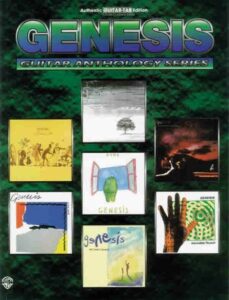
- Steve Hackett (Genesis): guitar on several Project albums
- David Paton (Pilot): bass and vocals
- Andrew Powell: orchestral arrangements on most Project albums
- Ian Bairnson (Pilot): lead guitar on most Project albums
- Zak Starkey (drums on later albums)
- Numerous vocalists like John Miles, Chris Rainbow, and Gary Brooker
Modern Collaborations: In recent years, Parsons has worked with artists like Steven Wilson (who remixed the early Project albums in surround sound), PJ Olsson (vocals on solo albums and tours), and Jake Shimabukuro (ukulele on “The NeverEnding Show”).

Chord Progressions and Harmonic Language
Parsons’ harmonic approach blends pop accessibility with progressive complexity:
Modal Interchange: He frequently borrows chords from parallel modes. In “Eye in the Sky,” the verse progression (Am-G/B-C-G-D/F#-F) mixes Aeolian and major tonality, creating a bittersweet quality that matches the song’s lyrical ambiguity.
Extended Chord Vocabulary: Parsons makes extensive use of 7th, 9th, and 11th chords beyond basic triads. “Time” features rich keyboard textures built on extended harmonies that create a dreamlike, suspended quality.

Non-Diatonic Movement: Rather than staying strictly within a key, Parsons employs chromatic bass motion and unexpected chord changes. “The Raven” uses descending chromatic bass lines beneath minor chords to create Gothic tension.
Circle Progressions and Unexpected Resolutions: While he utilizes classic progressions (the chorus of “Don’t Answer Me” follows a doo-wop inspired I-vi-ii-V), he often subverts expectations. “Sirius/Eye in the Sky” famously begins with a mysterious, unresolved chord progression that builds tension before resolving to the familiar opening of “Eye in the Sky.”
Orchestral Influence: Parsons’ chord voicings often reflect orchestral thinking, with instruments entering contrapuntally rather than all playing the same rhythm. This creates harmonic richness through layered entry points, as heard in “The Fall of the House of Usher.”
Suspended Tension: A hallmark of his style is the use of suspended chords (particularly sus4) that delay resolution, creating atmospheric tension perfect for narrative-driven music. This is evident throughout “Pyramid” and “I Robot.”
Influences
Parsons’ unique sound emerges from diverse influences:
Engineering Pioneers: Geoff Emerick (Beatles engineer), Peter Bown, and other Abbey Road innovators shaped his technical approach.
Progressive Rock: Early Pink Floyd, Yes, and Genesis influenced his conceptual ambitions and willingness to experiment with song structures.
Classical Music: Particularly Romantic and early 20th century composers like Debussy, Ravel, and Holst, who used orchestral color for emotional effect.
The Beatles: Their studio experimentation and melodic genius provided a template for balancing innovation with accessibility.
Film Composers: Bernard Herrmann’s suspenseful scores and John Barry’s elegant arrangements influenced Parsons’ cinematic approach.
Electronic Pioneers: Wendy Carlos’ synthesized Bach and early Kraftwerk inspired his integration of electronic elements with traditional composition.
Literature: Edgar Allan Poe’s Gothic tales directly inspired his first album, while science fiction and psychology informed later works.
Legacy
Alan Parsons’ legacy operates on multiple levels:
Audio Engineering: He elevated recording engineering from technical craft to artistic discipline. His work on “The Dark Side of the Moon” remains a benchmark for sonic innovation. Modern producers like Steven Wilson, Flood, and Nigel Godrich cite his influence.
Concept Album Tradition: Parsons helped popularize the narrative concept album format in the 1970s and 80s, bridging progressive rock’s ambition with AOR accessibility.
Art and Technology Integration: He demonstrated how new technologies (multitrack recording, synthesizers, digital effects) could serve artistic vision rather than dominate it.
Audiophile Culture: Parsons has been a consistent advocate for high-quality audio reproduction, consulting for companies like Linn Products and lending his name to the “Alan Parsons’ Art & Science of Sound Recording” educational series.
Cross-Genre Appeal: His ability to blend progressive, pop, and electronic elements created music that reached audiences across traditional genre boundaries.
The Producer as Artist: Alan Parsons helped establish the modern concept of the producer as a creative auteur rather than merely a technical facilitator.
Major Works and Notable Compositions
With The Alan Parsons Project:
- “Tales of Mystery and Imagination” (1976): Based on Edgar Allan Poe, featuring “The Raven” (with vocoder-led narration) and “The Fall of the House of Usher” (an instrumental suite).
- “I Robot” (1977): A conceptual exploration of technology and humanity, featuring “I Wouldn’t Want to Be Like You” and the title instrumental.
- “Pyramid” (1978): Themes of ancient Egypt and achievement, including “What Goes Up.”
- “The Turn of a Friendly Card” (1980): Concept album about gambling and chance, featuring “Games People Play” and the epic title suite.
- “Eye in the Sky” (1982): Their most commercially successful album, featuring the title track (a top 3 US hit) and “Sirius” (famously used as Chicago Bulls entrance music).
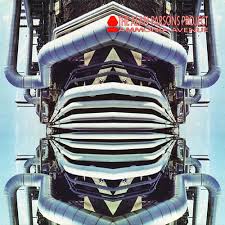
- “Ammonia Avenue” (1984): Featuring “Don’t Answer Me,” a retro-style pop song with elaborate production.
- “Stereotomy” (1985) and “Gaudi” (1987): Later albums that continued his signature sound into the digital age.
Solo Work:
- “Try Anything Once” (1993): First official solo album
- “On Air” (1996): Concept album about human flight
- “The Time Machine” (1999)
- “A Valid Path” (2004): Embracing electronic and trip-hop influences
- “The Secret” (2019): Return to classic Parsons sound
Engineering and Production Highlights:
- The Beatles – “Abbey Road” (assistant engineer)
- Pink Floyd – “The Dark Side of the Moon” (engineer)
- Paul McCartney – “Wild Life,” “Red Rose Speedway” (engineer)
- The Hollies – “Hollies” album (engineer)
- Al Stewart – “Year of the Cat” (co-producer/engineer)
- Pilot – “Magic” (engineer on hit single)
- Steven Wilson – Remixes of Project albums (consultant)
Filmography and Media Appearances
While primarily a recording artist, Parsons has intersected with visual media:
Music Videos: Produced early conceptual videos for “Don’t Answer Me” (in comic strip style) and “Prime Time.”
Documentaries: Featured extensively in the “Classic Albums” series episode on “The Dark Side of the Moon.”
Educational Series: Created and hosted “Alan Parsons’ Art & Science of Sound Recording” (2010), a comprehensive video tutorial series.
Film Soundtracks: His music has appeared in numerous films, most notably “Eye in the Sky” in “Casino” and “Sirius” as sports arena anthem.
Live DVDs: Several concert recordings document his transition to live performer.
Television Themes: The instrumental “Sirius” became one of television’s most recognizable themes through sports broadcasting.
Discography
The Alan Parsons Project:
- Tales of Mystery and Imagination (1976)
- I Robot (1977)
- Pyramid (1978)
- Eve (1979)
- The Turn of a Friendly Card (1980)
- Eye in the Sky (1982)
- Ammonia Avenue (1984)
- Vulture Culture (1985)
- Stereotomy (1985)
- Gaudi (1987)
Solo Albums:
- Try Anything Once (1993)
- On Air (1996)
- The Time Machine (1999)
- A Valid Path (2004)
- The Secret (2019)
Live Albums:
- The Alan Parsons Project Live (1995)
- Eye 2 Eye: Live in Madrid (2004)
- One Note Symphony: Live in Tel Aviv (2019)
Significant Compilations:
- The Best of The Alan Parsons Project (1983)
- The Instrumental Works (1988)
- The Definitive Collection (1997)
Most Known Compositions and Performances
- “Eye in the Sky” – The Project’s biggest hit, known for its hypnotic chord progression and philosophical lyrics about surveillance and relationships.
- “Sirius” – The instrumental overture to “Eye in the Sky,” immortalized as the Chicago Bulls’ introduction music during their 1990s championship era.
- “I Wouldn’t Want to Be Like You” – Funk-inflected rock from “I Robot” featuring Lenny Zakatek’s distinctive vocal and a memorable guitar solo.
- “Games People Play” – Upbeat social commentary with intricate vocal arrangements.
- “Time” – Atmospheric ballad from “The Turn of a Friendly Card” featuring Eric Woolfson’s poignant vocal and philosophical lyrics.
- “Don’t Answer Me” – Retro 1950s-style production with elaborate string arrangement and Phil Spector-inspired wall of sound.
- “The Raven” – From the debut album, notable for its early use of vocoder and Gothic atmosphere.
- “Prime Time” – Sophisticated pop from “Ammonia Avenue” with jazz-inflected chords.
- “Old and Wise” – Moving ballad featuring Colin Blunstone’s vocal, often cited as a Project highlight.
- “Lucifer” – Instrumental showcasing Parsons’ atmospheric production, featuring eerie choir and orchestration.
Alan Parsons: The Enduring Architect
Alan Parsons represents a unique convergence of technical mastery and artistic vision. In an era that often separates engineers from artists, he seamlessly inhabited both roles, demonstrating that the means of production could be as creative as the composition itself. His work with The Alan Parsons Project created a sophisticated middle ground between progressive rock’s complexity and pop’s accessibility, earning both critical respect and commercial success.
Beyond his specific recordings, Parsons’ legacy endures in his advocacy for audio quality, his educational efforts, and his demonstration that technology serves art when guided by human creativity. His induction into the Rock and Roll Hall of Fame in 2021 provided belated recognition for an artist whose influence permeates modern production while remaining rooted in the analog craftsmanship of recording’s golden age.
At over seven decades of age, Parsons continues to record, perform, and advocate for excellence in sound. His career embodies a simple but profound principle: whether through a haunting melody, an innovative studio technique, or a perfectly balanced mix, the ultimate goal is to move the listener. In this mission, Alan Parsons has consistently succeeded, building not just albums, but entire sonic worlds that continue to captivate audiences across generations.
Search your favorite sheet music in the Sheet Music Catalog
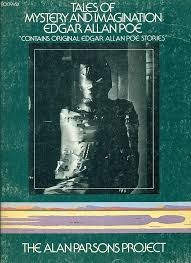
The Alan Parsons Project – Tales of Mystery and Imagination (1976)
Tales of Mystery and Imagination is the debut studio album by British rock band The Alan Parsons Project. It was released on 1 May 1976 in the United States by 20th Century Fox Records and on 1 June 1976 in the United Kingdom by Charisma Records. This is the MFSL 1994 CD remaster.
Listen to Alan Parsons music on Spotify
The Alan Parsons Project – Eye in the Sky
[Chorus]
I am the eye in the sky
Looking at you
I can read your mind
I am the maker of rules
Dealing with fools
I can cheat you blind
And I don’t need to see any more to know that
I can read your mind (looking at you)
I can read your mind (looking at you)
I can read your mind (looking at you)
I can read your mind